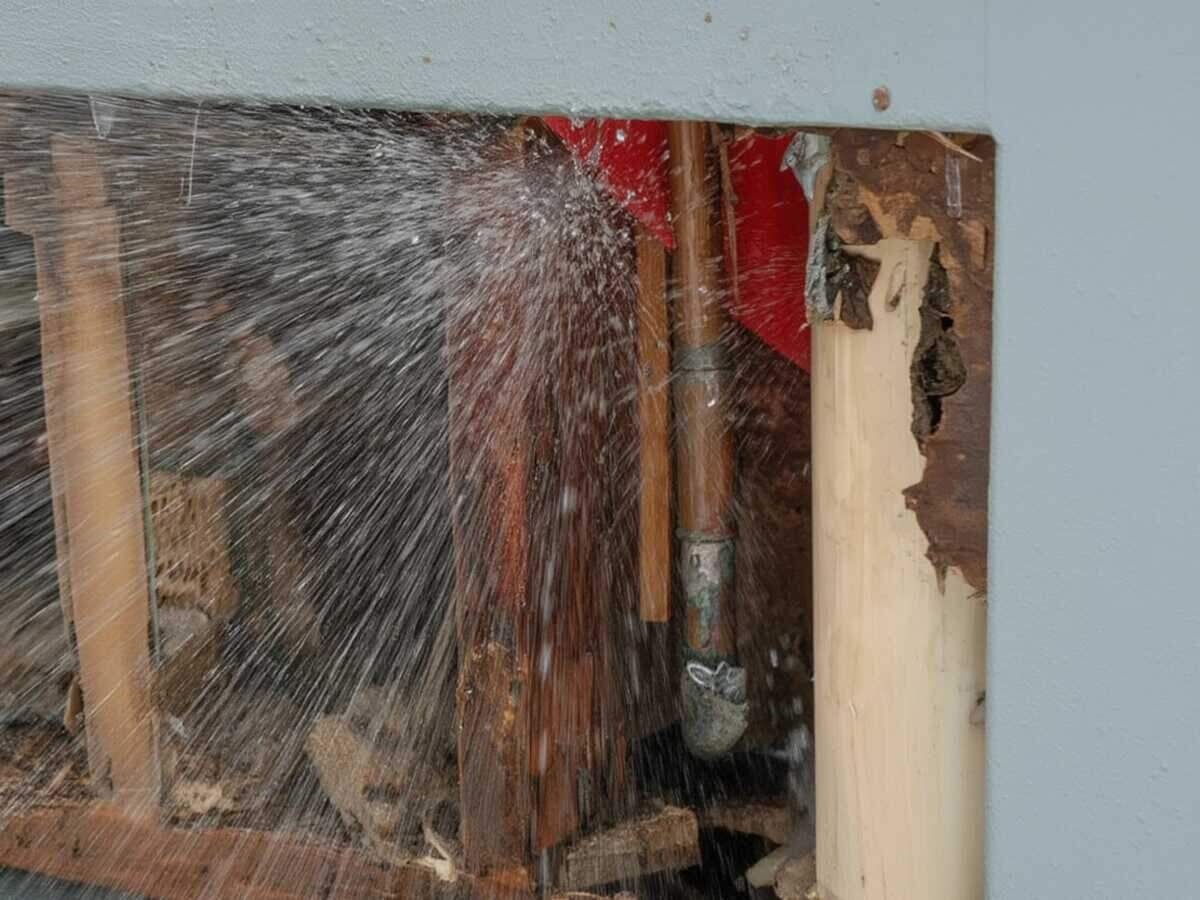




Roof water damage repair does not always start with a hole in the roof. A hard Central Texas storm pushes rain sideways, and every attic has openings built into it on purpose: soffit vents under the eaves, turbines or a ridge vent along the top, a louvered gable vent at each end of the house. Those are sized for moving air, not for horizontal water. When a line of storms crosses Williamson County with real wind behind it, rain gets driven through the louvers and blown in under a turbine housing, and it arrives on the insulation as spray rather than as a drip.
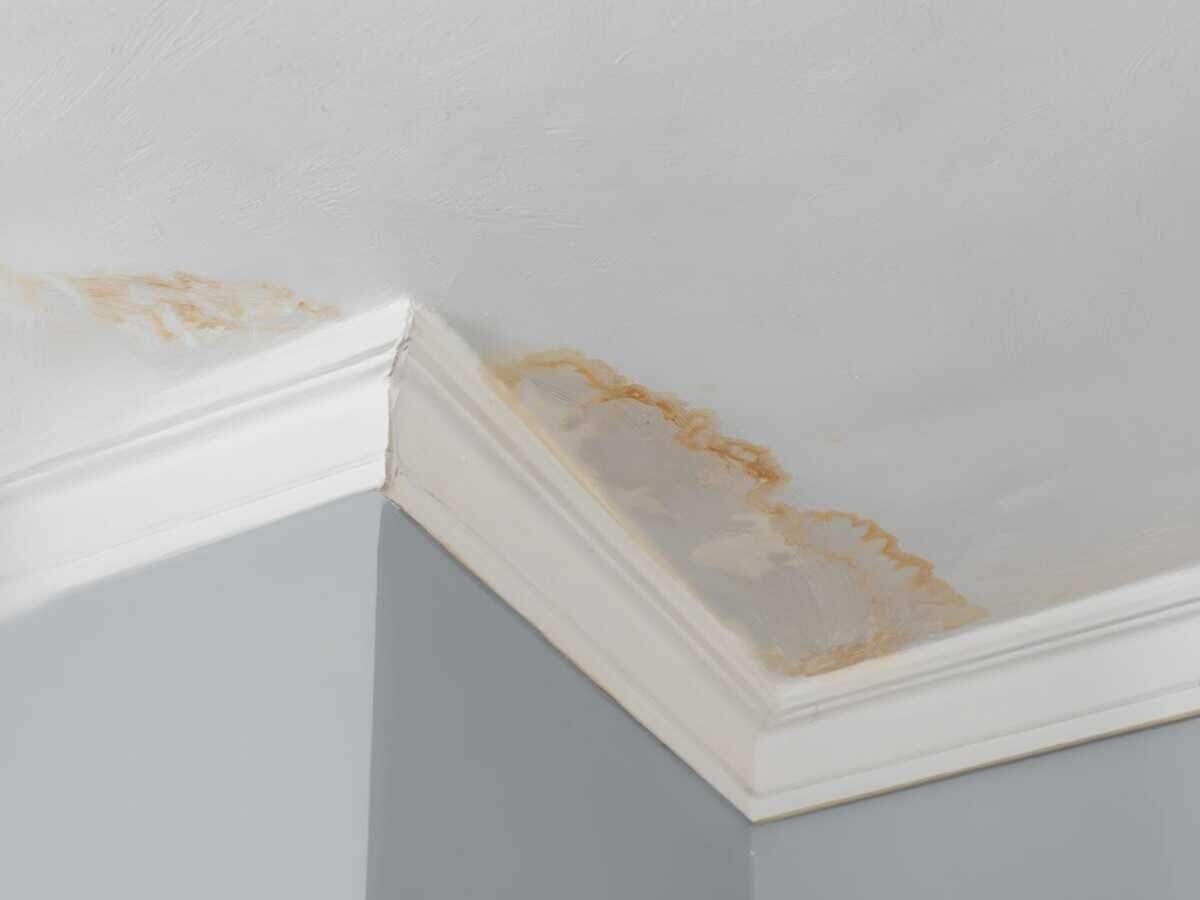
That is why the roofer finds nothing. No shingle failed, so there is nothing to point at, and the wet area is a band across the attic floor at one end of the house instead of a spot under a breach. It does not repeat on a schedule either, so the next ordinary rain stays dry and everyone decides the problem fixed itself. What we find afterward is matted insulation, damp decking on the windward side, and a ceiling below that has barely started to show. Water gets in the other way here too, high through a valley or a cracked boot and surfacing rooms away, which is the same lesson: map it before you cut it.
What we do inside while the roof question gets settled
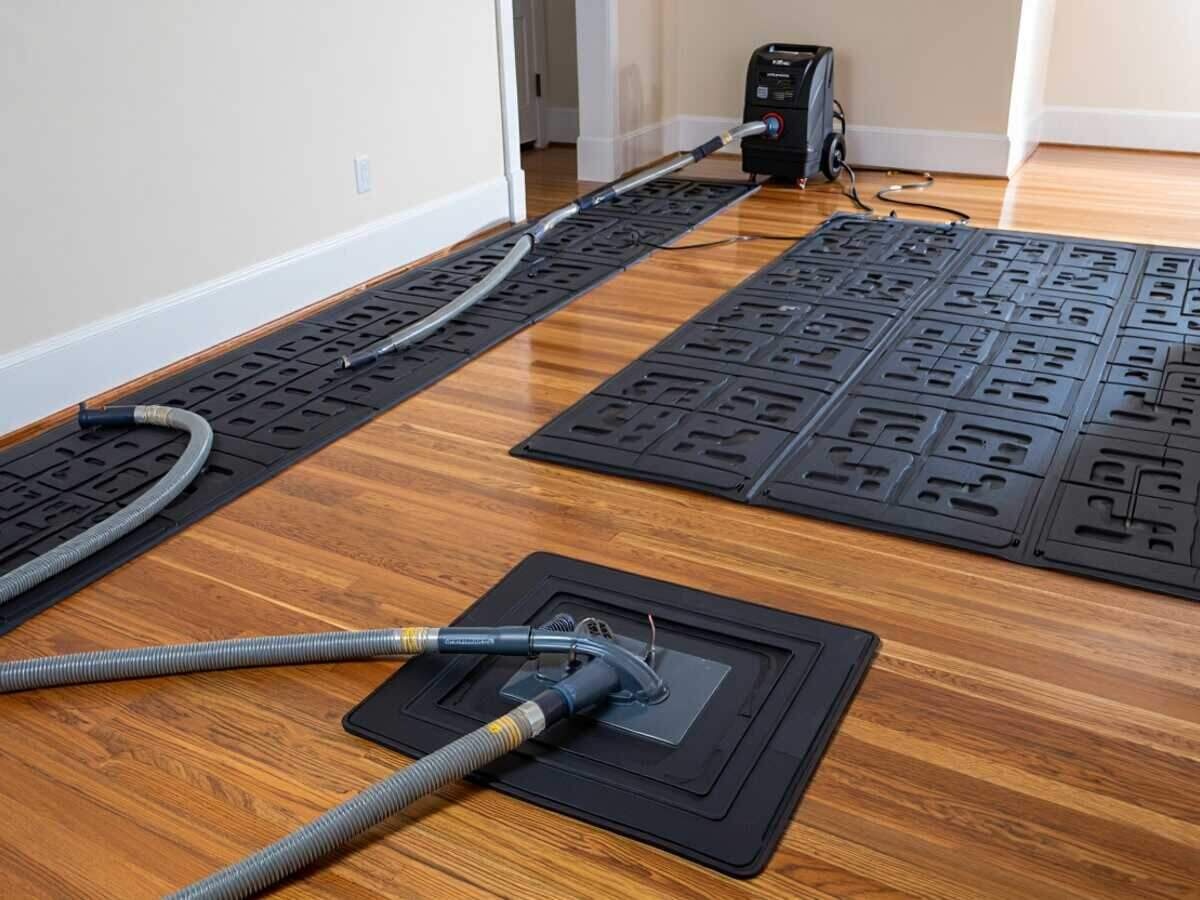
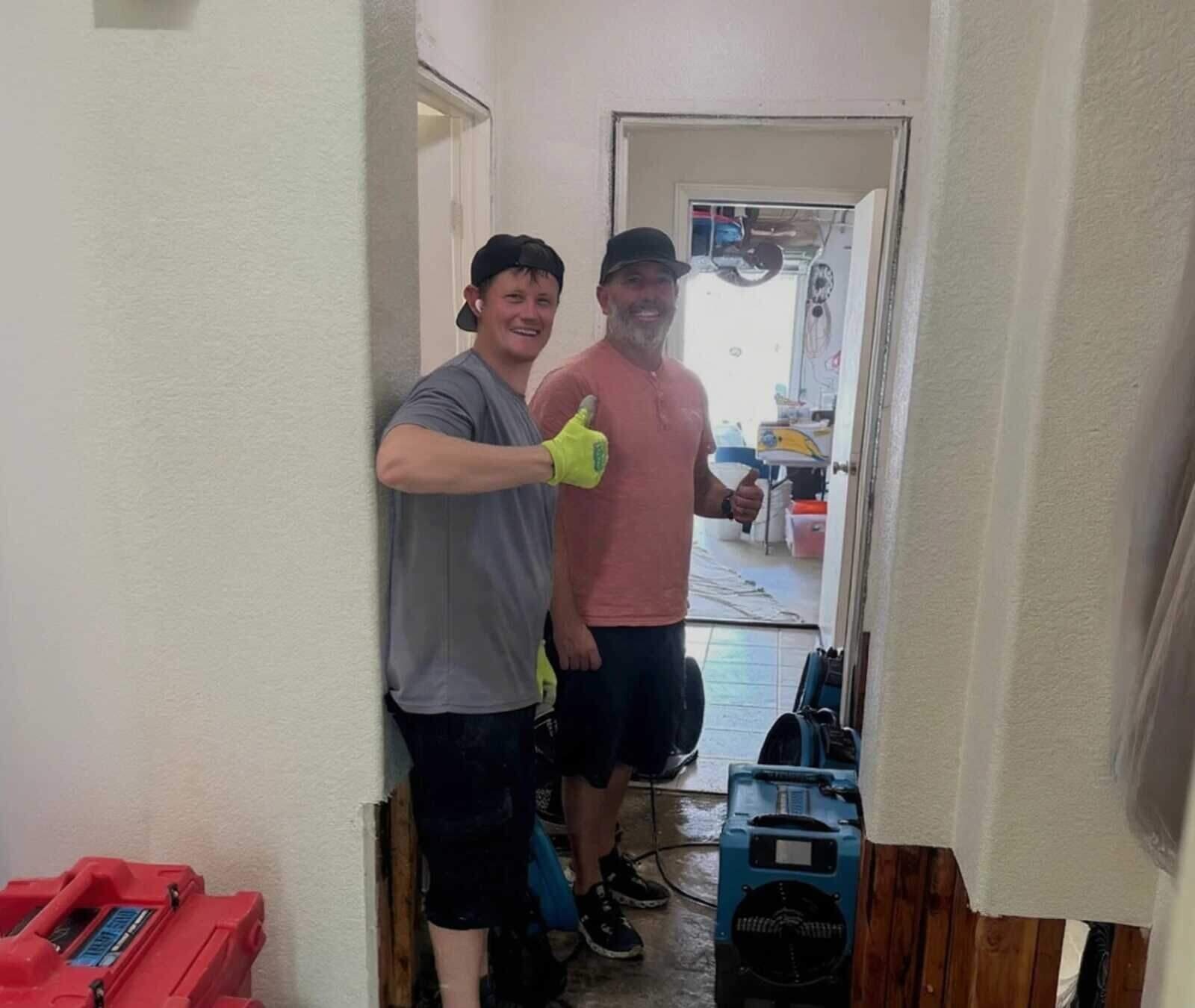
The attic gets mapped with infrared and a moisture meter first, at the gable ends, along the top plates, and across the decking, because the wet footprint of a wind-driven event looks nothing like the wet footprint of a point leak. The matted insulation comes out where the spray landed. Drying then runs from inside the bays, with equipment set between the rafters, a dehumidifier pulling the attic down, and a fixed set of marked points metered each morning until they match framing the storm never touched. Ceilings below get opened only where those numbers ask for it. Baffled vents, a replacement turbine, new storm collars: that half is roofing work, and we schedule around whoever is doing it.
- Infrared and meter mapping at the gable ends and down the windward slope
- Matted insulation pulled from the band where the spray landed, not from the whole attic
- Rafter bays dried from the inside, with marked points metered each morning
- Storm dates, dated photos, and repeat readings, which is what an on-and-off leak needs
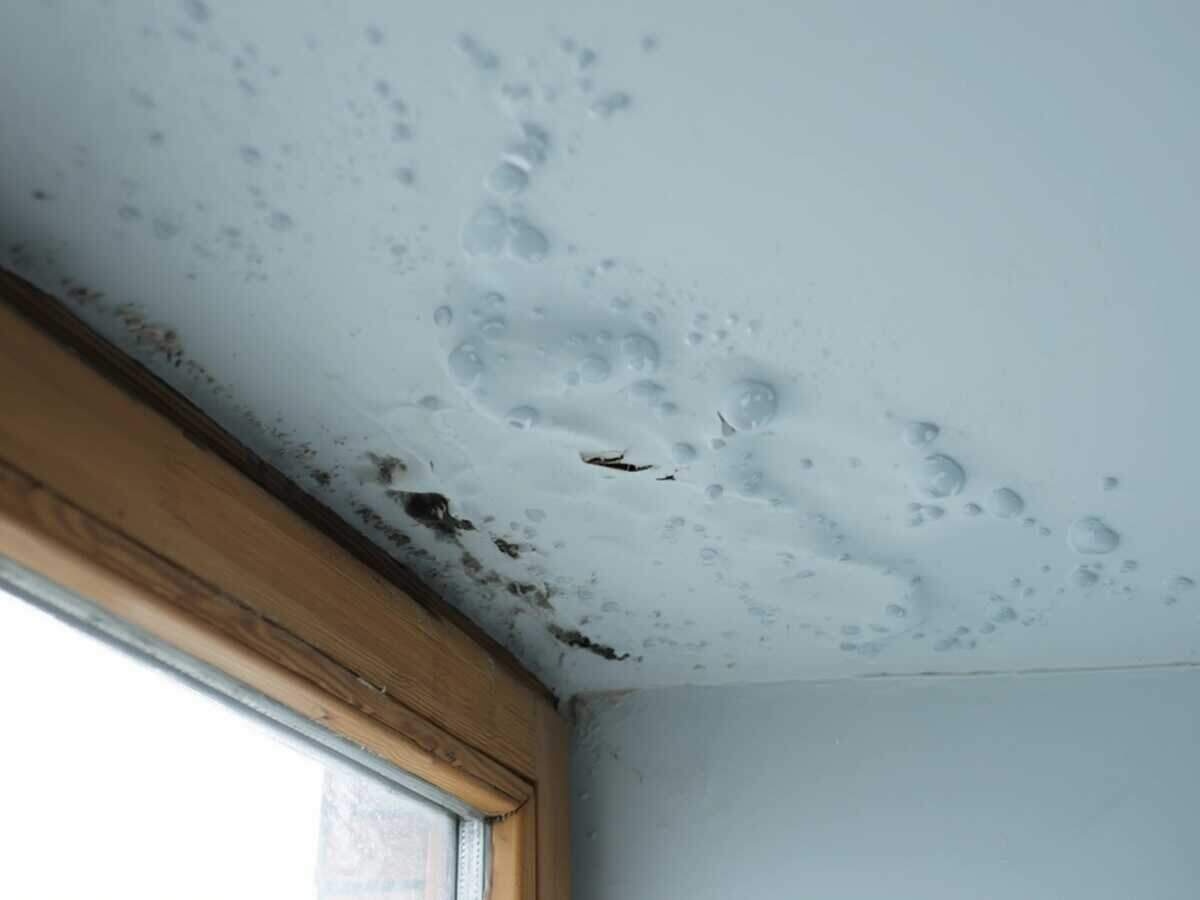
The awkward part of a wind-driven loss is that it is bone dry the day an adjuster visits. Our file carries the dates, the photographs from the morning we opened the attic, and readings taken at the same points across more than one storm, which is what turns an intermittent leak into something a carrier can actually evaluate. The coverage decision is theirs to make. Call (512) 271-5099 the next time that attic gets wet.