Ceiling Water Damage Repair in Austin, TX
A ring the size of a dinner plate over the hallway, and it was not there on Sunday. Something above the drywall has been wet for days. We read the cavity, dry the joist bay, and rebuild the ceiling. Someone picks up here at any hour.
- We bill your insurer directly
- IICRC-certified crews
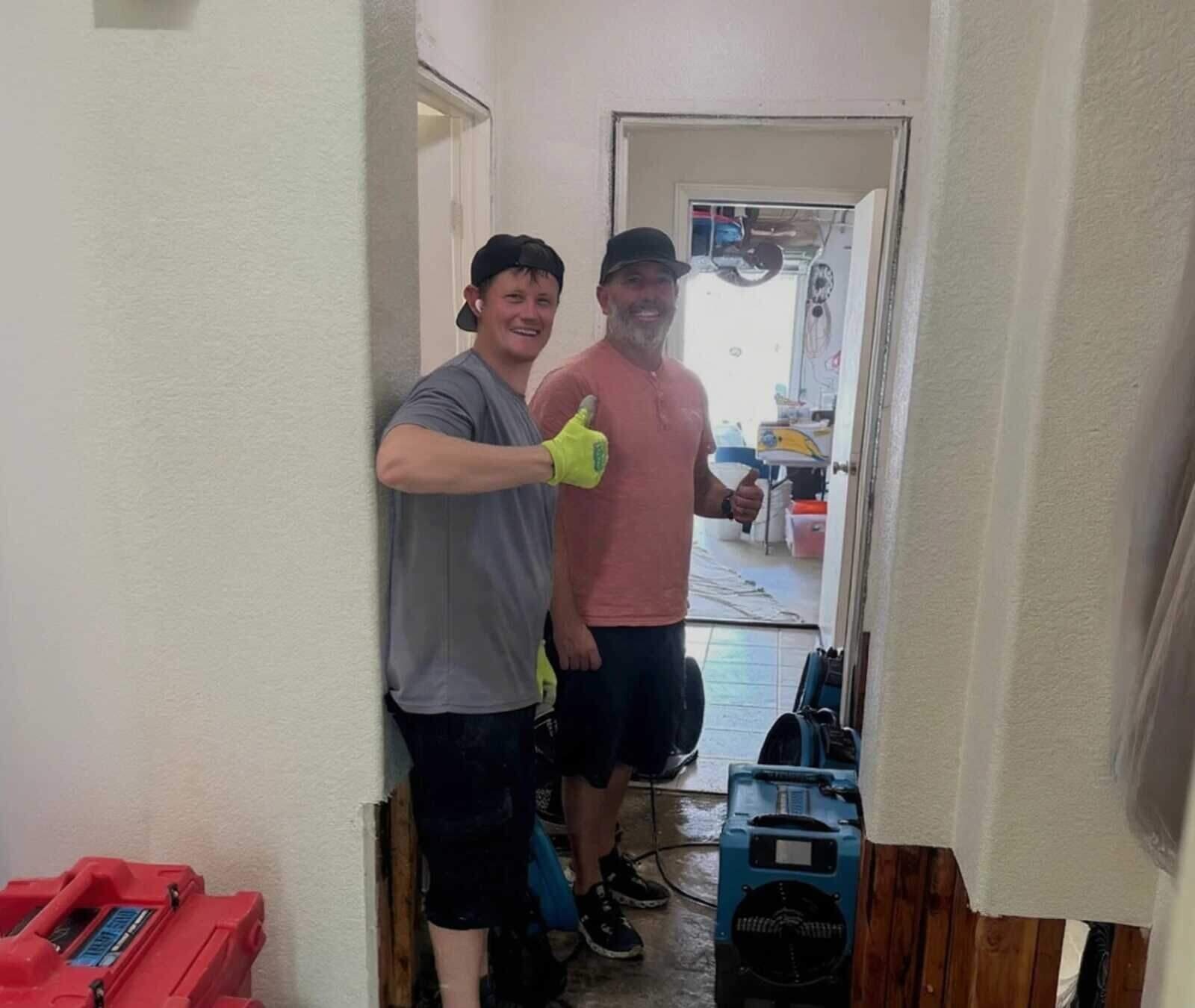
A local crew that shows up and does it right




The four pieces of a wet ceiling
The stain gets all the attention and the cavity behind it does all the damage. Whatever put the water there, a ceiling call comes down to these four, roughly in this order.
Rings and staining
A stain that is wider this week than last week is a live leak, not an old scar. We meter the board and the framing above it before anyone opens a paint can.
Sagging, spongy drywall
Soaked board gains weight fast and lets go at the fasteners all at once rather than gradually. We take that weight out under control instead of waiting for the sheet to land.
The cavity above
Wet blown-in insulation lies on the ceiling board and holds water against it for days. It comes out by the bag, and the joists get read with a meter.
Board, texture and paint
New drywall taped and floated, texture sprayed to match what is already up there, then a stain-blocking primer so the old ring never ghosts back.
What has to be dry, and how we know
A ceiling is the one surface in a house where the damage and its cause sit on opposite sides of the drywall. Our ceiling water damage repair services start on the far side of it, so nothing gets closed up over water:
- The joist bay over the stain, read through a small inspection cut rather than guessed at from a ladder.
- Saturated insulation, bagged and removed, because cellulose and fiberglass pack down under the weight of the water and never come back to depth.
- The top plate of the wall below, since water that reaches a wall line runs down inside the cavity and shows up as a baseboard problem next month.
- Growth, when the leak ran long. A ceiling that stayed damp for a week gets checked before board goes back, and our mold removal crew handles what turns up.
Dried first, rebuilt second
Drying and drywall usually mean two contractors and a gap of a week between them. We run both, so the ceiling closes the day the readings say it can.
Find the Water
Meter and thermal camera first: where it is coming in, and how far past the stain the wet area actually reaches.
Take the Weight Out
Anything sagging gets drained in a controlled stream and opened, so a loaded sheet never drops on its own schedule.
Dry the Bay
Wet insulation out, air movers into the cavity, dehumidifier in the room, and a reading logged every day.
Close It Back Up
Board, tape, float, texture to match the plane, stain-blocking primer, paint. Same crew that dried it.
Why we go above the ceiling before we open it
Ceiling water damage repair is two pieces of work with a hard order between them. Everything above the drywall has to be dry, then the ceiling gets rebuilt. Do it the other way around and you get a fresh coat of paint with a stain bleeding back through by Thanksgiving, or growth on the back of a board nobody will look at again for years.
The source barely changes our first hour. We get the same wet ceiling from an attic air handler that iced up, a second-floor toilet supply that ran all day while the house was at work, a shower pan dropping a cup a day into the joist bay, and rain that got past a roof two rooms away. What the source does change is whether the water is still arriving. A plumbing failure stops at a valve. Rain does not stop until the roof is closed.
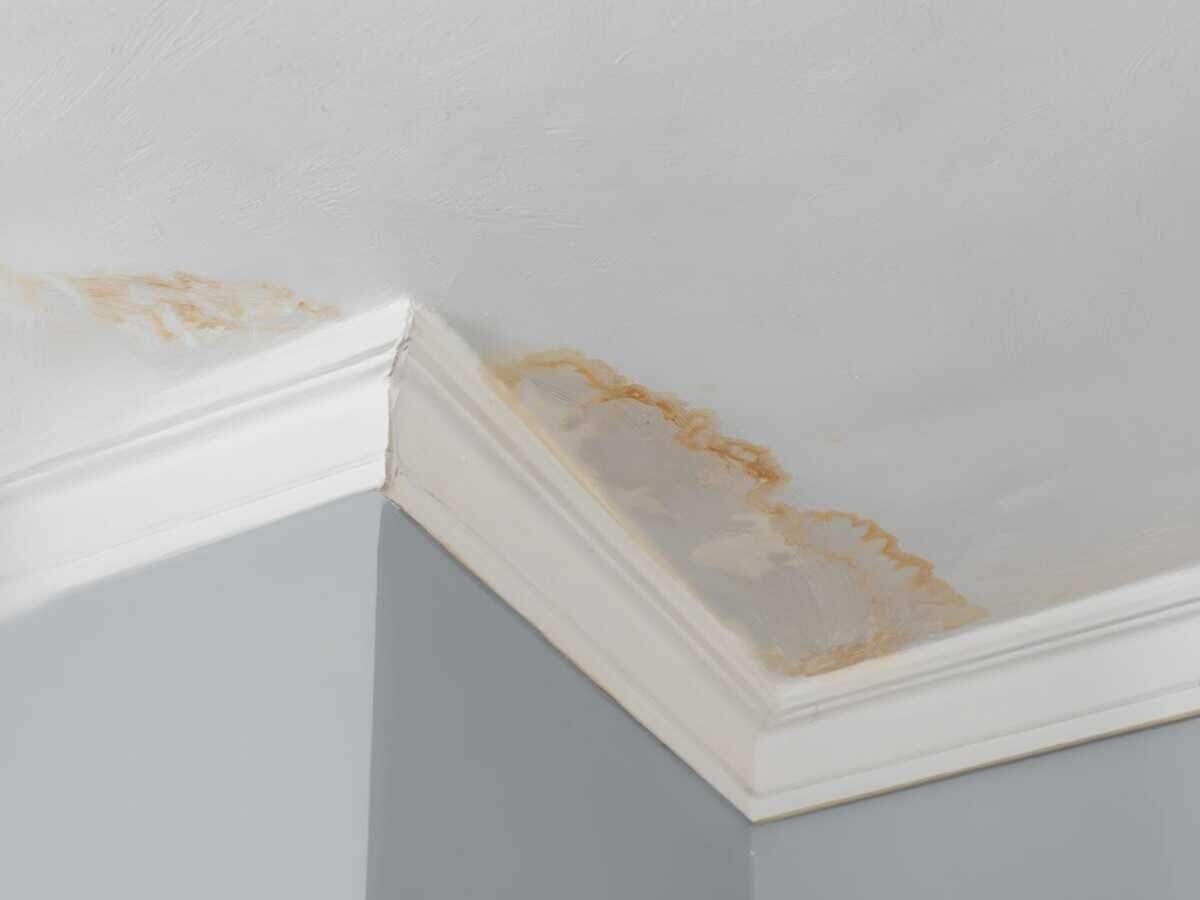
The drip nobody in Austin recognizes
Because houses here have no basements, the air handler lives in the attic directly over a hallway or a closet ceiling, and code makes that installation carry a second drain. When the primary condensate line clogs with the slime it grows every summer, the overflow pan catches the water and sends it out that secondary line, which a builder deliberately terminates somewhere you cannot miss: usually dripping over a front window or the porch. That drip is the cheapest warning a homeowner in this city will ever get. Ignore it through one humid August week and the pan takes on more than the line can carry, and the next thing you see is a ring on the hallway ceiling.
How much ceiling actually comes out
Less than most people expect. Board that is stained but firm, with framing that meters dry above it, stays. A section that sags, feels spongy under a knuckle, or has tape lifting along the seam is carrying water and comes down that day. Wet blown-in insulation comes out every time, because it packs flat, holds the water against the ceiling, and will not dry in place under any amount of air. Then the bay gets air movers and a dehumidifier and a reading each day until the joists meter the same as the framing in a bedroom the water never reached. Only after that does new board go up.
Matching what is already up there
The rebuild is where ceiling repair gets judged, because a patch that sits flat in a knocked-down plane reads as a scar from the doorway. Most production homes across the metro carry a hand-applied knockdown or orange peel, which is matched with a hopper and a knife rather than a bucket and a hope. On a small plane, or one that a window rakes light across, we texture the whole plane instead of the patch so there is no line to find. Popcorn is its own conversation: acoustic texture sprayed before about 1980 can contain asbestos, so on a stained popcorn ceiling in an older Allandale or Windsor Park house, it gets tested before anyone scrapes anything.

When the water is coming through the roof
A roof source changes the order of the work rather than the work itself. Rain arrives again with the next line of storms, so the ceiling cannot close until the roof is sealed, and the wet footprint upstairs is usually far larger than the ring downstairs. That upstairs half, the decking, the framing and the insulation, is covered on our roof water damage repair page. A condensate or plumbing source is the simpler case: once the valve is shut the loss stops growing, and the whole job is drying and rebuilding what is already wet.
One thing worth knowing before you call anyone. A drywall contractor will happily patch the hole, whereas a ceiling water damage repair company reads the cavity first and can show you it was dry before the board went up. Ask whoever you call what they do with the wet insulation, how they decide the framing is dry, and what you get on paper at the end. Austin Flood & Leak Restoration photographs the ceiling before the first cut and again with the cavity open, because a stain in a photo proves very little and a wet joist proves the loss. Your carrier decides what the policy covers, and our insurance claims page explains how that part runs. Call (512) 271-5099 at any hour, or start with the full water damage restoration overview if the water reached more than the ceiling.
Frequently asked questions
The stain is small and the ceiling feels dry. Do I need anyone?
Maybe not, and a meter settles it in ten minutes. Minor ceiling water damage is a real category: a tub upstairs that overflowed once, dried out on its own over a week, and left a ring. If the board and the framing above it read dry and the stain has not changed size since you first noticed it, the fix is a stain-blocking primer and paint. What you do not want to do is paint over a stain that grew between two looks. That one is still being fed, and paint on it buys about three weeks.
How much of the ceiling has to come out?
Only what is compromised or in the way of drying the cavity, and the meter draws that line rather than the eye. A firm sheet with dry framing above it stays put. A sagging or spongy section comes down the first day, because a soaked sheet fails at the fasteners without much warning and nobody should be under it when it does. Sometimes we open a narrow strip along a joist bay to get air where the water traveled, which is not the same as replacing a ceiling. Every cut has a reading behind it, and we show you the readings.
Will the patch match the rest of the ceiling?
That is the part we plan around from the first day. Knockdown and orange peel are matched by spraying the new area, letting it flash off, and knocking it down at the same angle as the existing texture, then feathering the edge well past the patch. Where a plane is small or a window rakes light across it, we retexture the whole plane so there is no seam to find. Popcorn ceilings get tested for asbestos before anything is disturbed if the house predates the early eighties. Everything is primed with a stain blocker, since a water ring bleeds through fresh latex within weeks.
The water is coming from the upstairs bathroom. Do you fix the pipe too?
We stop it and a licensed plumber repairs it. In practice that means we shut the fixture valve or the main when we walk in, open the ceiling to see what is actually leaking, and often have a plumber working in the same hole within the hour while our crew sets drying equipment in the room below. Keeping the two trades on separate invoices is also how your adjuster expects to read the file: the plumbing repair is one line, the water damage to the ceiling is another.
Documented to claim standard from the first hour
We document the loss to claim standard from the moment we arrive: dated photos, moisture readings by room, and a line-item scope that maps to your policy. Then we bill your insurer directly for the covered work, so you handle the deductible.
See how claims work in TexasAreas We Serve Across the Austin Metro
Local response across Travis, Williamson, and Hays counties.
Do not paint it yet
Call (512) 271-5099 and describe the stain: how big, how fast it grew, and what sits above that room. Austin Flood & Leak Restoration takes ceiling calls at any hour, and the crew that dries the cavity is the crew that hangs the new board.