Burst & Frozen Pipe Water Damage in Austin, TX
The line splits at four in the morning and nothing happens, because the ice is still plugging the hole it just made. It lets go the next afternoon while the house is empty. By the time somebody walks in, the water has been running for hours.
- We bill your insurer directly
- IICRC-certified crews
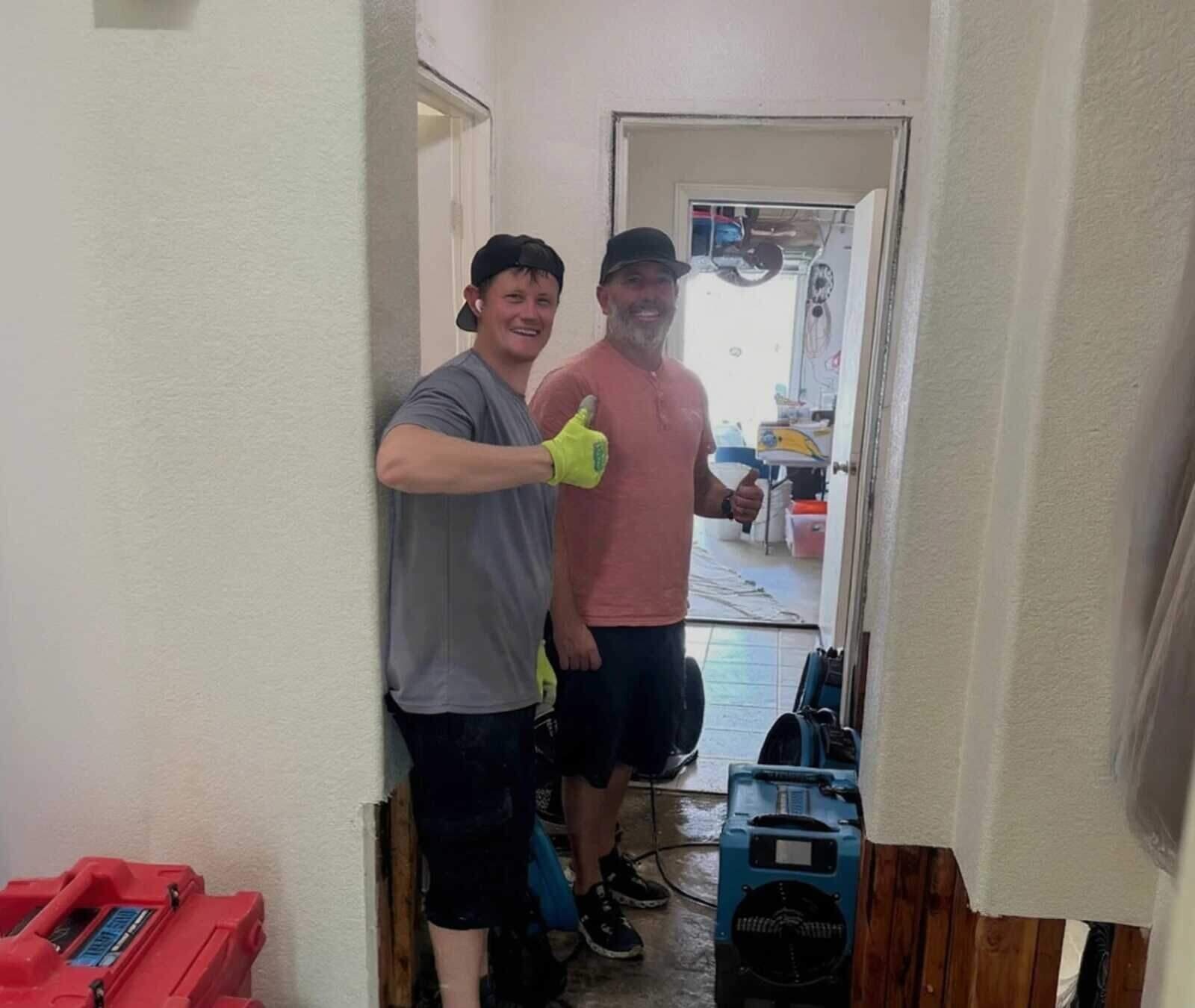
A local crew that shows up and does it right




The breaks that put water inside the walls
Plumbing in Central Texas runs through space nobody heats, because eleven months of the year that is fine. Two nights in the twenties is all it takes to change that. These are the calls we run across the Austin metro.
Freeze splits in unheated space
Attic runs, garage walls, and the stub of pipe behind an exterior spigot. Copper splits along its length; PEX usually lets go at the fitting instead.
Supply lines still under pressure
An open half-inch line moves a few hundred gallons an hour and keeps moving until somebody finds the meter. Most of that water goes somewhere you cannot see it.
Failures the cold had nothing to do with
Water hammer damage works joints loose over years, and a braided washer hose or an ice-maker line can go with no warning at all. Same water, same cleanup.
Stop the water, then start the record
Shut it off first and worry about the mess second. If it is safe to move around the house, this is the order that limits the damage, and it happens to be the order that makes the claim easy to prove:
- Shut the main at the meter box by the curb, house side of the meter. If the break is on a hot line, the valve on top of the water heater kills it faster than a walk to the street.
- Kill the breaker for that part of the house before you step into standing water near outlets or under a dripping light fixture.
- Open the lowest faucets once the main is closed, inside and outside, to drain the pressure and the water still standing in the lines.
- Photograph it before you move anything, the split pipe included if you can see it, then call (512) 271-5099. That first set of photos is what the insurance claim gets built on.
How we get the water back out
A freeze break leaves most of its water inside the structure, so the job is mostly a search. We map where it went before we open anything up.
Map It
Thermal camera first to find the cold, wet zones, then pin and pinless meters to confirm what is actually wet and how far it traveled from the break.
Open It
Controlled openings only where the readings call for them: baseboard off, a port at the bottom plate, wet batt insulation pulled out through it.
Dry the Cavity
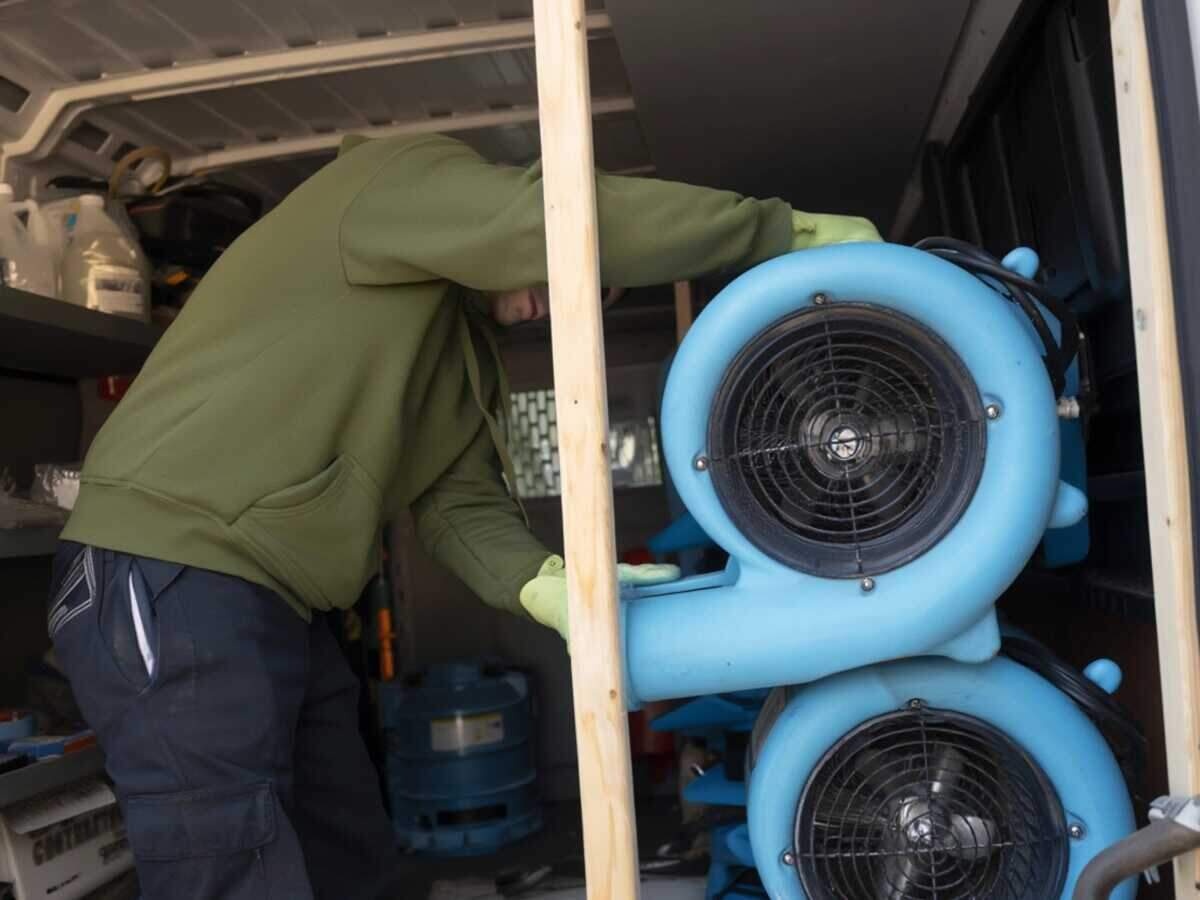
Dry air pushed behind the drywall through those ports while LGR dehumidifiers pull the moisture back out of the room instead of leaving it to wander.
Prove It, Then Rebuild
Daily readings against an unaffected room. The equipment leaves when the numbers match, and the rebuild starts after that, not before.
What a hard freeze does to an Austin house
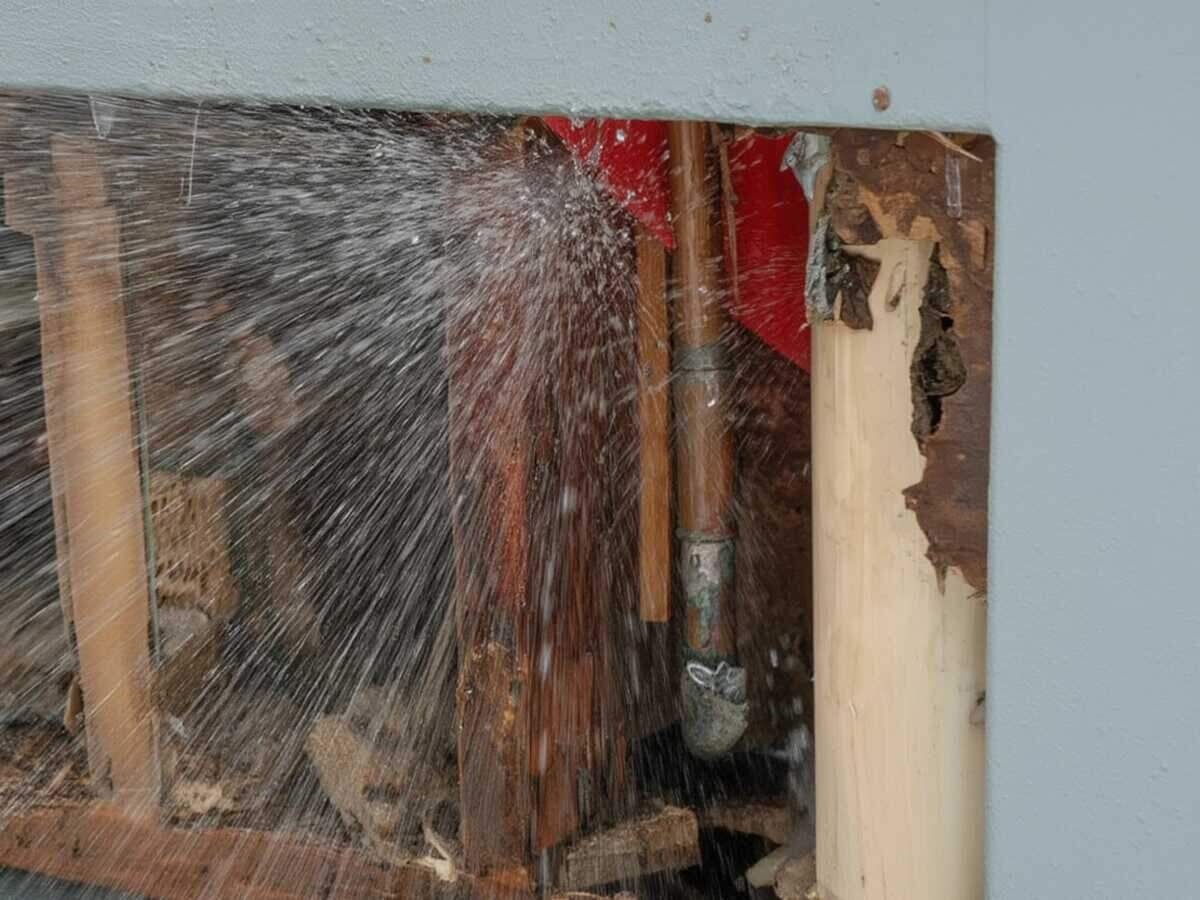
Burst pipe water damage is a hidden-water problem more than a standing-water problem. The puddle on the floor is the part you can see. The rest went into the bottom plate of the wall, the batt insulation, and the subfloor, and it will sit there for weeks if nobody reads it with a meter. We take the water side of these calls, from extraction through drying and the water damage restoration that closes them out. Making the pipe hold pressure again is the plumber's trade, a separate crew and a separate invoice.
It does not take a record freeze, just a long one
Houses here are built for August. Attic runs get no insulation, hose bibbs are rarely frost-proof, and the garage wall carrying the cold-water line is not conditioned space. Everyone in this metro dates their plumbing to February 2021, and the storm that taught us more was the ice at the start of February 2023. It never got as cold as Uri did. What it did was load the live oaks with ice until limbs came down across power lines, and parts of the metro sat without electricity, and so without heat, for most of a week with the temperature parked near freezing. An unheated house freezes from the inside out. That is the pattern we plan our winters around now.
The break shows up on the thaw
Our freezes are short. It drops below freezing overnight, holds through the morning, and by mid-afternoon the thermometer is back over forty. That rhythm is why so many of these calls come in during business hours rather than at three in the morning: the pipe splits while it is frozen, and its own ice plugs the hole until the thaw pulls the plug out. Frozen pipe water damage caught on that first afternoon is a fraction of the job it becomes two days later, so the hours right after a freeze are worth spending on a walk through the house.
Where burst pipe cleanup starts and stops
Burst pipe cleanup covers the water and everything it reached: extraction, wet material out, cavities opened and dried, contents lifted off the floor and blocked, and the daily readings that prove the structure came back to dry. It does not cover the pipe itself. We work alongside whichever plumber you use, or hand you a couple of numbers if you do not have one, and the two crews share the day so the repair is not waiting on the drying or the reverse. What follows is the rebuild: insulation, drywall, texture, trim, paint, flooring. Most homeowners here call a plumber first and a restoration company second, and by then the wall has had a day to wick, which is the difference between drying a bottom plate and replacing it.
Frozen pipe damage and what your policy does with it
A sudden burst is the kind of accidental loss homeowners policies are written for, and Texas carriers handled an enormous wave of them after 2021. Two things shape how yours goes. Many policies exclude freeze damage in a home that was left unheated and unattended, which is the reason insurers keep telling you to leave the thermostat up when you travel in January. And every policy puts a duty on you to mitigate, meaning you are expected to stop the loss and get drying started rather than wait days for an adjuster to walk it. We document from the first hour: dated photos, moisture logs room by room, and a scope showing the hidden water we found and what it took to dry. Your carrier decides what your policy covers. Our insurance claims help page shows what that file looks like, and the contact page reaches a technician at any hour.
Questions we hear after a freeze
The plumber already fixed the pipe. Do I still need you?
Usually, and how long the water ran decides it. A repaired pipe stops the source and does nothing for the water sitting in the wall cavity, under the flooring, or in the ceiling insulation. Drywall wicks upward from the bottom plate whether or not the surface feels dry, and in a closed-up house that stays wet long enough to grow mold. Ten minutes with a meter settles which situation you have, and we would rather tell you it is fine than leave equipment you do not need.
What do I do in the first few minutes?
Main off at the meter, breaker off for that part of the house if water is near outlets, then open the lowest faucets to drain the lines. Photograph everything before you move it. Then call us. If you cannot find the shutoff we will talk you to it on the phone, and a crew loads out while that call is still going.
Does insurance cover burst or frozen pipe damage in Texas?
A sudden burst is typically covered, since it is exactly the accidental loss a policy is built around. Slow leaks that were ignored for months are a different conversation and often fall outside it, and the unheated, unattended house is the freeze exclusion to read your own policy for. We document the loss to claim standard and bill your carrier directly for the covered work. Where we think a piece of the job lands outside coverage, you hear it from us before we start rather than on the invoice.
How do you dry a wall without tearing all of it out?
Ports rather than demolition, whenever the readings allow it. We pull the baseboard, drill a row of small holes into the cavity behind it, and push dried air in through hoses while dehumidifiers pull the moisture out of the room. Insulation is the exception: wet batt and blown-in hold water against the framing and cannot be dried in place, so those sections get opened. The meter decides what we cut, and we photograph it before and after so nobody has to take our word for it.
My pipes froze but nothing burst. Am I in the clear?
Not until it thaws and you have checked. A line can split while it is frozen and hold, because the ice is the plug, then start running hours later once the line clears. When water is flowing again, walk the ceilings under attic runs and feel along exterior-wall baseboards for a cold, damp patch. A split that has not surfaced yet often shows up as a stain the size of a hand that was not there the night before.
Documented to claim standard from the first hour
We document the loss to claim standard from the moment we arrive: dated photos, moisture readings by room, and a line-item scope that maps to your policy. Then we bill your insurer directly for the covered work, so you handle the deductible.
See how claims work in TexasAreas We Serve Across the Austin Metro
Local response across Travis, Williamson, and Hays counties.
Get the wet cavities open and drying
Call Austin Flood & Leak Restoration as soon as the main is off. A local crew maps where the water actually went with a thermal camera and meters, dries the cavities instead of guessing at them, and hands you and your adjuster the readings behind every cut. A technician answers day or night.