Appliance & Water Heater Leak Cleanup in Austin, TX
Pull the dishwasher out and the kick board comes with it, soft as wet cardboard. Appliance leaks work slowly, behind the one thing in the kitchen nobody ever moves. We pull the unit, read the cabinet and the wall behind it, and dry what the machine was hiding.
- We bill your insurer directly
- IICRC-certified crews
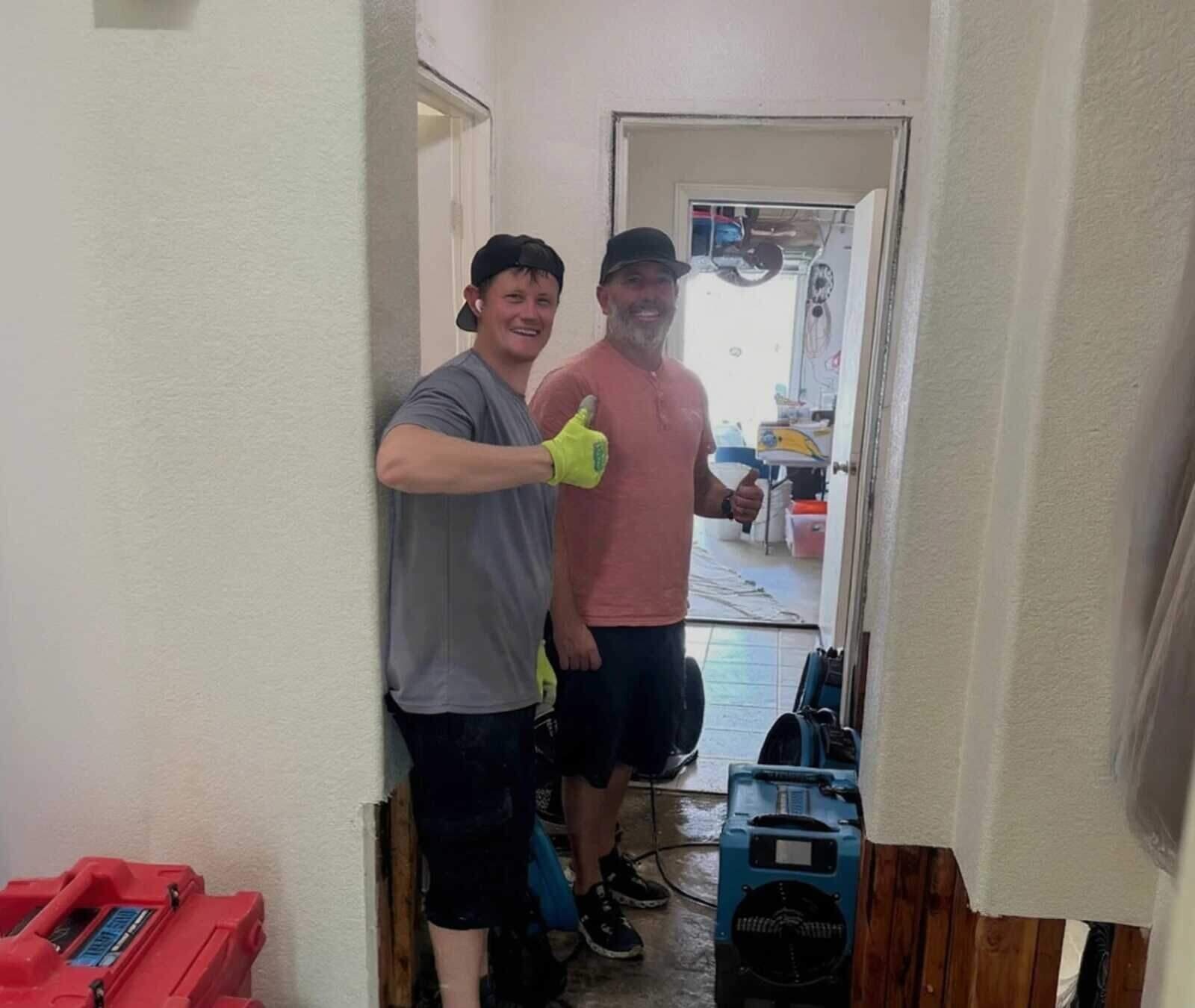
A local crew that shows up and does it right




The four machines that flood Austin houses
Every one of them holds pressure or makes water, and every one of them sits where you cannot see the floor. These are the calls, roughly in the order we get them.
Water heaters
Forty to fifty gallons in a tank that, on a slab-built house, often lives up in the attic. When the bottom seam finally rusts through, that load comes down through a ceiling.
Washer hoses
The line behind the machine holds street pressure every hour of every day, including the ones you are at work. When it splits it does not drip, it sprays.
Dishwashers & under-sink lines
A weeping angle stop or a tired door gasket runs into the cabinet floor. The first sign is a toe kick that has gone dark and soft, months after it started.
AC condensate & ice-maker lines
An air handler makes gallons of water on a hot day, and a fridge line runs thirty feet under the flooring. Both fail slowly enough that the damage beats the puddle.
The tank overhead and the pan under it
With no basement to put it in, the water heater in most of this metro went up into the attic, over a hallway or a bedroom closet. Code makes that installation sit in a drain pan piped to the outside. Here is what that pan does and does not do for you:
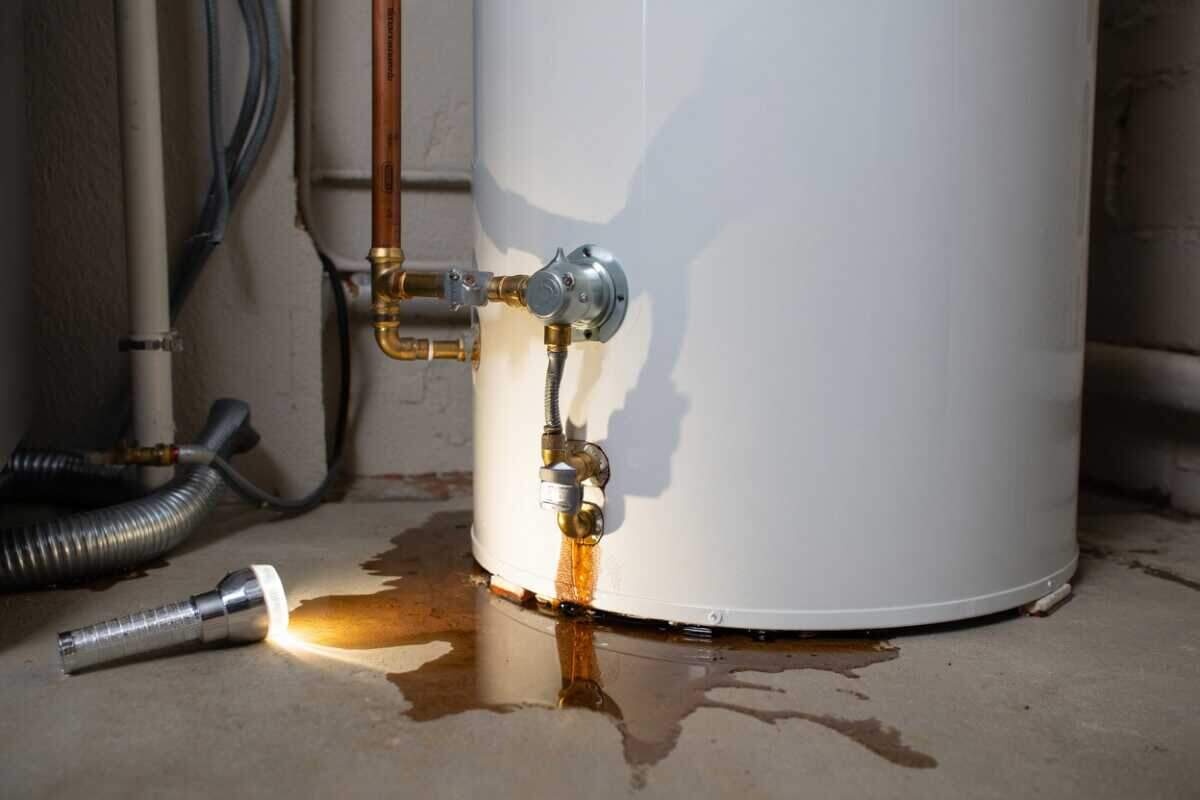
- A pan is built for a drip, not a rupture. It carries a weeping fitting or a relief-valve dribble. A tank that splits comes over the rim in about a minute.
- The pan line has to actually go somewhere. We find them disconnected in the attic, dry-fitted, or packed with insulation dust, which means the pan quietly fills and then spills.
- Standing water in the pan is a warning, not a nuisance. It means the tank or a fitting is already going, and you have days to weeks, not years.
- A garage tank is lower, not safer. The same fifty gallons run along the slab and into the wall the garage shares with the house, then up the bottom plate.
Stop it, move it, dry behind it
Nothing under a dishwasher or behind a heater dries with the machine still parked on top of it, so the unit comes out early and stays out until the readings say otherwise.
Kill the Supply
Cold inlet valve at the heater, angle stop under the sink, or the main for the house. Then the power or gas, so nothing is heating an empty tank.
Pull the Unit
The machine comes out to the middle of the room and we get eyes and a light on the cabinet floor, the wall, and the flooring behind it.
Extract and Map
Standing water first, then a meter and a thermal camera to trace how far it ran under the flooring and up the framing.
Dry and Document
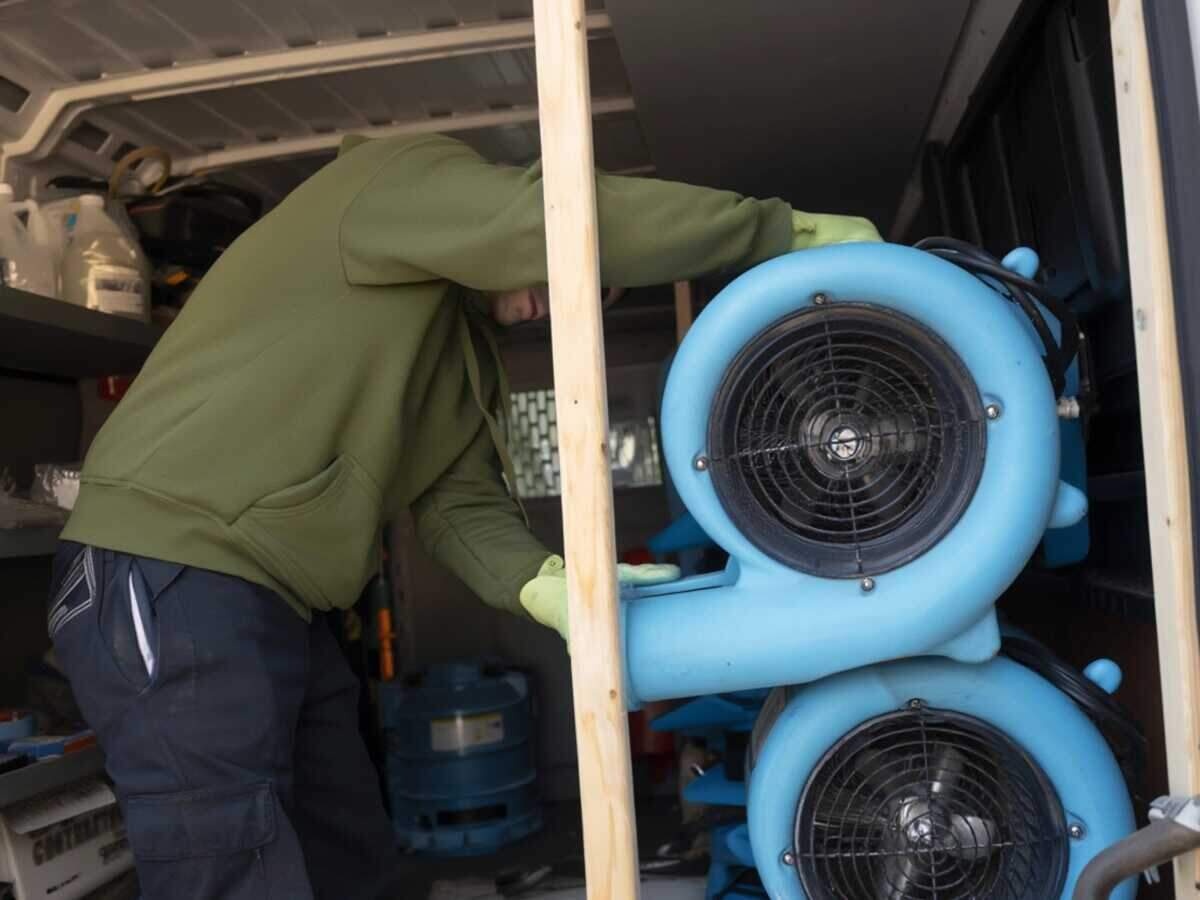
Air movers into the kick space, dehumidifier in the room, a reading logged daily, and photos of the failed part for the claim file.
Where water heater damage actually goes
Water heater damage is rarely about the heater. A plumber sets a new tank in an afternoon. What takes a week is everything the old one soaked on its way out: the ceiling under the attic platform, the closet wall, the bottom plate behind it, and the flooring two rooms away that nobody connected to the heater at all. Our part starts where the plumber's ends, and it is the part your policy is usually most interested in.
Two things make this a distinctly Central Texas job. The first is the location. Slab construction left nowhere at ground level for a tank, so it went into the attic on a platform, which means gravity is on the water's side from the first second. The second is the water itself: Austin's supply comes off the Highland Lakes through limestone country and it runs hard, so scale settles into the bottom of a tank and holds heat against the steel until the seam gives. That is why tanks around here rarely make it much past a decade, and why rust-brown water pooling at the base of one is not a slow drip you watch for a while.
The cabinet under the kitchen sink
Under-sink plumbing is the most ignored assembly in the house and the source of a steady share of our calls. An angle stop that weeps a teaspoon an hour, a slip joint on the disposal that shifted when someone slid a bucket past it, a braided line that has been flexed once too often: none of it announces itself, because the water runs down the back of the cabinet floor where the trash can hides it. By the time water damage under a kitchen sink is visible, the particleboard base has already wicked it edge to edge, the toe kick is dark, and there is usually a wet stripe under the flooring heading out toward the island. We dry the cabinet with a directed air mover and read the floor and wall behind it, then replace the base panel when it has lost structure, since swollen particleboard never comes back.
The air conditioner makes its own water
An Austin air handler pulls water out of the air all summer and pipes it away as condensate, and that drain line grows a slime that eventually plugs it. What is supposed to happen next is that a float switch in the pan senses the backup and shuts the system down, which is the cheap outcome: no cooling for an afternoon and a service call. When there is no switch, or someone bypassed one to keep the AC running through a July weekend, the pan overflows instead. AC water damage looks different from a burst line because it arrives on a schedule, an hour or two at a time, day after day, into the same square foot of insulation and drywall. That is also why it grows mold more often than a sudden failure does, and why we pull the wet insulation instead of drying around it.
What your adjuster will ask about an appliance leak
Carriers read appliance losses through one question: was this sudden, or has it been happening. A washer hose that split on Tuesday and a dishwasher that wept for two years produce similar-looking wet cabinets and very different claim files. So we photograph the failed part before it goes anywhere, bag it if it is small enough to keep, note the corrosion or the split in the scope, and log moisture readings by room every day the equipment runs. We document the loss and bill your carrier directly for covered work; the carrier decides what the policy covers, and our insurance claims page walks through how that plays out in Texas. If the leak ran long enough to grow something, the mold removal crew is the same company, not a referral, and a bigger loss rolls into full water damage restoration. Call (512) 271-5099 whenever you find it, including at 4 a.m.
Frequently asked questions
My water heater is in the attic and there is water in the pan. How urgent is it?
Urgent enough to get a plumber out this week rather than next month. Water sitting in the pan means the tank or a fitting is already leaking and the pan is doing exactly the job it was installed to do, which it can only do for a small, steady drip. It cannot hold fifty gallons arriving at once. Check whether the pan's drain line is actually running to the outside, and if the pan is full and the ceiling below has a stain or a soft spot, call us too. That water has already been in the drywall for a while.
The tank let go. What do I shut off first?
The cold inlet valve on top of the heater stops the refill, and that is the one that matters most. If it is seized or you cannot reach it safely, shut the whole house down at the main. Then kill the power at the breaker, or close the gas valve, so the burner or the elements are not firing into an empty tank. Move whatever is stored under or near it, stay out of standing water near electrical, and call us. We answer at any hour and usually reach most of the metro within the hour, traffic depending.
The cabinet under my sink is swollen. How far does the damage go?
Almost always further than the cabinet. Water under a sink base runs to the back corner, through the toe kick, and out under the flooring, so the wet area we meter is usually two or three times what you can see with a flashlight. We read the cabinet floor, the wall behind it, and the flooring in a grid out from the leak, then dry from the kick space with directed air. The swollen base panel gets replaced, because particleboard that has delaminated has no structure left even after it dries.
How long does the equipment run, and can I use the kitchen?
Typically three to five days for a contained appliance leak, longer if it got under a wood floor or into a wall cavity. You can use the room. The dishwasher or the washer stays pulled out and the cabinet stays open to the air, the fans are loud, and the dehumidifier will make the room a few degrees warmer. We come back daily to move equipment and take readings, and it comes out when the wet materials match a part of the house the water never reached, not on a fixed number of days.
Documented to claim standard from the first hour
We document the loss to claim standard from the moment we arrive: dated photos, moisture readings by room, and a line-item scope that maps to your policy. Then we bill your insurer directly for the covered work, so you handle the deductible.
See how claims work in TexasAreas We Serve Across the Austin Metro
Local response across Travis, Williamson, and Hays counties.
The machine can wait. The wall cannot.
Call (512) 271-5099 and tell us which appliance it was and roughly how long it ran. Austin Flood & Leak Restoration answers around the clock, and the crew pulls the unit, reads what is behind it, and leaves drying equipment running the same visit.