The line a Texas policy draws
One question decides most water damage insurance claims in Texas: did this happen suddenly, or did it happen slowly. A supply line that let go, a washer hose that split, a water heater that dumped its tank, a toilet that overflowed while nobody was home, all of those are the sudden and accidental events a standard homeowners policy is written to pay for. A shower pan that wept into a wall for a year, or a drip under a sink that quietly rotted the cabinet floor, is the kind of long-term seepage most standard policies exclude by name.
The awkward cases live in the middle. A pinhole in a copper line inside a wall can run for three weeks before a baseboard darkens, and nobody in the house did anything wrong. How that one lands depends on the exact wording of your policy and on what the material shows when it comes out. Rust lines, layered staining, and established growth read as time. Clean framing, fresh water, and one failed fitting read as an event. That is why the evidence gets collected before the demolition, not after.
We are not the ones who make that call, and it is worth being blunt about it this early on the page. What Austin Flood & Leak Restoration does is document the loss in detail, with dated readings taken at marked points. Your carrier decides what your policy covers.
What decides it is what you can prove
Photograph the loss before anything moves. That is the single highest-value thing a homeowner does, and it takes two minutes. Wide shots of each affected room, then close shots of the water line on the wall, the soaked flooring, the failed part, and the serial plate on the appliance if there is one. Keep the broken hose or the split fitting in a bag. An adjuster cannot pay for damage that was already cleaned up and hauled off before anyone looked at it.
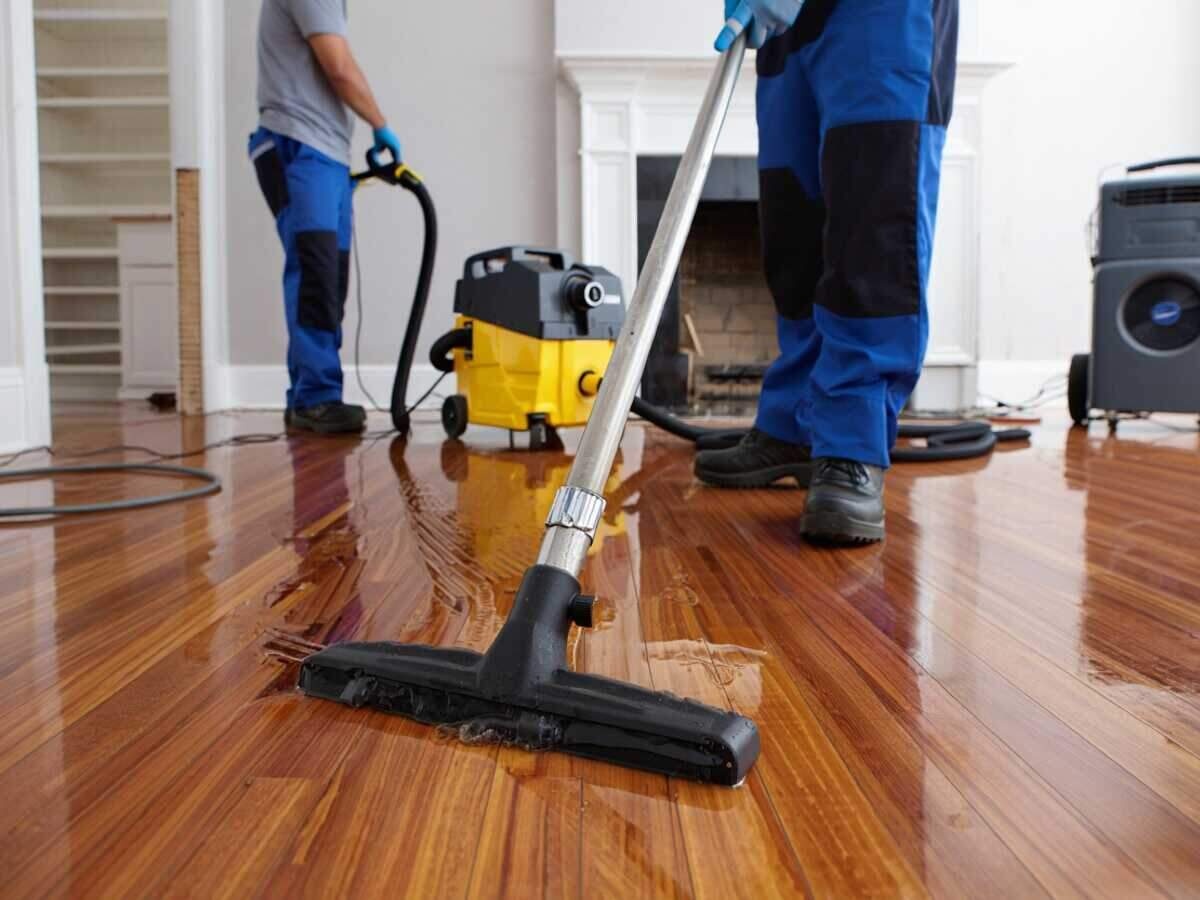
Our file starts where yours stops. Before a crew touches anything we photograph the rooms as found, then meter the walls, the framing, the flooring, and the slab, and mark where each reading was taken so the same points can be read again. The water gets a category and the intrusion gets a class, because both drive what the scope is allowed to include. From there it is a daily log: readings at marked points, equipment count, temperature and humidity, until the materials hit dry standard. What an adjuster ends up holding is a scope tied to numbers that moved over time, rather than a flat estimate with nothing behind it.
Three homeowner habits that quietly decide line items:
- Write down the timeline the day it happens. When the water started, when you found it, when it was shut off, who you called. Memory blurs in a week and the timeline is what separates sudden from gradual.
- Keep the receipts for anything you buy. Fans, a wet vac rental, a hotel night if the house is unlivable. Some of it may fall under a policy line you did not know you had.
- Do not throw the damaged contents out yet. Photograph them where they sat, then set them aside. Contents are settled on a different part of the policy from the building, and they need their own list.
Where a standard Texas policy usually stops
Four exclusions account for most of the water claims in Texas that do not get paid.
Long-term seepage. Damage that built up over weeks or months is generally treated as maintenance rather than an accident. Carriers read the material for evidence of duration, which is exactly why the photos taken in hour one matter more than the ones taken on day four.
Water that came in from outside. Rain that pushed under a door, or a creek that came up into the yard and then into the house, is a flood loss. A homeowners policy does not touch it. That claim lives on a separate flood policy, and if nobody bought one there is nothing to file. A pipe failing inside your wall is not flood, no matter how much water ends up on the floor, and the two get confused constantly.
Mold, past a limit. Texas is a special case here, and the history is local. A mold claim on a Dripping Springs house went to a Travis County jury in 2001, the verdict made national news, and within about two years carriers across the state had rewritten how mold is handled. Since then most standard Texas homeowners policies carry a mold sub-limit or move mold onto an endorsement rather than paying it as ordinary covered damage. Mold that grows on material soaked in a covered loss is usually treated better than mold that grew out of a leak nobody addressed, but the sub-limit still applies. Check the number on your declarations page before you need it. Our mold removal page covers the work itself.
Sewer and drain backups. Water coming up through a floor drain, a tub, or a toilet is usually excluded unless you carry a water backup endorsement. It is one of the cheaper add-ons on a homeowners policy and one of the most commonly declined, generally because nobody explained what it was. If you have an older lateral and mature trees over it, it is worth a call to your agent. The sewage cleanup page explains why that category of water costs what it does.
Renters, condo owners, and who owns which part
Renters insurance covers water damage to your belongings, not to the building. If a supply line in the unit above yours fails at 2 a.m., your renters policy is what replaces the soaked mattress, the rug, and the laptop, subject to your deductible. The structure is the landlord's problem on the landlord's policy. Your carrier may then go after the responsible party's insurer to recover what it paid you, which is normal and takes months, and it happens without you doing anything.
Condo owners have a seam to find. The association's master policy covers the building envelope and usually the common elements; an HO-6 unit policy covers what is inside your walls, and where exactly the line falls is written into the association's declaration, not into your policy. Ask the management company for the current declaration page before you file, because condo insurance coverage for water damage is where two adjusters can each reasonably say the other one owns it. When the water crossed from one unit into another we meter both sides and document them separately, so each file has its own numbers.
Your deductible, and whether filing is worth it
Do the arithmetic before you file. If the whole job comes to $2,800 and your deductible is $2,500, filing buys you three hundred dollars and puts a water claim on your record. If the job comes to $18,000, you file, and it is not a close question. Water claims are among the ones carriers watch, and a second one within a few years can affect what renewal costs you or how the risk gets rated. Nobody at an insurance company will volunteer that, so it is worth saying here.
Two things to check on your declarations page while you are deciding. First, the water deductible is usually a flat dollar amount rather than the percentage deductible many Texas policies apply to wind and hail, so read which one governs. Second, look for the loss-of-use line, which pays for somewhere to sleep when the house is not livable and is frequently forgotten in the middle of a bad week. We will give you our scope number before you decide whether to open a claim, so the decision is made with a real figure in hand instead of a guess. The restoration cost page explains how that number gets built.
Mitigation and repair are two separate line items
Emergency mitigation and reconstruction are billed as two scopes and often settled at two different times. Mitigation is the extraction, the removal of unsalvageable material, the drying, and the documentation, and carriers generally expect it to start immediately, because a policy obliges you to prevent further damage rather than wait for an inspection. Waiting several days for an adjuster before anything gets dried can enlarge the loss and weaken the claim at the same time. Our emergency water damage page covers what the first visit gets done.
Reconstruction is the second scope: drywall, texture, paint, trim, flooring, cabinets. It is written after the structure reads dry, priced as its own estimate, and approved by you. When drying opens a wall and reveals more damage than anyone could see on day one, that goes to the carrier as a supplement with the readings and photos attached. Keeping the two scopes apart is what keeps a supplement from looking like an argument. Our water damage restoration page shows how the two halves fit together on one job.
What the adjuster does, and what we do
A water damage insurance adjuster works for the carrier. They inspect the loss, write a scope of what they believe it takes to repair it, and price that scope against the carrier's schedule. They are not your opponent and they are not your advocate; they are applying a policy to a set of facts. Which means the facts you hand them determine most of the outcome.
Our part is narrow and we keep it that way. We walk the adjuster through every affected area, including the parts a visual inspection misses, hand over the moisture logs, the marked reading points, the photographs, and an itemized scope, and answer questions in writing so there is a record. When a first estimate leaves out the drywall behind a cabinet run or the subfloor under tile, the readings are what make the case to include it. We do not decide coverage, we do not file the claim for you, and nobody here can promise you an outcome a carrier controls. Anyone in this trade who tells you otherwise is selling something they do not own.
Public adjusters are a different animal and worth knowing about. A public adjuster is licensed in Texas, works for the policyholder rather than the carrier, and takes a percentage of the settlement. On a large, genuinely disputed loss that can be money well spent. On a straightforward one-room claim it usually is not. We are not public adjusters and we take no share of your settlement, so the recommendation costs us nothing either way.
If the offer does not cover the scope
Ask for the reason in writing first. A carrier that denies or underpays has to tell you which policy provision it relied on, and that sentence tells you what you are actually arguing about. From there, most Texas homeowners have three paths, and they are not exclusive.
- Send the documentation back. An itemized contractor scope with moisture readings attached answers a low estimate better than a phone call does, and it is the cheapest step by a distance.
- Look for the appraisal clause. Many Texas policies include one: each side hires an appraiser, the two select an umpire, and the resulting decision on the amount is binding. It settles how much, not whether the loss is covered.
- File a complaint with the Texas Department of Insurance. Free, and it puts the handling of your file in front of the regulator that licenses the company.
We supply the readings, photographs, and itemized scope for whichever route you take, and the contact page has every way to reach us for a copy of the file. None of this is legal advice, and a coverage dispute worth real money is worth an hour with a Texas attorney who does this work.
Wet right now and the claim is not open yet? Call first and let the loss be photographed and metered as found. The documentation is far harder to build after the cleanup.
Call (512) 271-5099Questions we get about water damage claims
Will my homeowners insurance cover this?
If the water arrived suddenly and by accident, most standard Texas homeowners policies are written to pay for it: a burst supply line, a failed washer hose, a ruptured water heater, an overflowing fixture. If it seeped for months, most policies exclude it as maintenance. The honest answer for anything in between is that it depends on your wording and on the evidence, and the person who decides is your carrier, not your restoration crew. What we can do is document the loss thoroughly enough that the decision gets made on facts.
Should I file a claim at all?
Compare the job to your deductible before you call the carrier. If the repair lands anywhere near what your deductible already costs you, filing buys very little and puts a water claim on your record; if it is a five-figure loss, there is nothing to think about. Water claims carry weight at renewal, and a second one inside a few years can move your rate or your eligibility. Call (512) 271-5099 and get the scope number first. You can open a claim the same day if the math says to, and mitigation gets going either way, because the drying cannot wait for the paperwork.
Does renters insurance cover water damage?
Yes, for your belongings, subject to your deductible. Renters insurance water damage coverage handles the furniture, clothing, and electronics ruined when a line upstairs fails or a heater in the wall next door lets go. The building itself is the owner's policy. Photograph everything before you move it, keep the ruined items until they have been seen, and list what was damaged with rough purchase dates. Your carrier may later recover from whoever was responsible, which happens in the background and does not change what you are owed.
Do you handle the claim for me?
We handle the documentation and the billing side, not the claim itself. You open it, you own it, and your carrier decides the coverage. What we do is photograph the loss as found, meter it daily, write an itemized scope, walk your adjuster through the affected areas, and bill the carrier directly for the covered mitigation so you are not fronting the cost of the drying. If hidden damage turns up once a wall is open, we send a supplement with readings attached. What we will never do is promise you a result the carrier controls.
Is mold covered if it came from the leak?
Usually to a point, and the point is a number in your policy. Most standard Texas policies carry a mold sub-limit or handle mold through an endorsement, so growth on material soaked in a covered loss is often payable up to that cap and no further. Mold from a leak that ran unaddressed for months tends to be excluded outright as gradual damage. Check the mold line on your declarations page, and dry fast: the cheapest version of this conversation is the one where nothing had time to grow.