Roof Water Damage Repair in Austin, TX
The storm came through at four in the morning, and by breakfast there is a drip in the hall and a dark patch spreading across the closet ceiling. Most of that water is already in the insulation. We contain it, dry the attic out, and put the inside back.
- We bill your insurer directly
- IICRC-certified crews
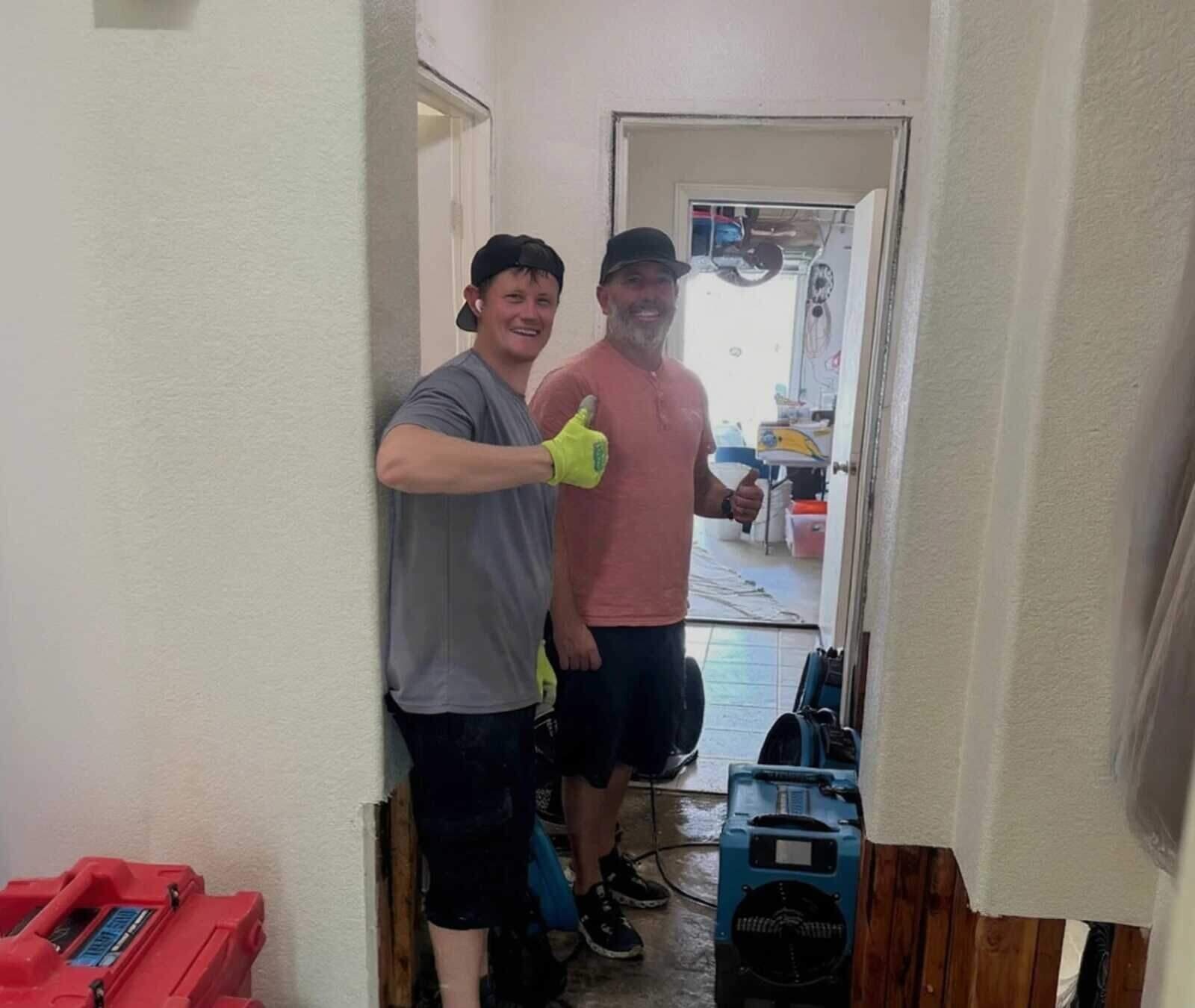
A local crew that shows up and does it right




Where the water goes once it is past the shingles
Rain gets in at one small point and then spends hours traveling. By the time anything is visible from a room, all four of these are already in play.
Decking and rafters
Water runs the underside of the deck and follows whichever rafter it lands on, so the wet footprint upstairs is long, narrow, and rarely over the stain.
Blown-in insulation
A foot of cellulose or fiberglass takes on water like a sponge, packs flat under the weight, and then holds it against the ceiling board. None of it dries in place.
Ceilings and top plates
The drip finds the low point of the framing, comes through a joist bay, and tracks into the top of a wall. That is how a bedroom two rooms over gets wet.
Growth on the sheathing
A leak that ran quietly through a warm month grows on the underside of the decking and the face of the framing, out of sight until someone goes up there.
We dry the house, a roofer closes the roof
Austin Flood & Leak Restoration takes the inside of a storm loss, and a licensed roofer takes the shingles, the flashing and the deck. Our half of it looks like this:
- Catch it in the attic first, diverting whatever is still coming in into a pan and a hose so it stops loading more ceiling while the rain lasts.
- Wet insulation bagged and out, since blown-in that has taken water never returns to depth and keeps the ceiling below it damp for weeks.
- Decking, rafters and top plates dried on daily meter readings, not on how the attic feels to whoever last stuck their head through the hatch.
- Checked for growth before we close, because warm sheathing plus a week of damp is where our mold removal crew usually gets called next.
The order we work it in
The order is not arbitrary. Every hour the attic stays loaded, more of the ceiling under it stops being something we can dry and starts being something we replace.
Stop the Inside
Divert the active drip, cover and move what is under it, and contain the rooms so the water stays in one place.
Read the Attic
Meter and infrared map the real wet area across the deck, the joists and the ceilings, which always outruns the stain.
Strip and Dry
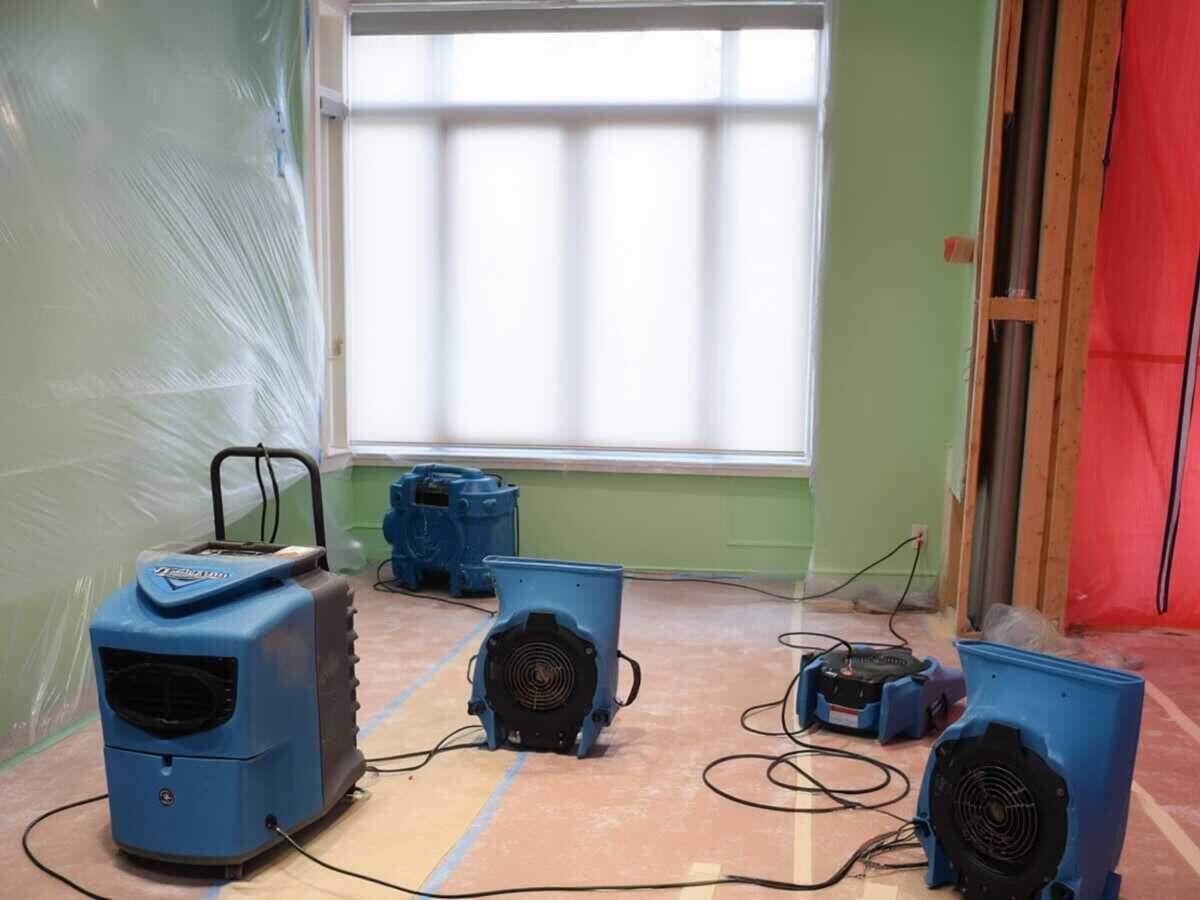
Soaked insulation stripped out, air movers on the framing, dehumidifier holding the space, readings logged daily.
Insulate and Rebuild
Insulation blown back to depth, ceilings and finishes restored, and your adjuster gets the scope with the readings attached.
The leak is on the roof, the damage is in the attic
Roof water damage repair, the part we do, is everything the leak did once it was inside: the attic, the insulation lying on your ceilings, the decking and rafters, and whatever wall the runoff found on the way down. The roof itself belongs to a roofer, and you will hear that from us on the first call rather than after the estimate. One night of wind-driven rain through a cracked seal can soak a whole run of blown-in insulation, and that run then sits on the ceiling board like a wet towel nobody wrings out.
Two things put most of this metro's roof water inside a house. The first is the rubber boot around a plumbing vent, which is the piece of a Texas roof the sun kills first; the collar splits somewhere in its second decade and rain runs straight down the pipe into the attic. The second is hail. A stone does not have to punch a hole to end a roof's working life. It bruises the mat and knocks the granules off, the bare asphalt bakes through the next summer, and the water damage from a leaking roof turns up in October from a storm that came through in April. Our severe season runs roughly March into June, so those calls arrive on a lag long enough that most homeowners never connect the two.
An attic does not dry itself
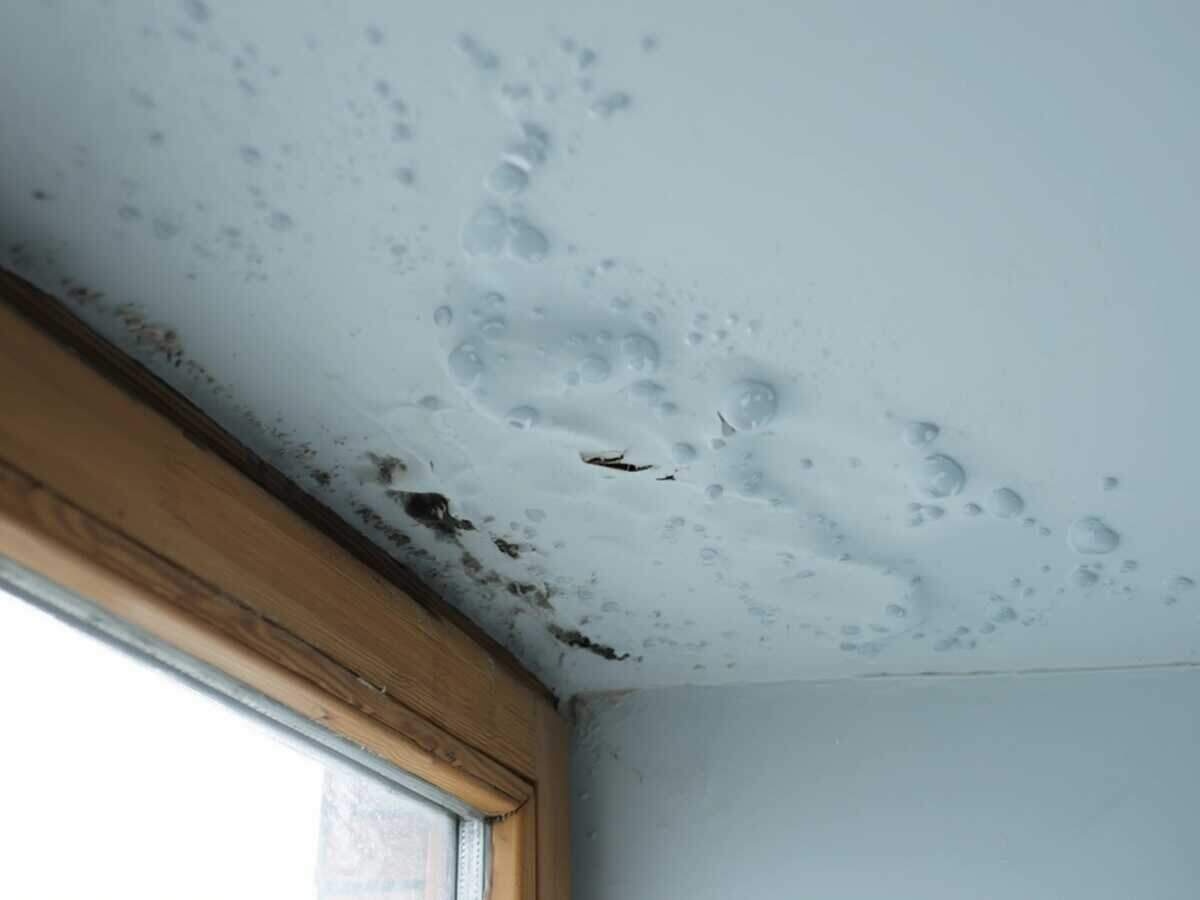
It looks like it should. Air moves through the soffits and out the ridge all day, and by August the space is running past 120 degrees, which is hot enough to dry a wet surface fast. That is exactly the trap. Hot moving air dries the face of the decking while a foot of packed, saturated insulation holds water against the ceiling board underneath it, and the ventilation you cannot switch off keeps feeding humid outside air back into the space. So we take the water out physically instead of waiting: the wet insulation comes out, air movers go in along the rafter bays, a dehumidifier holds a controlled area, and readings are logged in the same spots every day. The deck and the joists have to meter like a section of attic the leak never reached before insulation goes back to depth.
The ceiling under the hole
The ceiling is where roof leak water damage becomes visible and where it becomes expensive. A ceiling under saturated insulation is taking on water long before it shows a ring, and by the time it stains it may already be holding enough weight to fail. On a storm job it is the last surface we close: drywall, texture and paint go back only after the deck, the joists and the top plate read dry. The stain, the sag and the drywall work get their own detail on our ceiling water damage repair page, and on a roof loss we handle both halves as one file.
Two trades, one file for the adjuster
A storm loss usually generates two scopes, and they have to agree. The roofer prices the roof; we price what the water did underneath it. We photograph the attic with the wet insulation still in place, because once it is bagged up nobody can prove how far the water reached, and we record the depth and the area of what comes out, since blowing an attic back to R-38 is a real cost that is easy to leave off a scope. We bill your carrier directly for covered work and flag the pieces we expect to land outside the policy before we start them. Nobody here will promise you a coverage decision that is not ours to make: we document what the water did, and your carrier rules on the policy. That process is laid out on our insurance claims page, and the wider mitigation-to-rebuild workflow sits on the water damage restoration page. Call (512) 271-5099 at any hour, storms included.
Frequently asked questions
It is still raining. Is there anything you can do tonight?
Yes, and this is the call worth making while it is happening rather than in the morning. We can catch and divert the water in the attic before it loads more ceiling, get what is underneath it out of the way, and set containment and drying equipment in the rooms that took it. What nobody should be doing at two in the morning is climbing onto a wet composition roof with a tarp. We coordinate a roofer for the dry-in as soon as it is safe to be up there and work the inside in the meantime.
Do you repair the roof itself?
No. Shingles, flashing and decking are a licensed roofer's trade, and we would rather say that than sub it out at a markup. Our work is everything the leak reached inside: the soaked insulation, the deck and rafters, the ceilings and any wall the water tracked into, plus the rebuild afterward. On most storm jobs the two trades overlap rather than queue. They close the roof while we pull insulation and set equipment, and neither of us puts new material up until the other's side reads finished.
The leak has been going for months. Does that change anything?
It changes the scope, and it can change the claim. Months of slow seepage means the decking and the top of the ceiling board have been damp through a Texas summer, which turns this into a growth question as much as a drying one, and the insulation under the drip line is finished either way. It also matters to your policy: Texas homeowner policies generally pay for sudden and accidental water damage and most carry wording that excludes damage from a leak seeping over a period of days or weeks. We document what we actually find, in both directions, and your carrier makes the coverage call.
I am in a top-floor condo and it came through the roof. Who handles what?
Usually two policies, split along a line your governing documents draw. Condo water damage from the roof normally sits with the association's master policy for the building envelope, while your HO-6 covers the interior of your unit and your belongings. Exactly where that line falls varies by declaration, so we write the scope in a form that can be split cleanly and document the interior loss on its own. Call the management company the same day you call us, because we will need access to the space above the unit, and a shared roof means the water is rarely in only one home.
Documented to claim standard from the first hour
We document the loss to claim standard from the moment we arrive: dated photos, moisture readings by room, and a line-item scope that maps to your policy. Then we bill your insurer directly for the covered work, so you handle the deductible.
See how claims work in TexasAreas We Serve Across the Austin Metro
Local response across Travis, Williamson, and Hays counties.
The rain stopped. The attic did not.
Call (512) 271-5099 and describe what is wet inside: which rooms, and whether water is still coming in. Austin Flood & Leak Restoration runs storm calls through the night, and the truck rolls with meters, air movers and empty bags for the insulation.