Emergency Water Damage Restoration in Austin, TX
The washer hose let go while you were at work, and it has been running down the hall since lunch. A technician here answers at any hour, walks you to the shutoff, and a crew leaves with pumps already loaded.
- We bill your insurer directly
- IICRC-certified crews
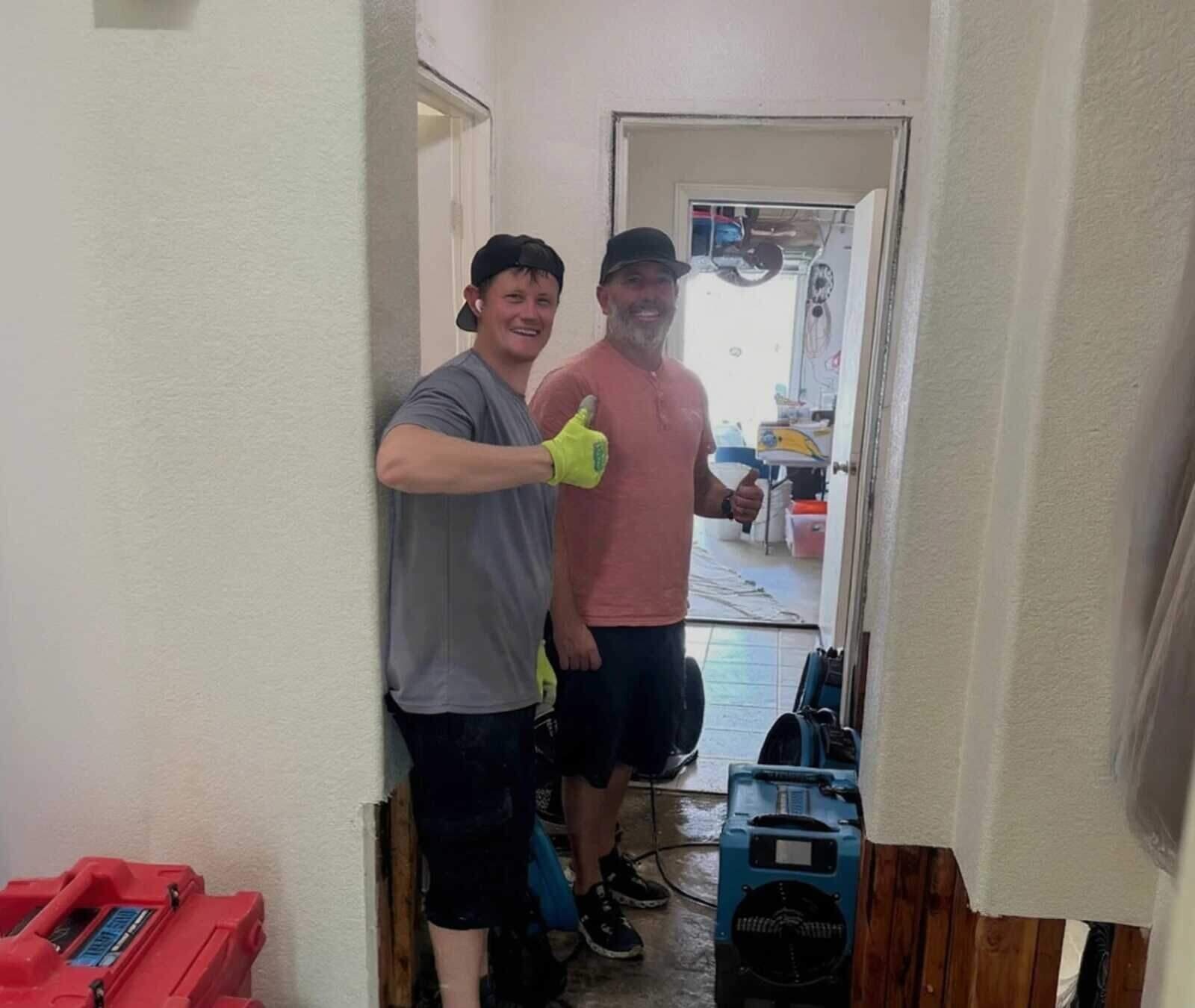
A local crew that shows up and does it right




The calls that cannot wait until morning
Most after-hours calls are one of four failures. The response barely changes between them: stop the source, get the water out, and leave with drying equipment running.
Supply lines & washer hoses
A braided hose or a toilet supply lets go with nobody home. A half-inch line moves several gallons a minute, so one workday soaks the pad in two rooms.
Water heaters & appliances
A corroded tank empties all at once and keeps refilling until the cold-side valve is closed. Dishwasher and ice-maker lines do the same damage quietly, over weeks.
Ceilings letting go
Rain past worn flashing pools on top of the drywall. The brown ring becomes a bulge, and a bulge holding water is heavy enough to drop the sheet. See ceiling water damage.
Sewage backups
A backed-up main is black water, and it is the one emergency where the right first move is to stay out of the room. See sewage cleanup.
First moves before we get there
Two things decide how big this job gets: how fast the water stops, and whether anyone walks into a live room. If it is safe, work down this list.
- Close the water at the fixture valve if you can reach it. If you can't, the whole-house valve sits in the Austin Water meter box out by the sidewalk, on the house side of the meter, under a lid that usually needs a meter key or a long screwdriver to lift.
- Kill the breaker for that room before you step in, any time water is near outlets, cords, or something plugged in.
- Get things up off the floor. Rugs, boxes, and electronics first. A square of foil under a sofa leg keeps the stain out of the wood.
- Photograph the room before anything moves. Your insurance claim rests on what the loss looked like at hour one, not on what it looked like after you cleaned up.
What the first visit gets done
All four of these happen on the first visit, not on a return trip. The equipment is already on the truck when it leaves.
Kill the Source
We confirm the water is off, then read the room with a meter and a thermal camera to see where it went.
Pump It Out
Extractors clear the standing water and pull the rest back up out of carpet and pad.
Open & Dry
Soaked baseboard and drywall come out where the meter says they must, then air movers and dehumidifiers go in.
Write It Down
Photos, readings, and a line-item scope, so your adjuster is looking at the same loss we are.
Why the first hour decides how much comes out
Emergency water damage follows a curve, not a straight line. In the first hour most of the water is still on the surface, where a pump can take it. By hour six it is in the carpet pad, the bottom plate of the wall, and the seams of the subfloor. By the next morning the drywall has wicked it a foot up the wall, the baseboard has swelled, and the mold clock is running. Nothing about that sequence is fixable later for less money.
That curve is the whole argument for calling at 3 a.m. instead of waiting for business hours. What you get from an emergency water damage company in the middle of the night is not fancier equipment. It is a truck that was loaded before the phone rang, and a technician who reads a moisture meter before deciding what gets cut out of your wall.
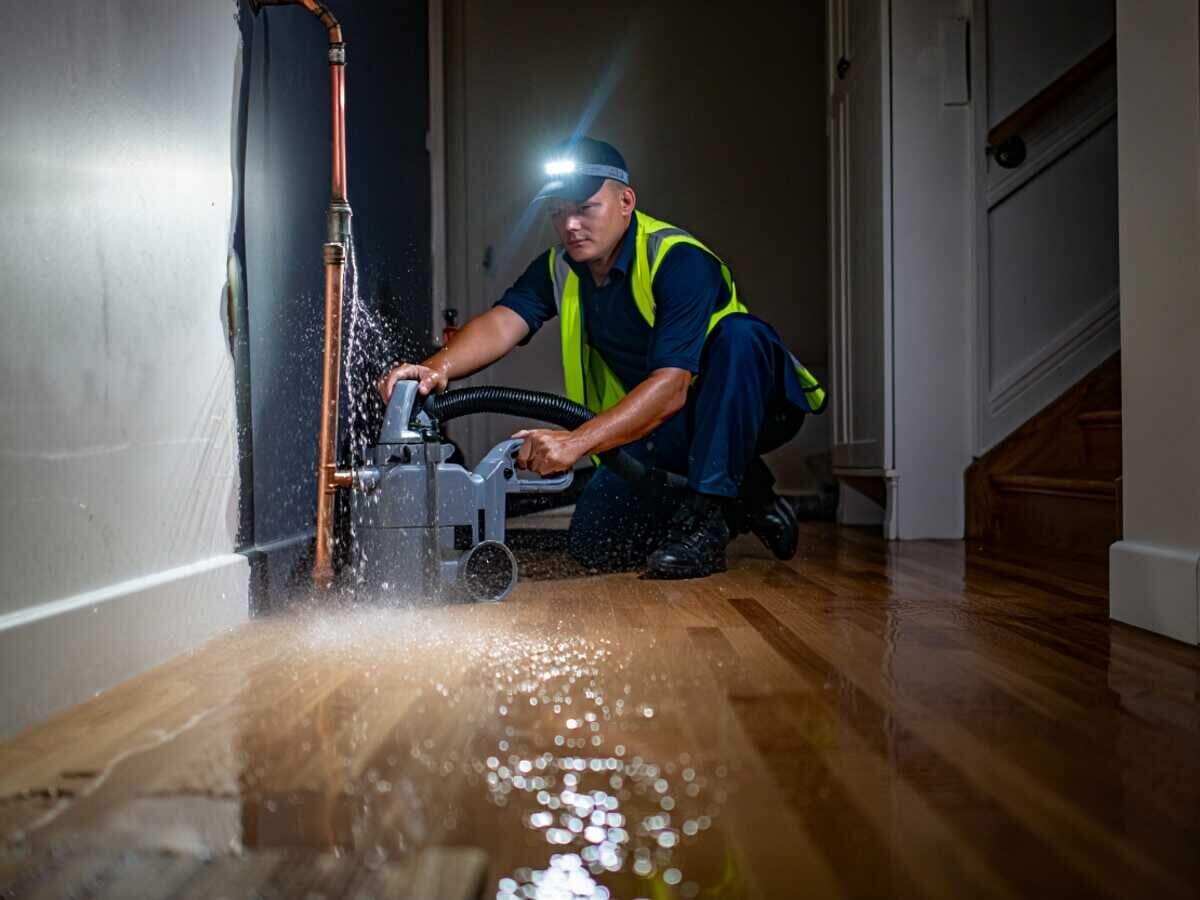
Cleanup tonight, rebuild later
Emergency water damage cleanup is everything that stops the loss where it stands: source off, standing water out, soaked material removed, air movers and dehumidifiers set before the crew leaves. Putting the room back is separate work on a separate line, and it does not start until the meter says the structure underneath is dry. Keeping those two apart is not paperwork. It is what stops new drywall going up over a wet bottom plate, which is how a repaired room ends up growing mold six weeks later.
What round-the-clock response means here
A phone answered at 3 a.m. is worth nothing if the crew starts loading at 8. Our trucks stage in the north Austin metro with extraction and drying equipment already on board, so the truck leaves on your call rather than in the morning. How long the drive takes depends on which part of the metro you are in and what MoPac and 183 are doing at that hour, and the technician on the phone will give you an honest estimate instead of a number nobody can hold. While the crew rolls, that same technician talks you through the shutoff and the breaker panel.
After the first night the job turns into ordinary work: monitored structural drying that usually runs three to five days, then the repairs that put the room back. We photograph the loss before a wet board moves, log readings room by room, and bill your carrier directly for the covered work. The carrier decides what your policy covers, not us, and you will hear it from us early if part of the job looks like it will land outside. Call (512) 271-5099 whenever it happens, or reach us through the contact page.
Frequently asked questions
It is 1 a.m. and I got the water shut off. Can this wait until morning?
Usually not, and the reason is the pad and the wall cavity rather than the puddle. Water that stopped spreading is still being absorbed: eight more hours gives it time to wick up the drywall and soak the bottom plate, which turns a dry-out into a tear-out. If the water was clean, the area is small, and you can get air moving over a hard floor, morning may be fine. Tell us what happened on the phone and we will say which one you have.
Do you charge more for a night or holiday call?
After-hours labor is priced above a scheduled daytime job, the same as in every emergency trade, and it appears as its own line on the estimate where adjusters expect to see it. What we will not do is quote you a total over the phone. The number depends on how far the water traveled and what it soaked, and neither is knowable until someone reads the rooms with a meter.
Plumber or restoration crew, who do I call first?
Both, and the order matters less than you would think. A plumber's job is the pipe; ours is everything the water touched. If the leak is still running and you cannot reach a valve, the plumber is the more urgent call. Otherwise call us and say a plumber is coming: emergency water restoration and the pipe repair regularly happen in the same visit, and we would rather be extracting while they work than waiting for them to finish.
Do I have to be home the whole time?
Only for the first visit. Someone has to let the crew in and sign a work authorization before anything comes out, and that is when we walk the rooms with you and explain the scope. After that the equipment runs unattended, and we come back once a day to take readings and adjust it. Most homeowners are at work for those visits and get the readings by text.
Documented to claim standard from the first hour
We document the loss to claim standard from the moment we arrive: dated photos, moisture readings by room, and a line-item scope that maps to your policy. Then we bill your insurer directly for the covered work, so you handle the deductible.
See how claims work in TexasAreas We Serve Across the Austin Metro
Local response across Travis, Williamson, and Hays counties.
The water is still spreading while you read this
Call (512) 271-5099 and tell us what failed and where it is now. Austin Flood & Leak Restoration answers at any hour, and the crew heading to your address carries extraction and drying gear on the first trip.