Sewage Cleanup & Backup Restoration in Austin, TX
It usually shows up in the lowest fixture in the house, a shower pan or a tub, while the toilet down the hall still flushes clean. That water is Category 3. Keep everyone out of the room and call us before anything gets mopped.
- We bill your insurer directly
- IICRC-certified crews
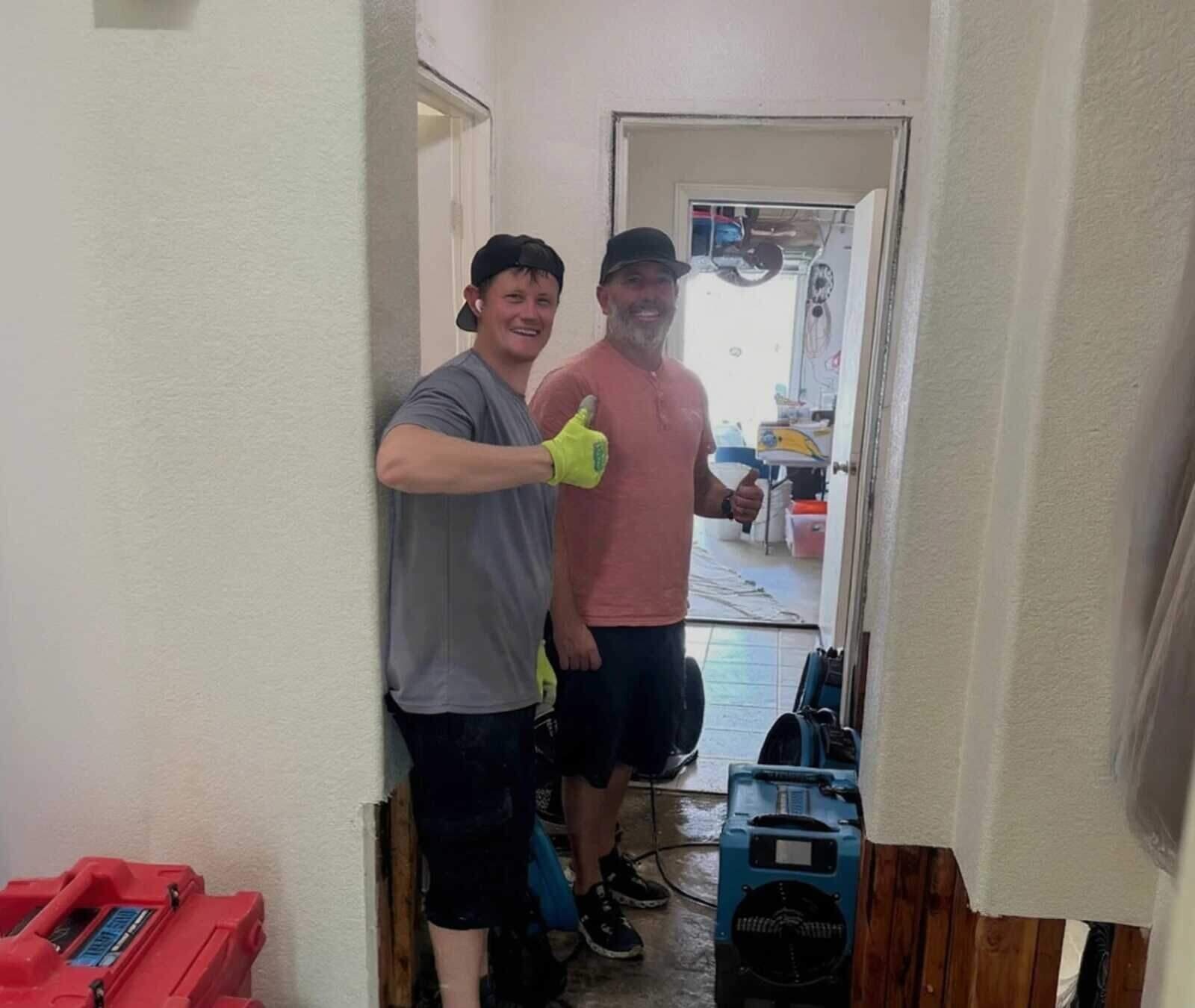
A local crew that shows up and does it right




The three ways sewage gets into an Austin house
Sewage is Category 3 water, the dirtiest class the IICRC defines. However it got in, the work is the same: seal the room off, take out what soaked it up, disinfect what stays, dry the rest.
Toilet overflows carrying waste
A blocked trap, one flush too many, and what lands on the floor is Category 3 the second it leaves the bowl. It is under the vanity and out the door before anyone finds a towel.
Main-line and lateral backups
The clog sits out past the house, so everything that drains comes back up at the lowest opening it can find. Every fixture above that one looks normal the whole time.
Septic and drain-field backups
A saturated drain field or an overfull tank has nowhere left to send what comes down the line, so the line runs backwards and the house gets it first.
Stay out of it, and keep it in one room
Do not clean it up yourself. Sewage carries E. coli, hepatitis A, and giardia, and a mop or a shop vac spreads all three into rooms that were fine. If you can do these four things safely, do them, then call (512) 271-5099 from a dry part of the house:
- Get everyone out of the room, kids and pets first, and shut the door behind you if that room has one.
- Stop using anything that drains. No laundry, no dishwasher, no flushing. Every gallon you send down the line comes back through the same floor.
- Switch the HVAC off if a return vent sits in or near the affected room, so the air handler stops pulling that air through the whole house.
- Photograph it from the doorway before anything moves, then leave it alone. Those photos are what the claim gets built on.
What the crew does, in order
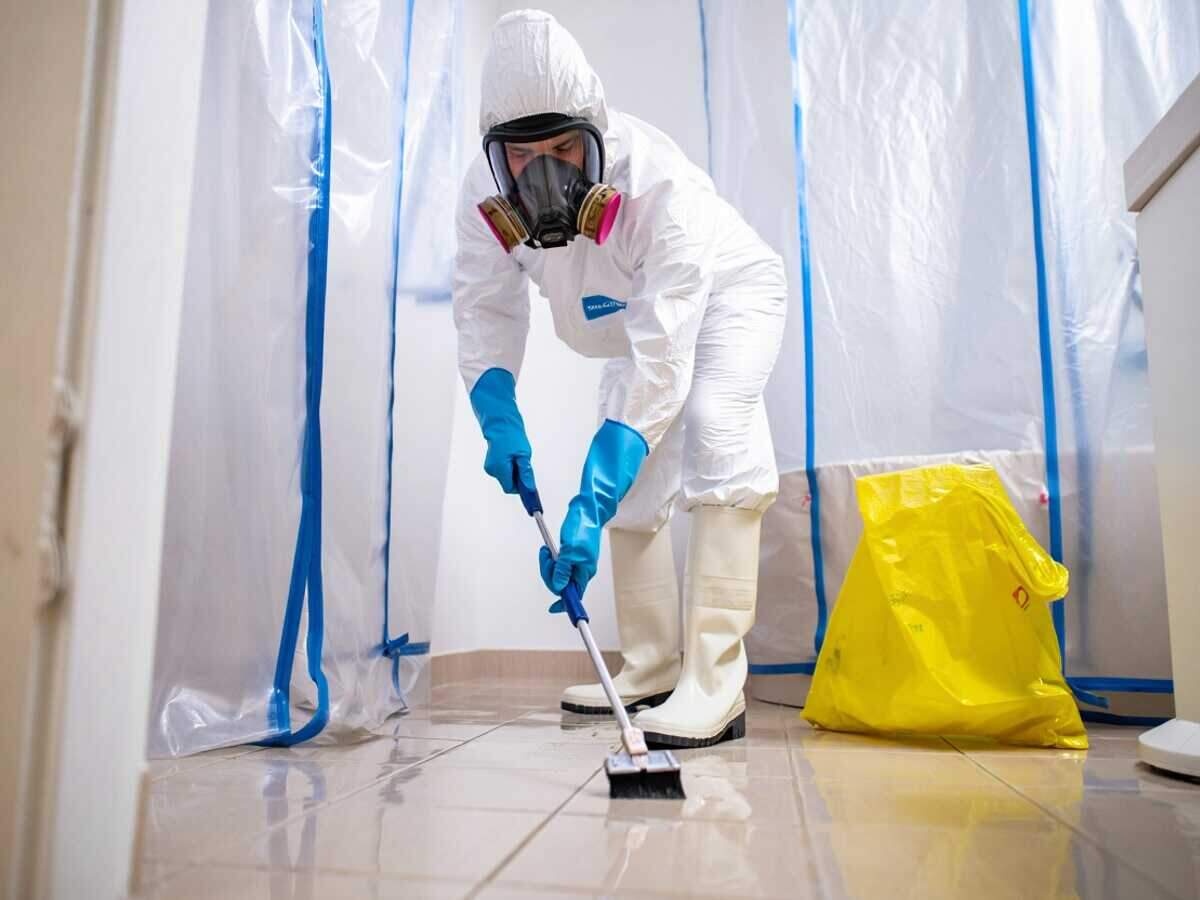
Everyone suits up in the driveway, not in the doorway: Tyvek, nitrile gloves, boot covers, respirators. Nothing contaminated gets carried back through the clean part of the house.
Seal the Room
Plastic sheeting across the openings and a HEPA air scrubber holding the room under negative pressure, so nothing drifts down the hall while we work.
Take Out the Contamination
Waste and standing water extracted first, then the porous material comes out, cut a foot or two above where the water stopped and bagged before it leaves the room.
Wash, Then Disinfect
Surfaces get scrubbed with detergent and rinsed before anything else, because disinfectant landing on soil is wasted. Then an EPA-registered antimicrobial goes on and stays wet for its full label contact time.
Dry and Re-Read
Air movers and a dehumidifier run until the slab and framing read dry against an unaffected room. Odor gets pulled out at the source instead of covered over.
What a Category 3 job actually involves
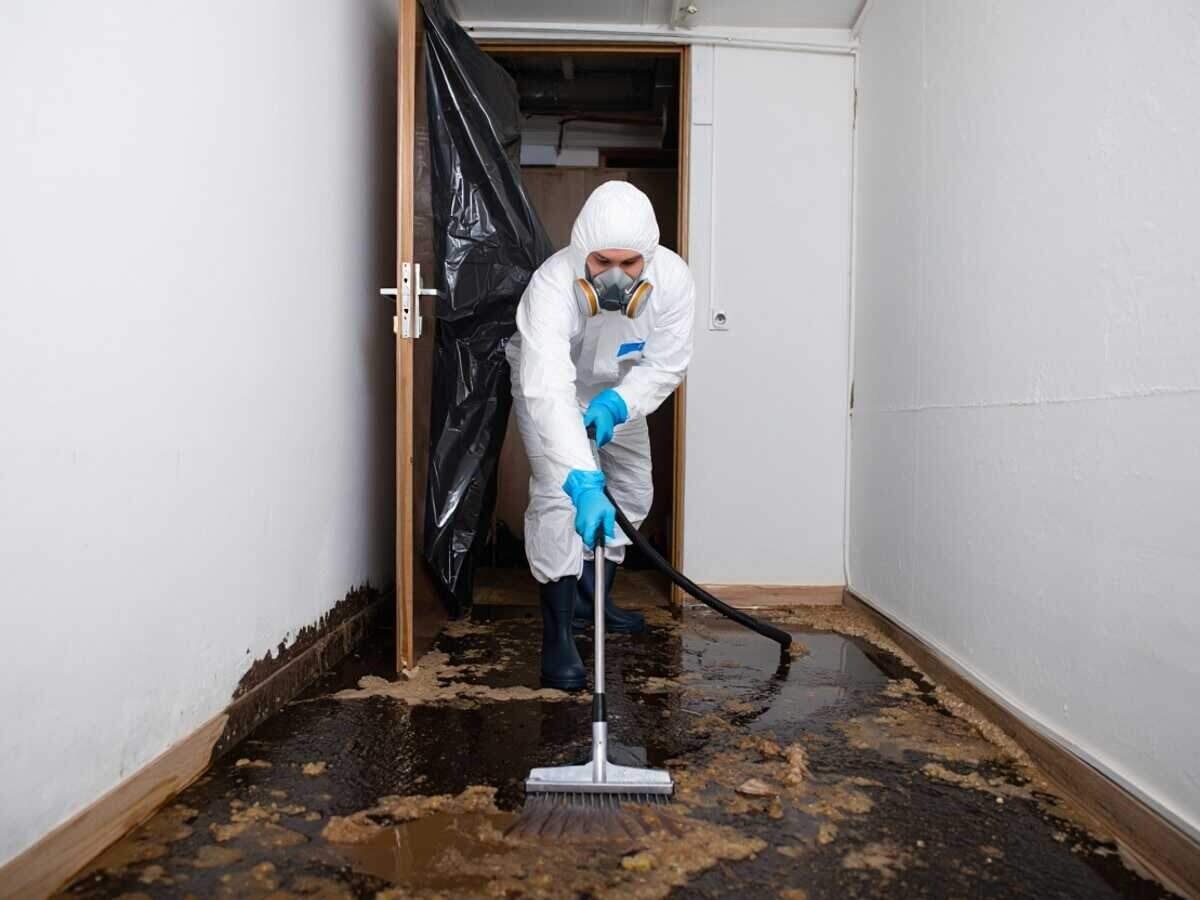
Sewage cleanup is a removal job before it is a cleaning job. Anything porous that black water soaked has to leave the house, because nothing you spray will disinfect through a carpet pad or the paper face of a sheet of drywall. What stays is the hard shell of the room: slab, framing, tile, metal, plumbing fixtures. That gets washed, disinfected, and dried under the same daily monitoring we run on any water damage restoration job, with tighter containment around it and a disposal step at the end.
What Category 3 means in plain terms
The IICRC S500 standard sorts water losses by how dirty the water is. Category 1 is clean supply water off a broken line. Category 2 is used water, a washing machine discharge or an overflowing tub. Category 3, black water, is grossly contaminated: sewage, toilet water carrying waste, and anything that sat long enough to grow its own biology. Black water damage is dangerous for a plain reason. It carries live pathogens, and they do not stop being a problem once the floor dries. The category also moves with time, so a clean supply leak nobody found for two days in a closed-up Austin house degrades on its own. We read the calendar as carefully as the meter.
Why we get these calls where we get them
Two very different kinds of Austin homes call us for this. The older central and east-side stock, the 1930s to 1950s bungalows in Rosedale, Cherrywood, and Bouldin Creek, sits under a heavy live oak and pecan canopy, and those houses still drain through cast-iron and clay-tile laterals with a joint every few feet. Roots find the joints, the line packs solid, and the first sign is a shower that will not drain, then water on the bathroom floor. The other call comes from where there is no city sewer at all, out around Dripping Springs and the county pockets past Manor, where the house runs on its own septic system. After a long wet stretch the drain field has nowhere to push, so the tank sends it back down the line. Different cause, same black water on the floor.
What we can promise, and what nobody can
No crew can sterilize a house, and anyone telling you otherwise is selling. The honest measure of sewage cleanup services is what leaves the property: the bagged material on the truck, the cut lines you can walk over and look at, and a moisture reading on the framing that stayed. We finish with that walk-through on purpose. The smell is gone because its source went out the door, not because the room got fogged.
Putting the room back, and the claim behind it
Rebuilding starts after the moisture readings pass, never before. Black water work pulls out more material than a clean-water loss does, so the rebuild is usually the bigger half of the invoice: drywall and baseboard, flooring, sometimes a vanity or the toe kick of a cabinet run. Sewage damage restoration is also the work adjusters question hardest, which is why we photograph every cut line and log why each piece of material came out. Texas policies also treat a drain backup differently from a burst supply line, and that is worth knowing before you need it. We write the file; your carrier decides what your policy covers. Our insurance claims help page walks through how that file is built, and the contact page reaches the crew at any hour.
Questions we get on these calls
Can we stay in the house?
It depends on where the water went and what shares air with it. One contained bathroom, usually yes, with that door shut and the HVAC off until we arrive. Sewage that traveled down a hallway into carpeted bedrooms, or into the return air path, and we will tell you plainly to sleep somewhere else for a night or two. Anyone in the house with asthma, a weakened immune system, or an infant tips that call toward leaving, and we would rather say so than have you tough it out.
What can be saved, and what has to go?
Hard, non-porous things stay: the slab, framing, sealed tile, metal, glass, solid wood, plumbing fixtures. Porous things that took black water go: carpet and pad, drywall up to a line above the waterline, particleboard, insulation, mattresses, upholstered furniture. The split runs through single pieces of furniture too, since a solid wood cabinet door often survives when the particleboard box under the sink does not. We make each call on the first visit and photograph it, because that list is exactly what your adjuster reads later.
How do you disinfect after a backup?
In two steps, in that order. Everything gets cleaned with detergent and rinsed first, because a disinfectant that lands on soil is mostly wasted. Then an EPA-registered antimicrobial rated for this work goes on and stays wet for the contact time printed on its label, which is minutes of dwell, not a spray and a wipe. After that we dry the structure and confirm the readings. We do not fog a scent over a wet floor and call it finished.
Does homeowners insurance cover a sewer backup in Texas?
Often not without an endorsement. Most standard Texas homeowners policies exclude water that backs up through sewers or drains unless you bought backup coverage, which is normally an add-on with its own limit rather than your full dwelling coverage. Septic backups sit in the same bucket. We document the loss the same way either way, dated photos, moisture logs, and a line-item scope, and your carrier reads that file and decides. If you are unsure what you carry, the endorsement is the line to look for on your declarations page.
The plumber cleared the line. Is that the end of it?
That is the first half. Clearing the blockage stops more from coming in, and it does nothing about what already soaked into the floor and the bottom of the walls. Water that carried waste wicks up drywall the same way clean water does, and the material holds the contamination long after the surface looks dry. We take the room from there: what comes out, what gets disinfected, what has to read dry before anything is rebuilt.
Documented to claim standard from the first hour
We document the loss to claim standard from the moment we arrive: dated photos, moisture readings by room, and a line-item scope that maps to your policy. Then we bill your insurer directly for the covered work, so you handle the deductible.
See how claims work in TexasAreas We Serve Across the Austin Metro
Local response across Travis, Williamson, and Hays counties.
Get a crew that suits up for it
Shut the door on that room and call Austin Flood & Leak Restoration. A local crew arrives with containment, protective gear, and disposal bags, hauls out what the water ruined, disinfects the surfaces that stay, and dries the structure behind them. Someone picks up at any hour, anywhere in the metro.