Carpet Water Damage Repair in Austin, TX
The bedroom carpet squelches two rooms from the leak: the pad drank it all first. Whether the carpet stays or goes gets settled in the first day or two, by the category of the water and the hours it sat. Every hour counts against it.
- We bill your insurer directly
- IICRC-certified crews
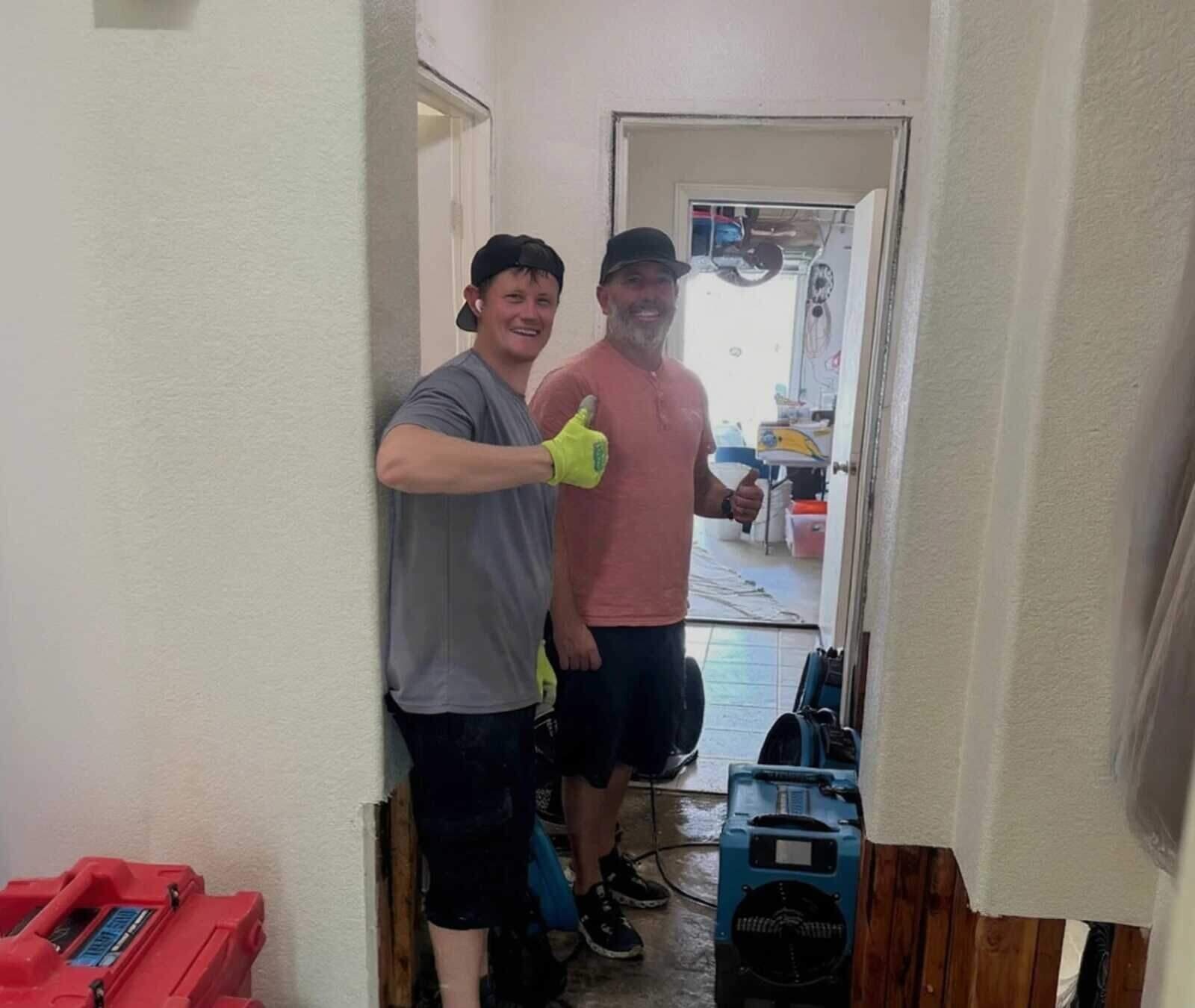
A local crew that shows up and does it right



Which way your floor goes, and what decides it
Two things settle it, and neither one is how bad the room looks: what was in the water, and how many hours it sat before anyone pulled it back out. Here is roughly how those calls land.
Clean supply water, same day
A split ice-maker line or a tub left running, caught inside a day. The carpet stays. We float it over air movers, and the pad is usually the only thing lost.
Gray water
Washer discharge, a dishwasher, an overflowing AC pan. The fibers clean and sanitize fine. The pad is a sponge full of detergent and food waste, so it comes out.
Category 3
A toilet overflow past the trap or a sewer backup. Carpet, pad, and often the bottom of the drywall all go. See sewage cleanup for how that job runs.
Wet too long
Past about two days the latex holding the backing to the fibers gives up and the seams open. Delaminated carpet will not lie flat again no matter how hard it is stretched.
The pad, the tack strip, and what concrete does
The carpet is the part you are looking at. The three layers under it are the ones that decide the job, so that is where our crews start reading:
- The pad holds more than the carpet does. Bonded foam soaks up several times its own weight, crushes flat under the water, and never comes back to loft.
- The tack strip is wood and steel. Soaked, the strip swells and the pins rust, and rust bleeds a brown line along the wall through a carpet that dried perfectly well.
- Concrete drains nowhere. On a slab the water spreads sideways under the pad instead of down, so the wet edge is usually a room past where anyone thought to look.
- Baseboard is the first casualty. Water climbs the wall base within hours, which is why we pull trim in the wet rooms rather than blowing air at a floor and hoping.
Extract, decide, dry, re-lay
All four happen on one job with one crew. The decision in step two is the one that costs or saves you a floor, so it comes off a meter and a category, not off a glance.
Meter the Edge
We find where the wet area actually stops, which is past the part that feels damp, and we call the water category out loud before touching anything.
Weighted Extraction
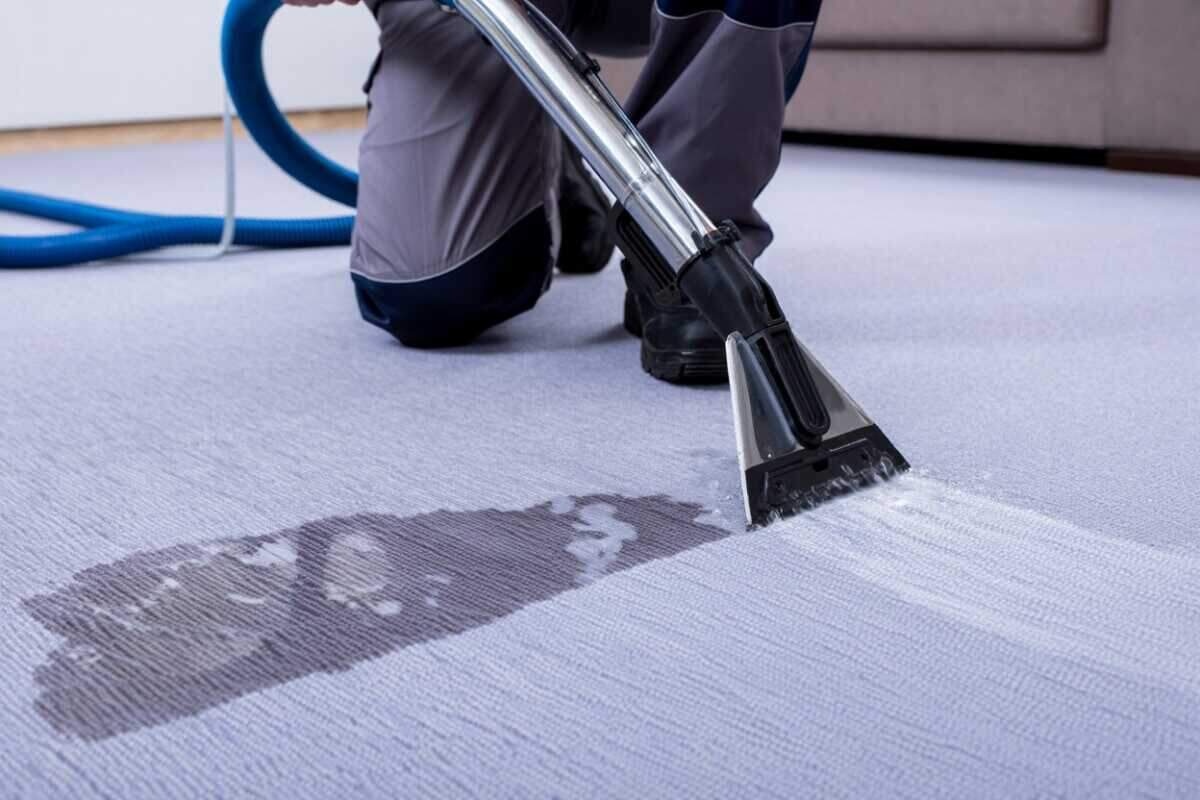
A technician's body weight over the wand, pass after pass, pressing water back up out of the backing and the pad instead of skimming the surface.
Pad Out, Then Dry
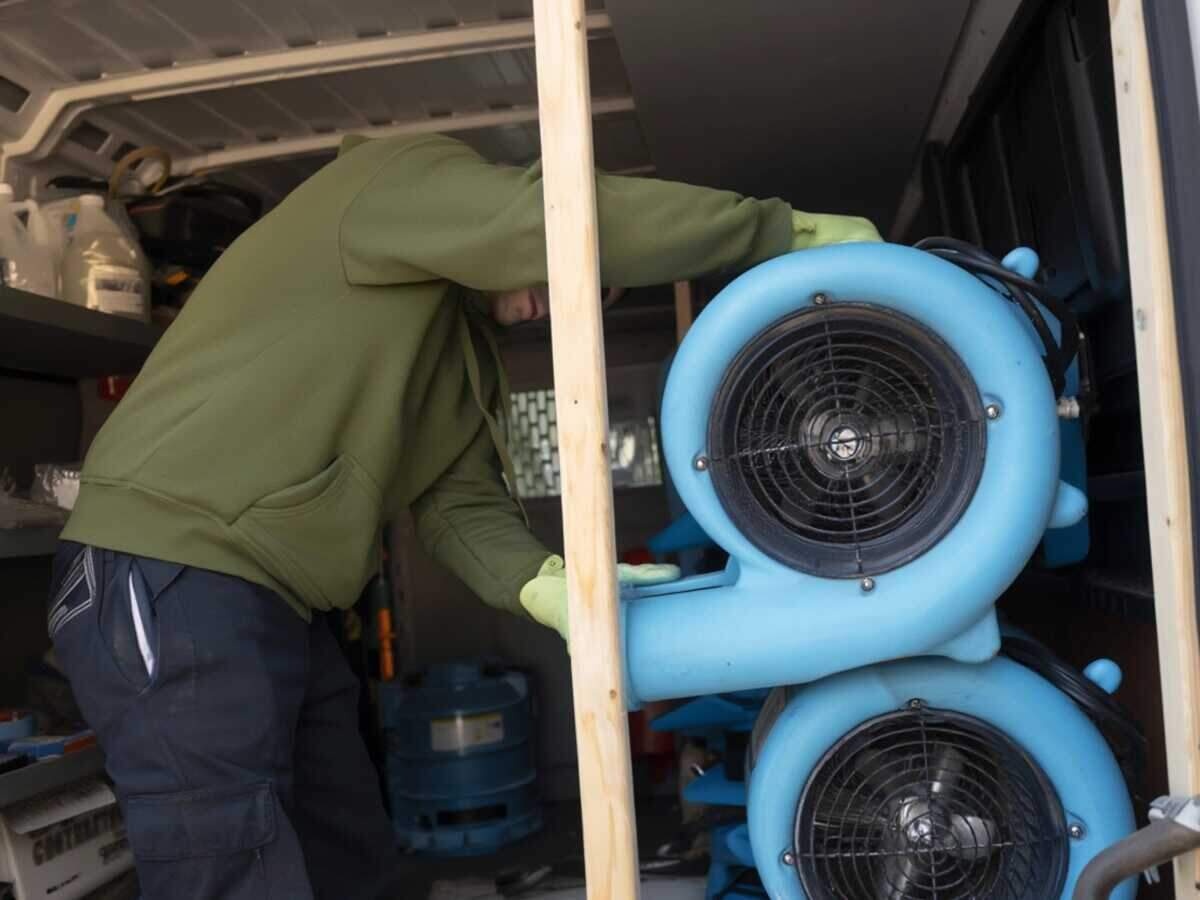
Where the pad is gone we cut it out in strips and get air onto bare slab. Clean-water rooms get floated on air movers with a dehumidifier pulling the room down.
Re-Lay and Stretch
New pad, new tack strip where the pins rusted, seams re-glued, then power-stretched back so there is no wave down the middle in July.
Salvage is a decision with a deadline
Most carpet we get called to is savable and most pad is not. That is the honest one-line summary of carpet water damage repair, and everything else is the detail behind it. Clean water out of a supply line, extracted the same day, leaves you re-stretching a floor you already own. The same water sitting for three days leaves you replacing it, because carpet is a laminated product: fibers tufted into a woven backing, held to a second backing with latex. Keep that sandwich wet and warm long enough and the latex lets go. Once it delaminates, the carpet ripples and no amount of stretching will pull it flat again.
The jobs that end badly are almost always the ones nobody was standing in. Austin has a whole housing category built for that: the West Campus and Riverside rentals that empty out between leases in August, thermostat set at 82, while an angle stop weeps into the bedroom carpet for four days. Water does not stay clean while it waits. Warm, dark, and sitting in a pad, Category 1 supply water degrades into Category 2 within a couple of days, and that shifts the whole conversation from drying to hauling. If you are reading this on day one, you are in the good version of this story.
Mold in carpet is a backing problem
Growth almost never starts in the part you can see. It starts on the woven backing and on the underside of the pad, where it is dark, warm, and still wet three days after the surface felt dry, and you smell it a week before you would ever see it. That is what makes wet carpet different from a wet tile floor: the assembly hides its own moisture. So the meter goes to the slab and the wall base, not to the pile. If a musty smell has already set in, or the loss sat through a closed-up Austin weekend in August, we open it up and check the backing before anyone talks about saving anything, and our mold removal crew handles what turns up.
Cleaning is not drying
These get confused constantly, and it costs people floors. A carpet cleaning company rinses and extracts the pile, which is exactly right for a stain and useless against a soaked pad. That is why water damage carpet cleaning comes at the end of our sequence rather than the start: we extract, decide the pad, dry the assembly to a number, and then clean and sanitize the fibers so the room does not smell like the day it happened. Skip the drying half and you get a clean carpet over a wet slab, which is a mold job in about a week.
Putting the room back so nobody can tell
A floor that dried is only half a result. Carpet that has been soaked and floated comes back slightly relaxed, so it goes down over new pad and gets power-stretched, not kicked into place, or you will see a ripple across the traffic lane by the first hot week. Tack strip that rusted gets replaced along that wall, seams get re-glued, and the baseboard goes back with the same profile. We also photograph the pad and the strip as they come out, since an adjuster reading the file later has no way to know what was under there. That documentation moves with the rest of the loss through our insurance claims process, and if the water reached beyond the carpet, the water removal and full water damage restoration pages cover the rest of it. Call (512) 271-5099 at any hour and we will tell you which version of this you have.
Frequently asked questions
Can wet carpet be saved, or is it always a tear-out?
Usually it stays, and the pad is what decides it. Pad holds many times its own weight in water and presses it back against the slab, so it comes out first, the carpet goes up over air movers, and the concrete underneath dries before the backing gives up. What ruins a carpet is rarely the water itself, it is the hours: past roughly two days the latex bonding the primary and secondary backing lets go, and a delaminated carpet ripples afterwards no matter how well it dried. Sewage is the one case with no decision in it, because Category 3 puts both the carpet and the pad in the dumpster.
Does the pad have to come out every time?
Not every time, but often. Bonded foam pad is built to absorb and it does that job perfectly, which is the problem. Once saturated it holds water against the slab for days and crushes permanently under the weight. On a small clean-water loss caught fast we will sometimes dry the pad in place and prove it with daily readings. Anything gray or anything that sat overnight, the pad comes out, because new pad costs less than a second visit to a room that never dried.
The room has been dry for a week and it still smells. Is that mold?
Usually it means something under the carpet never dried, and that something is feeding either bacteria or early growth on the backing. A musty smell in a room that looks fine is the classic sign of water damage in carpet that was surface-dried, and it does not go away with cleaner or a plug-in deodorizer. We meter the slab and the wall base, lift a corner to read the backing and the pad, and tell you whether this is a cleaning, a pad replacement, or a mold job.
Will insurance pay for new carpet, or only the drying?
That depends on the policy and the cause, and your carrier makes the call. What we control is the file: dated photos of the carpet and pad before anything moves, moisture readings by room every day, and a scope that separates the drying from the replacement so an adjuster can price both. Sudden failures like a burst supply line generally read differently to a carrier than a leak that seeped for months. We document the loss, bill the carrier directly for covered work, and tell you plainly which parts they are likely to argue about.
Documented to claim standard from the first hour
We document the loss to claim standard from the moment we arrive: dated photos, moisture readings by room, and a line-item scope that maps to your policy. Then we bill your insurer directly for the covered work, so you handle the deductible.
See how claims work in TexasAreas We Serve Across the Austin Metro
Local response across Travis, Williamson, and Hays counties.
Tell us what the water was
Call (512) 271-5099 and say what leaked, how long it ran, and whether anyone was home. Austin Flood & Leak Restoration answers day and night, and the crew rolls with pad and tack strip on board so the room is not left open waiting on a second trip.