Hardwood Floor Water Damage Repair in Austin, TX
The ice maker line behind the fridge let go Friday, and by Monday the oak in the kitchen stands proud along every seam. Wood keeps moving until the water is out of it. We read the boards, set mats, and pull the water back up through the floor.
- We bill your insurer directly
- IICRC-certified crews
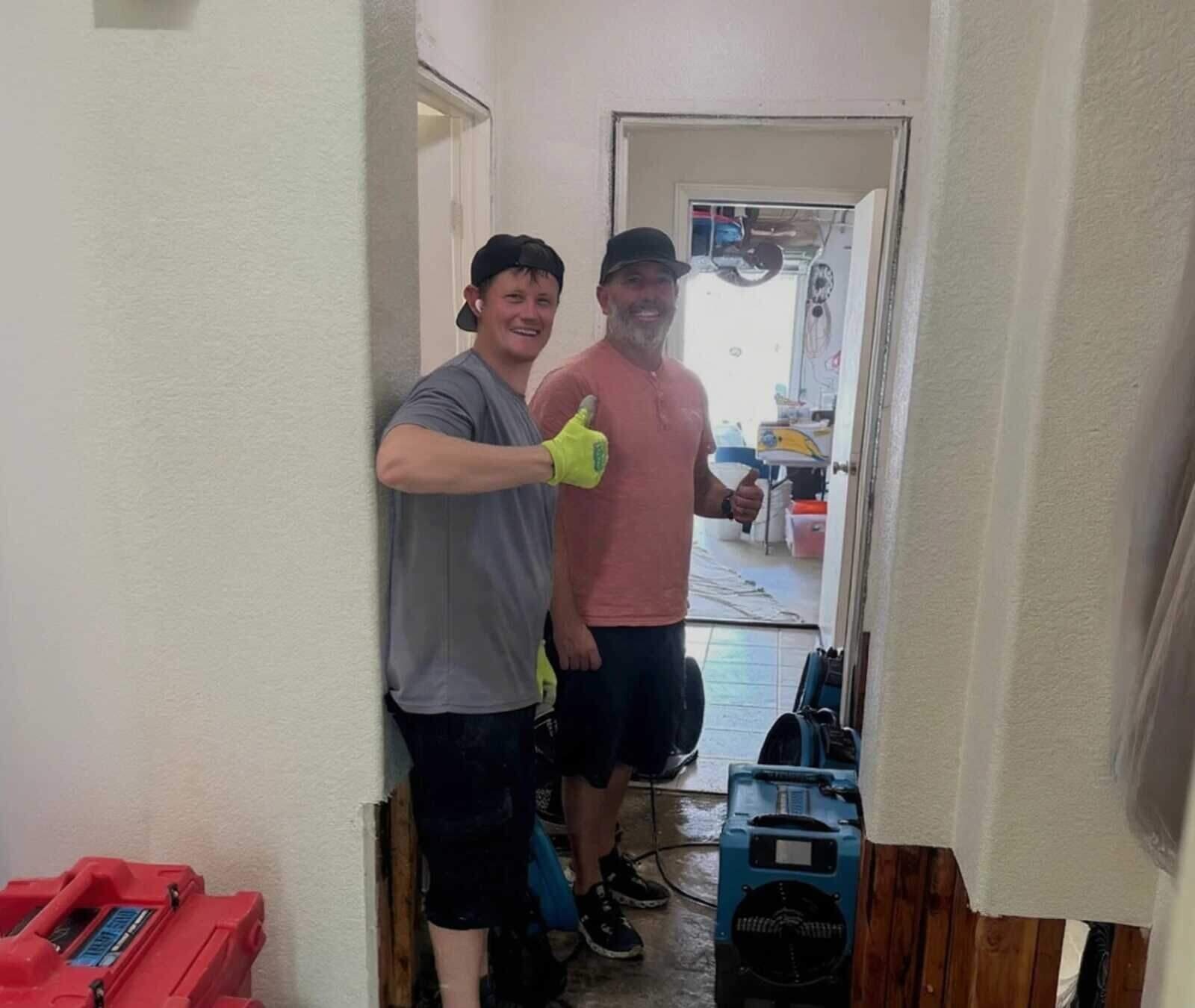
A local crew that shows up and does it right




Wood moves four ways, and only some of them come back
Wood swells where the water is and shrinks where it is not, so the shape a floor takes is a map of where the water sat and for how long. We read that shape on the first walk-through, before anything gets pulled up.
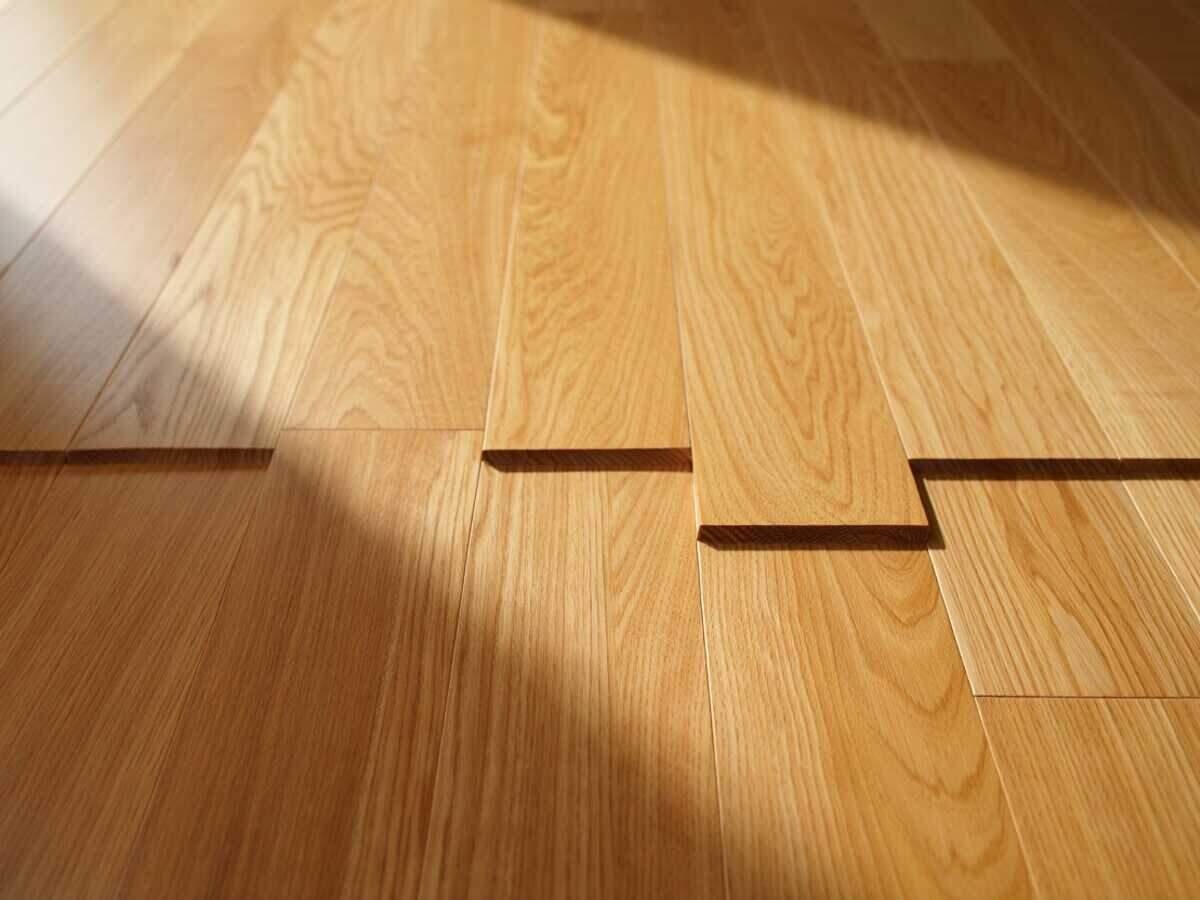
Cupping
The underside wets first, each board swells against its neighbors, and the middle sits low. Caught while the wood is still wet, this is the shape that comes back flat.
Buckling
Boards push hard enough to pull their nails or break the glue line and lift clear of the subfloor. A row or two can be re-laid. A room that has moved as one sheet usually cannot.
Crowning
Centers ride higher than edges, because someone pushed heat at the surface or sanded a floor that still read wet inside. It is the one shape here caused by the repair rather than the leak.
Engineered and laminate
Engineered plank can delaminate where the veneer lets go of its core. Laminate is not wood at all: a swollen fiberboard core never returns to size, so laminate floor water damage is a replacement conversation.
Dry it in place, or take it out
Most floors we get called to can still be dried in place, and the ones that cannot are usually clear by the second reading. Four things decide it, and none of them is how the floor looks from the doorway:
- How many hours it sat. A supply line caught the same morning is a different job from a dishwasher that ran through a long weekend, because the wood keeps taking on water the entire time.
- What the water was. Clean supply water gives the best odds, gray appliance water is a judgment call, and anything from a sewage backup takes the flooring out no matter what the meter says.
- What it is fastened to. Solid oak nailed over a plywood subfloor can give moisture back downward. Engineered plank glued to a slab has nowhere to send it but sideways along the glue line.
- How much wear layer is left. Solid boards carry enough thickness for several sandings. A two-millimeter engineered veneer has one in it at best, and a floor already sanded twice is at the end of what repair can do.
Under the boards, not over them
A finished floor is built to shed water from above, which means the water that got underneath cannot leave that way either. Everything below works the underside of the wood.
Read the Boards
Pins into the wood and the subfloor at the wet edge, and again in a room the water never reached, so there is a number to dry back to.
Take the Load Off
Surface water out, rugs and pad lifted off the finish, base shoe pulled where the perimeter needs air.
Mats and Vacuum
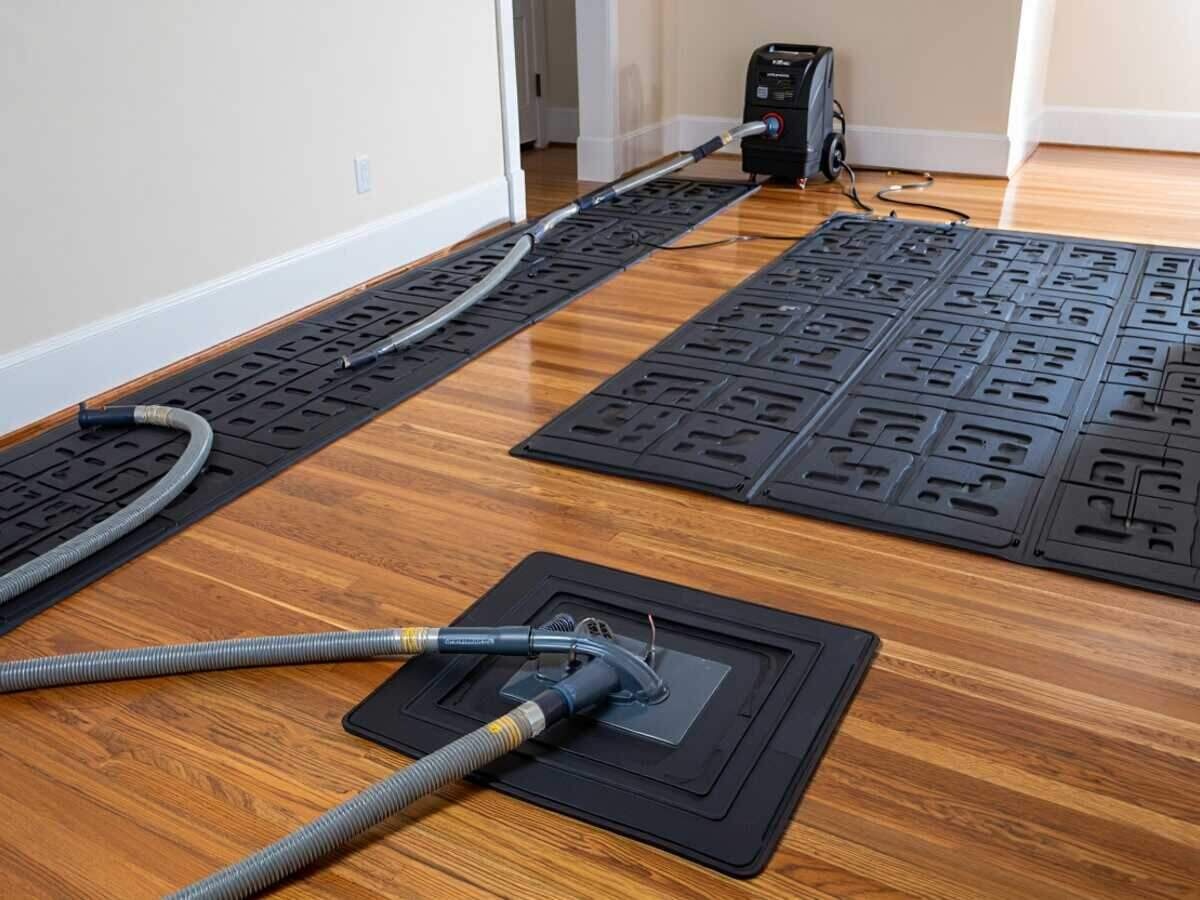
Panels sealed to the floor pull air and moisture up through the boards under vacuum, and they move as the readings shift.
Flatten and Refinish
Once the wood holds the same number as the rest of the house, cupping gets sanded flat, stained to match, and coated.
The finish that protects a floor is what traps the water
Hardwood floor water damage is the one loss where the material works against the repair. The finish on top sheds water, the boards sit tight to each other, and whatever came through is now held between the wood and the subfloor. A floor can feel dry underfoot and still read in the high teens on a pin meter, when the rest of the house sits between six and nine percent. So we meter every water damaged hardwood floor before anyone quotes anything, and the number decides whether the boards stay, not the look of them.
Solid, engineered, and what this city puts them over
What is under the wood changes the whole job, and in Austin it changes by address. The condo towers along Rainey Street and the rest of downtown almost never have solid wood in them, because nobody nails oak to a concrete deck. Those floors are engineered plank glued or floated over concrete, with no cavity underneath and nowhere for water to drain, so a failed supply line runs flat under the planks, crosses under the wall, and is in the next unit before anybody has called it in. Out in the slab subdivisions the construction is the same, with more floor for the water to cross. The older nailed-down solid floors, over a plywood or plank subfloor with air beneath, are the forgiving ones, and they are also the ones worth the most to save.
The season matters too. A wood floor in a conditioned Austin house lives around six to nine percent moisture content, and it moves a little every year between a dry February and a humid August. That is why we take a reading in a room the water never reached and dry your floor back to that, rather than to a number out of a manual. Dry it past where the rest of the house sits and you have simply traded cupping for gaps.
Mats, vacuum, and the reason we go slow
Because the water is sealed between the finish and the subfloor, air blown across the top of a floor does close to nothing. Wood floor drying works from underneath instead: panel mats are sealed to the surface and a vacuum unit pulls air and moisture up through the boards and out through the hoses, while a dehumidifier holds the room dry enough to keep taking it. Mats get repositioned as the wet area shrinks, and we resist the temptation to push harder, because a floor pushed dry faster than the wood can equalize will crown, and the finish checks. Slow and measured is not caution here, it is the difference between sanding a floor and replacing it.
What a saved floor looks like when we leave
There are four honest endings to a wet wood floor, and we will tell you which one you are looking at rather than sell the best case. The floor dries flat and needs nothing but a cleaning. It dries flat with light cupping left, gets sanded and recoated, and reads as new. A few ruined boards get woven in from a matching run, then the whole plane is sanded so the repair does not show as a patch. Or the floor is past saving and comes out, in which case the money is better spent on replacement than on a week of equipment. When sanding is in the plan, it waits: the wood has to hold a steady reading for a stretch after the mats come off, often a few weeks, and anyone who offers to sand your floor the day the equipment leaves is about to give you a crowned surface.
Around the floor, the rest of the room gets its own treatment. Baseboard, the bottom plate behind it, and any wet drywall are dried and logged on the same schedule, and the equipment sizing and daily readings for the room are covered on our structural drying page. Austin Flood & Leak Restoration photographs the floor before the first mat goes down and records the run of the material, because whether the flooring continues past a doorway is the detail that decides how far a repair can reasonably stop. We document what the water did and hand it over; your carrier decides what the policy covers, and our insurance claims page walks through how that goes in Texas. Call (512) 271-5099 at any hour, or start from the full water damage restoration overview if the water reached more than the floor.
Frequently asked questions
Can a water damaged wood floor be fixed, or does it all come out?
Fixed, more often than people expect. Clean water caught in the first day or two, on a solid floor with air under the subfloor, usually dries flat and sands out. The odds slide with every day it sits, and they drop sharply for gray or black water, for glued-down engineered plank, and for a floor that has already been sanded twice. What settles it is a meter reading on the wood and the subfloor, which takes about fifteen minutes to get and is worth having before anybody rents a dumpster.
The boards have already cupped. Is it too late?
No. Cupping is the stage we reverse most often, because the shape is the wood holding water, not the wood being ruined. Get the moisture out evenly and the boards relax back down, and whatever cup is left after that is a sanding job. Two things do make it too late: a floor that was dried hot and fast, which crowns and cracks the finish, and a floor that was sanded flat while it was still wet, which shrinks into gaps once the water finally leaves. Both of those we can only replace.
Do laminate and engineered floors get treated the same way?
No, and it is worth knowing before you pay anyone to dry one. Laminate is a photographic layer over fiberboard, so once the core swells and the edges chip up, no amount of drying brings the plank back and the flooring is a replacement. Engineered depends on how it is built and how it is stuck down. A floating engineered floor over a slab can sometimes be lifted, the slab dried, and the planks relaid if the veneer has not delaminated. Glued engineered rarely survives, because pulling it up destroys it and leaving it down traps the water against the concrete.
How long before the furniture goes back?
Plan on the mats and dehumidifier running five to eight days on a wood floor, longer where the water reached a large area or sat over a slab, and you can walk the room in socks the whole time. Furniture waits for the sanding, and sanding waits for the wood to hold a steady reading, which is usually a few weeks after the equipment leaves. If refinishing is in the scope, add about three days for sanding and coats, plus cure time before rugs go back down. We give you the dates as the readings come in rather than at the start, because wood sets its own schedule.
My adjuster will only pay for the one room. Is that normal?
It is a common position, and the argument turns on where the flooring actually stops. A run of oak that carries from the kitchen through the hall and into the living room with no threshold cannot be repaired in one room without a visible line across the house, and that is the case we document: photos of the continuous run, where the material changes, and what the same species and grade look like next to a twenty-year-old floor. We put the facts in the file and your carrier makes the coverage call. Where the answer comes back short, you will hear the number from us before we start, not after.
Documented to claim standard from the first hour
We document the loss to claim standard from the moment we arrive: dated photos, moisture readings by room, and a line-item scope that maps to your policy. Then we bill your insurer directly for the covered work, so you handle the deductible.
See how claims work in TexasAreas We Serve Across the Austin Metro
Local response across Travis, Williamson, and Hays counties.
Get a meter on it today
Tell us what the floor is doing now, what is under it, and how long the water ran. A technician here will say plainly whether mats and a vacuum can still save these boards or whether you are looking at replacement, and the truck is loaded either way. (512) 271-5099, answered day or night across the Austin metro.