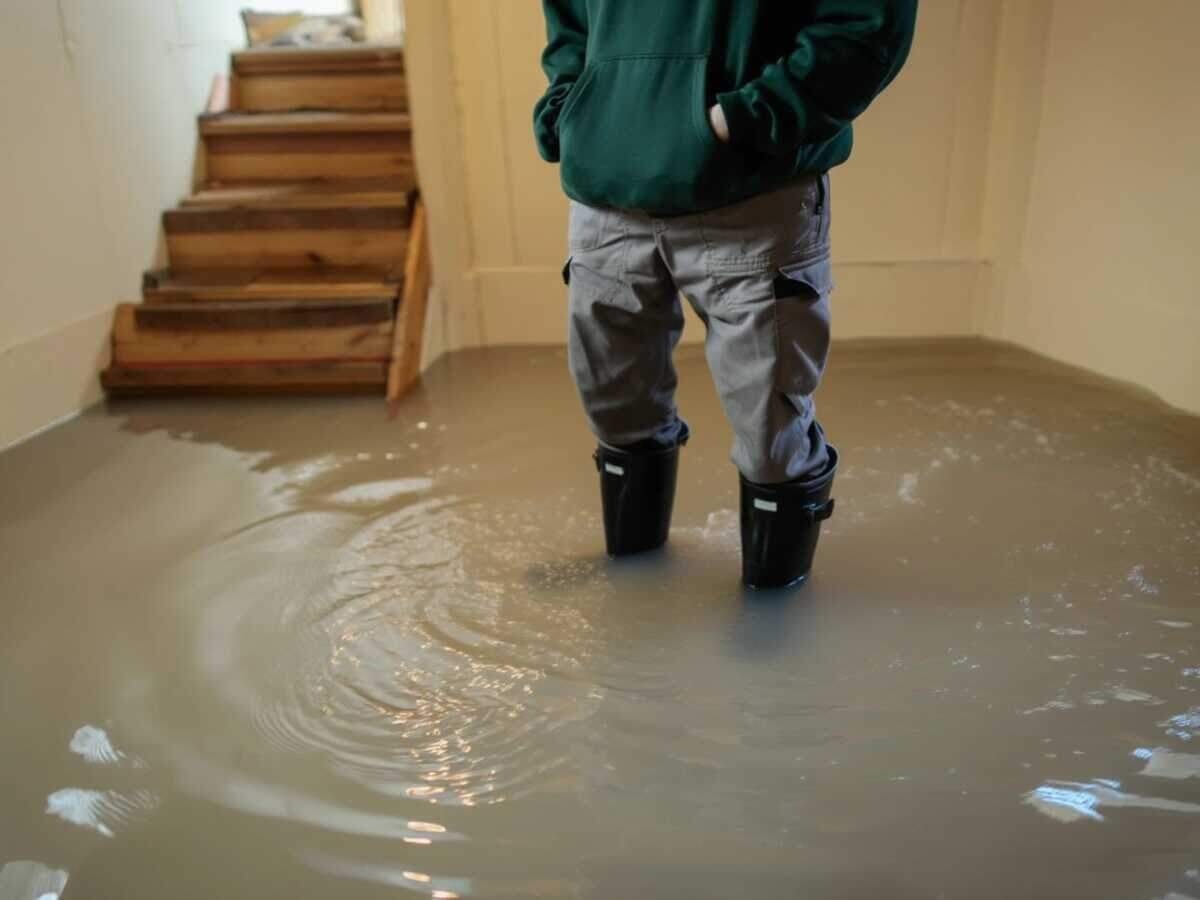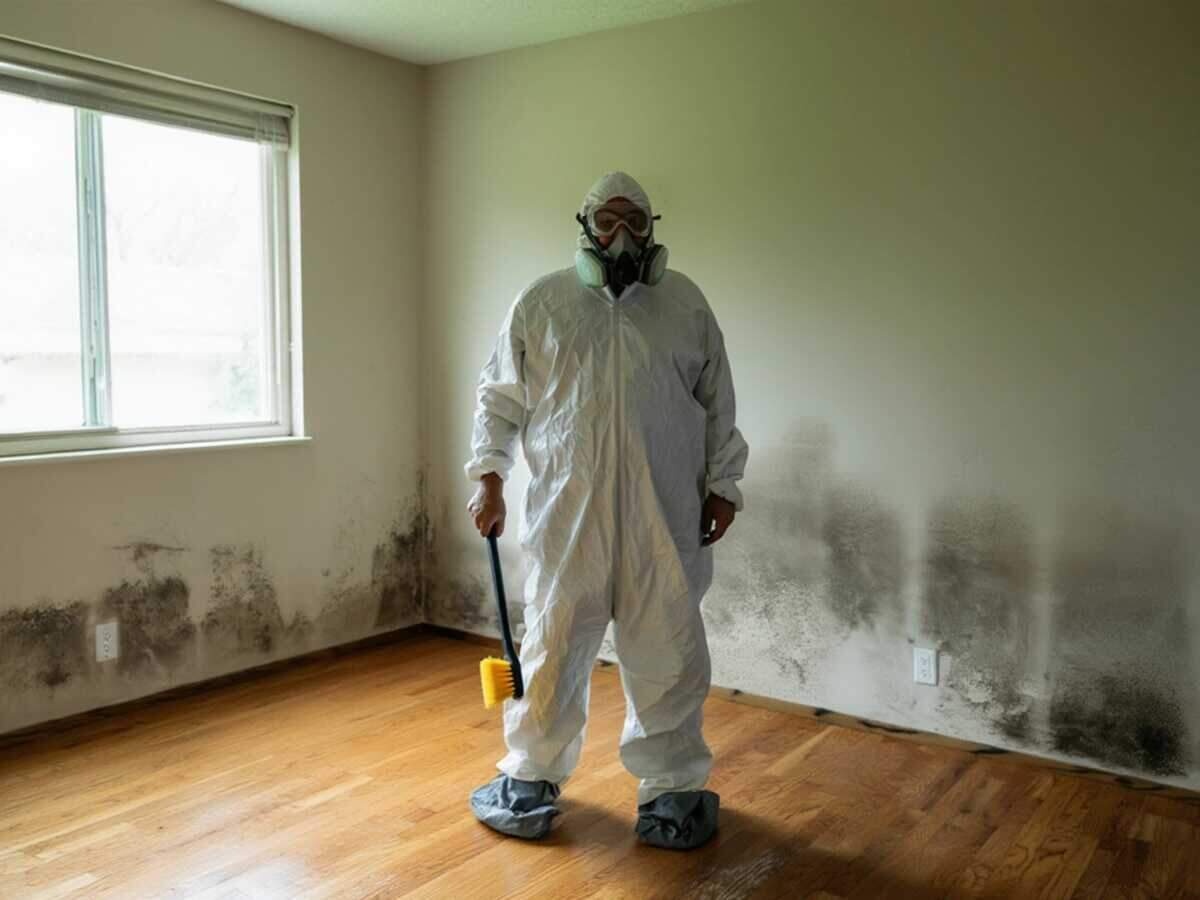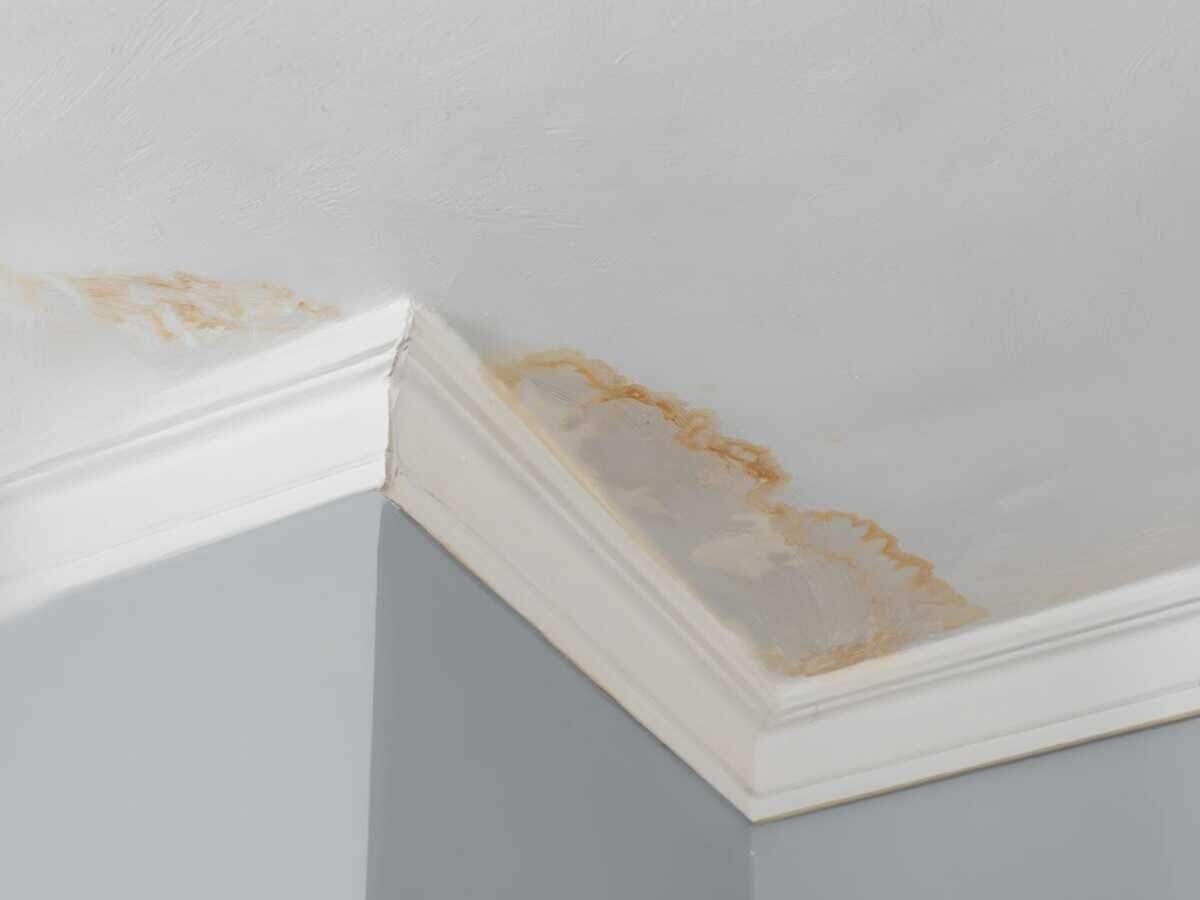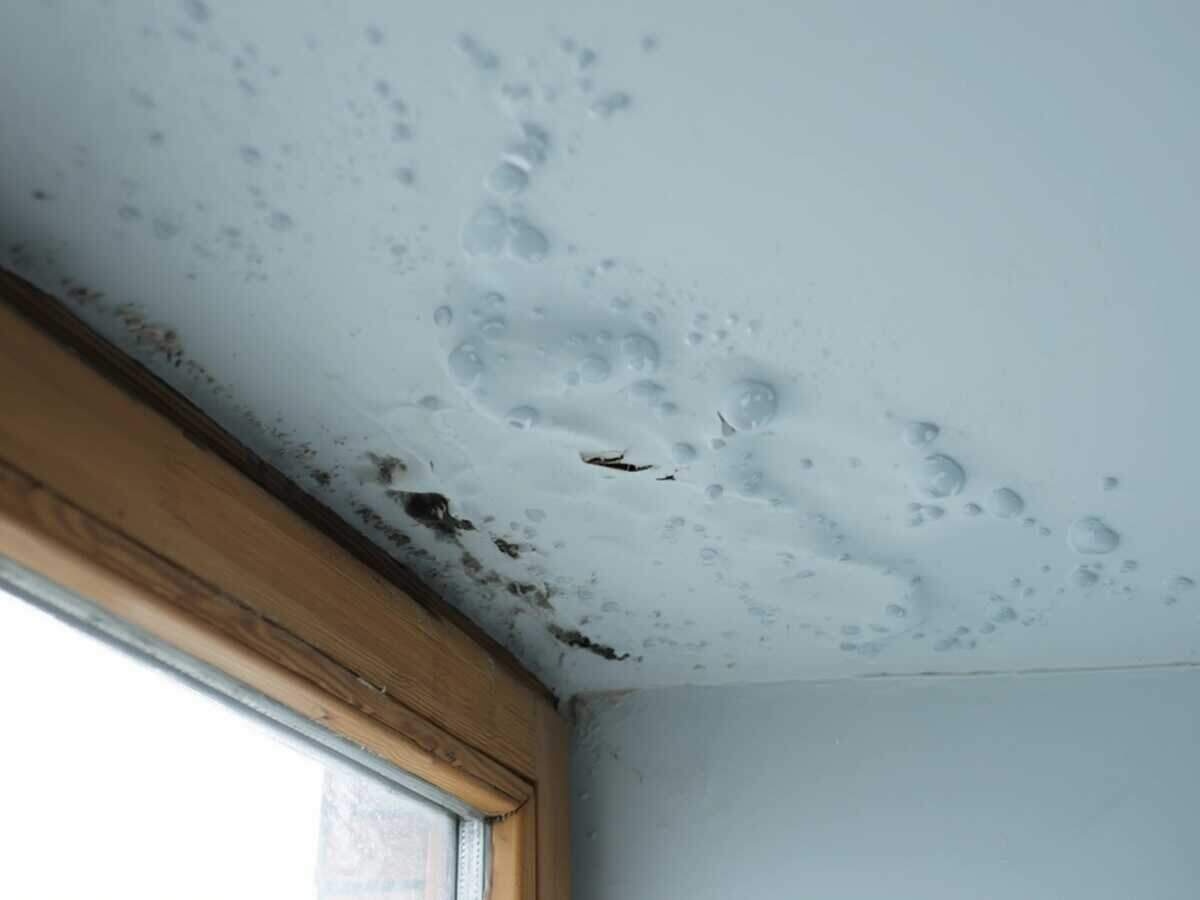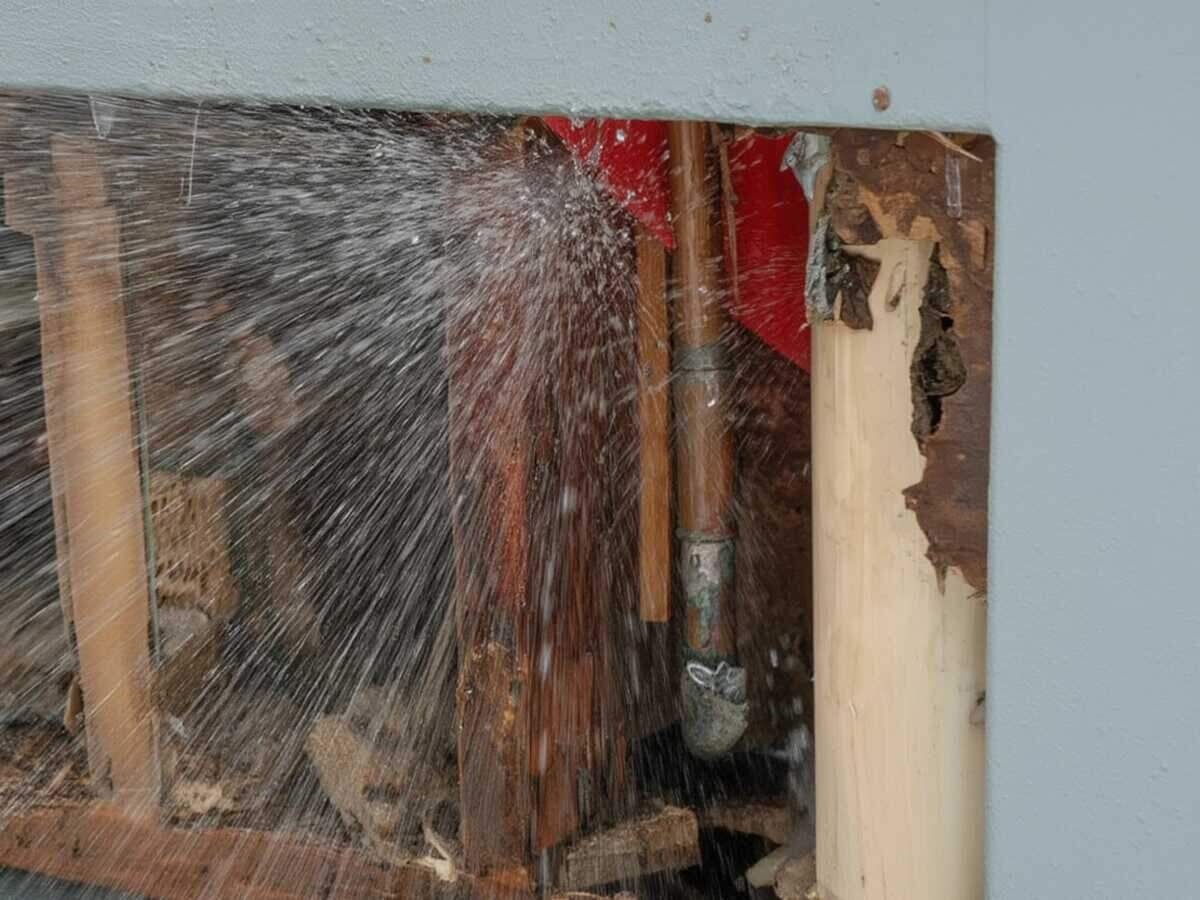




Most of the emergency water damage calls we take in Round Rock land between the end of the workday and the middle of the evening, and that is not a coincidence. Between the Dell campus off I-35 and the commute out on SH 45, plenty of these houses are empty from seven in the morning until six at night. A supply line does not wait for an audience. By the time the front door opens, the loss is not a spill anymore. It is a drying job.
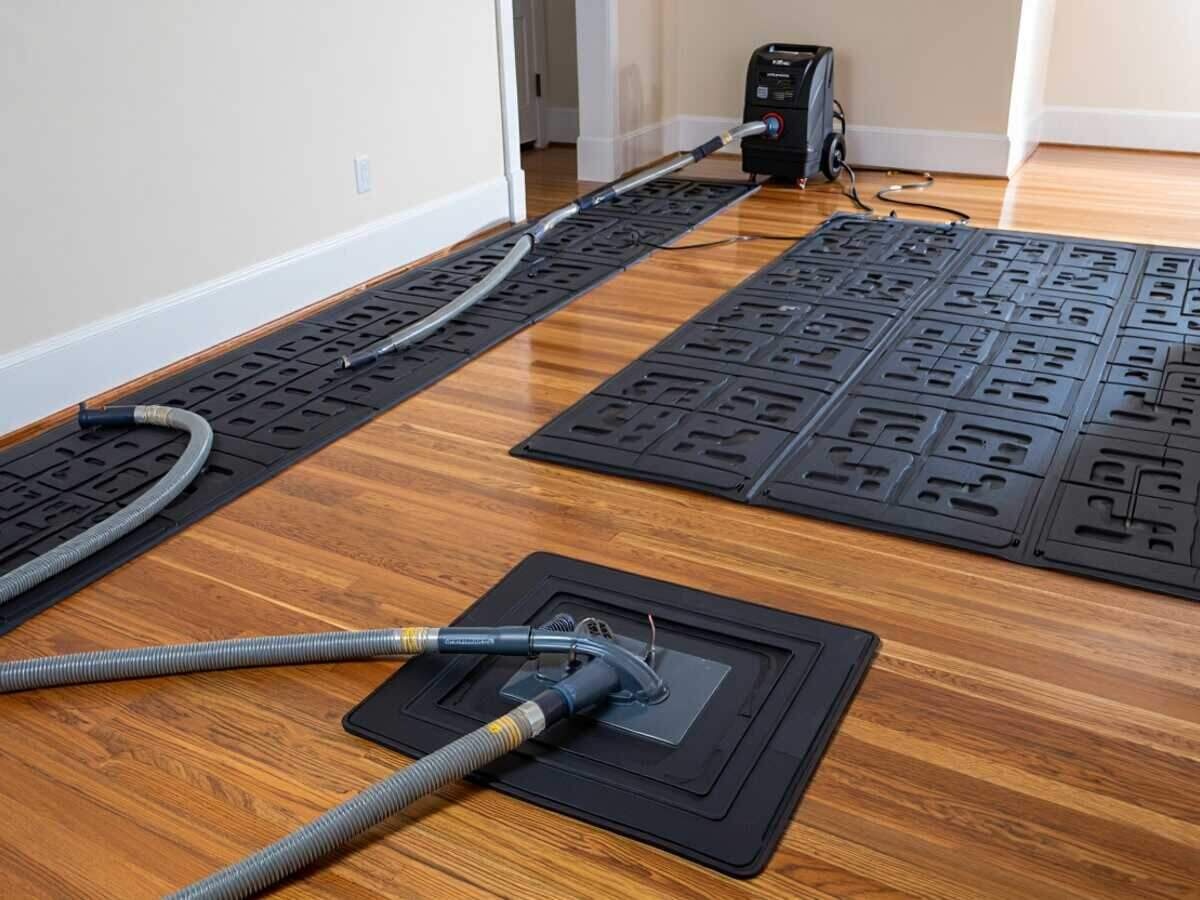
That changes what the first visit is for. There is no race with a puddle left to win, so the evening is about decisions: what is still feeding water and has to be shut down, what is saturated enough to leave the house tonight, and what gets a number in the morning before anyone touches it. We bring extraction anyway, because a carpet pad holds far more than it looks like it does, and the drying equipment rides on the same truck so the machines are running before we go.
What leaves the house tonight, and what waits for a number
Saturated pad, soaked insulation, and drywall that has gone soft come out on the first visit. None of it dries usefully in place, and all of it keeps pushing humidity into the rooms around it. Cabinets, wood flooring, and framing get metered and opened rather than condemned, because those are the expensive calls and they belong to a reading taken over two or three days, not to how a floor looks at nine at night. We photograph the water where it sits before anything moves, map the wet area room by room, and set air movers and a dehumidifier sized to what we found. Then somebody comes back daily to read it. Emergency water damage restoration is something the first night starts, not something it finishes.
- The source confirmed dead or isolated before anything else gets touched
- Pad, wet insulation, and soft board out that night, the expensive calls left to a reading
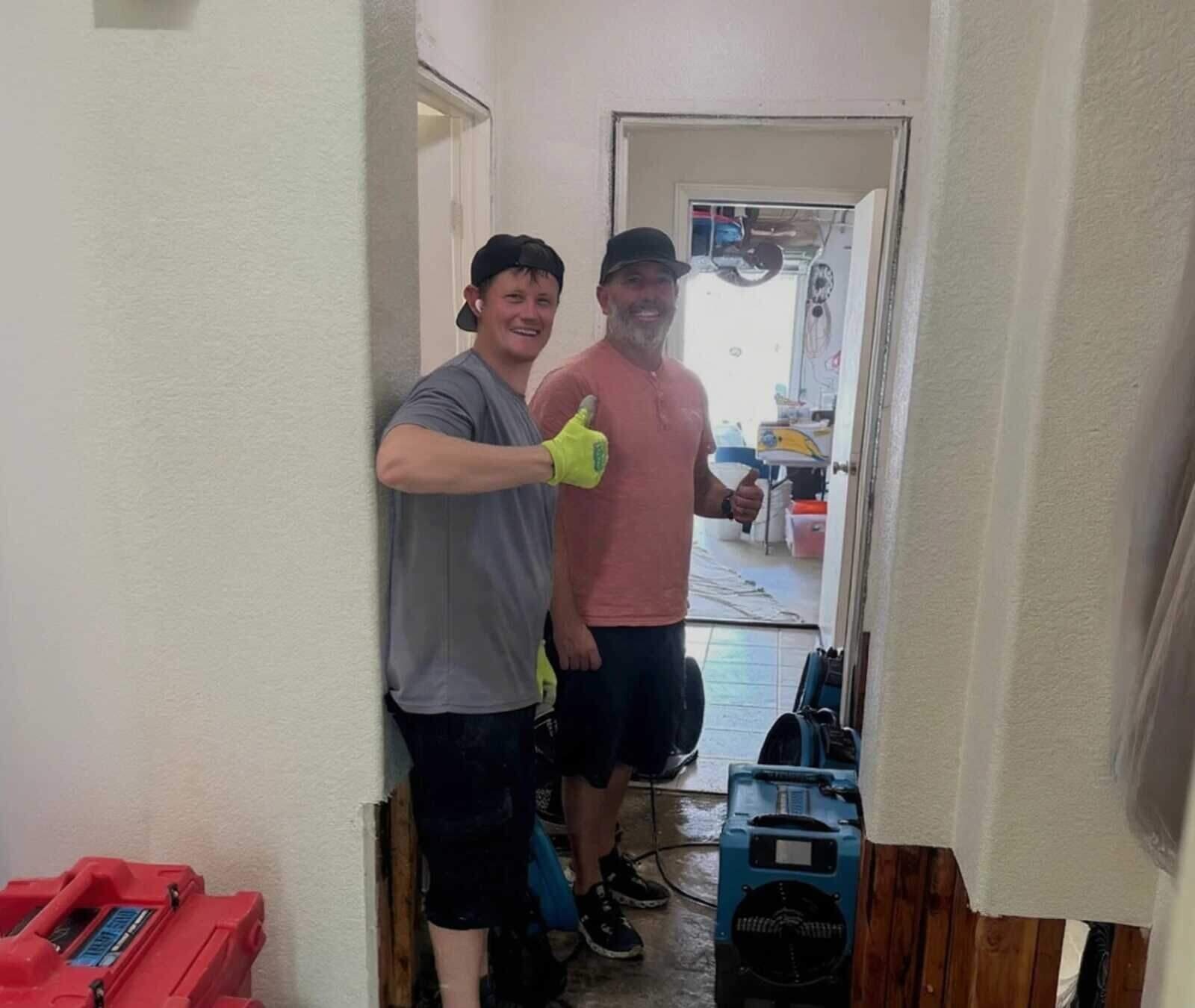
- Extraction and drying equipment on one truck, running before the crew leaves
- Photos and a moisture map opened at the front door, then a read every day
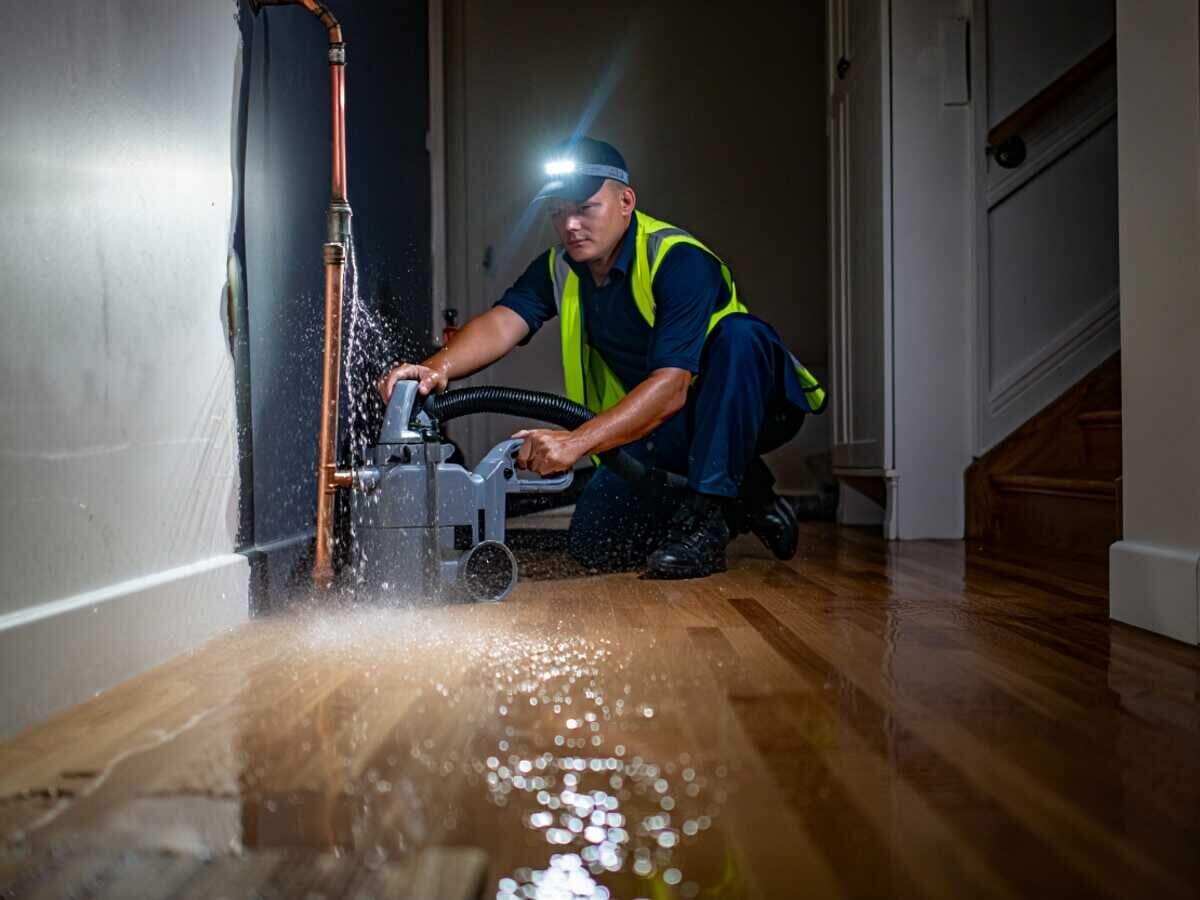
A leak that ran all day and a leak that ran ten minutes are two different jobs, and the file has to show which one yours was: dated photographs, readings room by room, and a log of every machine left behind. Your adjuster prices that; the coverage call belongs to the carrier. Call (512) 271-5099 and tell us what you walked in on.