



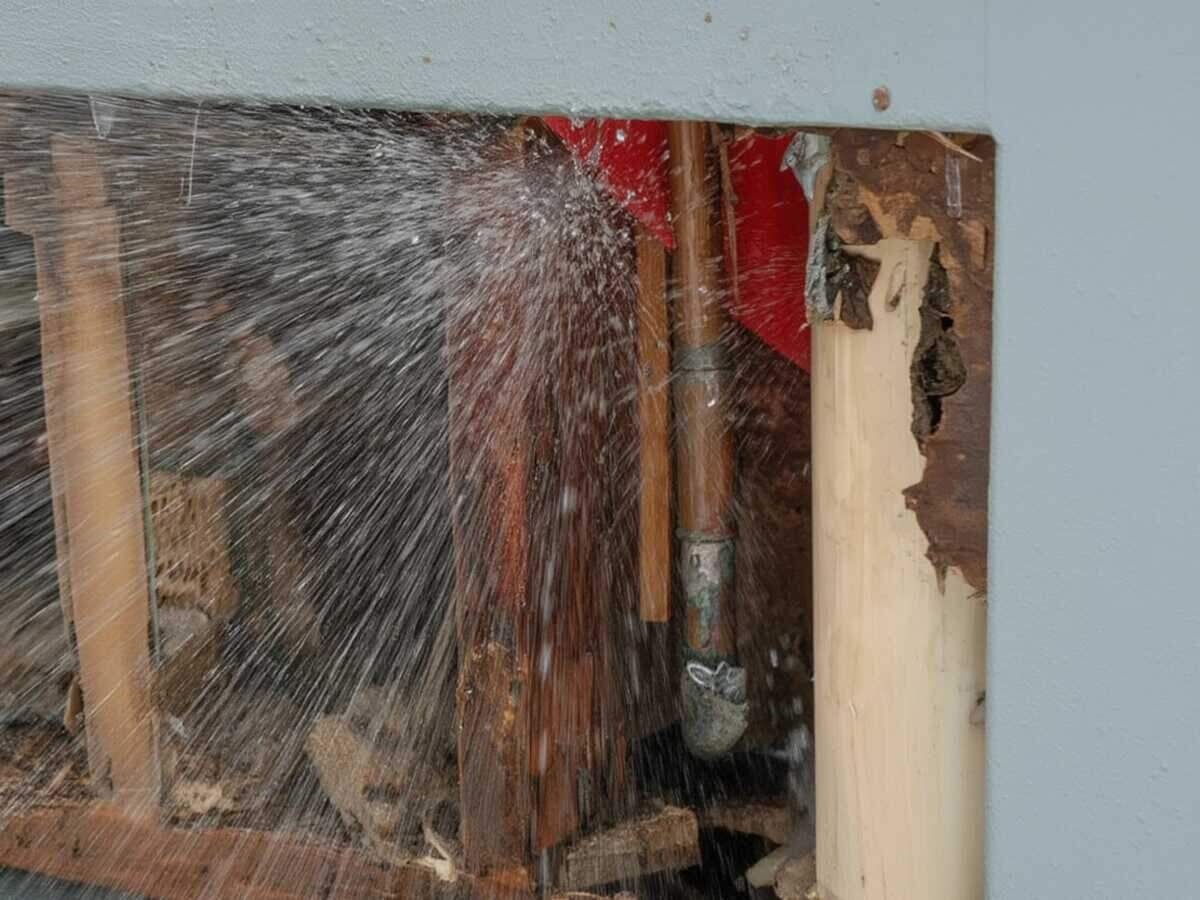
Dripping a faucet works, and it works along exactly one path. Water on the move resists freezing; everything branching off that path is standing still, and standing water in an uninsulated run is what splits in a Central Texas freeze. That is why so many burst pipe calls in Round Rock trace back to the fixture the household uses least. The guest bath at the far end of the plan. The hall bath in a wing that gets opened at Christmas. The laundry sink, the line to a bar sink or a second refrigerator, the capped stub left in a wall when somebody moved a kitchen twenty years ago.
The older sections here have decades of remodeling behind their walls, and every redo leaves a branch running to something that is not there anymore. Nobody has a drawing of those. The newer two-story plans have their own version: a full bath upstairs in a bedroom wing that gets used when family visits, plumbed up an exterior wall on the cold side of the house. Both of them sat perfectly still through the last hard freeze while somebody in the kitchen watched a faucet drip and assumed the house was covered.
Finding what the break left behind
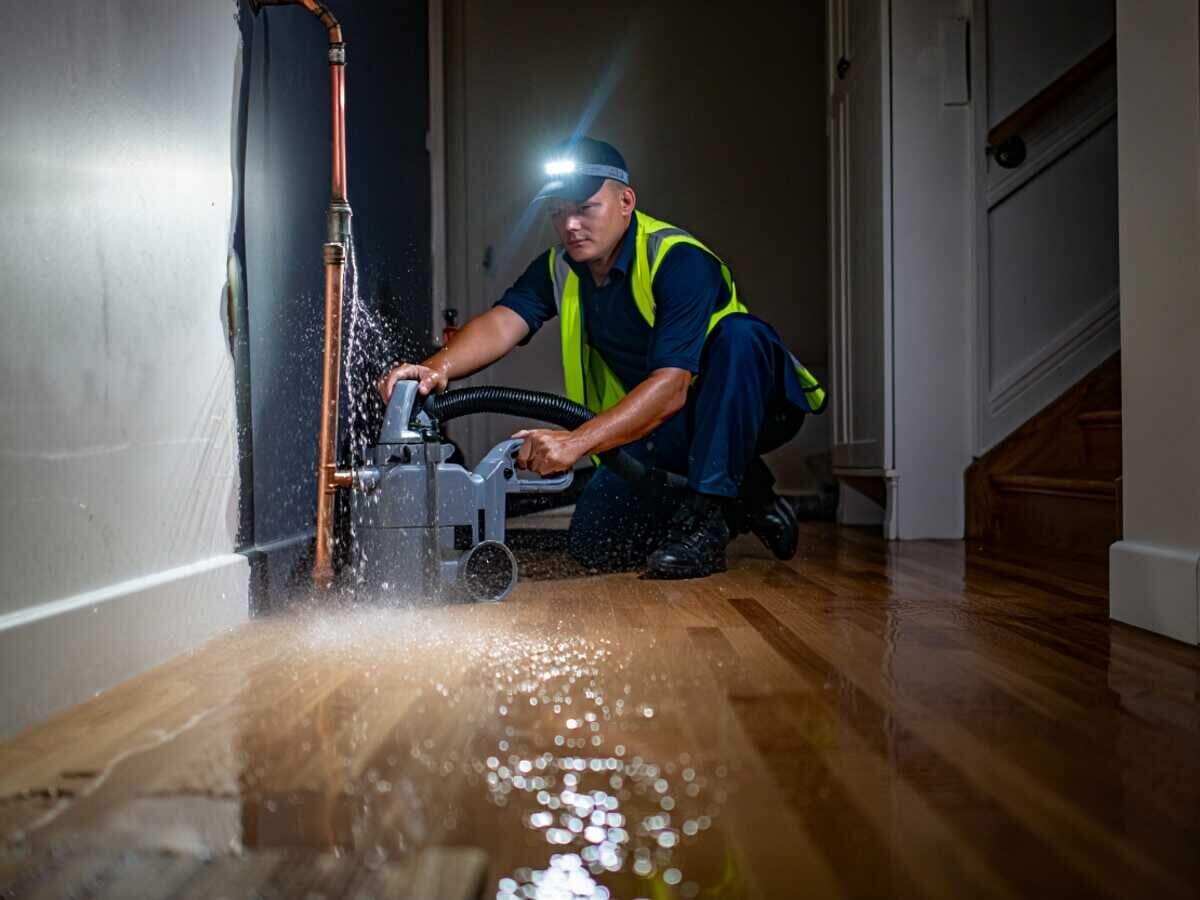
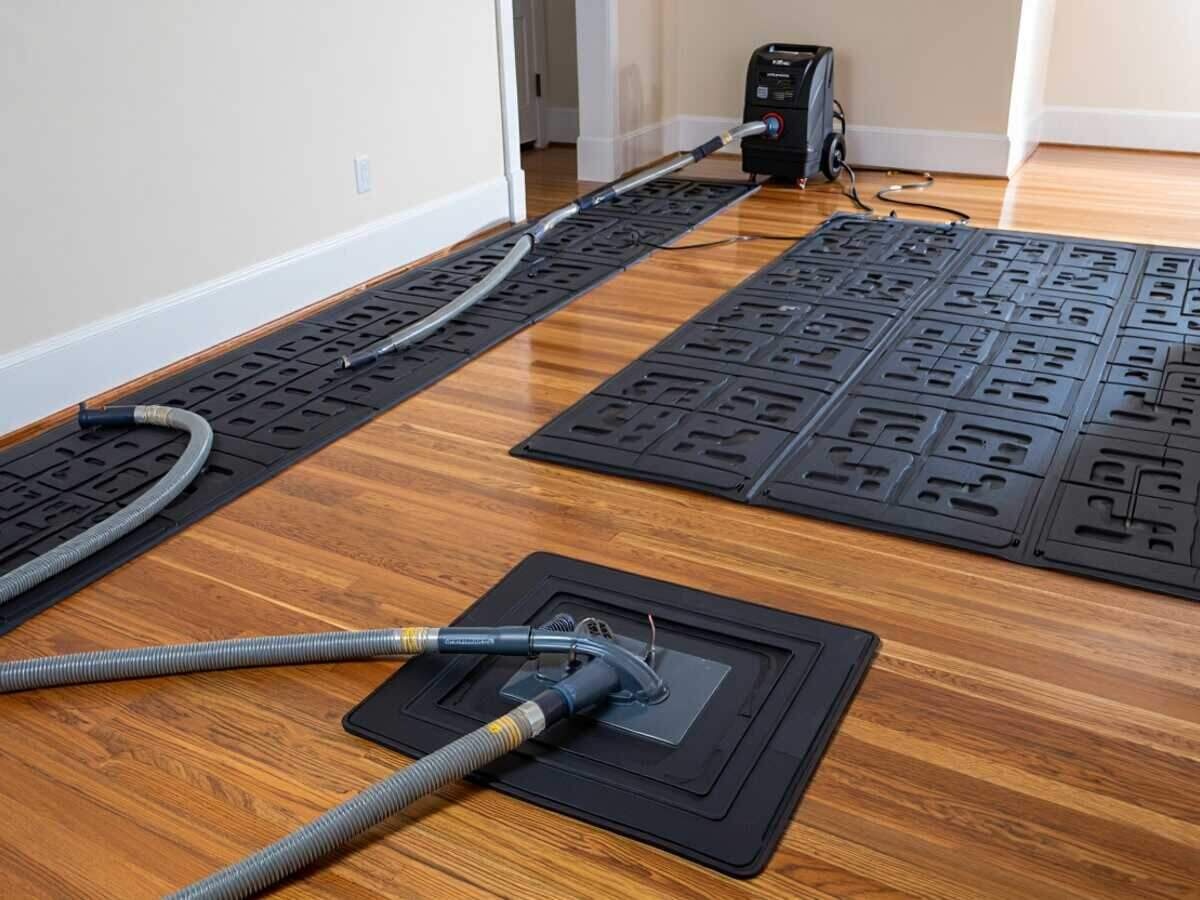
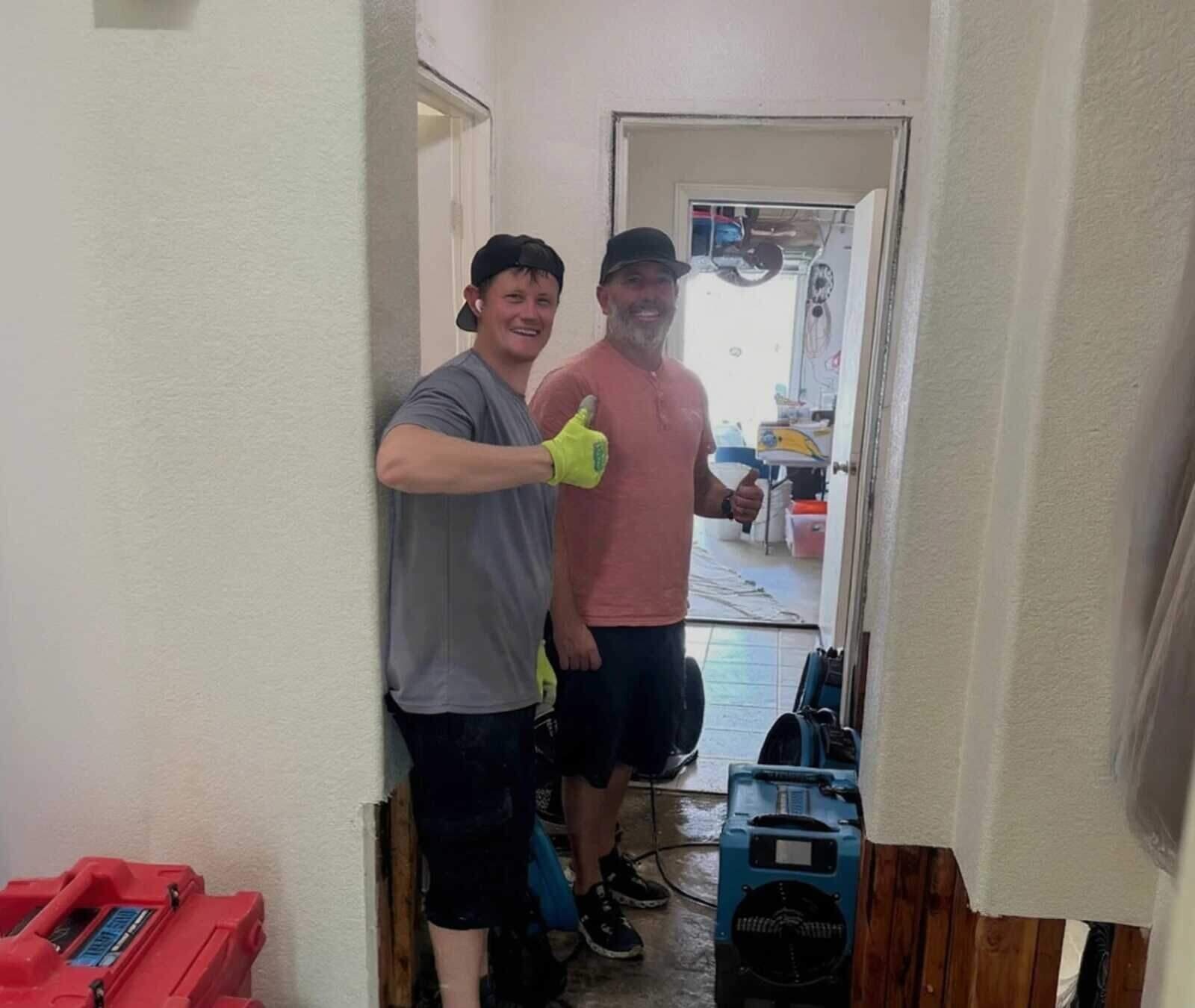
A dead branch does one thing on the way out that catches people off guard: it keeps draining after the water is off. There is no pressure behind it, so it empties by gravity as the ice plug lets go, and a wall can go on getting wetter for hours after the main is closed. We map the water with a thermal camera and a moisture meter, cut access only into the bays that read wet, bag the soaked insulation out, and put focused air movers into the cavity with a dehumidifier working the room. Readings go in daily until the framing holds a dry number. Where a plumber has already opened the wall we use that hole if it is in the right place, which it often is not, since a repair hole gets cut where the fitting is and the water went where gravity took it.
- Thermal camera and meter first, so access cuts land in the bays that are actually wet
- Soaked insulation bagged out instead of left to dry inside a closed cavity
- Focused air movers into the cavity, a dehumidifier on the room, readings logged daily
- Every opening photographed before it is cut, for the freeze claim file
The pipe belongs to your plumber and the water belongs to us, and the two schedules have to line up or the drying runs in fits and starts. We coordinate that directly with whoever you called. Nobody on our truck can tell you what your policy covers on a frozen pipe loss; what we can do is hand your adjuster a file that leaves nothing to guess at, with the readings, the photographs, and a scope in the language they price in. Call (512) 271-5099 and describe what is wet.