



Water Removal in Manor, TX

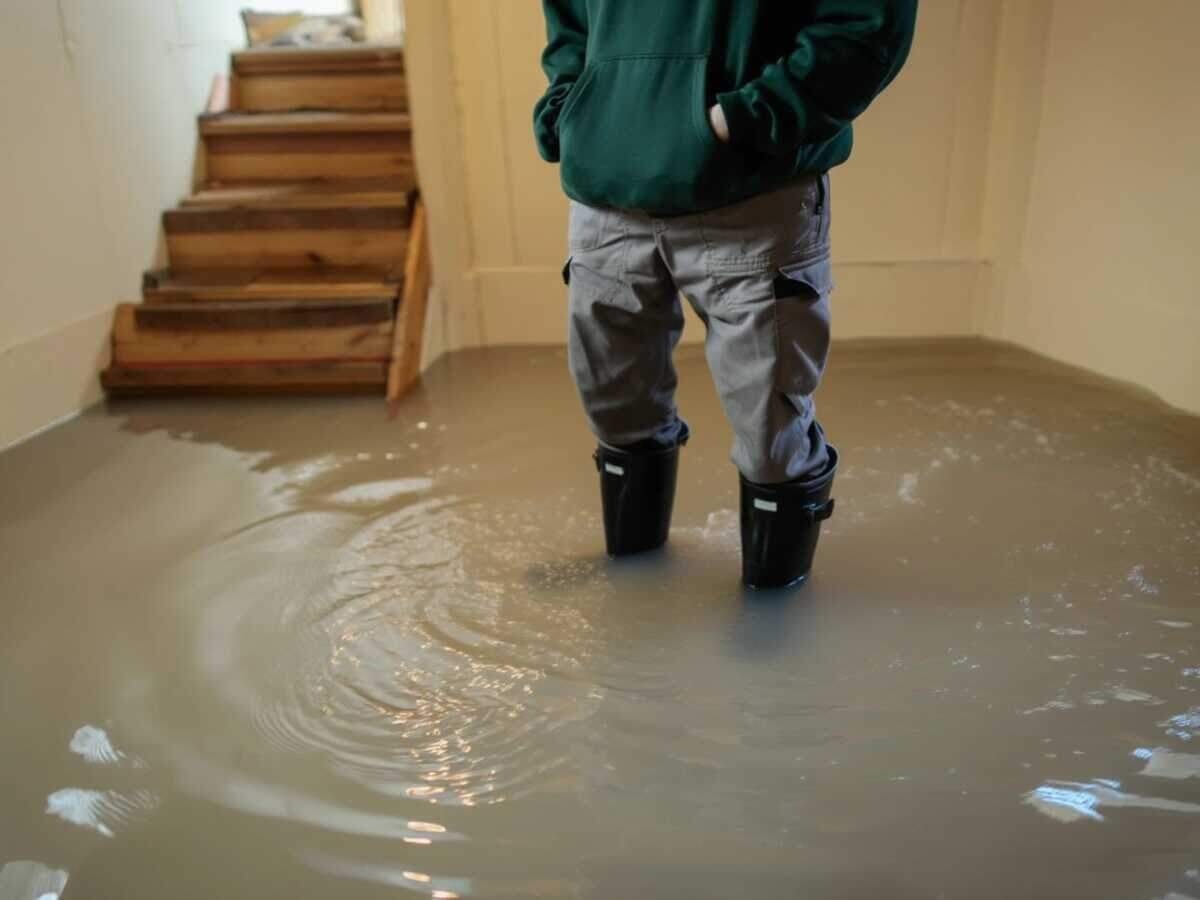
On the slab side the water is in the room and you can see all of it. Six feet away, over the crawl space, the same leak drains straight through the floor and the room looks almost normal. The loss is under the house, on the ground cover.

Call (512) 271-5099 Answered live, 24/7Nights, weekends, holidays
  • We bill your insurer directly
  • IICRC-certified crews
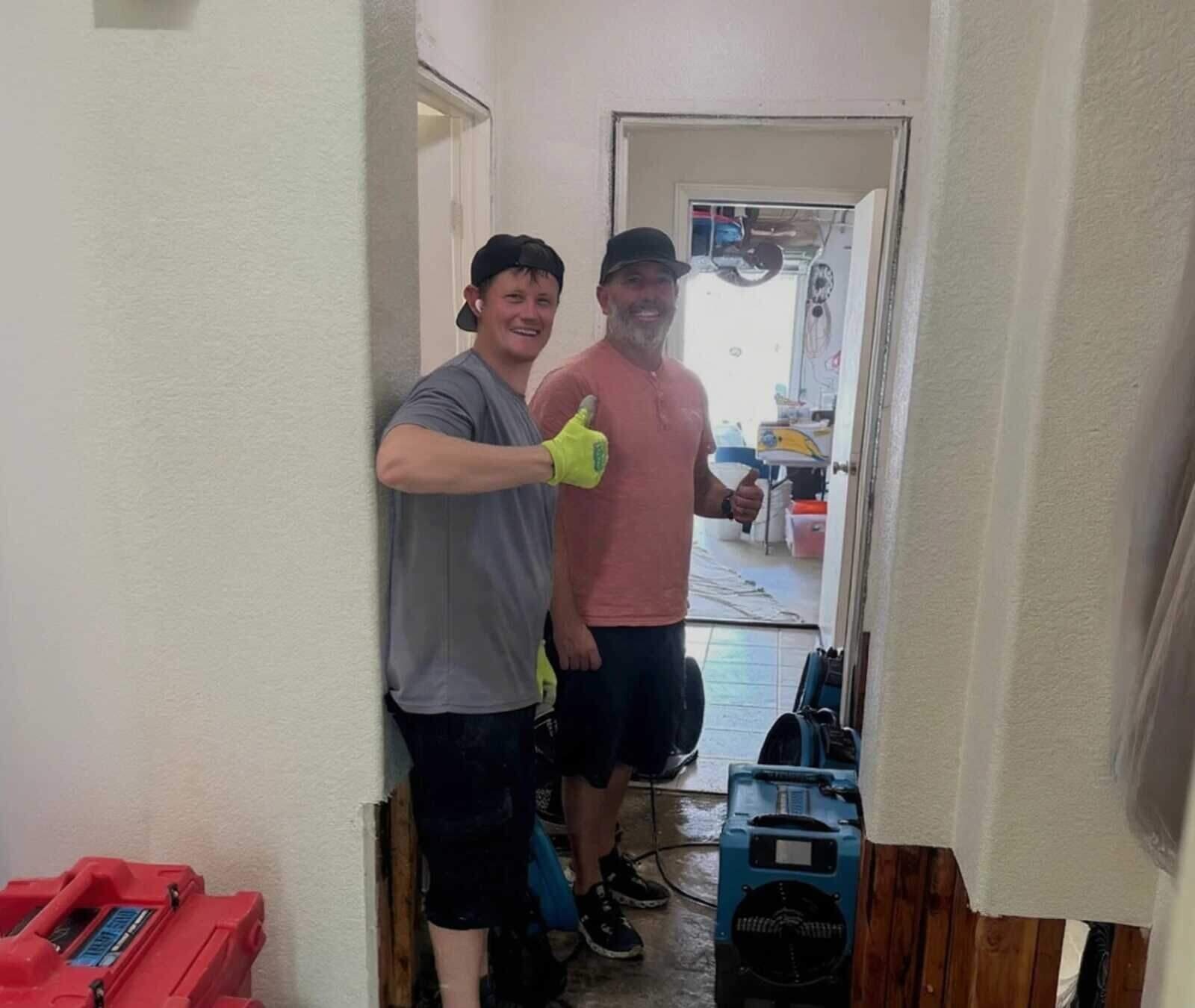
Local water damage crew working in an Austin-area home with air movers and a dehumidifier
Our crew · Austin metro
Why Manor homeowners call us

A local crew that shows up and does it right

Dried to a reading Equipment stays until the material meters dry, not until the surface feels dry.
One crew, start to finish The same local crew from the first extraction to the final repair.
No surprise line on the bill Equipment days and demolition are priced before the work happens, not discovered on the invoice.
Local Austin crew Dispatched from the north metro, never routed through an out-of-state call center.
Certified & accredited
IICRC Certified firm Indoor Air Quality Association member Certified and licensed water damage restoration Certified and licensed mold remediation and removal
How it works

Our restoration process

Four steps, starting the moment you call.

1

Call & Dispatch

Tell us what happened. A local crew is dispatched on the call, and how fast we reach you depends on traffic and where you are.

2

Extract & Stabilize

We stop the source, pump out standing water, and set drying equipment.

3

Dry & Monitor

Air movers and dehumidifiers run while we track moisture daily to dry standard.

4

Repair & Reinstall

Drywall, texture, trim, and paint go back so the room reads finished.

Insurance-savvy from the first call

Documented to claim standard from the first hour

We document the loss to claim standard from the moment we arrive — photos, moisture readings by room, and a scope that maps to your policy. Then we bill your insurer directly for the covered work.

See how claims work in Texas

Water removal in Manor depends on which half of the house you are standing in. Over a slab the floor is a container: the water stays in the room, spreads flat, and the extraction is the job you would expect. Over a framed floor it behaves like a strainer. Water finds the seams in the subfloor, the gap at a register boot and the opening around a toilet flange, and within minutes most of it is under the house where nobody is looking.

What it lands on down there is worth knowing. A plastic ground cover keeps water from soaking into the dirt, which helps us and hurts you if it is ignored, because the water ponds and stays. Fiberglass batts stapled between the joists soak, get heavy and drop into it. Flex duct lying on the ground fills or wicks. Meanwhile the room above has dried on the surface and somebody has decided it drained away, and six weeks later the house smells in July and the floor over that bay feels cool underfoot.

Getting water out from under a floor

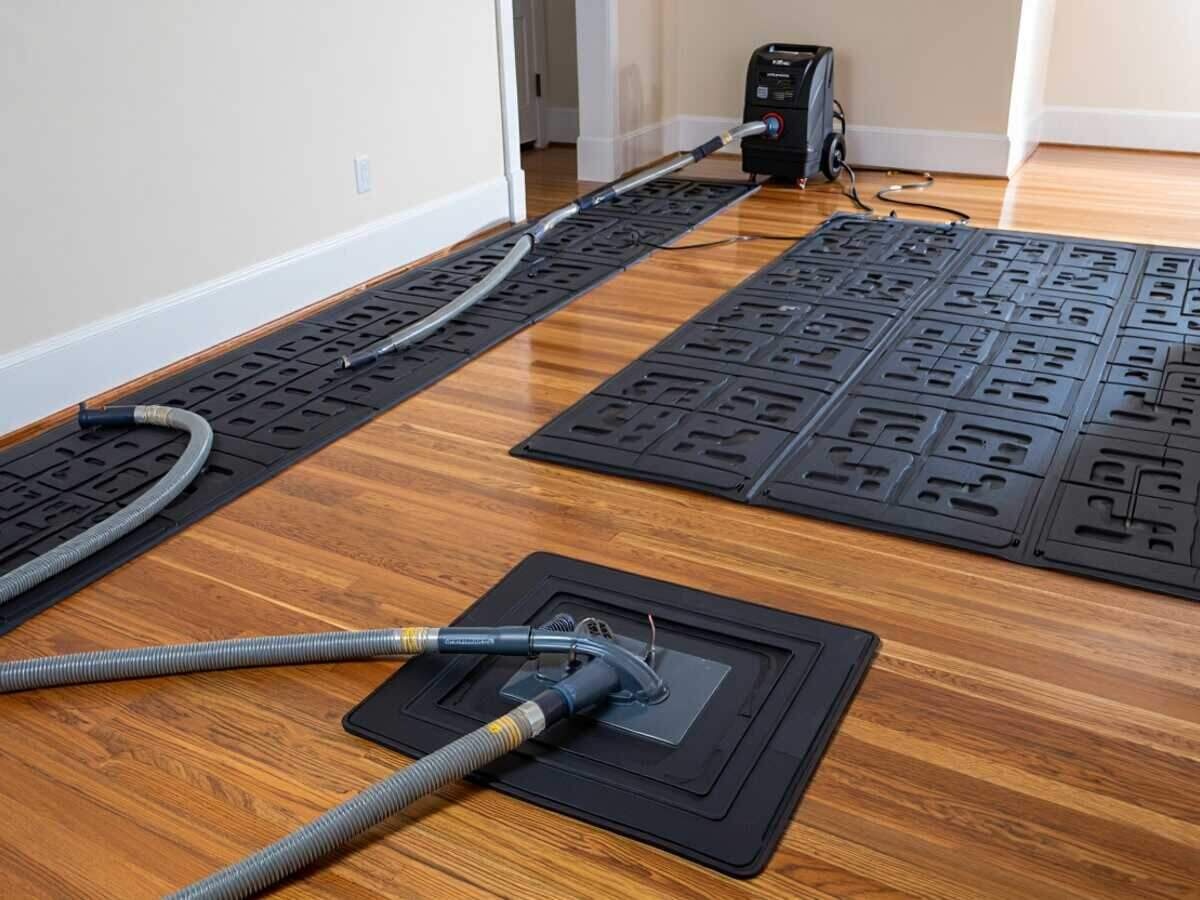
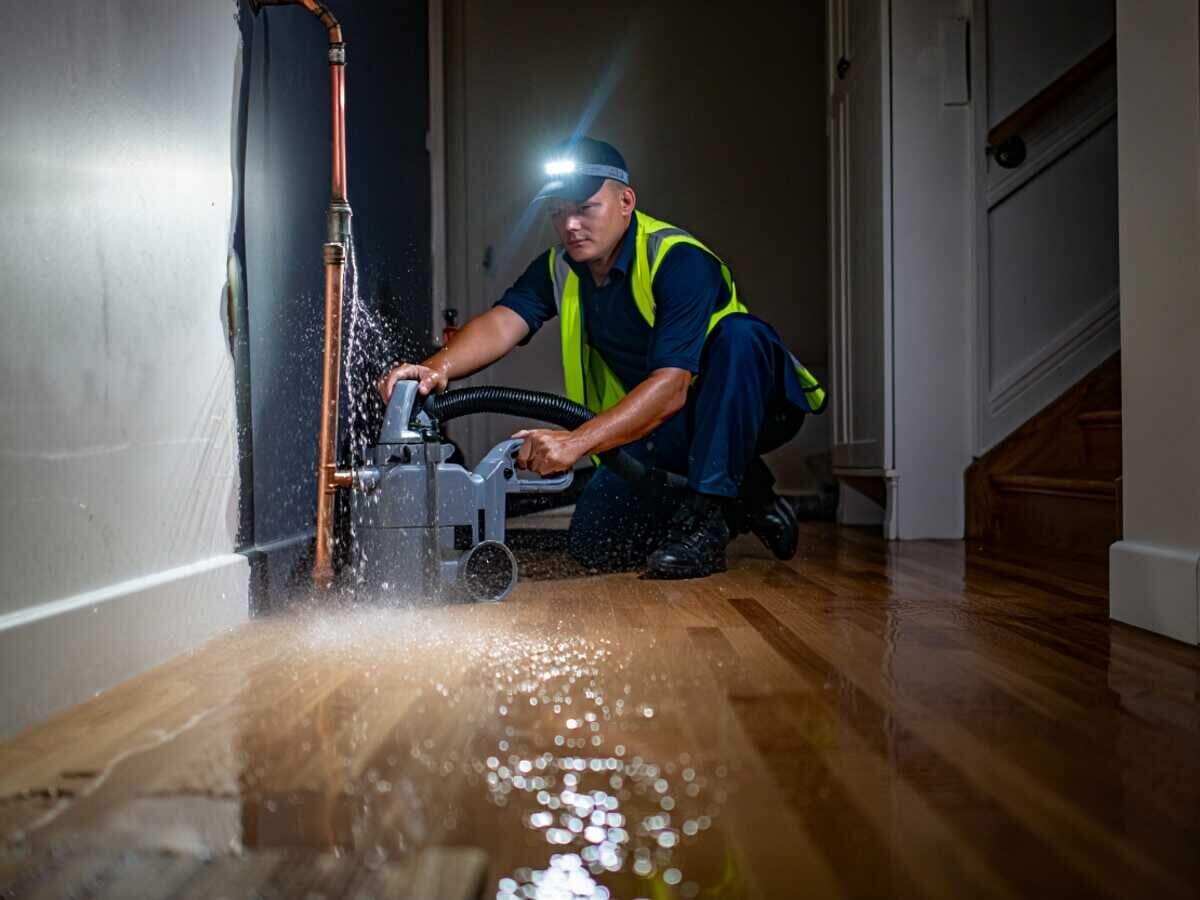
Access comes first, because a hatch, a vent opening or a doorway into the crawl decides what equipment can physically get down there. From that point it is portable extraction carried under the house and worked toward the low spot, with the ground cover pulled back or reset so water is not trapped in a pocket we cannot reach. Fallen batt is bagged out rather than left to dry, wet duct wrap gets the same treatment, and air movement and dehumidification are set below the floor as well as in the room above. Readings come off the joists and the underside of the subfloor, since those are what has to reach a dry number.

  • Water pulled off the ground cover with portables carried under the house, not left to soak away
  • Soaked batt insulation and wet duct wrap bagged out instead of dried in place
  • Air and dehumidification set below the floor as well as in the room above
  • Readings taken on the joists and the underside of the subfloor, daily, until they hold
water removal in Manor, TX

One honest limit on crawl-space work: nobody gets every drop off a dirt floor, and a photograph of damp ground is not the measure of success. The number that matters is the wood. We pull the standing water, take out what cannot dry, and run equipment until the joists and subfloor read dry and stay there. Call (512) 271-5099.
Good to know

Frequently asked questions

The floor looks dry. Why do you want to go under the house?

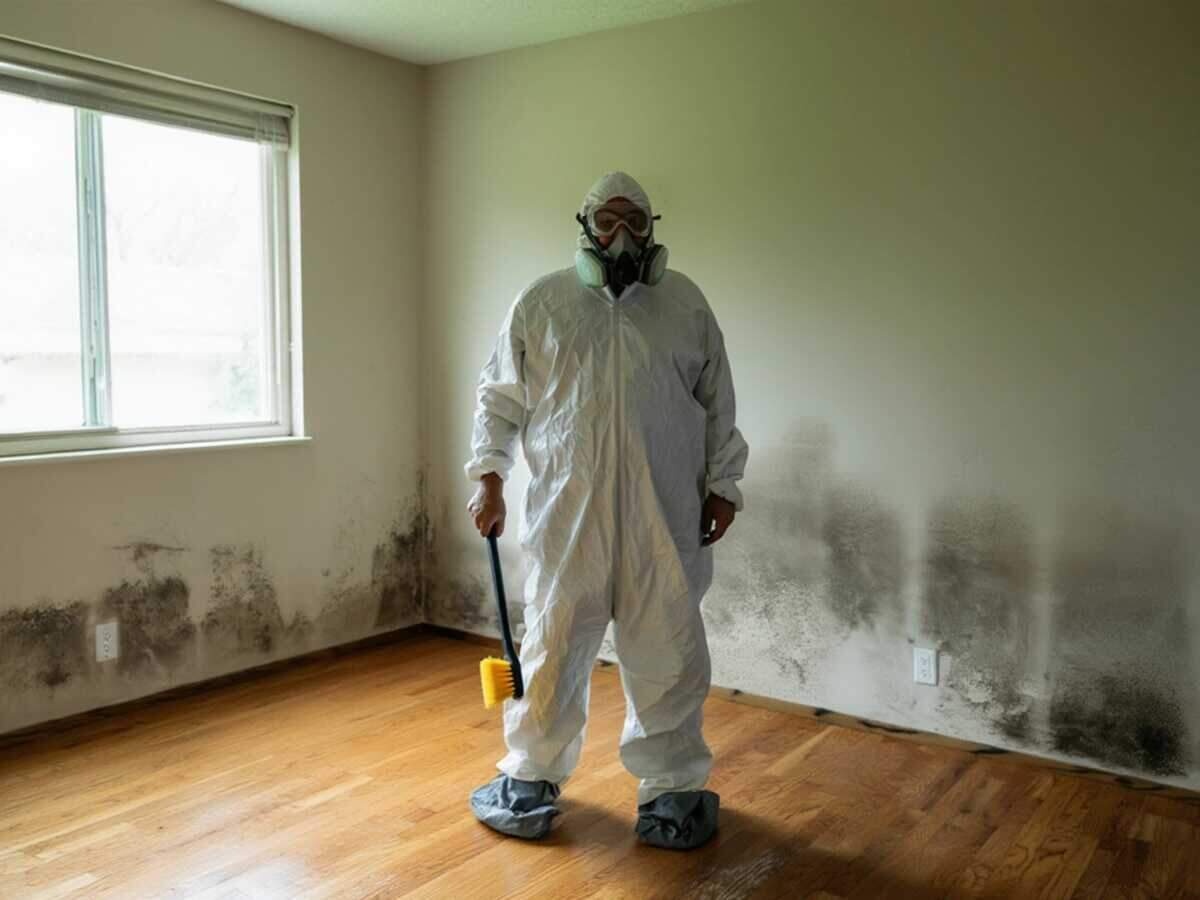
Because that is where the water went. A framed floor lets water through at the subfloor seams and around every penetration in it, so a leak that barely marked the room can put twenty gallons on the ground cover underneath. Left there it keeps the joists and the underside of the subfloor damp for weeks, which is exactly the condition that produces a smell in the summer and growth on the wood.

Can anybody actually get under there?

Usually, and we will tell you quickly if not. What we need is a hatch or a vent opening that a person and a hose fit through and enough clearance to work, which most of these houses have. Where the crawl is too tight, we work from above instead and sections of flooring come up so equipment can reach the cavity, which is more disruptive and we would rather avoid it. Either way the water does not get to stay down there.

It went into the dirt. Does it not just soak away?

Not with a ground cover in place, and not fast enough to matter without one. The plastic is there to keep ground moisture out of the house, and it does the same job in reverse when water lands on top of it. Even on bare dirt a crawl space has almost no air movement, and humidity under a wet floor stays high for a long time, which is why we dry it deliberately instead of waiting for it to sort itself out.

Do the ducts under the floor have to be replaced?

Sometimes, and it comes down to what got wet. Flex duct that filled with water, or insulation wrap that is saturated, does not come back and it goes on the scope for replacement. Duct that only got splashed on the outside can be cleaned and dried. We look at every run in the affected bay, because a wet duct sitting in a crawl space blows that air into your bedrooms the moment the system runs again.

Water damage won't wait

In Manor, the water you cannot see is under the floor.

Call and tell us which part of the house it happened in, the newer slab side or the older framed side. We extract what is in the room, get under the floor where the rest went, take out what cannot dry, and run equipment until the wood reads dry. Everything is metered and photographed for your claim.

Call (512) 271-5099 Available 24/7 · Austin metro