


Roof water damage repair on an older Manor house is complicated by everything that has already been done to the roof. Decades of ownership leave a record up there: cement smeared over a flashing, a patch around a vent, a valley that has been worked on more than once, and on a good number of these houses a second layer of shingles laid straight over the first because it was cheaper than a tear-off. Water that gets past the top layer runs on the old one until it finds a nail hole or a gap in aging felt, so the point where it enters the roof and the point where it enters the house can be a long way apart.
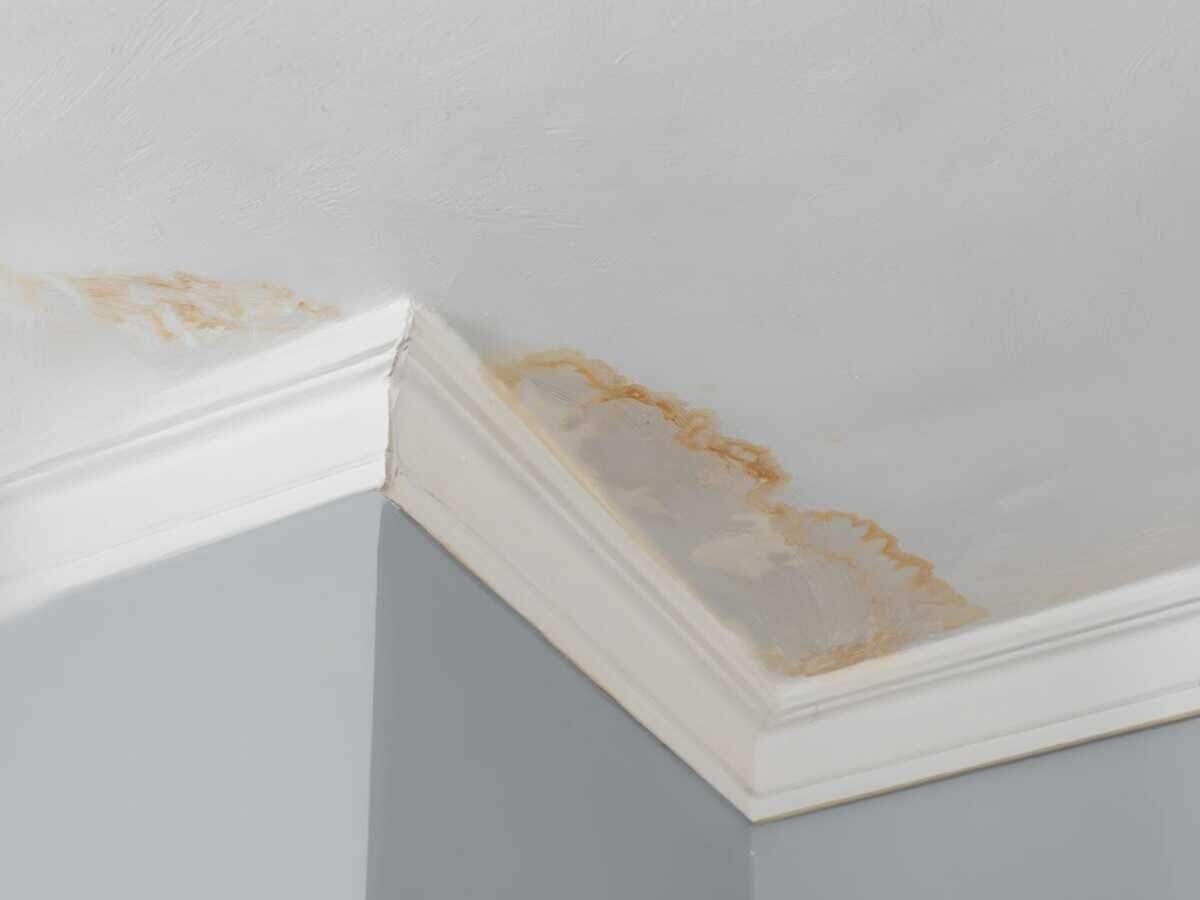
The decking matters too. Older roofs in the original part of town are frequently plank rather than plywood: one-by boards laid with gaps between them, which lets water through in a dozen small places instead of one. What that produces inside is a band of wet insulation spread along the underside of the roof and across the attic floor rather than a neat drip, and a ceiling stain that is honestly no guide at all to where the trouble started.
The inside work while the roof waits its turn
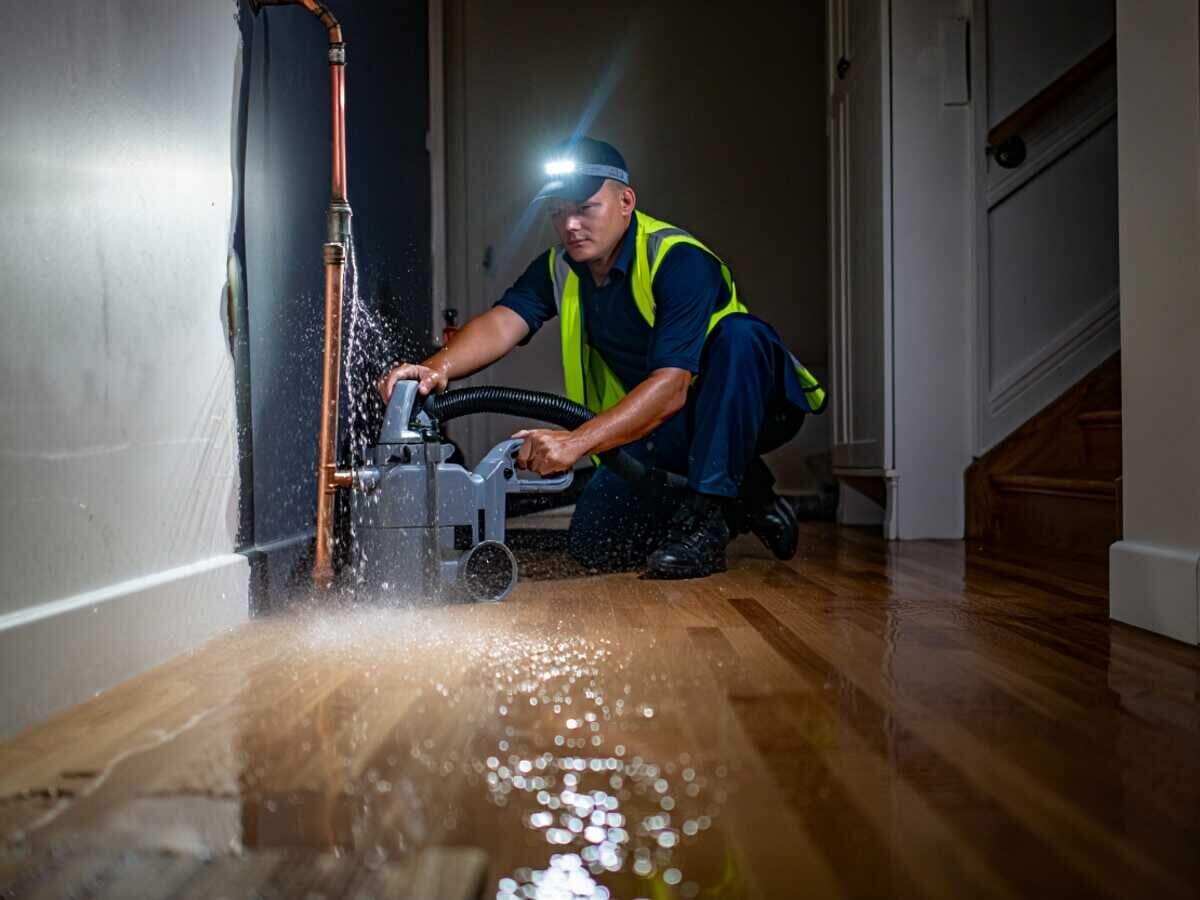
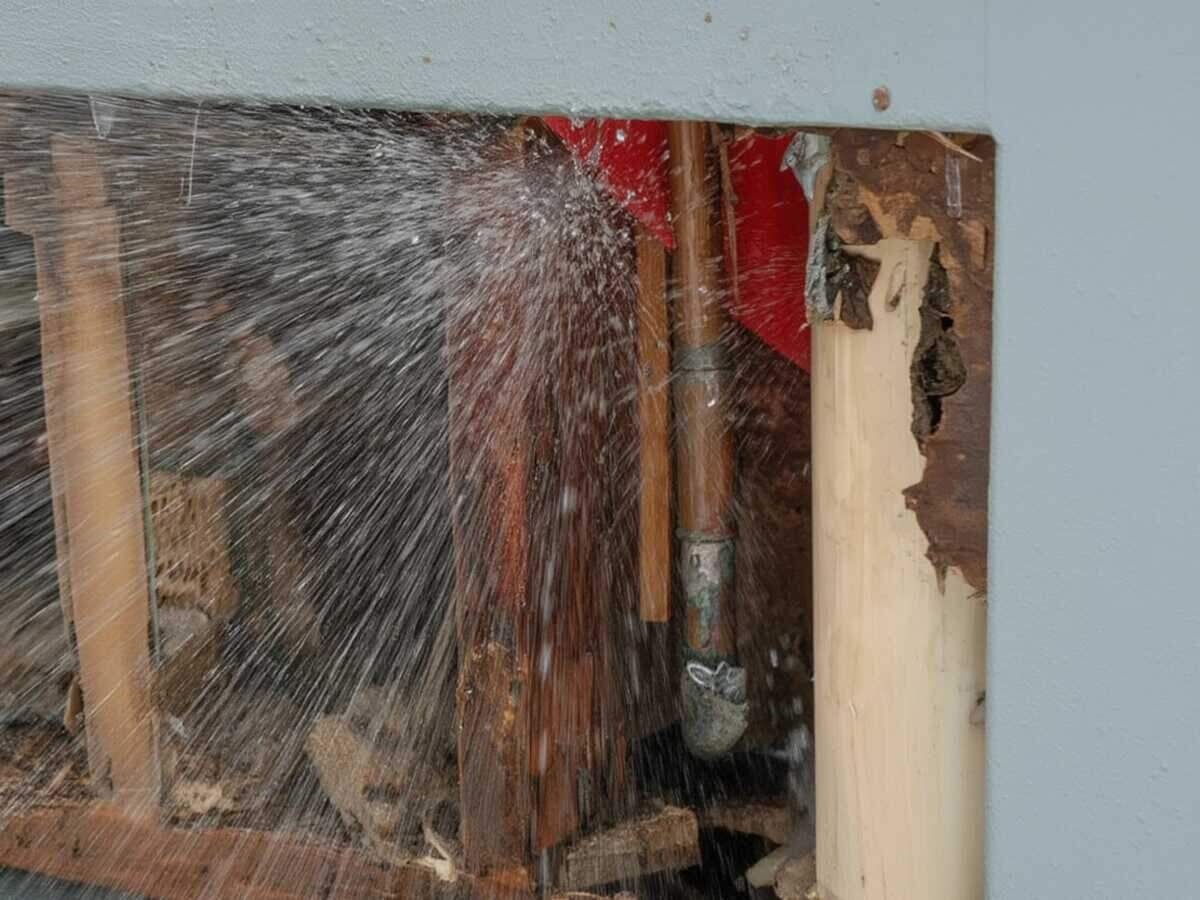
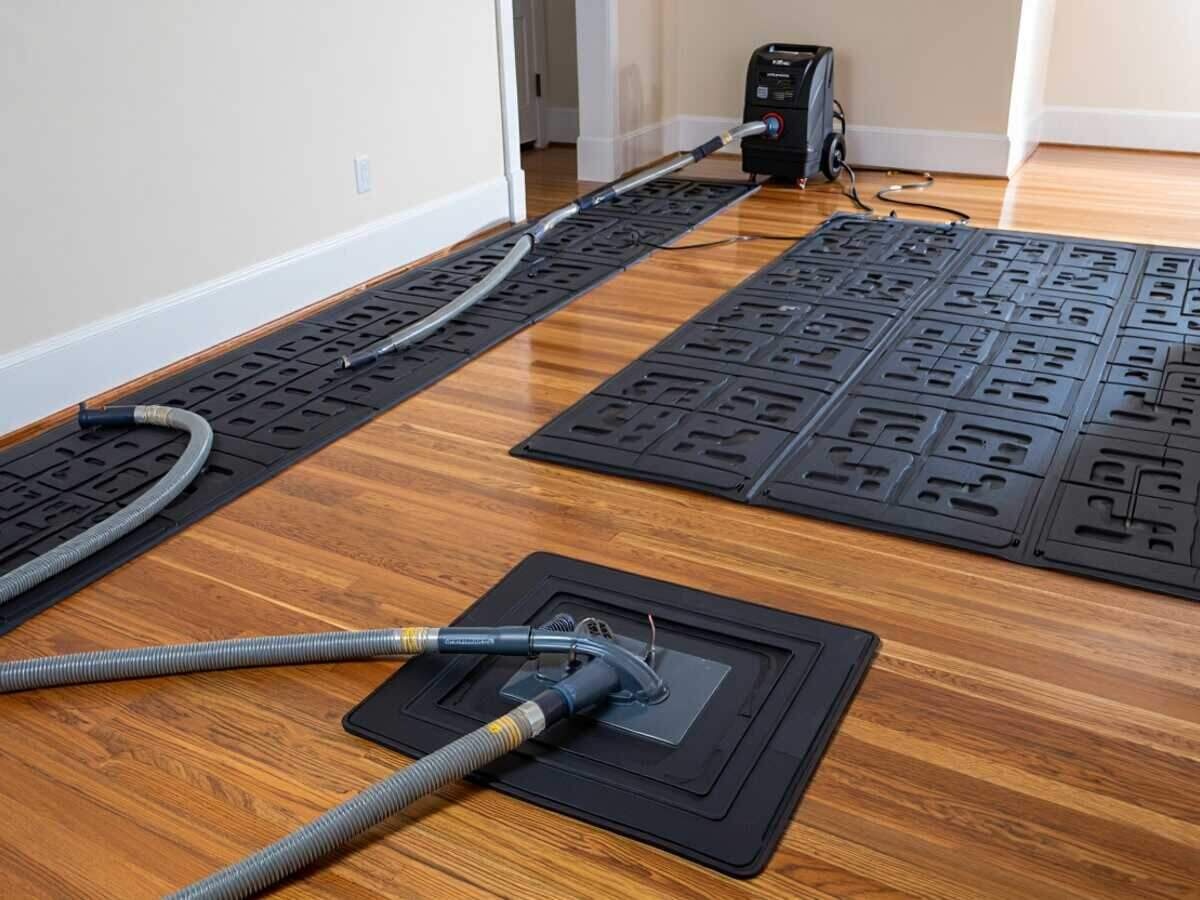
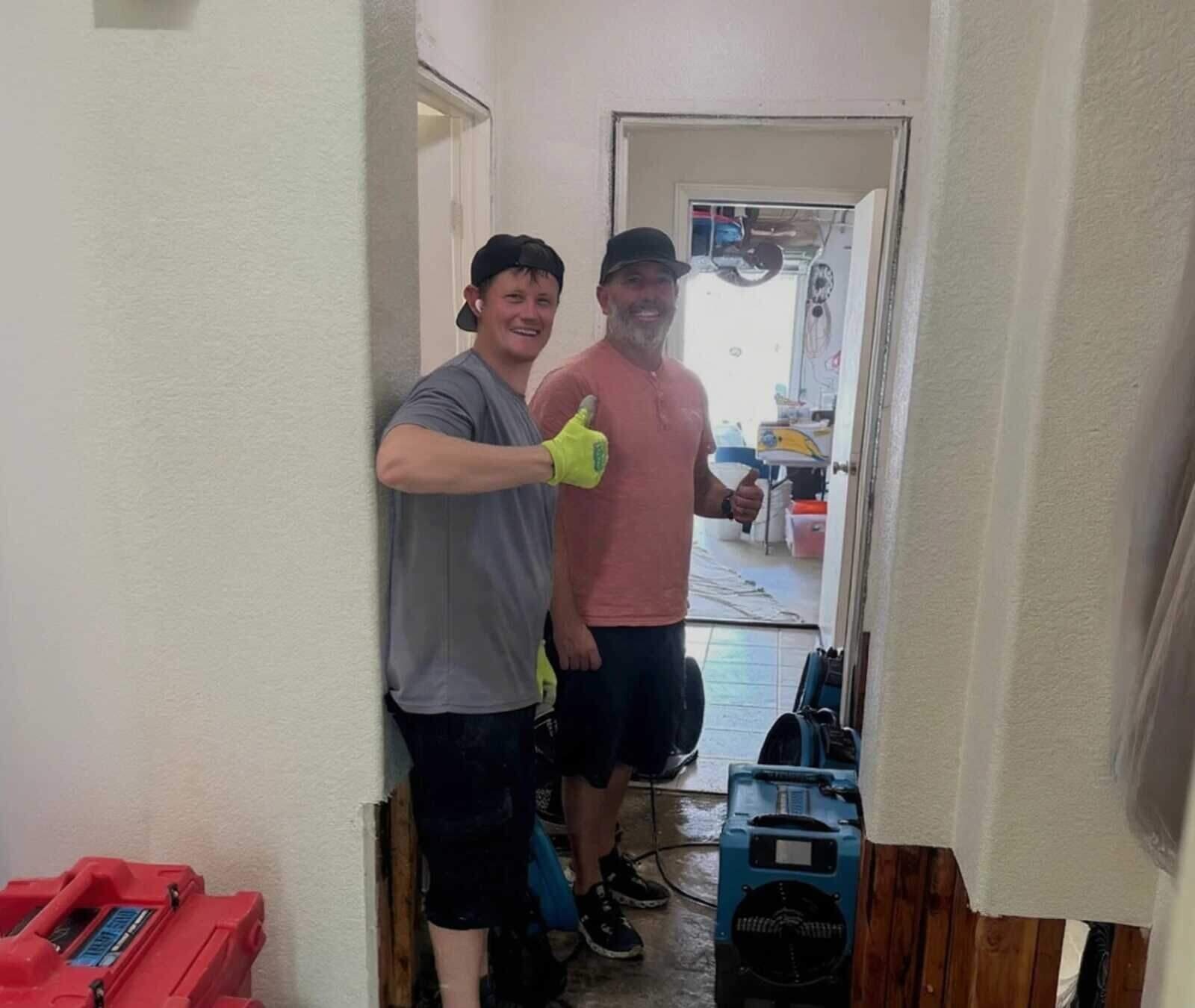
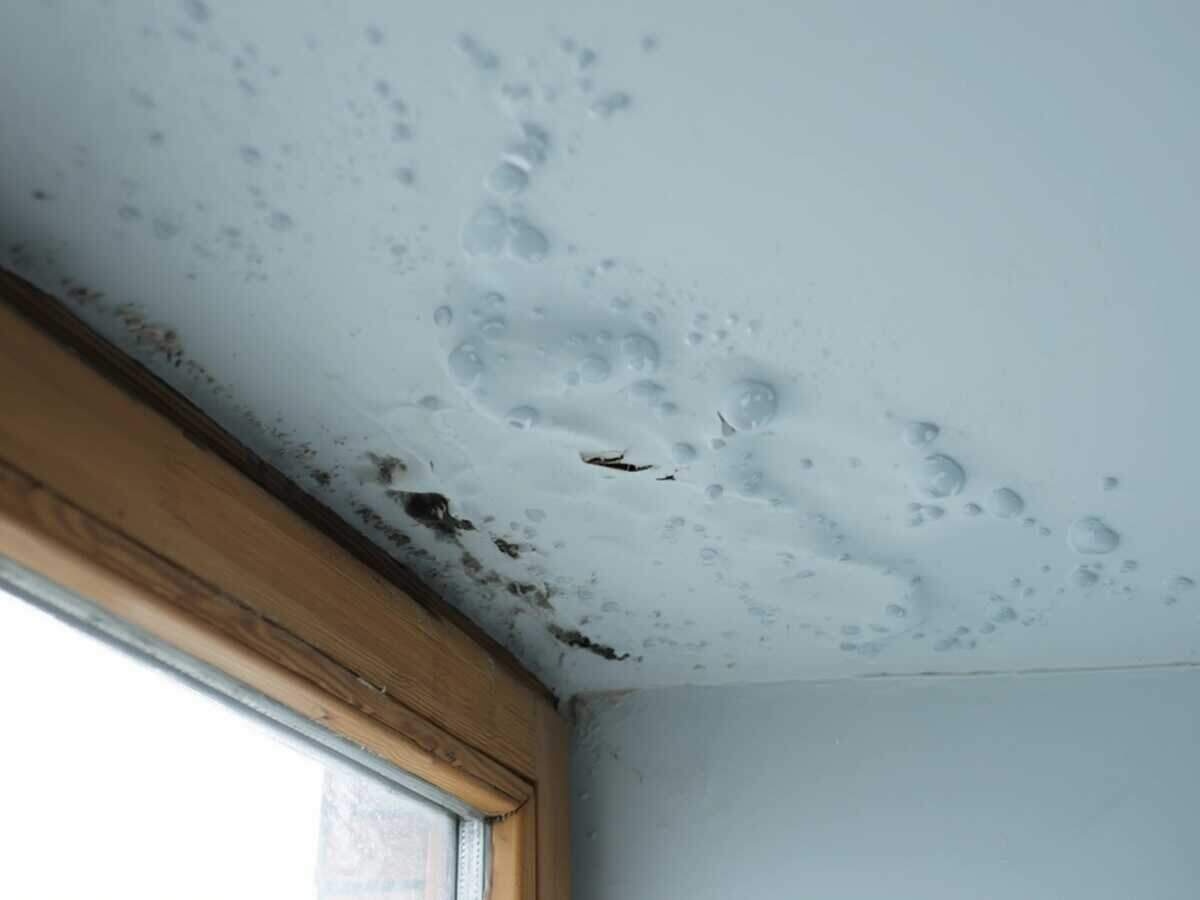
Where water is still arriving, the first move happens indoors: we catch it and route it into a container so it stops travelling from room to room. Then infrared and a meter give us the real wet footprint, which on a layered roof is nearly always wider than anyone expected. Saturated insulation leaves in bags, the deck and the rafters run under equipment until the daily numbers hold, and ceiling material comes out only where those numbers condemn it. Your interior file gets photographed and scoped by itself, so it never ends up folded into the roofer estimate as a single line.
- Active intrusion contained from inside, so the loss stops growing while the roof waits
- The wet footprint mapped with infrared and a meter, along the deck as well as the attic floor
- Saturated insulation bagged and carried out, decking and rafters read daily as they dry
- An interior scope written on its own rather than folded into the roofing estimate
Shingles are a licensed roofer's work, and a layered roof is a conversation worth having with one, because a tear-off changes what can be inspected and what can be warranted. Our end is the water that already got in, and we schedule the rebuild behind the roofing work so nothing closes up over damp framing. Call (512) 271-5099, storms and weekends included.