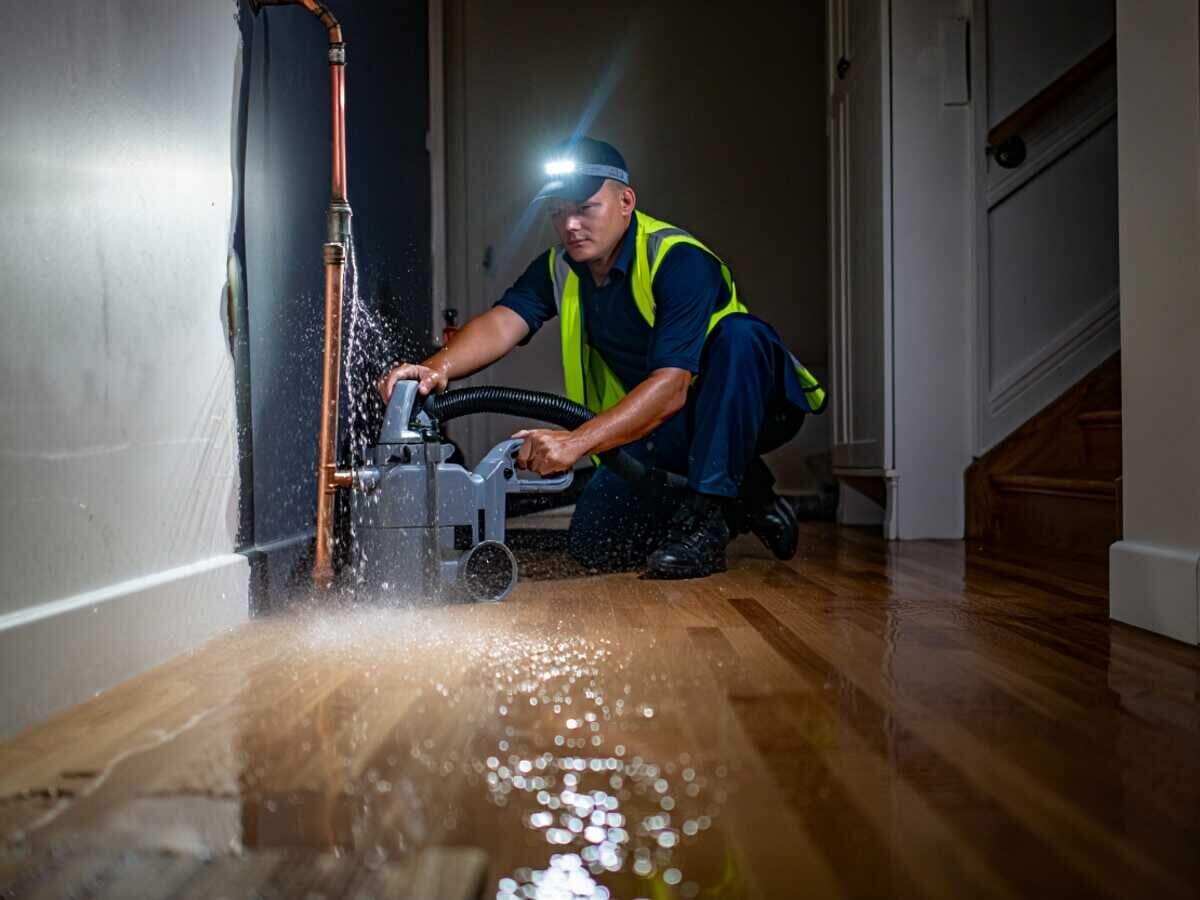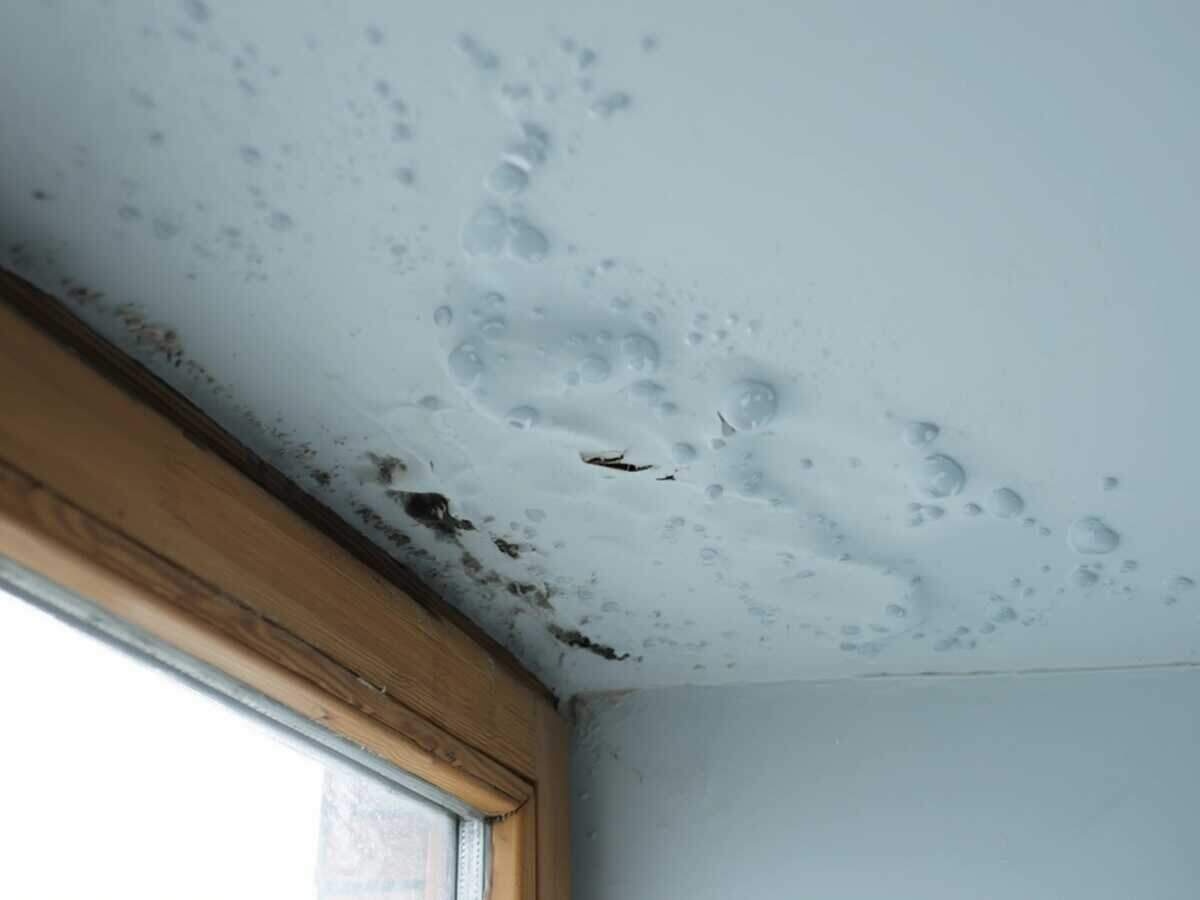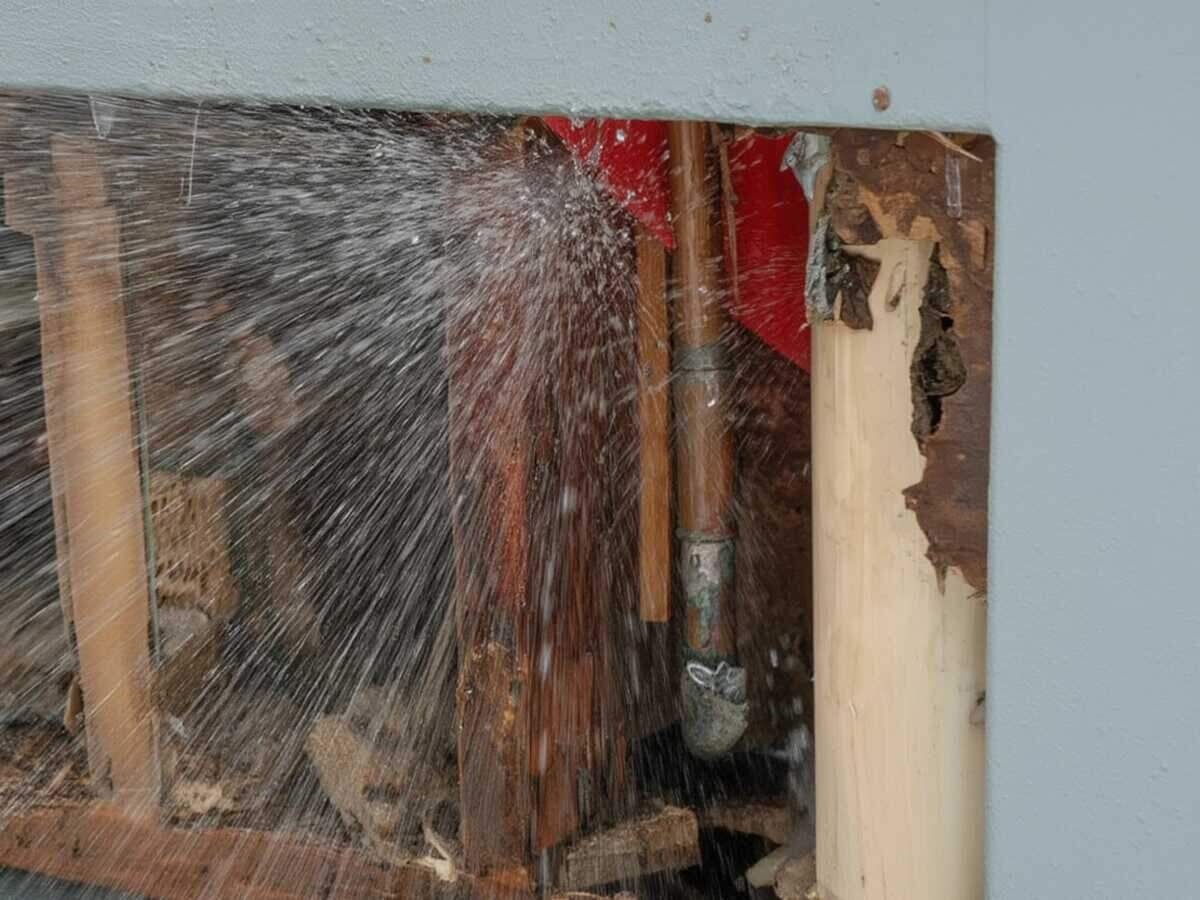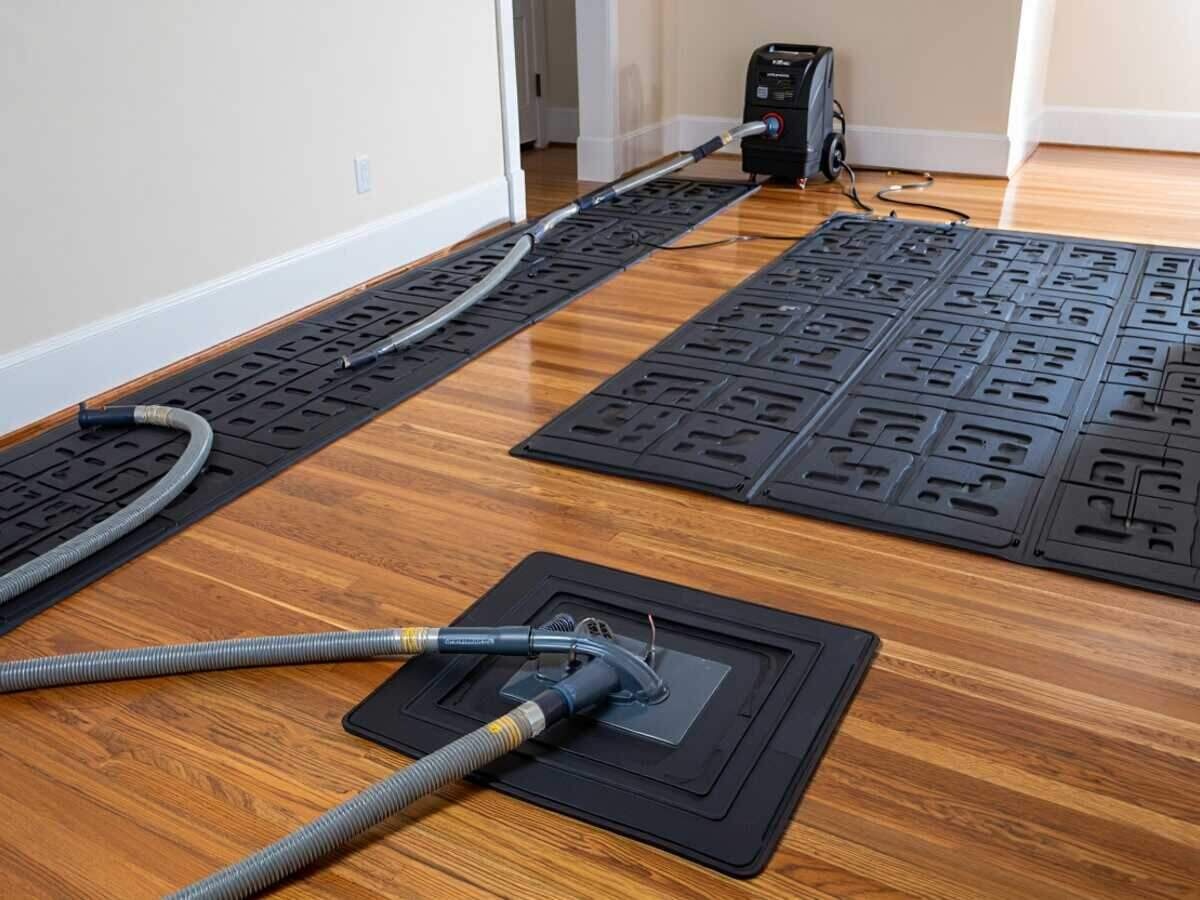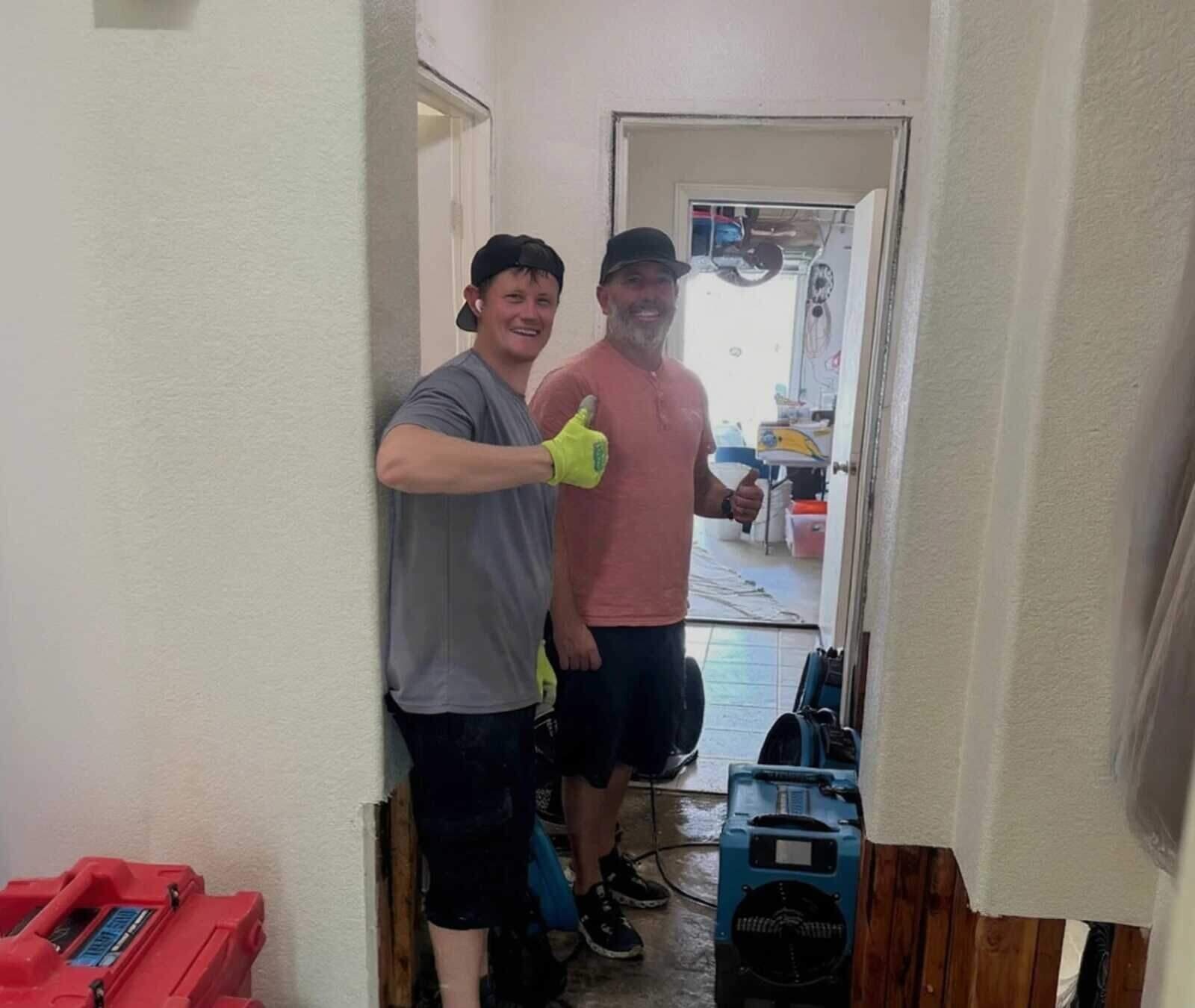




Three things put water on a Manor ceiling, and one of them never involves a leak. A supply or drain line above the ceiling runs day and night, wet weather or dry. A roof leak tracks the rain. Condensation keeps a season: it appears when the air conditioning is working hard, it fades in October, and it draws a mark that follows a duct rather than pooling in one place. Sorting out which one you have is the first thing we do, because it decides everything after it.
Ductwork is a common culprit in added-on houses. The runs serving rooms built later were pulled through the attic after the fact, often the long way around, and where insulation is compressed, torn or stops short of a register boot, that cold metal sits below the dew point of attic air through a Central Texas August. It sweats, the drops land on the ceiling board and the insulation above it, and you get a slow stain in a spot with no plumbing anywhere near it. Ceiling water damage repair on one of these is the same work as a leak, but the trigger is the season rather than a failure.
What we do about a ceiling that got wet without a leak
We read the ceiling from below and the insulation above it, then follow the wet line back to whatever is producing it. Board that has lost the bond in its paper comes down and is replaced; board that only picked up humidity dries in place with the insulation pulled back off it. The cavity dries on daily readings, and we mark the exact surface that is sweating so your air conditioning contractor is not hunting for it. We handle the ceiling and the water. Duct repair and system insulation belong to an HVAC company, and we say so rather than charge you for guesswork.
- The pattern read first, since rain-driven, use-driven and seasonal water each point somewhere different
- Ceiling board replaced only where it has lost its bond, dried in place where it has not
- Wet insulation pulled back off the board so the cavity can actually dry
- The sweating run marked and photographed for whoever repairs the duct
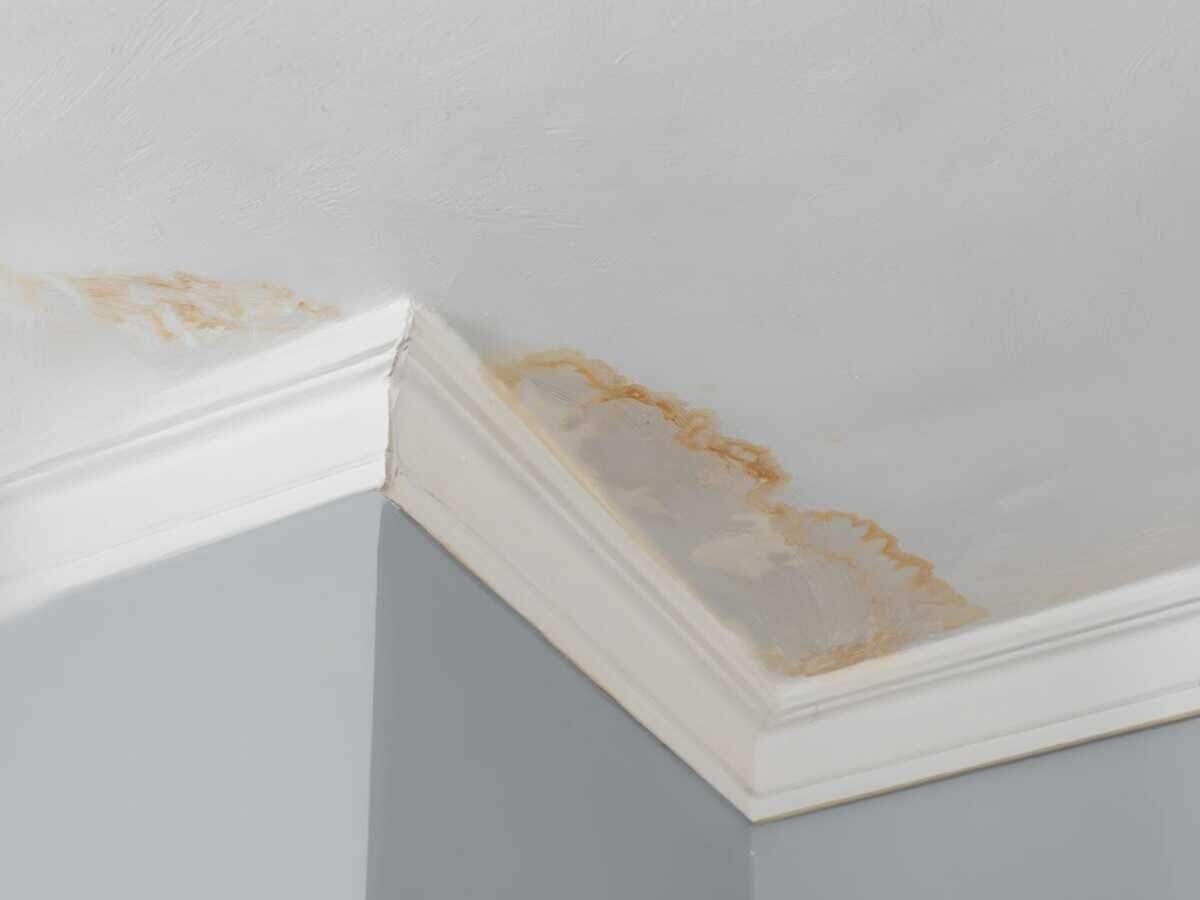
Be ready for a coverage conversation on this one. Carriers generally pay for sudden accidental water and take a hard line on damage that built up over seasons, and a condensation stain that has come and gone for three summers reads as the second kind. We document what we found and what it measured, and your carrier decides what it covers. If the cause turns out to be a line rather than a duct, that is a different conversation entirely, which is one more reason to have it identified properly. Call (512) 271-5099.