


Hardwood Floor Water Damage Repair in Manor, TX

An old Manor floor has probably been sanded before, maybe twice. What decides whether yours can be flattened again is not the cupping. It is the thickness left above the tongue, and a threshold shows you that in about a minute.

Call (512) 271-5099 Answered live, 24/7Nights, weekends, holidays
  • We bill your insurer directly
  • IICRC-certified crews
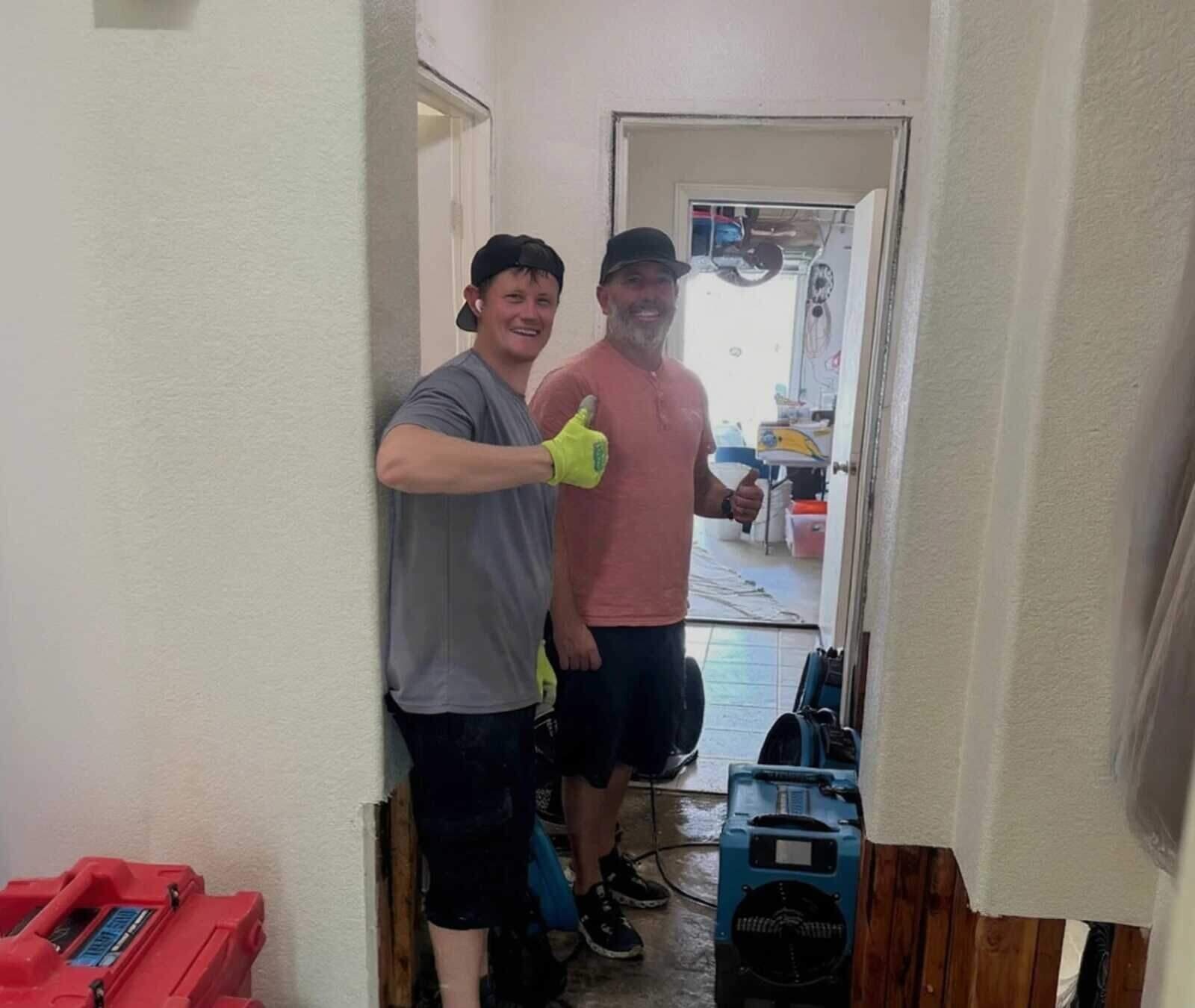
Local water damage crew working in an Austin-area home with air movers and a dehumidifier
Our crew · Austin metro
Why Manor homeowners call us

A local crew that shows up and does it right

Dried to a reading Equipment stays until the material meters dry, not until the surface feels dry.
One crew, start to finish The same local crew from the first extraction to the final repair.
No surprise line on the bill Equipment days and demolition are priced before the work happens, not discovered on the invoice.
Local Austin crew Dispatched from the north metro, never routed through an out-of-state call center.
Certified & accredited
IICRC Certified firm Indoor Air Quality Association member Certified and licensed water damage restoration Certified and licensed mold remediation and removal
How it works

Our restoration process

Four steps, starting the moment you call.

1

Call & Dispatch

Tell us what happened. A local crew is dispatched on the call, and how fast we reach you depends on traffic and where you are.

2

Extract & Stabilize

We stop the source, pump out standing water, and set drying equipment.

3

Dry & Monitor

Air movers and dehumidifiers run while we track moisture daily to dry standard.

4

Repair & Reinstall

Drywall, texture, trim, and paint go back so the room reads finished.

Insurance-savvy from the first call

Documented to claim standard from the first hour

We document the loss to claim standard from the moment we arrive — photos, moisture readings by room, and a scope that maps to your policy. Then we bill your insurer directly for the covered work.

See how claims work in Texas

Drying an old solid floor is the straightforward half of a hardwood floor water damage job. The question that decides the invoice is what can be done to it afterward. A three-quarter-inch strip floor leaves roughly a quarter inch of usable wood above the tongue when it is new, and every full sanding takes a slice out of that. A floor in a house that has changed hands a few times has often been done twice already, and there is a point past which nobody can flatten it again because there is nothing left to cut.

You can usually see where you stand without pulling anything up. At a floor vent, a threshold or the edge of a hearth, the cut end of a board shows how much face is left above the tongue. Face nails sitting near the surface say the same thing, and so does a tongue that is visible at a gap. It is worth knowing on day one, because it changes the plan: a floor with life left in it gets dried with a refinish waiting at the end, and a floor without it gets dried anyway and then repaired on different terms.

Drying an old floor without ruining it

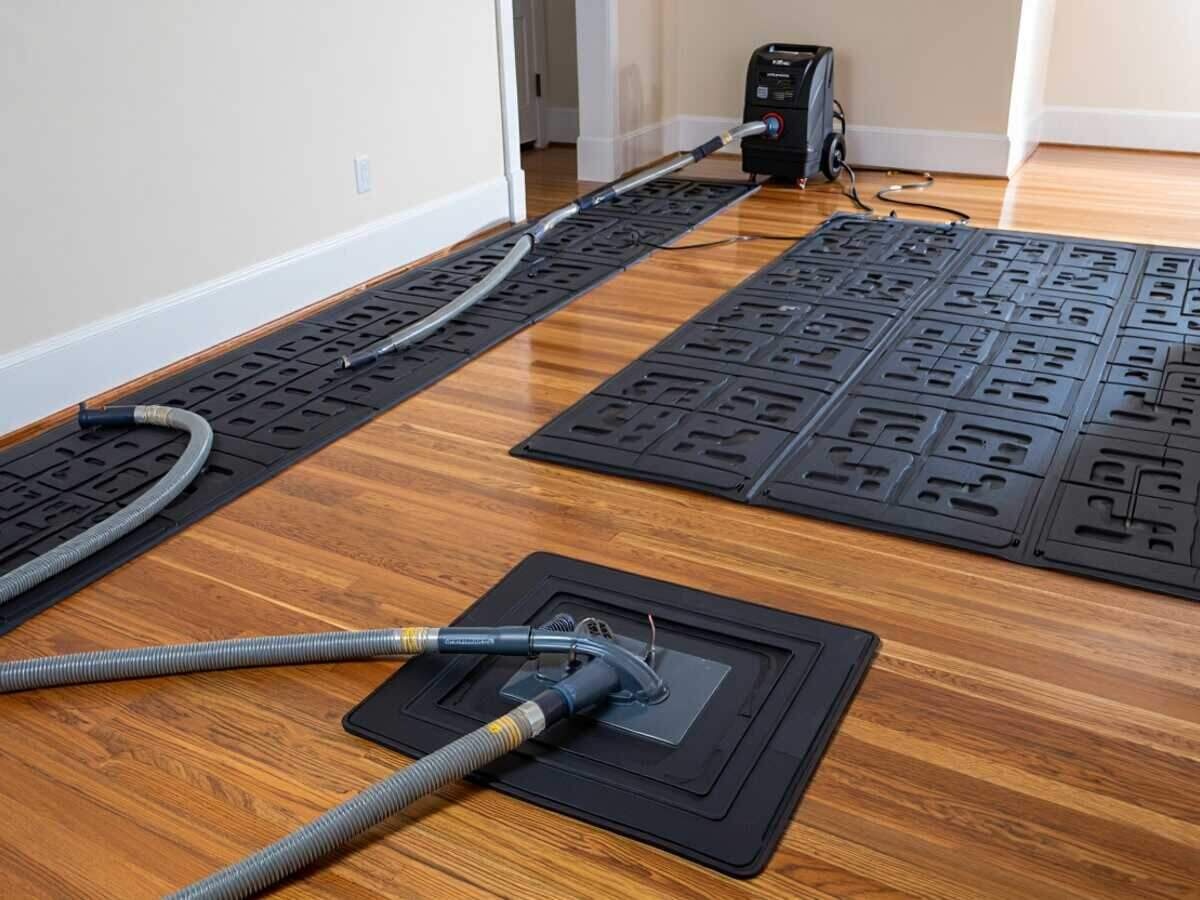
Old wood does not like being hurried. We take readings on the boards, the subfloor and the framing under them, then dry with mats and vacuum on the field and dehumidification holding the room, at a pace slow enough that boards flatten instead of splitting at the nails. When there is a crawl space under it, the underside gets equipment as well, since a subfloor that keeps handing moisture back will undo the room above it. Readings run daily and we stop against the moisture content that same floor holds in a room which stayed dry, not against a number out of a book.

  • The remaining wear surface read at a vent or threshold before anything is promised
  • Readings taken on boards, subfloor and framing, not just the surface you walk on
  • Mats and vacuum run at a deliberately low rate so old boards flatten instead of splitting
  • Stopped against a dry section of your own floor rather than a generic target
hardwood floor water damage repair in Manor, TX

If sanding is off the table there are still decent answers. Old two-and-a-quarter-inch strip is still milled, so a damaged area can be replaced, woven into the surrounding boards and finished to blend, and a floor that dried flat but kept a little texture is a perfectly good floor. What we will not do is promise a sand-and-refinish on wood that cannot take one. Call (512) 271-5099 and we will look at it before any equipment goes down.
Good to know

Frequently asked questions

How can you tell how many times a floor has been sanded?

By looking at an edge rather than the middle. Lifting a floor vent or a threshold shows the cut end of the boards and how much face is left above the tongue, and the nails tell the same story: on a floor taken down a couple of times, fasteners sit close to the surface and the tongue starts to show at any gap. It takes a minute and it is the difference between an honest plan and a guess.

If it cannot be sanded, is the floor a write-off?

No, and calling it one too early is a mistake. Drying still matters because the subfloor and framing under it are part of your house, and a floor that dries flat can be cleaned, screened and recoated without taking any thickness off. Where boards are ruined, that area gets replaced in matching profile and woven in. The write-off case is a floor that buckled hard across a large area with nothing left to sand, and you will hear that plainly if it is what you have.

The boards have opened up gaps since it dried. Will they close?

Some of it comes back and some does not. Wood that swelled and got crushed against its neighbors while wet loses a little width permanently, so when it dries you see gaps that were not there before, and they usually narrow through a humid summer without closing completely. We take final readings against a dry part of the same floor so the wood settles at the moisture content your house actually runs at, which gives it the best chance.

Which is more likely to survive, the old floor or the newer part of the house?

Often the old one, which surprises people. Solid wood over joists can be dried from two sides and sanded if it has thickness left, so it has options. An engineered plank glued or floated over a slab in a later addition has a thin wear layer, an adhesive line and a core that can delaminate, and once that has happened no amount of drying brings it back. We read both and tell you where the money is best spent.

Water damage won't wait

Wet wood floor in an older Manor house?

Call and we read the boards, the subfloor and how much wear surface is left before any equipment goes down. You get a straight answer on whether this floor dries and refinishes or gets repaired another way, with the readings written up for your claim either way.

Call (512) 271-5099 Available 24/7 · Austin metro