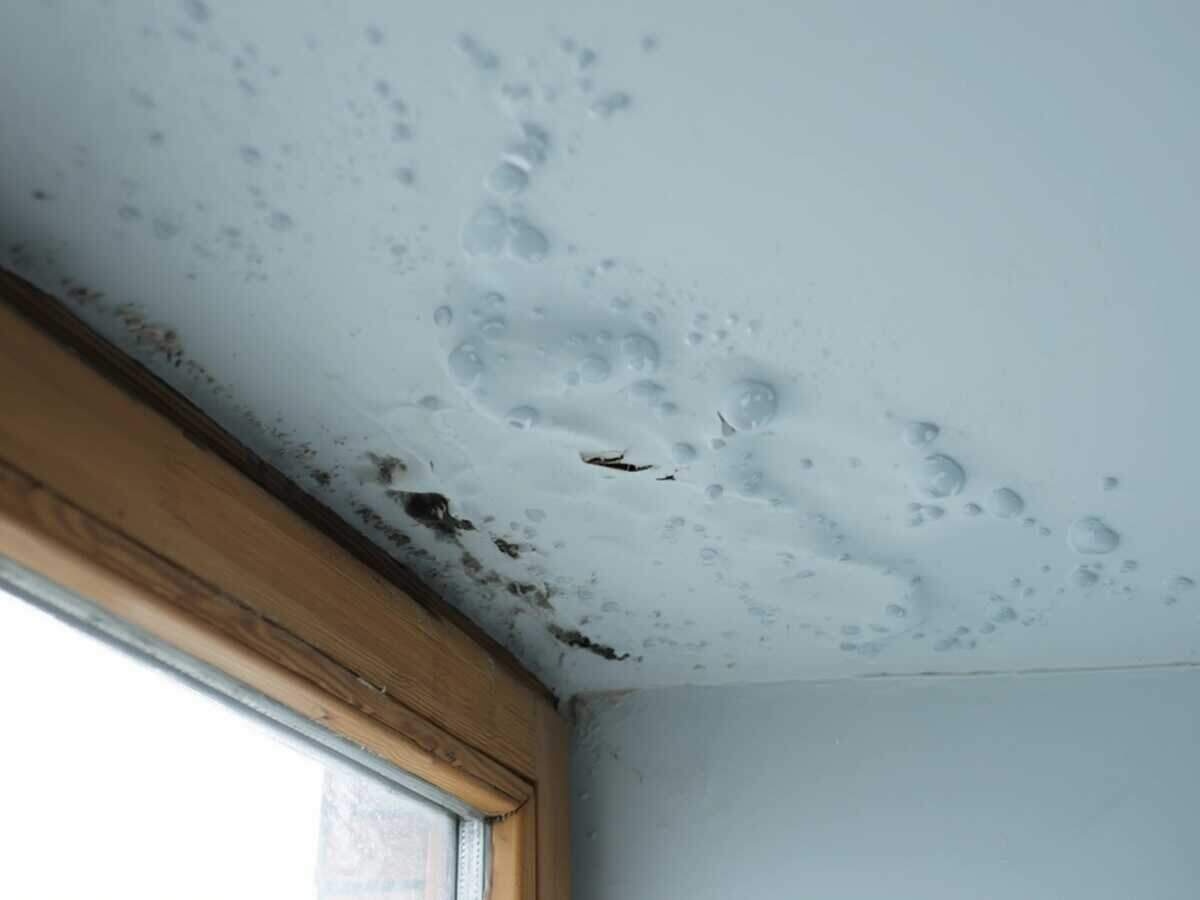




The first thing we hear on a Leander mold call is that the house is too new for this. Age is not what decides it. Mold needs water, something with cellulose in it, and a few days, and the paper facing on drywall feeds a colony in a 2016 house exactly the way it does in a 1976 one. If anything the newer house has the harder time. A home built to current energy code is wrapped, air sealed, and genuinely tight, so a wall cavity that gets wet has very little air moving through it to carry that moisture back out, and it holds what it soaked up longer than a draftier old house would.
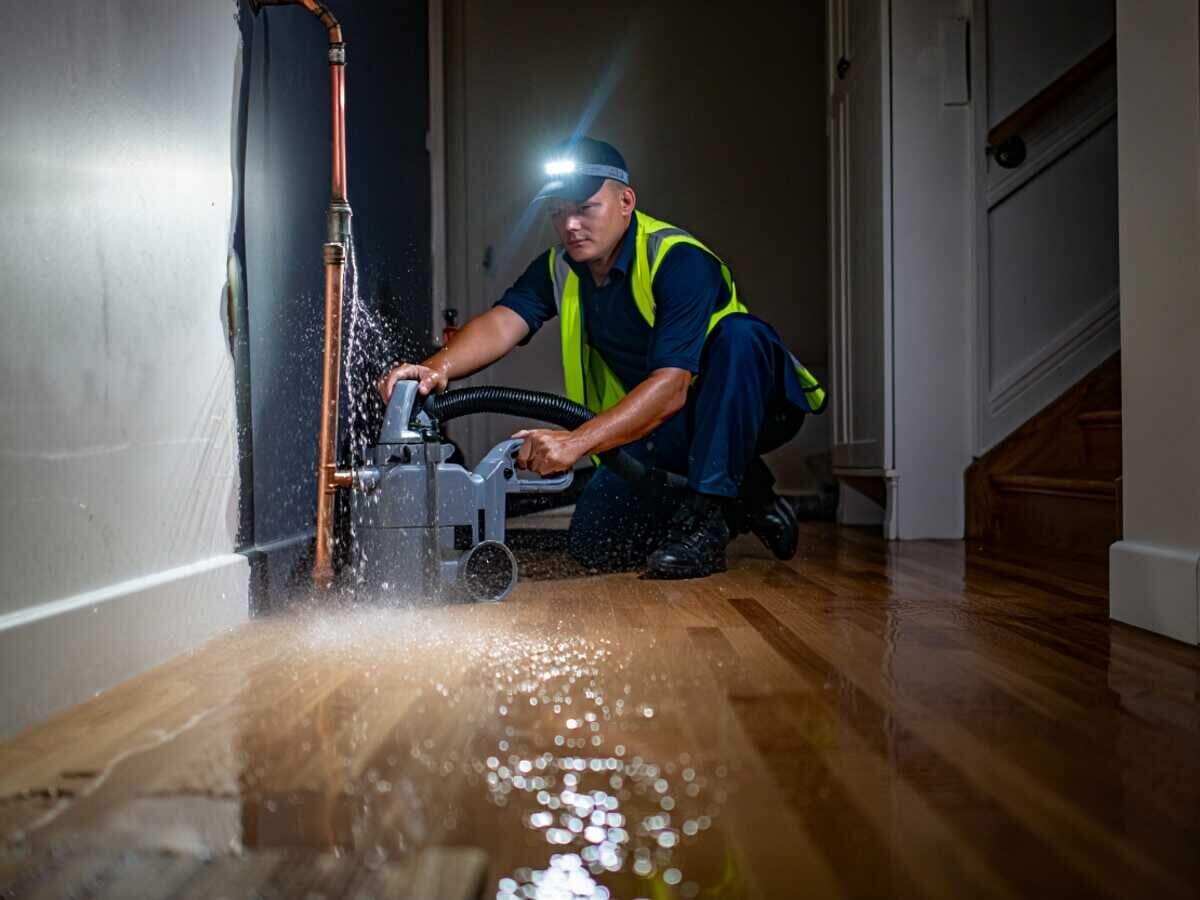
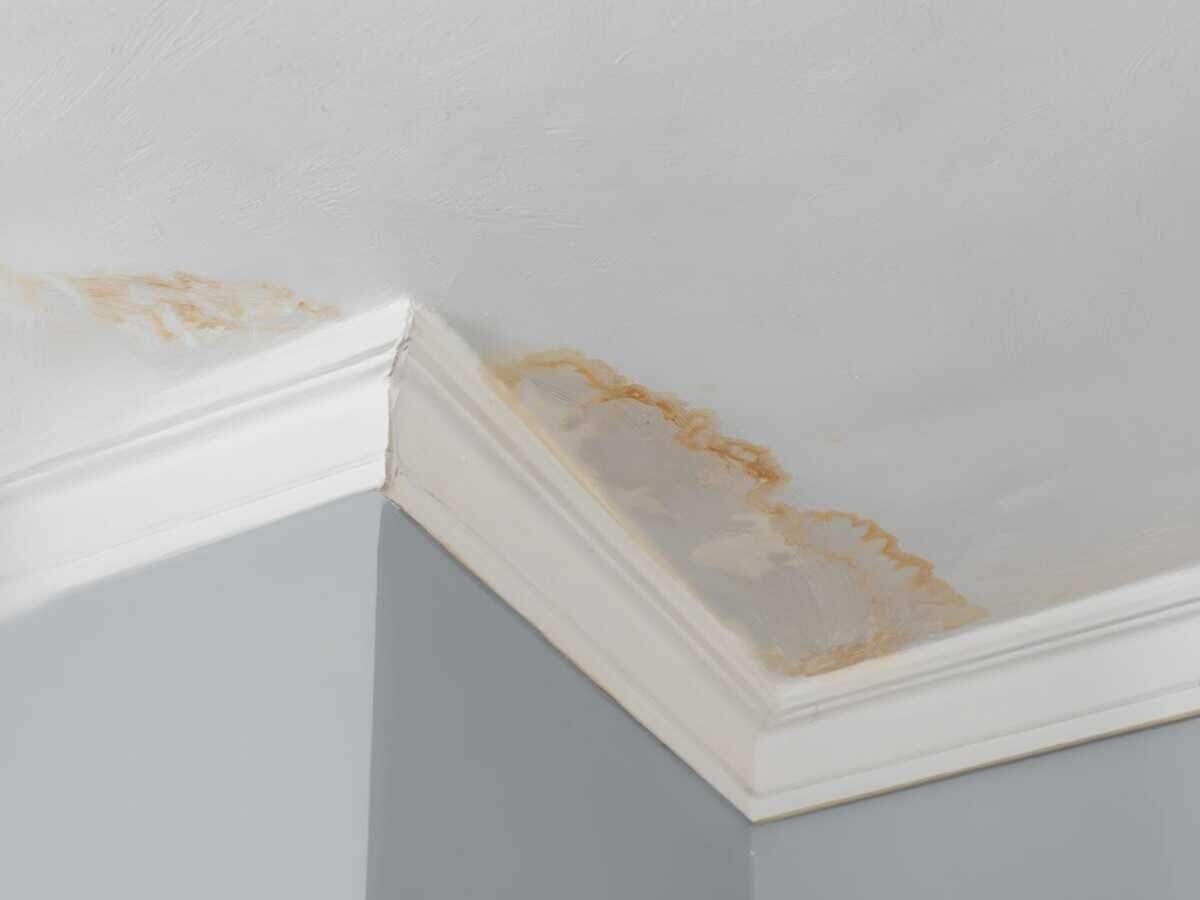
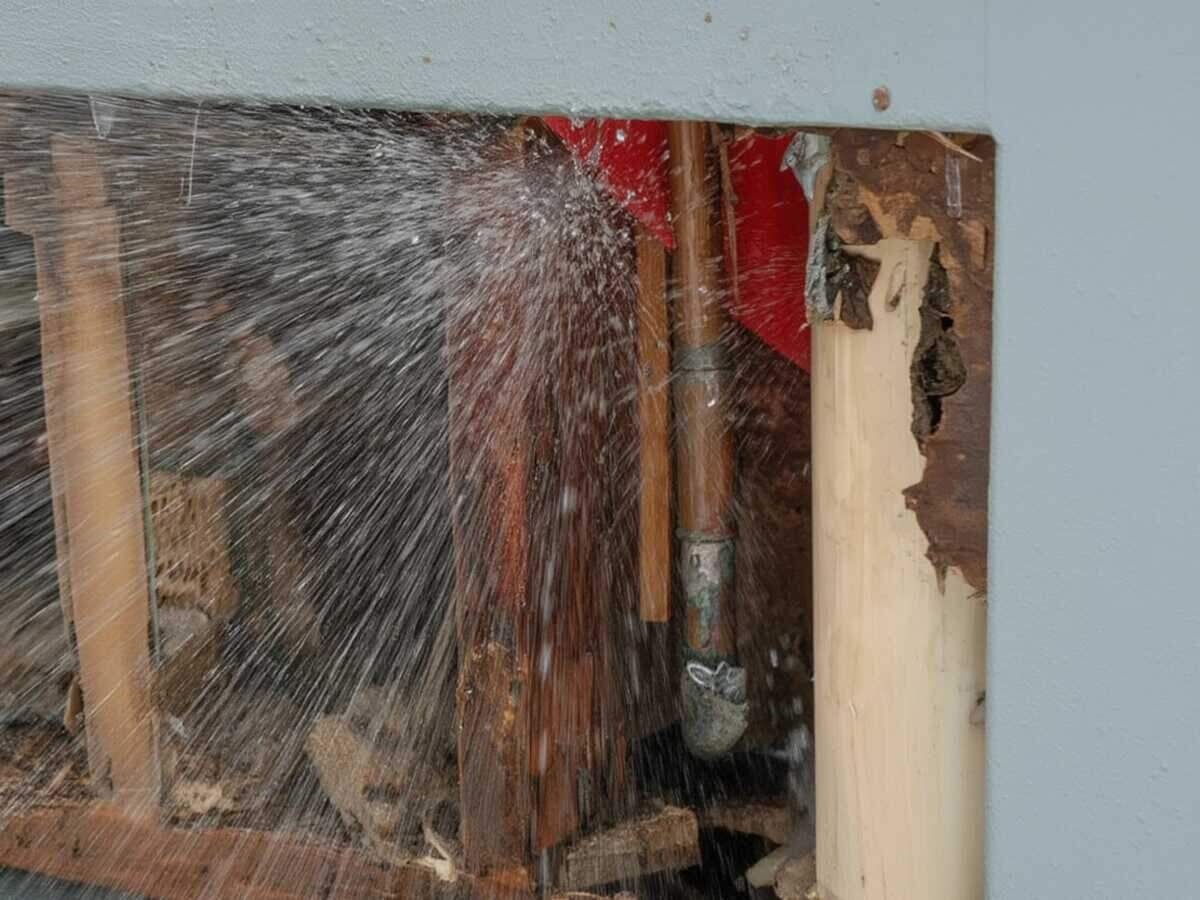
Where we find it here is where nobody is looking: the wall behind a hall bath vanity, the cabinet under a kitchen sink that stays shut for weeks, the laundry box recessed into the wall behind the washer. A push-fit fitting or a supply riser that seeps instead of spraying can run for a month without making a sound. The smell arrives before the stain, usually in the room next door, and that smell is what finally puts most people on the phone to a mold removal company rather than waiting to see what happens.
What a contained job looks like in an occupied house
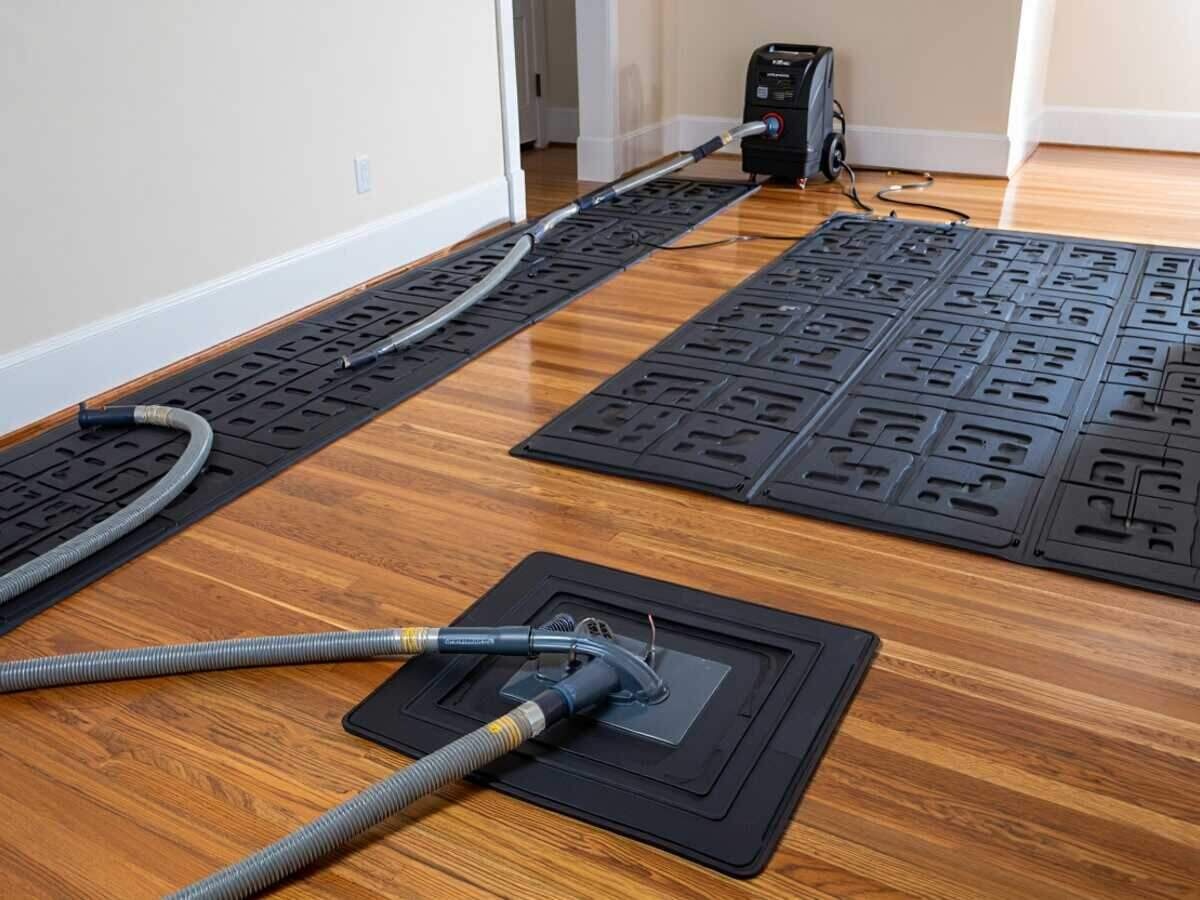
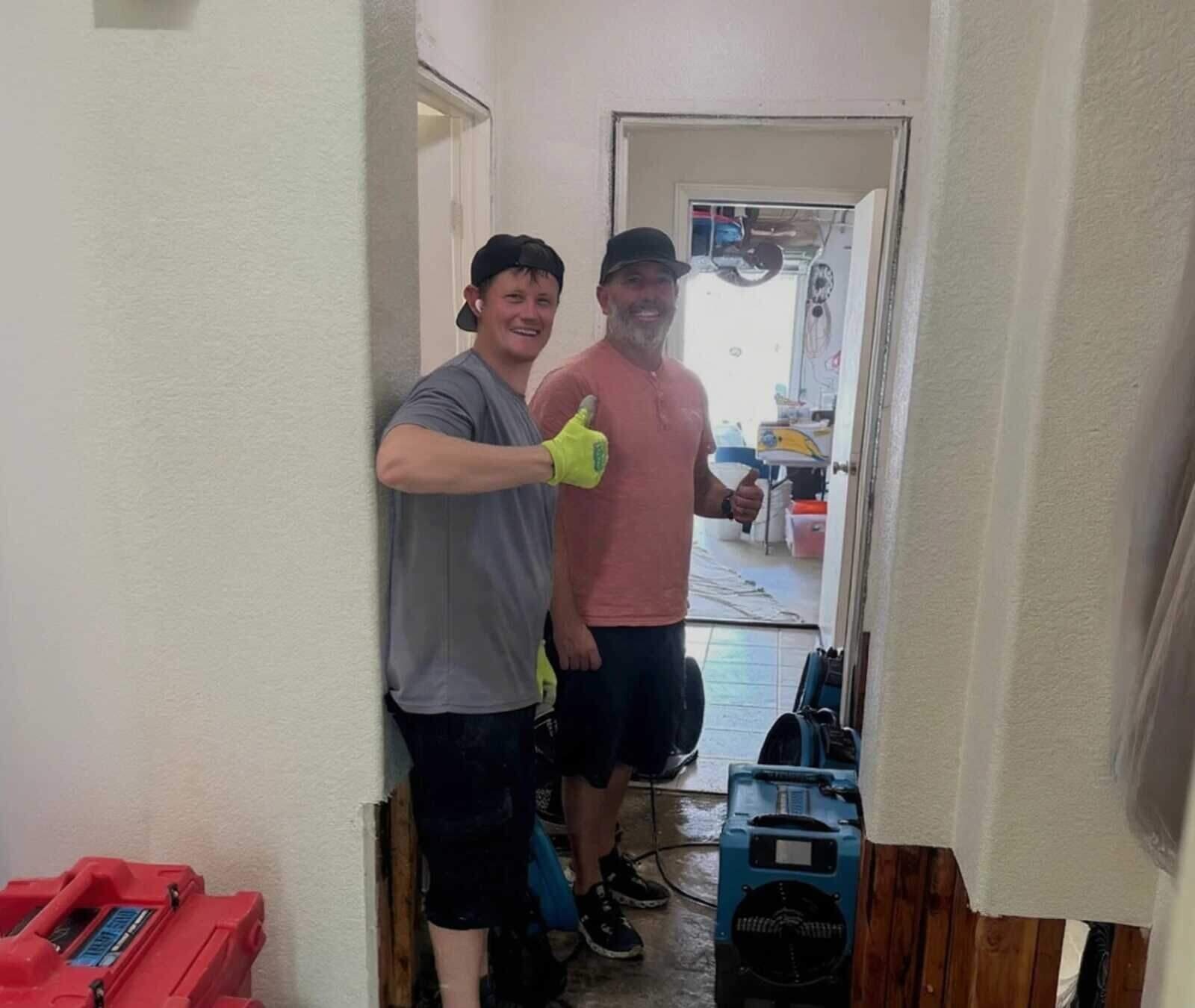
We work to IICRC S520, and the practical shape of that is one room sealed in plastic, held under negative pressure, with HEPA scrubbers running the whole time anyone is cutting. The supply and return registers inside the containment get sealed too. A house this tight moves its air through the ducts and nowhere else, so an open return is a straight path from a demolition zone to the bedrooms. Everything porous leaves bagged. Framing stays, takes a HEPA vacuum and a treatment, and then holds under equipment until the meter agrees the wood is dry. Looking dry arrives days earlier than that, especially in a house sealed this tight.
- The moisture source found and confirmed before any removal begins
- One room sealed under negative pressure with HEPA scrubbers running
- Duct registers inside the containment sealed so nothing rides the air handler
- Framing HEPA vacuumed and treated, then dried to a meter reading
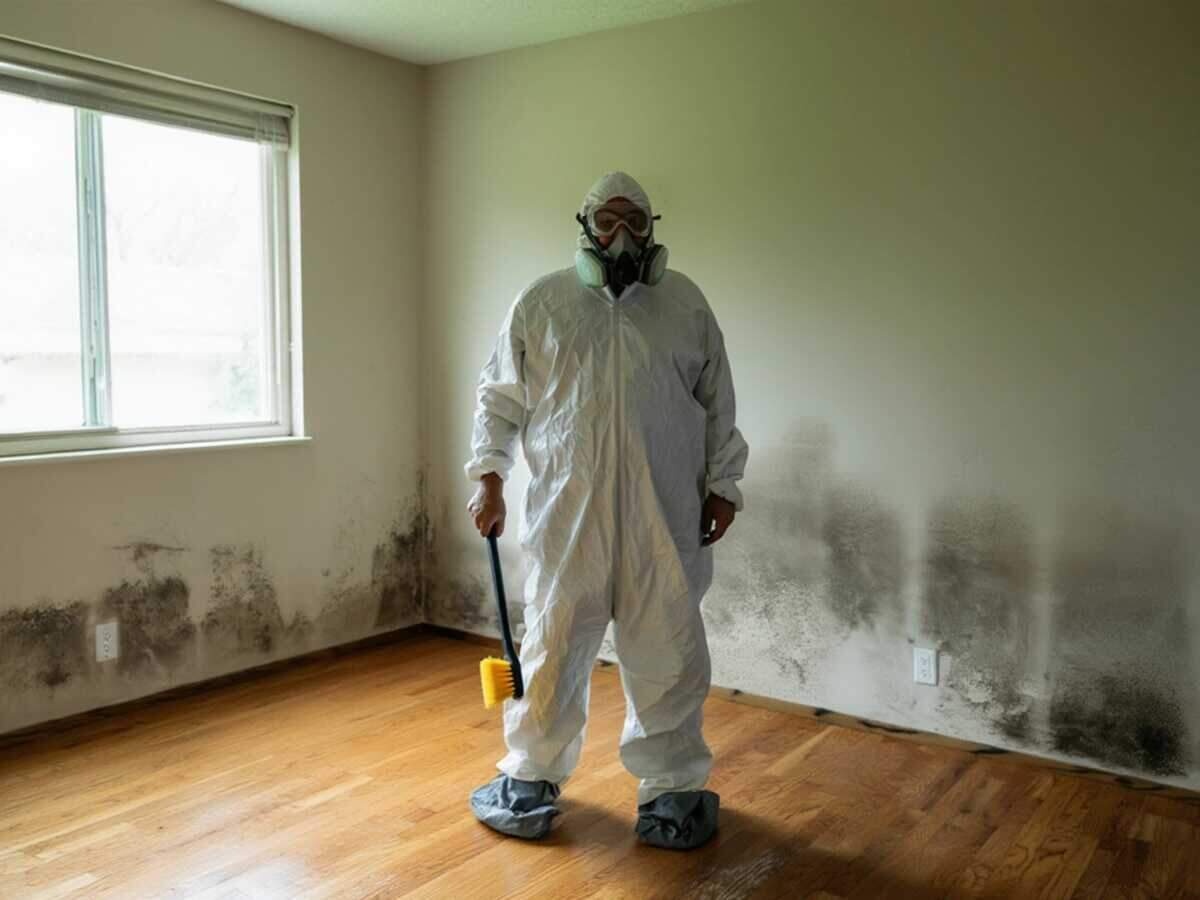
Most of the mold remediation we do in Leander sits on top of a water loss somebody reported months earlier, and that history matters to the paperwork as much as to the wall. Photographs of the open cavity, a dated reading log, and a scope your adjuster can price without phoning us back: that file is part of the job, not an extra. Coverage itself is the carrier's to decide. Call (512) 271-5099 and describe what you are smelling.