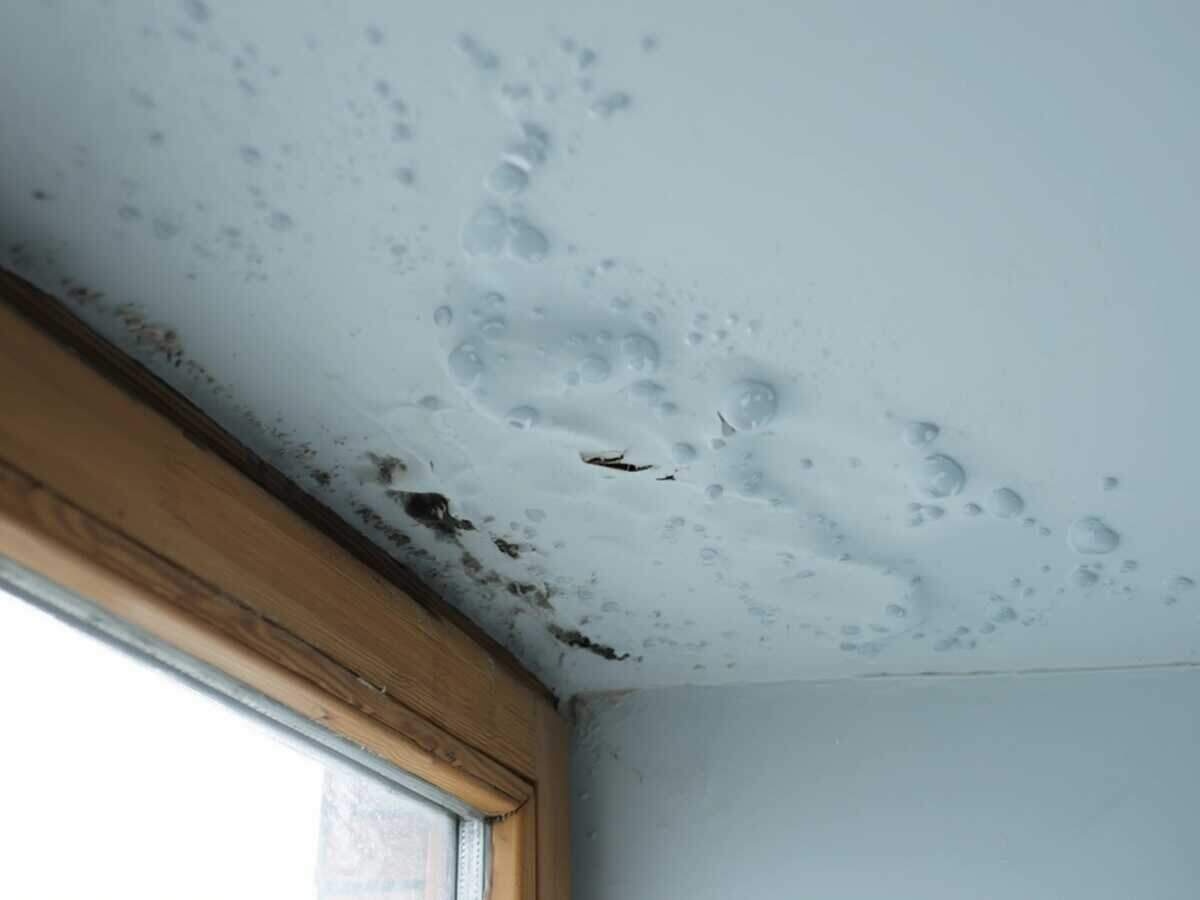




A vaulted ceiling has no attic over it. The drywall is fastened to the underside of the rafters, insulation fills the bay above it, and the roof deck closes the top, so there is no hatch, no walkway, and nothing to check with a flashlight. Ceiling water damage in that assembly gets diagnosed from the room side with a meter and a thermal camera, and the water usually runs down the bay to its low end before it stains anything at all.
The sources are ordinary enough. A second-floor bath or laundry over a flat section of ceiling, a clogged condensate line where the house does have an attic, or a roof-side entry that follows a rafter into the vault. What is different in a Lakeway house is the reach. A two-story great room means a lift or scaffold to touch the ceiling, and a stained tongue-and-groove plank ceiling cannot be cut out and re-textured the way drywall can.
Ceiling water damage repair when there is no attic above it
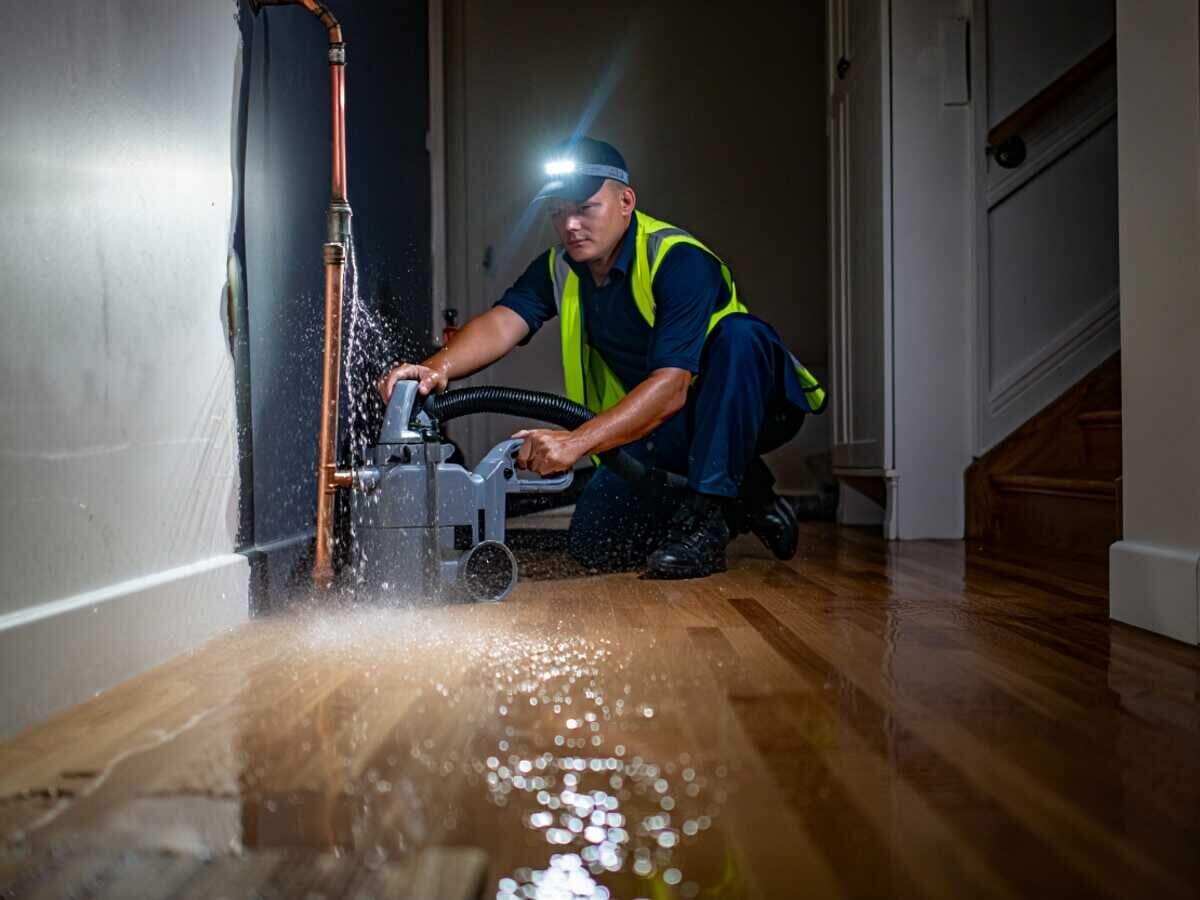
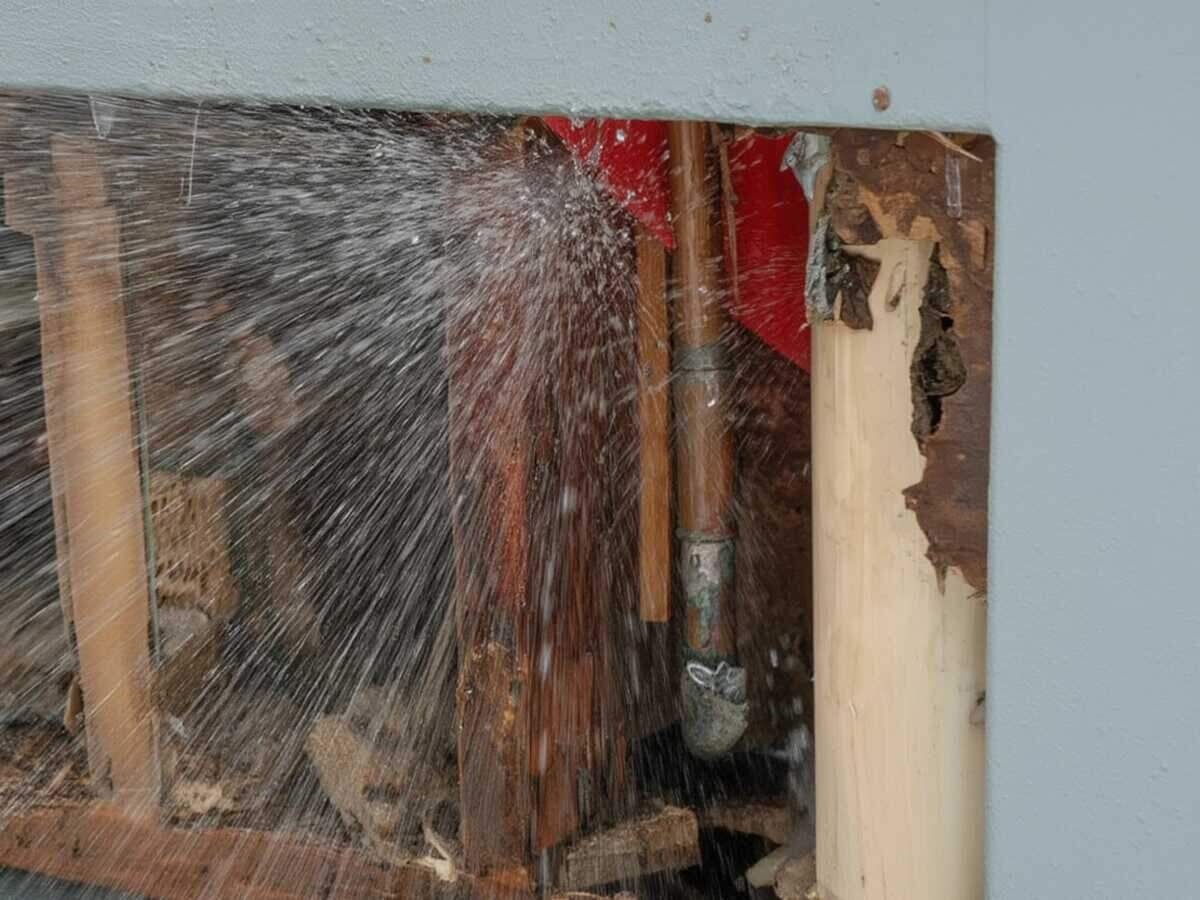
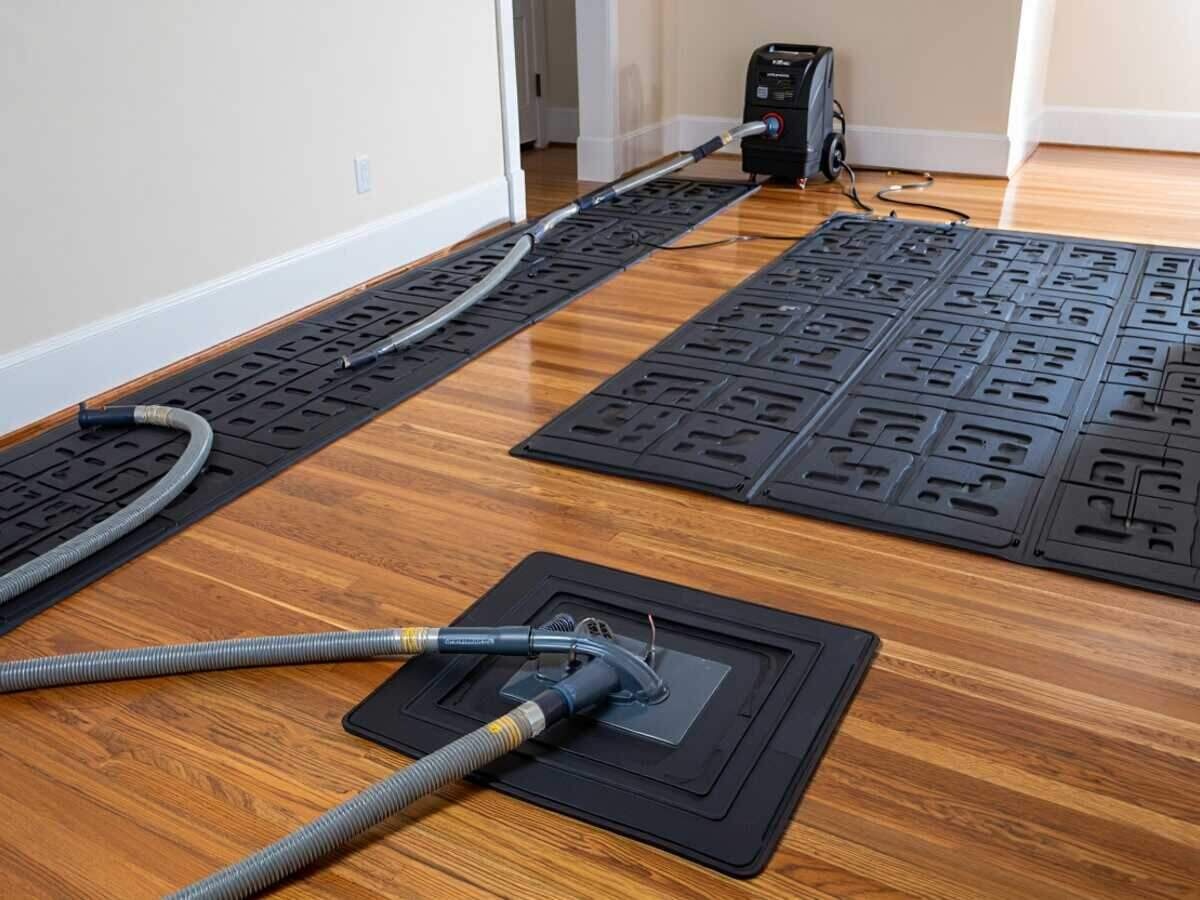
We stop the source first, because a rebuilt ceiling over a live leak is money spent twice. A section holding water gets relieved under control rather than left to land on a dining table. Then we open the bay at its low end, pull the wet insulation out of it, and dry the cavity with air directed into the bay itself instead of blown at the room. Readings come off the framing daily. Once the numbers hold, new board goes up, the texture is matched to what is already there, and a stain-blocking primer seals it so the old ring cannot ghost back through the paint.
- Source found and stopped before any ceiling work starts
- Sagging sections relieved under control, not left to let go on their own
- The rafter bay opened at its low end, wet insulation out, air driven into the cavity
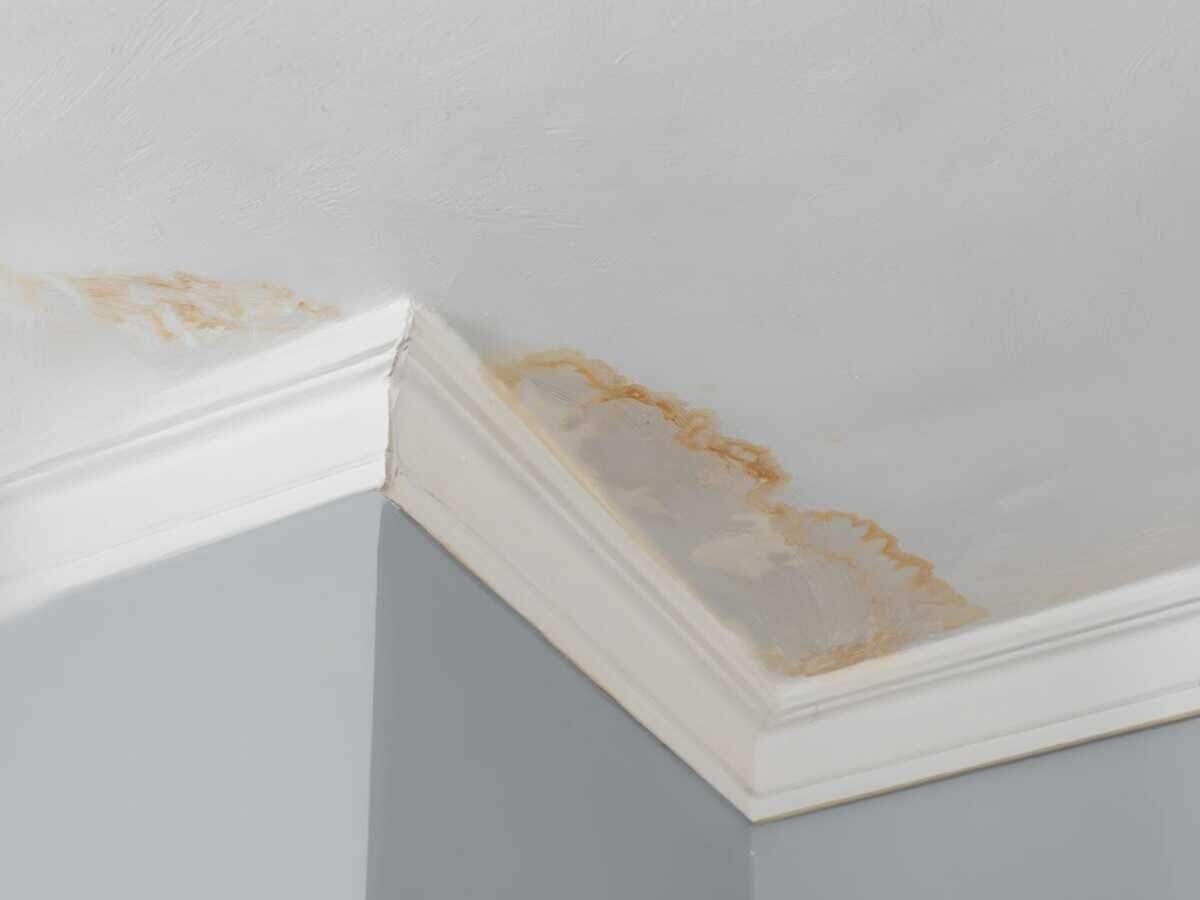
- Board back up, texture matched into the surrounding plane, and a stain-blocking primer, but not before the framing reads dry
Wood ceilings get their own call. Stained tongue-and-groove and exposed beams often dry and refinish rather than come down, but a plank that has cupped or opened at the joints has told you it is finished, and we say so instead of nailing it back flat. Call (512) 271-5099 and describe what the ceiling is made of, because that decides most of the plan.