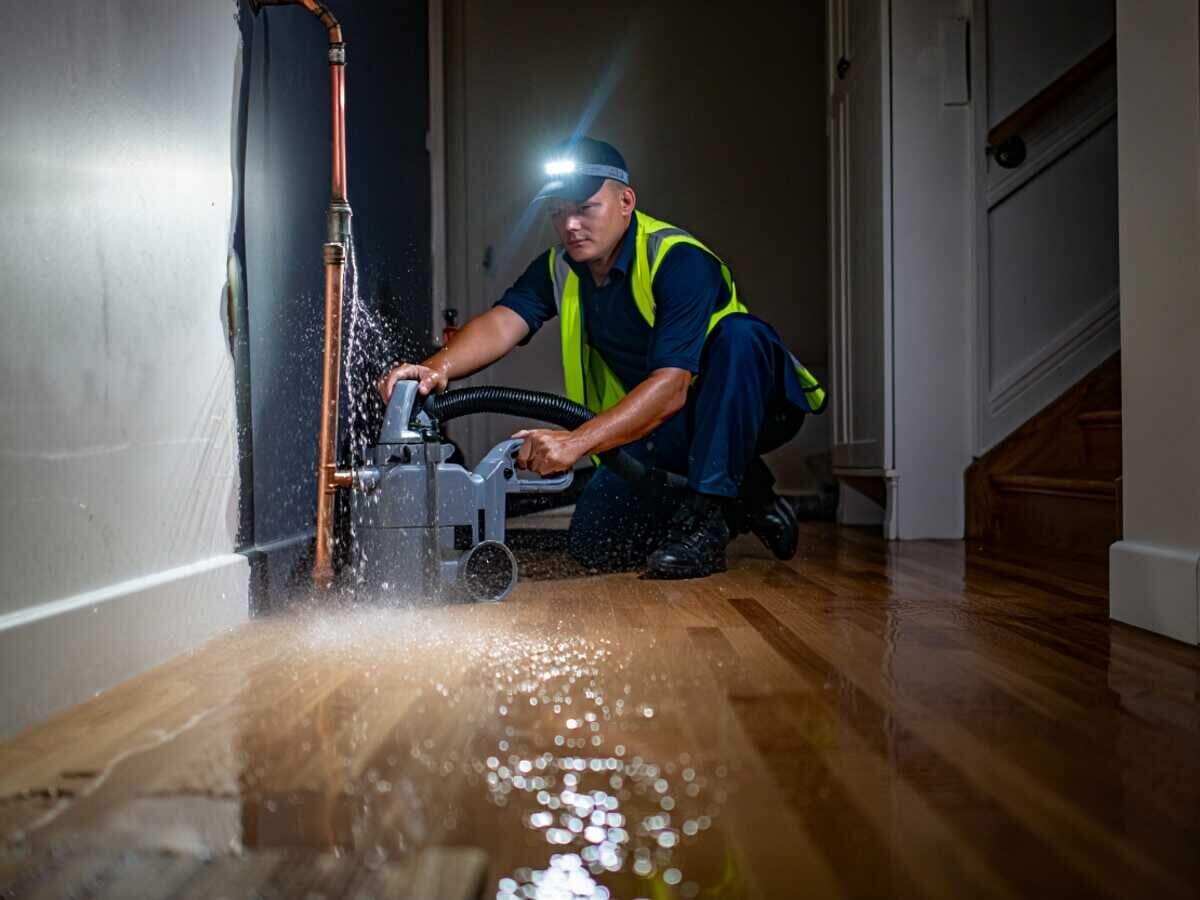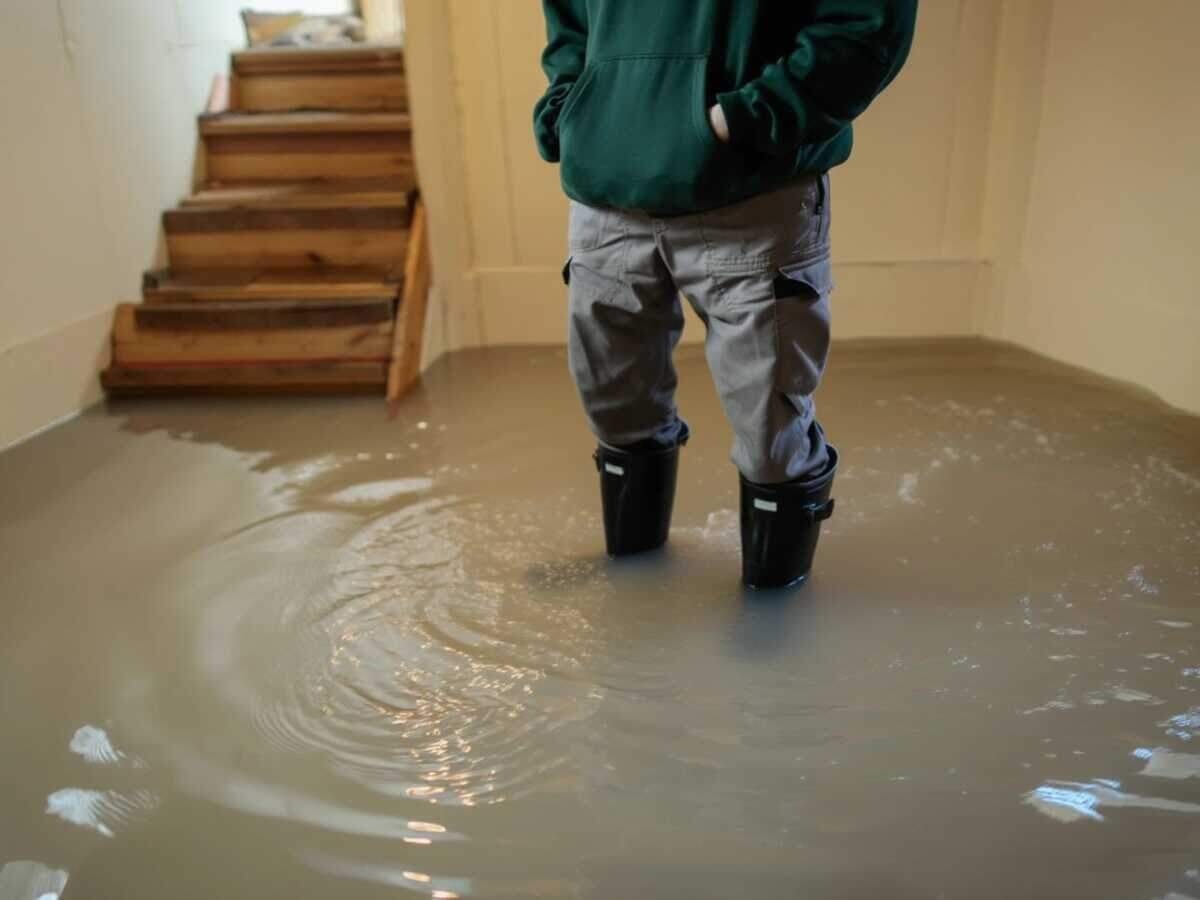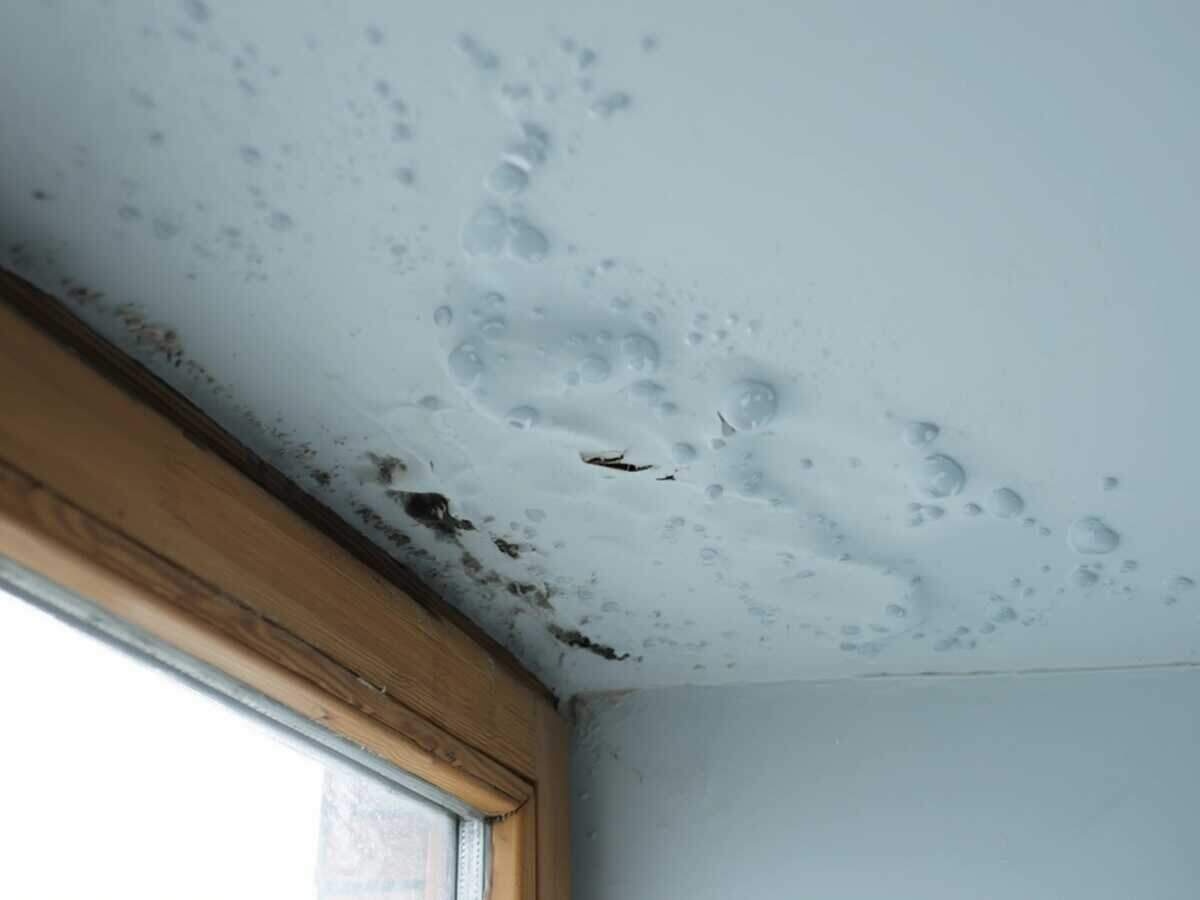




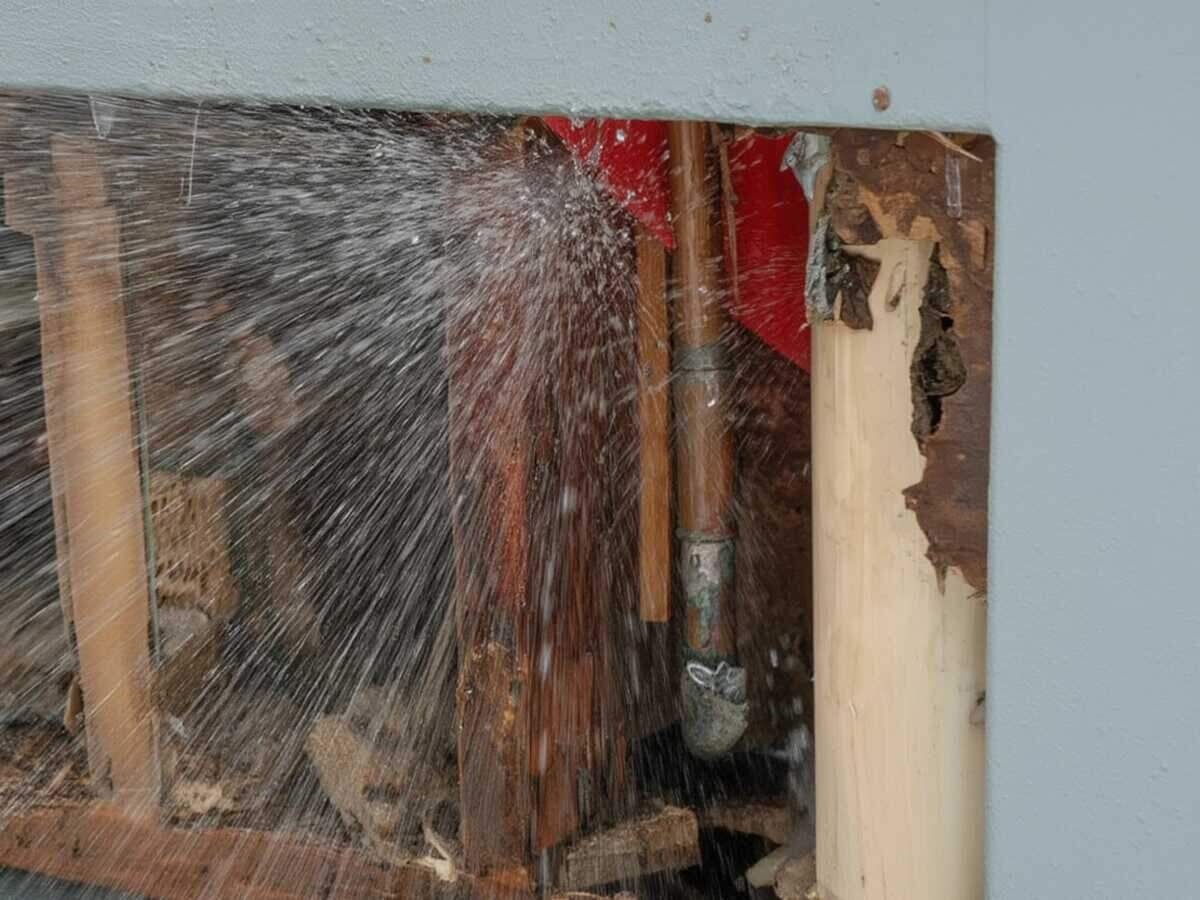
On a Lakeway house built into a slope, the garage tucks under the living space, and the floor between them is the coldest assembly in the building. Supply lines running through that floor sit over an unheated box with a big door open to the weather, which is why a burst pipe in these houses so often turns out to be over the garage rather than in an exterior wall. The other regulars are the runs on the shaded uphill side, where sun never reaches the wall.
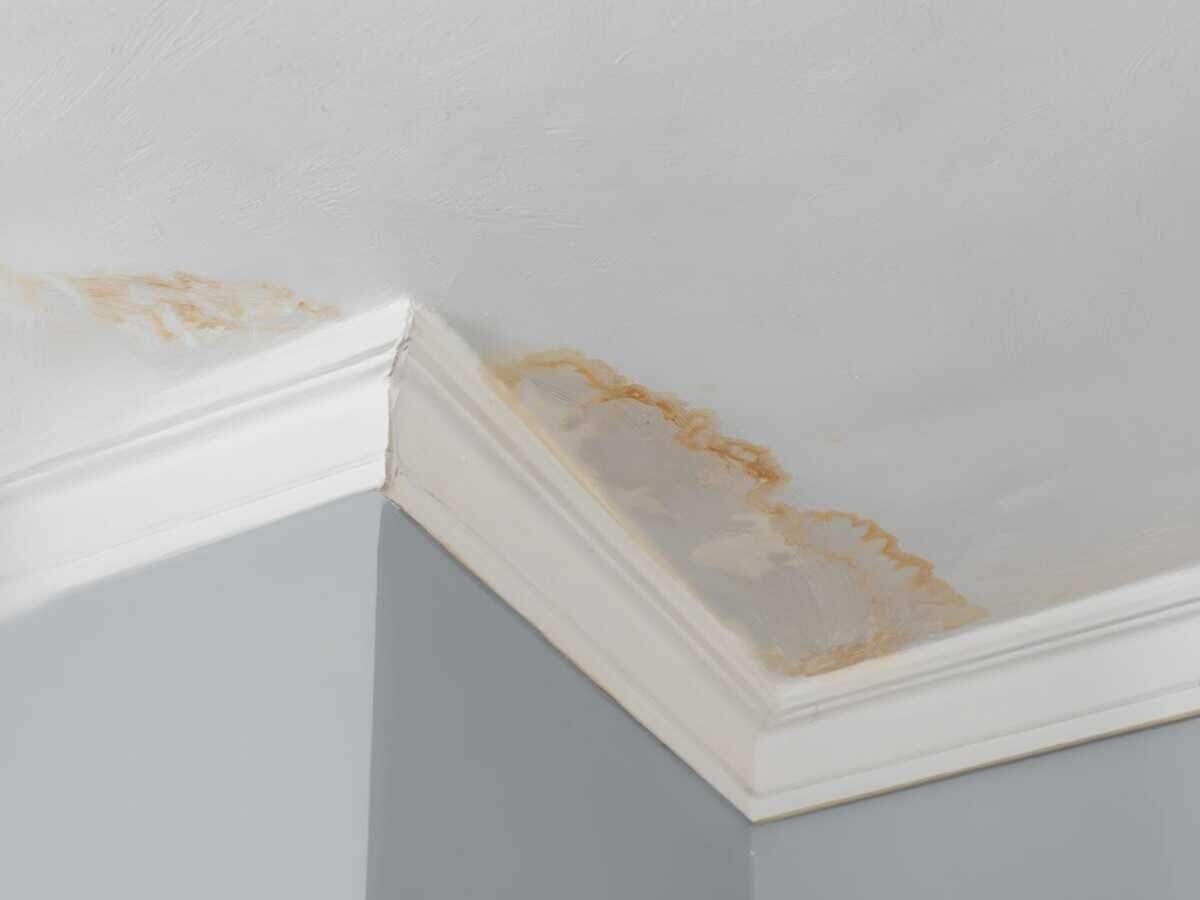
The break itself is quiet. Ice plugs the split while the freeze holds, and the water starts moving once the house warms up, so the discovery is usually a stain on a garage ceiling or the sound of water running with every tap closed. By then the frozen pipe has put water into the floor cavity, the top plate of the garage wall, and whatever is finished below.
Finding where the water went, not just where the pipe split
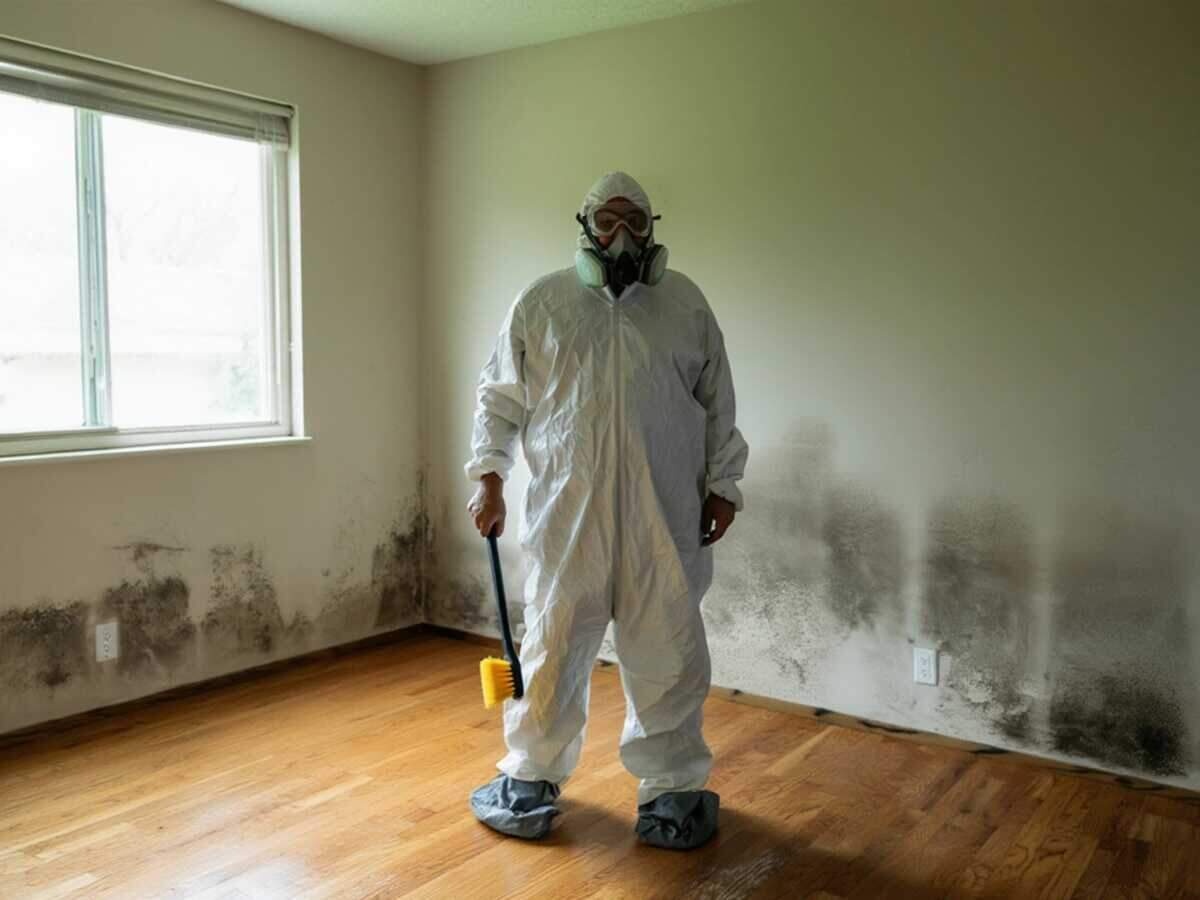
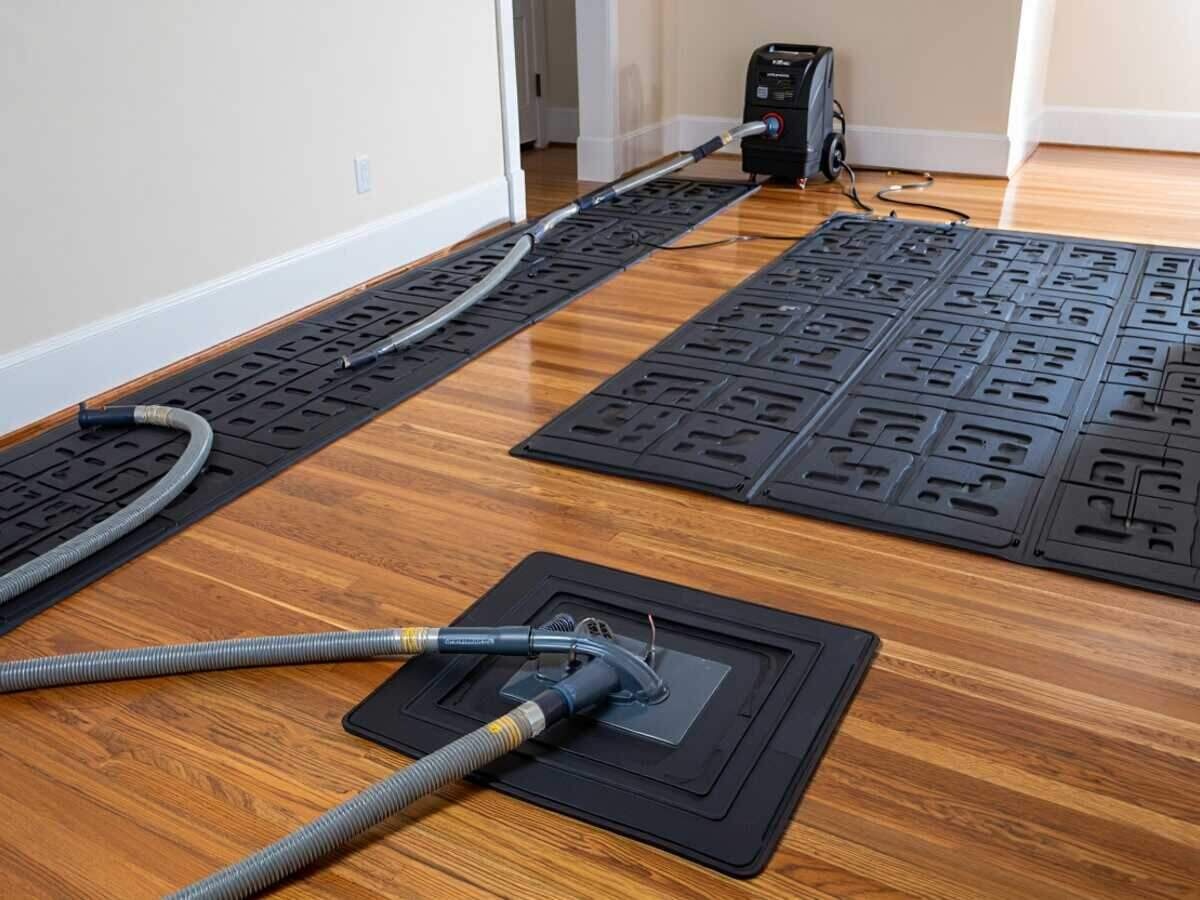
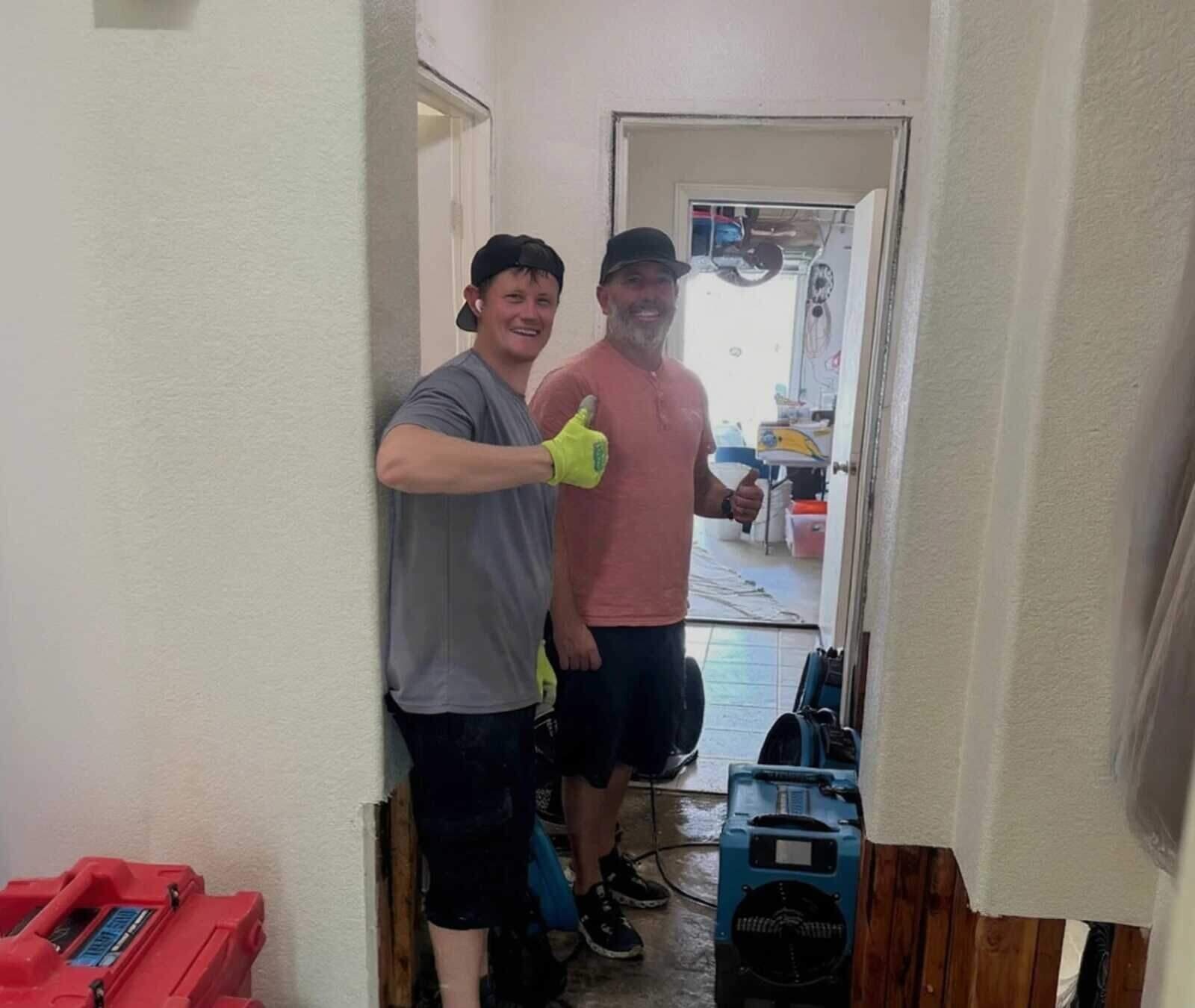
The plumber's repair takes an hour. Ours takes the water out of everything the break reached. Moisture meters and a thermal camera trace the wet path through the floor assembly, the walls beside it, and the ceiling below, and we make controlled openings at the ends of the wet area rather than one long demolition cut down the middle. Air goes into the cavities with dehumidifiers behind it, and the framing is re-read every day until it holds a dry number. Nothing closes up before that, because a wall shut over wet framing is next summer's mold job.
- The wet path traced through the floor assembly and the walls with meter and thermal imaging
- Controlled openings at the edges of the wet zone, not a demolition line down the ceiling
- Wet insulation out of the cavity, air driven in, dehumidifiers running behind it
- Daily readings on the framing, and nothing closed until the numbers hold
A plumber fixes the pipe and we handle the water it left, and the two need to be sequenced rather than stacked, so we talk to whoever you have coming. Everything is photographed and logged for the claim. What the policy actually answers for is a decision that belongs to the adjuster. Call (512) 271-5099, freeze week included.