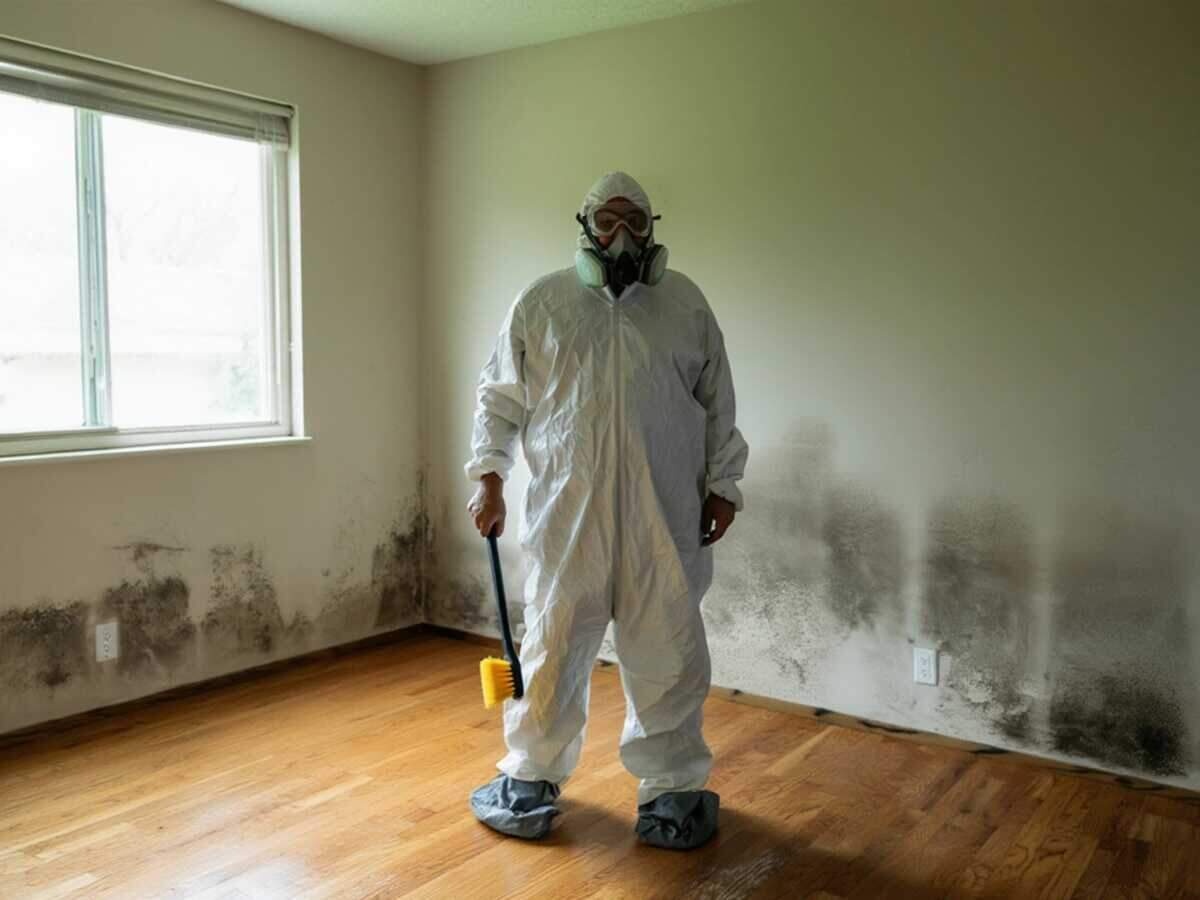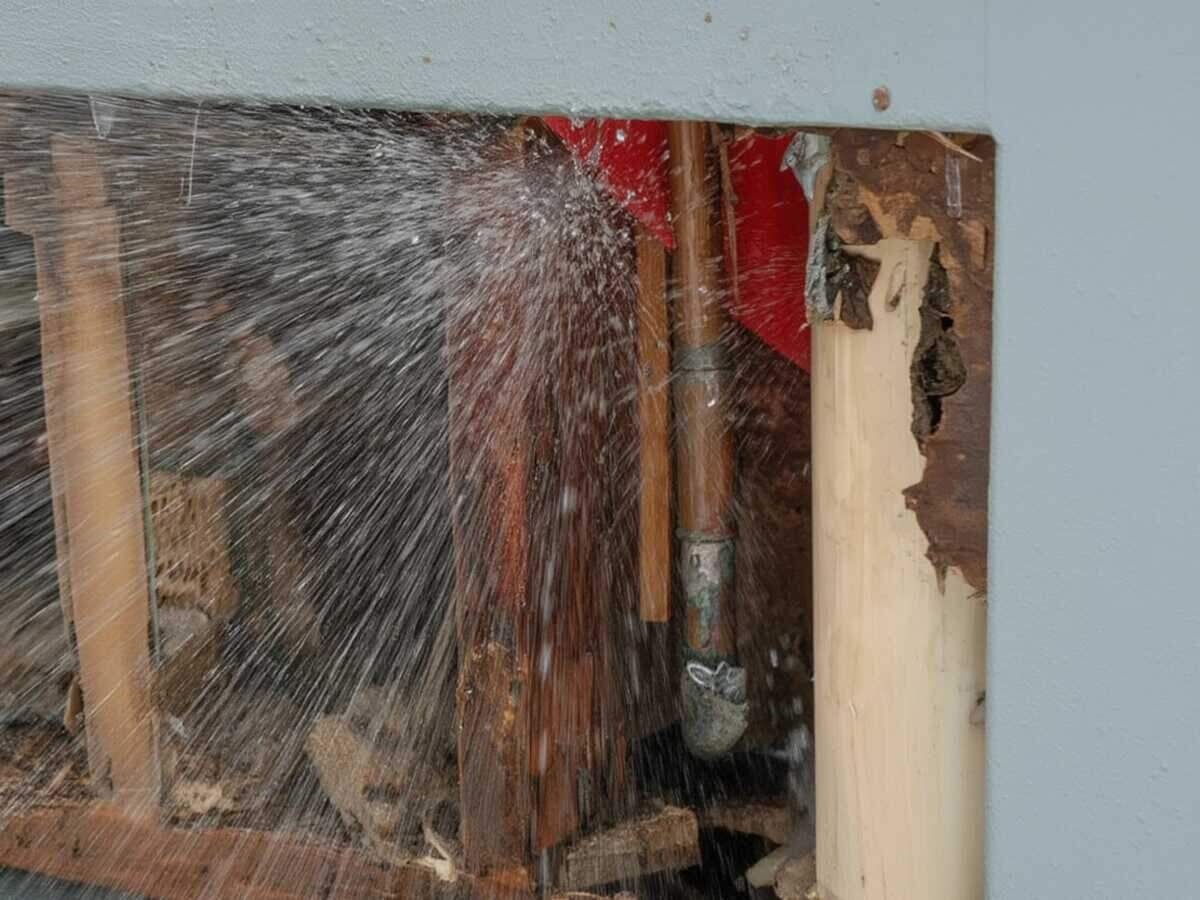




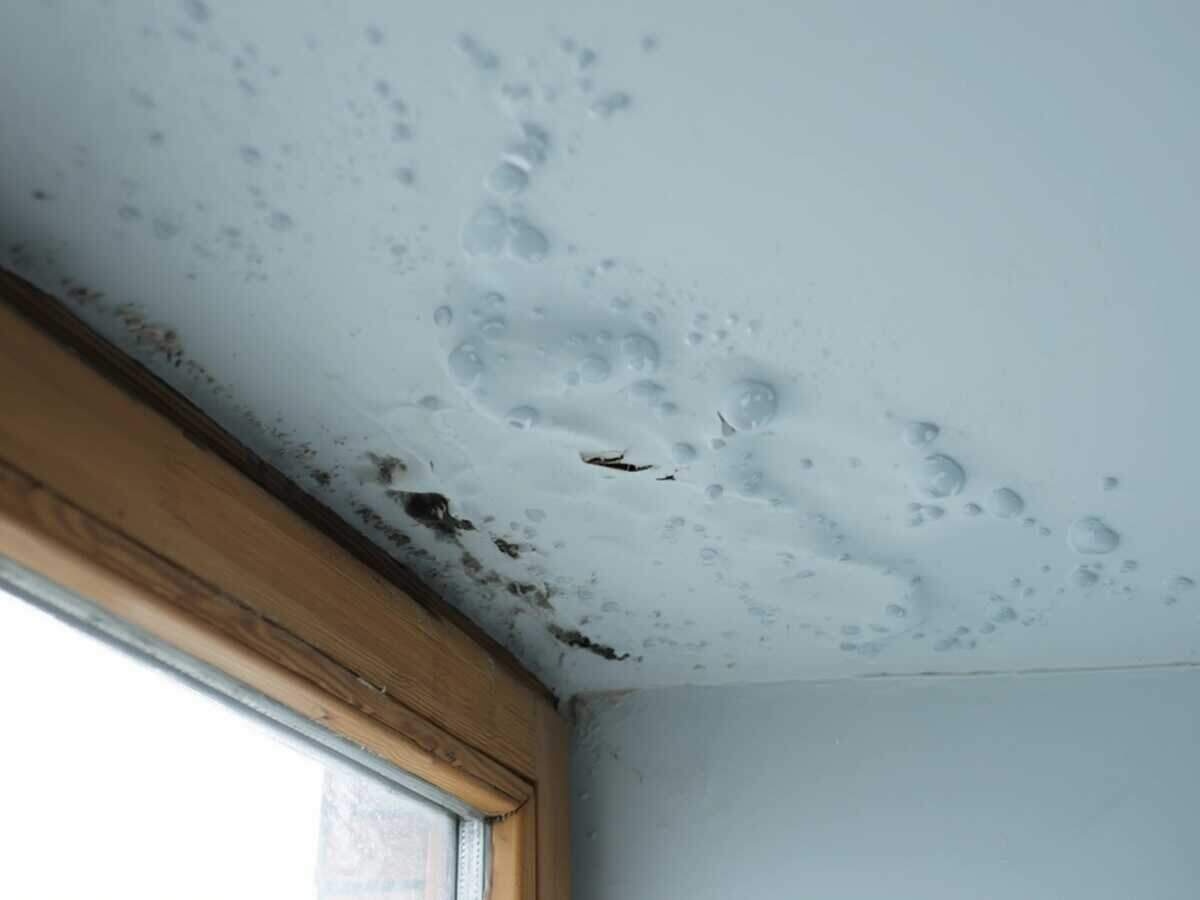
By the time a Georgetown roof leak gets reported, the attic has usually had a season to sit with it, and the delay changes what we find. A space that took water in the spring and stayed shut through the summer has been running hot and damp for months, so the question is no longer only how wet the framing is. It is whether anything has started growing on the underside of the decking and the faces of the rafters, which is where a slow leak shows itself first.
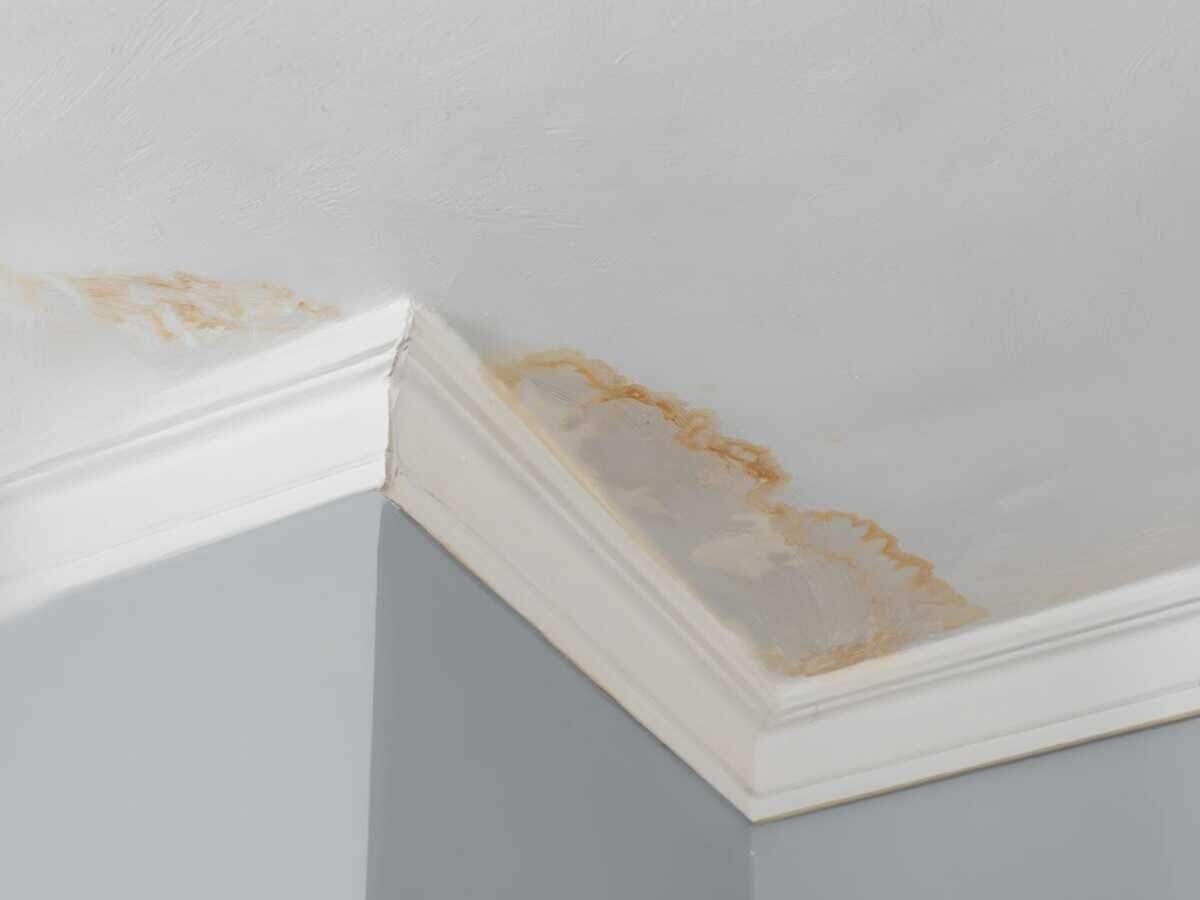
Where the newer phases carry a foil radiant barrier on the underside of the roof deck, the water behaves differently again. It does not soak into the sheathing where it got in. It beads on the foil and runs down the slope until it reaches a seam, a fastener, or the end of the run, so the soaked insulation and the stain below can sit a long way from the breach. On a single-story house the attic is the entire footprint of the home, which gives that water plenty of room to travel before anything downstairs notices. Roof water damage repair here starts with mapping that, not with the shingles.
What we do about an attic that has been wet a while
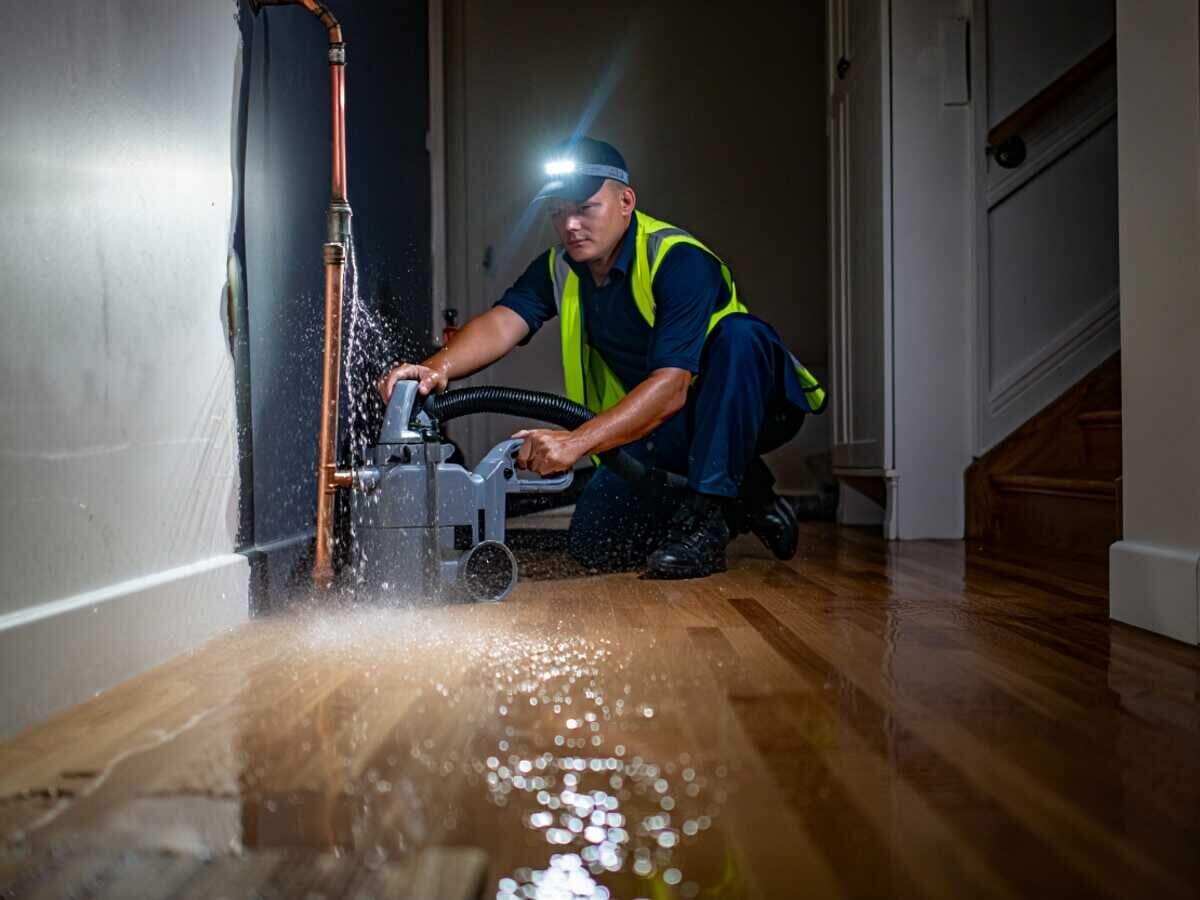
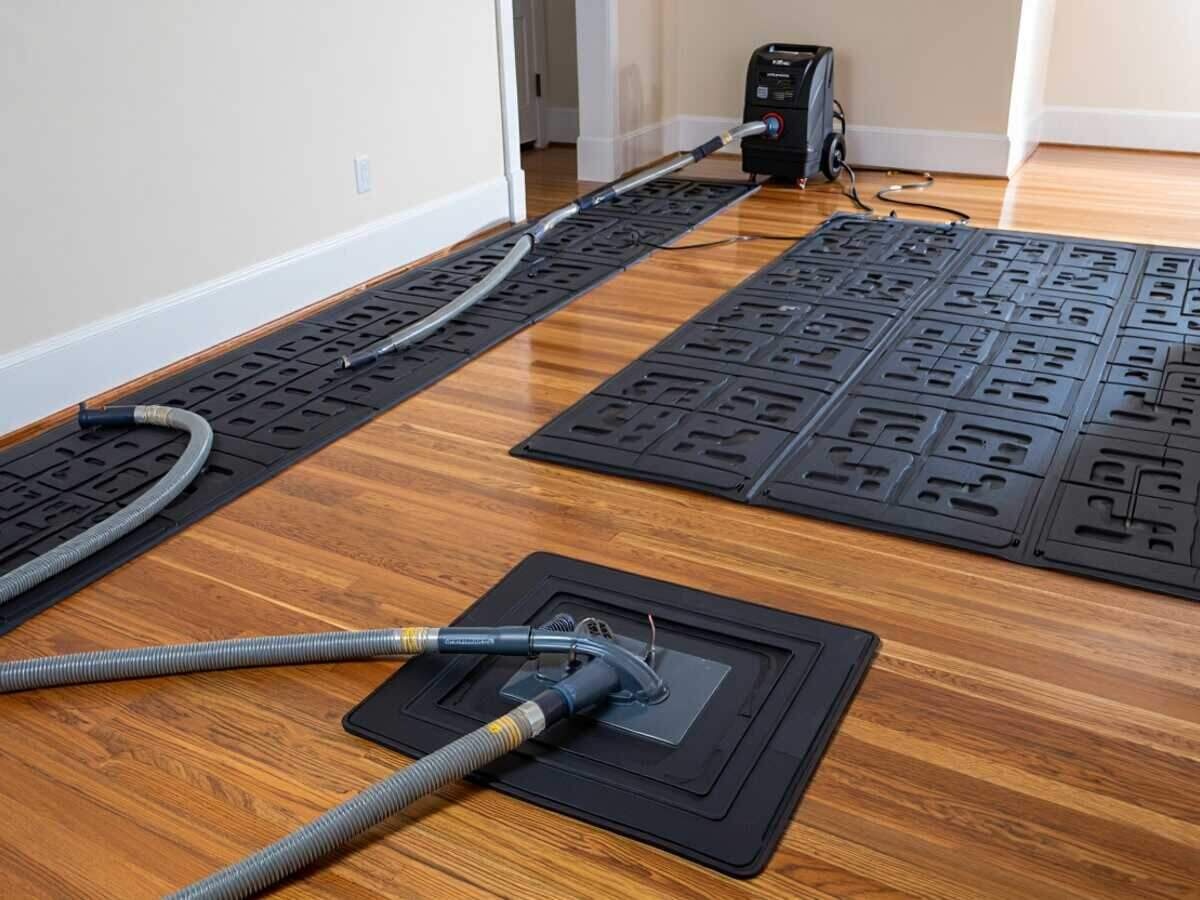
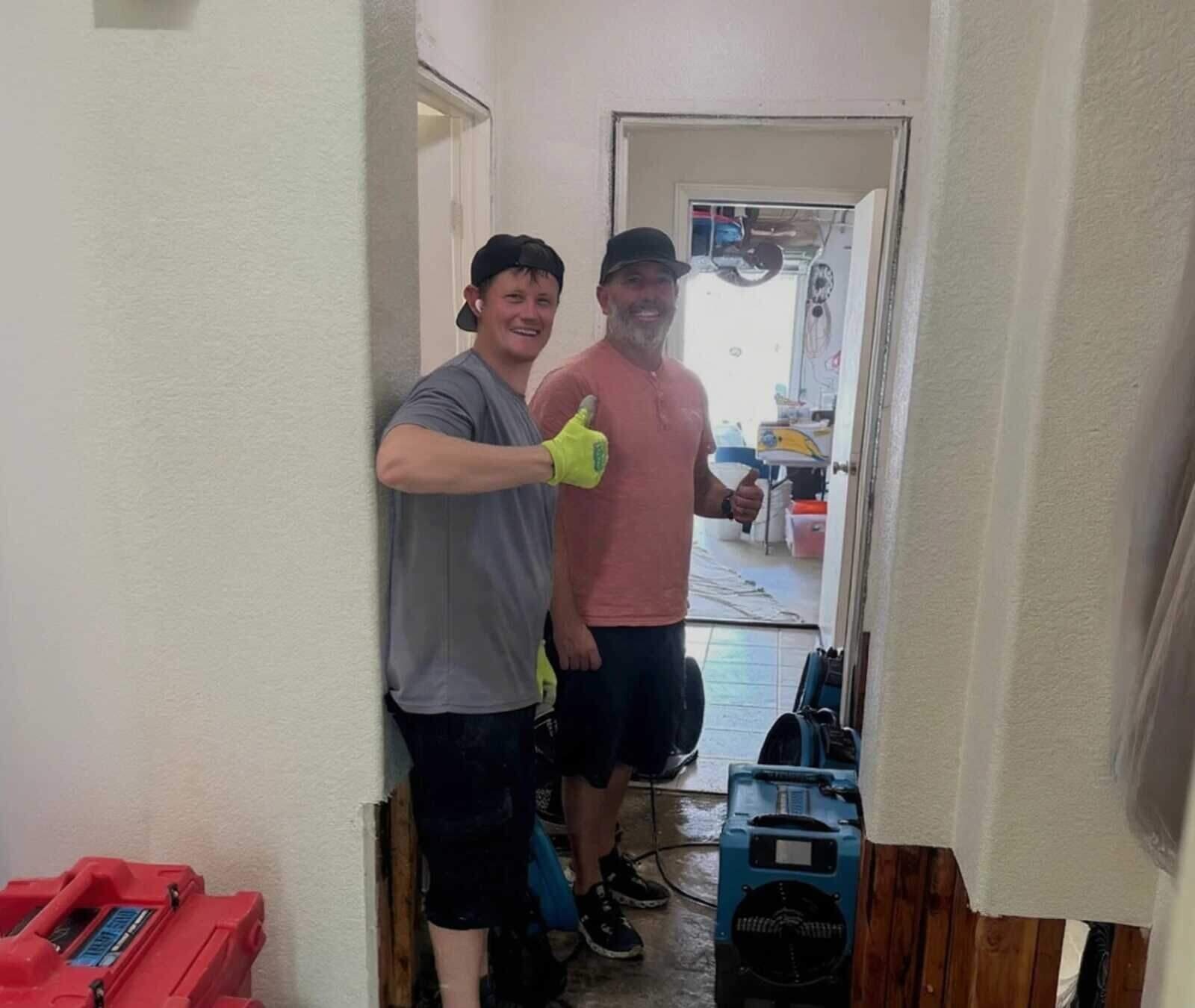
Infrared and moisture meters map the real extent across the decking, the rafters, the top plates, and the ceilings below, and the work follows that map. Soaked blown-in insulation comes out, and we record the area and depth of what leaves so it can be blown back to where it was rather than to whatever a crew guesses. Air movers go in along the rafter bays with a dehumidifier holding a controlled area, and the same points get read every day until the wood matches a section of attic the leak never reached. Where growth has taken hold on the sheathing, that gets contained and treated as part of the same job. The roof itself belongs to a licensed roofer, and we sequence our work to theirs.
- The real wet footprint mapped with infrared before anything is pulled
- Wet blown-in bagged out, with the depth and area recorded for the rebuild
- Decking and rafters read daily and checked for growth as we dry
- The interior scope documented to line up with the roofer's
A leak that ran for months and one that started last night are different conversations with your carrier, and you should hear that from us before the work starts rather than at the end. Our part is a file that shows what the water actually did, in both directions. The coverage decision belongs to your carrier. Call (512) 271-5099 any hour, storms included.