



Burst & Frozen Pipe Water Damage in Georgetown, TX

You set the thermostat low, locked up, and went to see the grandkids, and the metro sat below freezing for three days. A line in an exterior wall split with nobody in the house to hear it. Call (512) 271-5099 the hour it turns up.

Call (512) 271-5099 Answered live, 24/7Nights, weekends, holidays
  • We bill your insurer directly
  • IICRC-certified crews
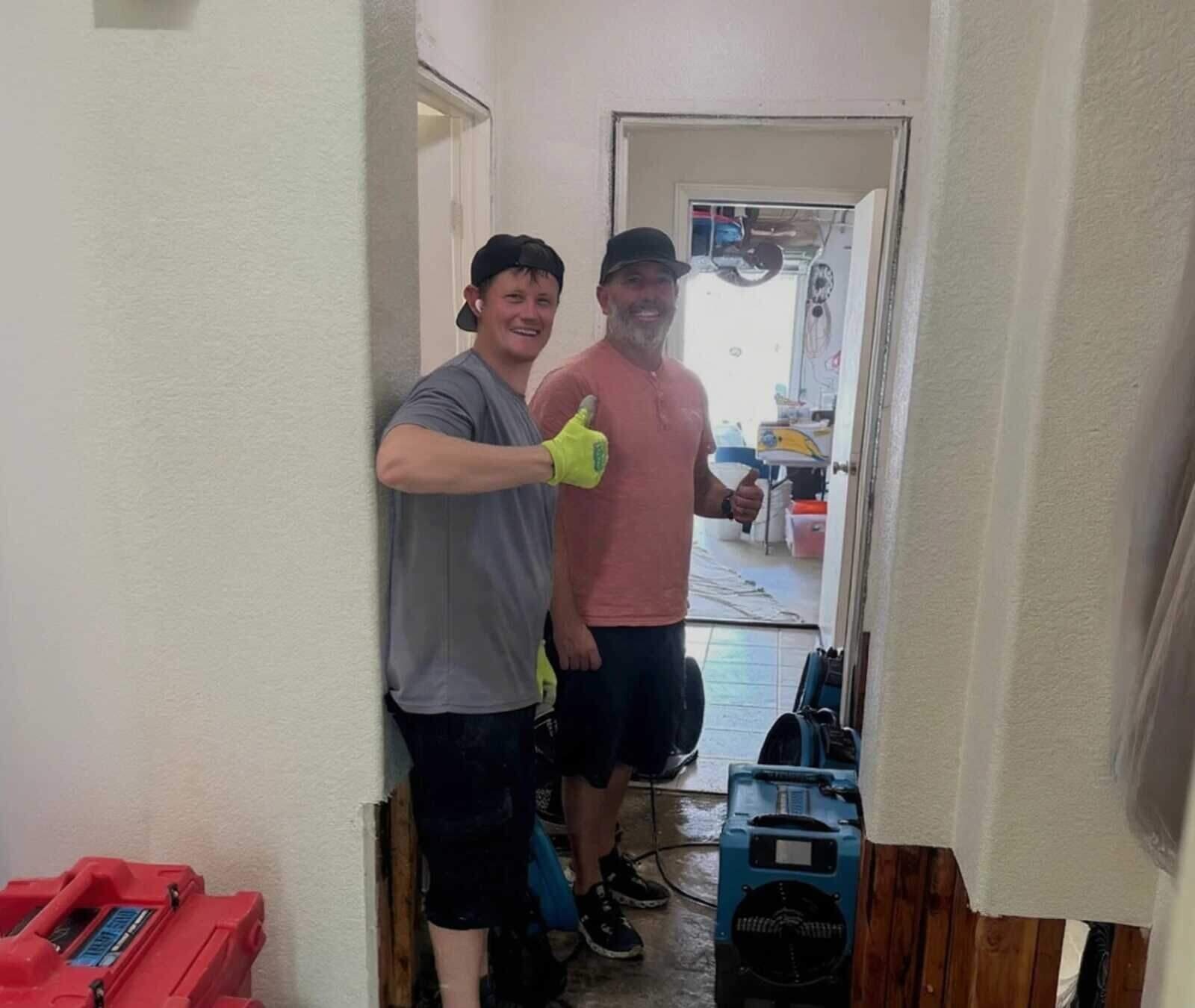
Local water damage crew working in an Austin-area home with air movers and a dehumidifier
Our crew · Austin metro
Why Georgetown homeowners call us

A local crew that shows up and does it right

Dried to a reading Equipment stays until the material meters dry, not until the surface feels dry.
One crew, start to finish The same local crew from the first extraction to the final repair.
No surprise line on the bill Equipment days and demolition are priced before the work happens, not discovered on the invoice.
Local Austin crew Dispatched from the north metro, never routed through an out-of-state call center.
Certified & accredited
IICRC Certified firm Indoor Air Quality Association member Certified and licensed water damage restoration Certified and licensed mold remediation and removal
How it works

Our restoration process

Four steps, starting the moment you call.

1

Call & Dispatch

Tell us what happened. A local crew is dispatched on the call, and how fast we reach you depends on traffic and where you are.

2

Extract & Stabilize

We stop the source, pump out standing water, and set drying equipment.

3

Dry & Monitor

Air movers and dehumidifiers run while we track moisture daily to dry standard.

4

Repair & Reinstall

Drywall, texture, trim, and paint go back so the room reads finished.

Insurance-savvy from the first call

Documented to claim standard from the first hour

We document the loss to claim standard from the moment we arrive — photos, moisture readings by room, and a scope that maps to your policy. Then we bill your insurer directly for the covered work.

See how claims work in Texas

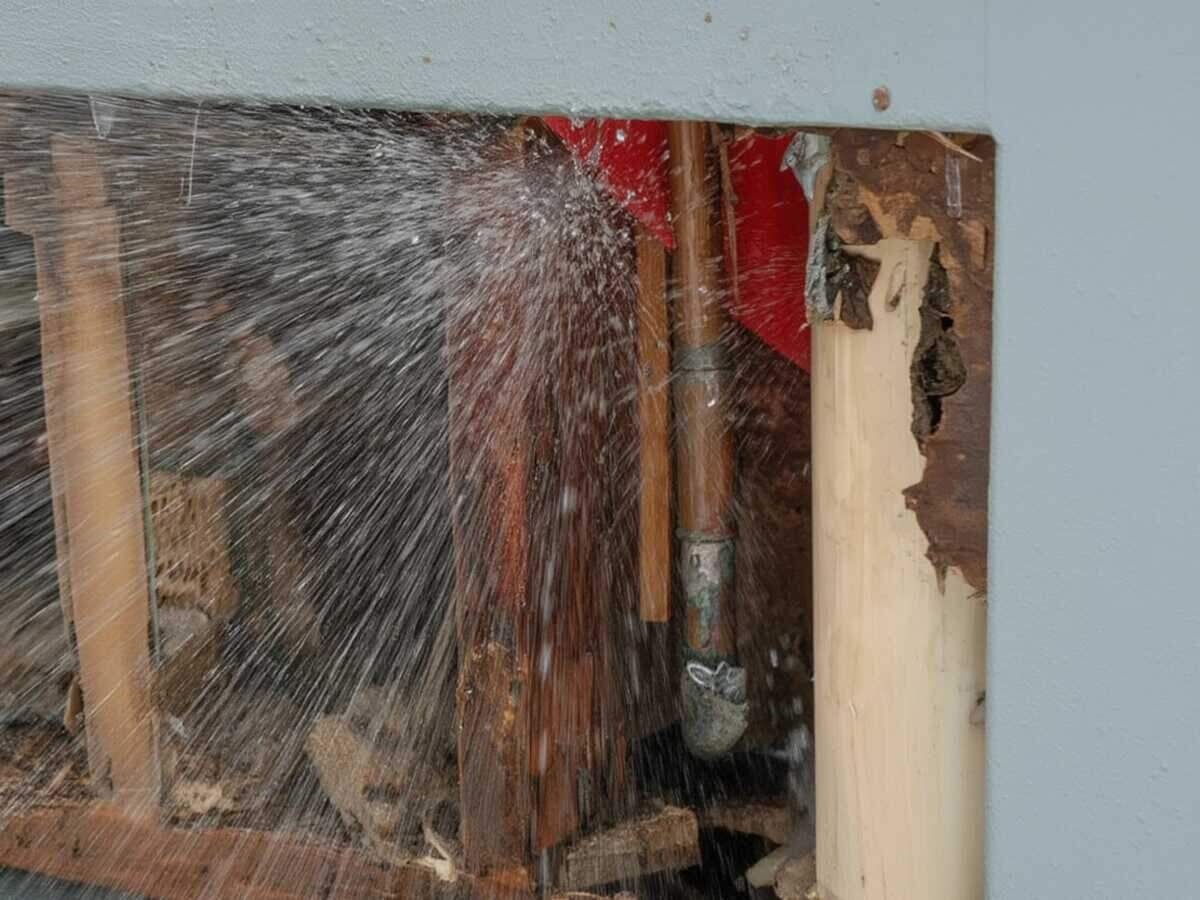
Freeze breaks in Georgetown houses turn up in a short list of places, and which one depends on the part of town you are in. On the slab stock the splits are in attic runs sitting above the insulation instead of under it, and in the stub-outs where a line passes through an exterior wall to a hose bib. In the older houses around the Square, where the floor sits over a crawl space, the supply runs hang in open air under the house with nothing but a skirt between them and the weather. Service lines here also run shallow, because the ground turns to Edwards limestone not far down, so a long freeze reaches the yard side sooner than it would in deep soil.

What sets these apart from an ordinary burst pipe is who was home. A freeze break happens when the house is at its coldest and least attended, so the water goes into cavities that are already cold, and the loss gets discovered by whoever opens the door rather than by whoever heard it. We ask what we can record on arrival: where the thermostat was set, whether the water was off at the main, which fixtures were left open. Those details end up mattering to the claim more than most homeowners expect.

Proving where the water went, then proving it left

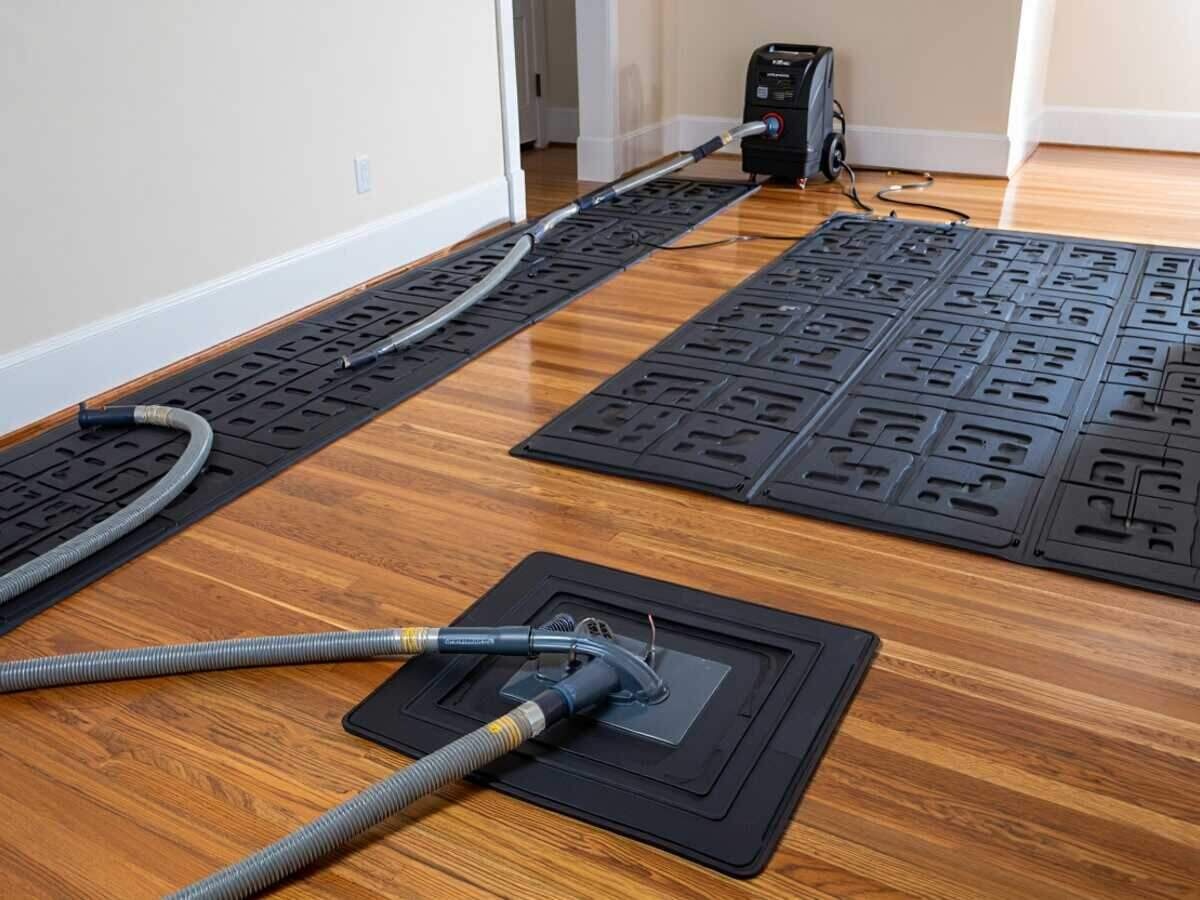
Very little of what a freeze break releases ends up somewhere anybody can see it. A thermal camera finds the cold wet zones inside the assembly and a meter confirms what is actually wet and how far it traveled from the split, and only then does anything get opened. The base comes off along the run, saturated batt is pulled out through the gap, and warm dry air goes in behind the drywall while dehumidifiers take that moisture out of the room rather than letting it migrate next door. Monitoring runs against a reference room that stayed dry, and what you get at the end is the curve those points followed rather than one reading on the last day.

  • Thermal and meter mapping before a single opening is cut
  • Saturated batt drawn out through the base gap instead of a torn-out wall
  • The conditions found on arrival recorded for the freeze claim
  • A monitoring log an adjuster can follow, not one number on the last day
Burst and frozen pipe water damage in Georgetown, TX

A plumber puts the pipe back in service; we handle the water it left in the building, and the two crews regularly work the same day. One honest note on coverage: a sudden burst is the accidental loss a Texas homeowners policy is written around, but many policies exclude freeze damage in a home left unheated and unattended, which is the whole reason insurers keep telling you to leave the heat up when you travel. We document what we find and your carrier decides. Call (512) 271-5099 any hour.
Good to know

Frequently asked questions

We were away and the heat was set low. Will the carrier still cover it?

That is between you and your policy, and the wording matters. Most Texas policies cover a sudden burst; many exclude freeze damage where the house was left unheated and unattended, and some hinge on whether the water was shut off. We record what we find on arrival, thermostat setting included, so the file reflects the house rather than a guess. Your carrier makes the coverage call.

The house sits over a crawl space. Does that change where you look?

It changes the first place we look. Supply runs under a floor with a vented crawl space below sit in outside air on every side, so they freeze earlier than anything inside a wall. It changes the drying too: the underside of the floor system and the joists get read and dried as well, and a crawl space that stayed wet is its own problem to solve.

The water was shut off at the main before we left. How did this still happen?

Shutting the main off limits how much water comes out; it does not stop a pipe from splitting. Whatever is still standing in the lines freezes, expands, and opens the pipe the same way, then drains what the lines held and whatever the system refills once the water goes back on. It is why the standard advice pairs shutting off with draining the lines from the lowest faucets.

Can you tell how long the water was running?

Within reason, and we write down what supports it. How far the water traveled, how high it wicked up the drywall, whether the material has started breaking down, and what the readings look like across the footprint all point at duration. It is not a stopwatch, but it is the kind of evidence an adjuster works from, and it beats a guess on a form.

Water damage won't wait

Georgetown freeze break in an empty house? Start with what it left behind.

Call with what was found and roughly when the house was last lived in. We trace what went into the assemblies, cut only where a reading justifies it, dry the cavities, and write down the conditions your carrier will ask about.

Call (512) 271-5099 Available 24/7 · Austin metro