



Hardwood Floor Water Damage Repair in Georgetown, TX

Nobody was in the house when the ice maker line let go, and the plank floor across the great room has been swelling for a week. Some of these come back and some are finished. The meter decides which. Call (512) 271-5099.

Call (512) 271-5099 Answered live, 24/7Nights, weekends, holidays
  • We bill your insurer directly
  • IICRC-certified crews
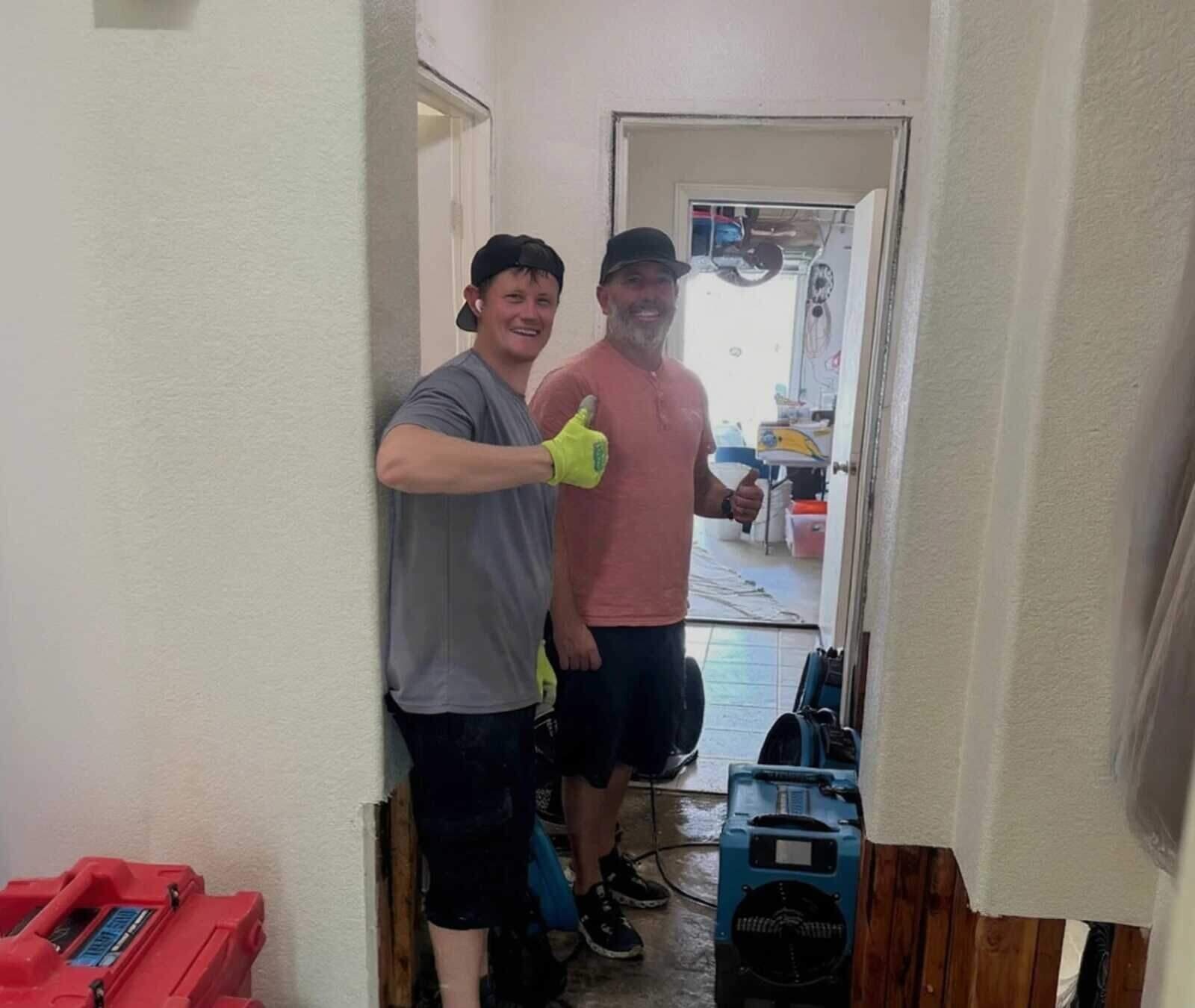
Local water damage crew working in an Austin-area home with air movers and a dehumidifier
Our crew · Austin metro
Why Georgetown homeowners call us

A local crew that shows up and does it right

Dried to a reading Equipment stays until the material meters dry, not until the surface feels dry.
One crew, start to finish The same local crew from the first extraction to the final repair.
No surprise line on the bill Equipment days and demolition are priced before the work happens, not discovered on the invoice.
Local Austin crew Dispatched from the north metro, never routed through an out-of-state call center.
Certified & accredited
IICRC Certified firm Indoor Air Quality Association member Certified and licensed water damage restoration Certified and licensed mold remediation and removal
How it works

Our restoration process

Four steps, starting the moment you call.

1

Call & Dispatch

Tell us what happened. A local crew is dispatched on the call, and how fast we reach you depends on traffic and where you are.

2

Extract & Stabilize

We stop the source, pump out standing water, and set drying equipment.

3

Dry & Monitor

Air movers and dehumidifiers run while we track moisture daily to dry standard.

4

Repair & Reinstall

Drywall, texture, trim, and paint go back so the room reads finished.

Insurance-savvy from the first call

Documented to claim standard from the first hour

We document the loss to claim standard from the moment we arrive — photos, moisture readings by room, and a scope that maps to your policy. Then we bill your insurer directly for the covered work.

See how claims work in Texas

On a wet floor in Georgetown, what is down matters more than how much water there was. The newer stock leans heavily on engineered plank and laminate through the main living space, and the two behave nothing alike once they are wet: engineered can sometimes be dried where the veneer has not lifted, while a laminate core that has swollen is a replacement and no amount of equipment changes that. The older houses off the Square are where solid wood turns up, and a solid hardwood floor is usually the one worth a slow, careful schedule.

Telling them apart takes a few seconds at a vent cutout or the end of a run, and it is worth doing before anyone prices anything. After that, the tells are all about dwell time: click joints swollen so they no longer meet flush, veneer lifting at a board edge, planks that rock underfoot, and dark shadows where an area rug or a piece of furniture sat and held moisture against the finish. On a slab there is no subfloor to save, which changes the last question, because the concrete itself holds water and new flooring glued over a slab that still reads high will fail on its own inside a year.

Reading the wood before anyone commits

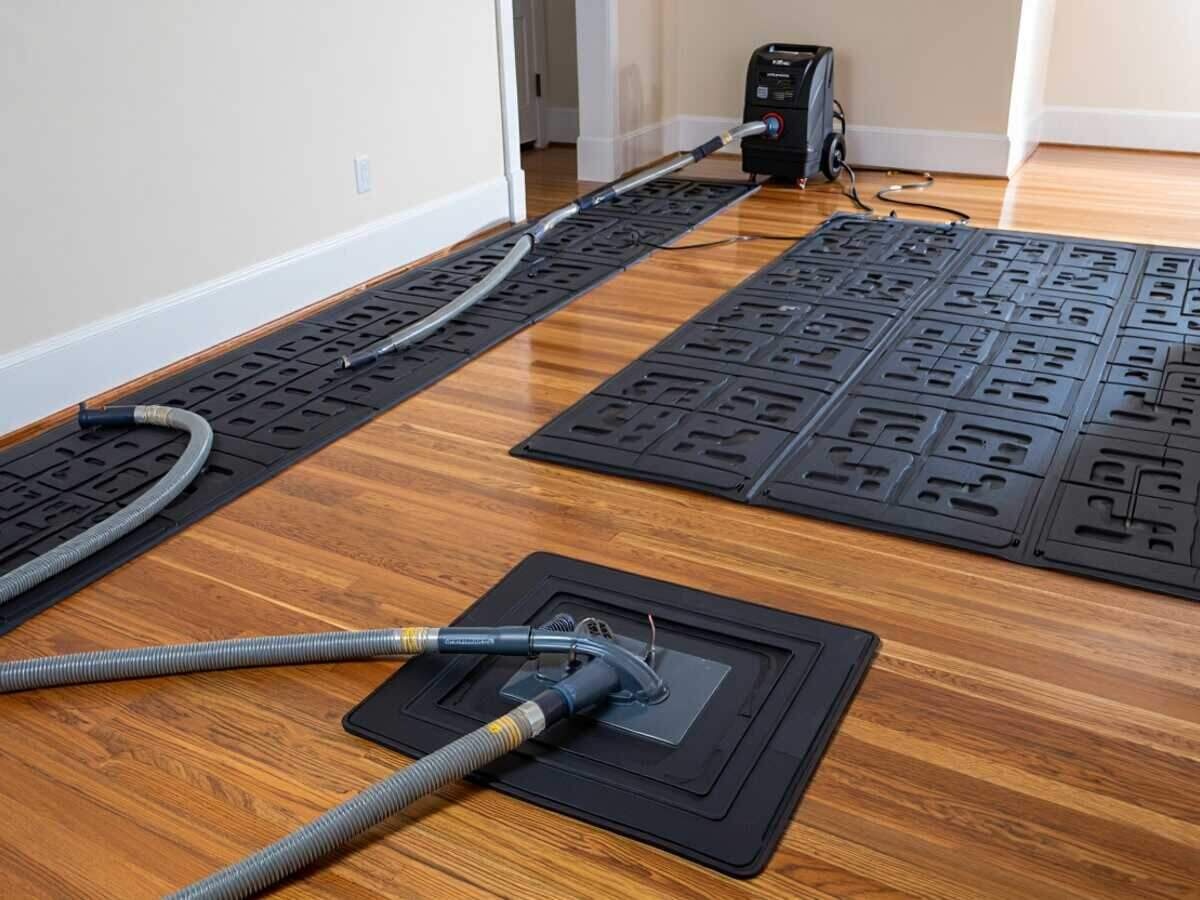
Every drying plan here starts with two numbers: what the boards read at the wet edge, and what the same floor reads in a room the leak never touched. The second one is the target. Where drying is realistic, mats seal to the surface and a vacuum draws moisture up through the boards while a dehumidifier keeps the room able to take it, and the pace stays slow on purpose, because a floor brought back too fast crowns instead of flattening. Where it is not realistic, we say so on the first visit and put the money toward removal and drying the slab properly instead of a week of equipment on a floor that was never coming back.

  • The floor identified as solid, engineered, or laminate before anything is quoted
  • Pin readings on the boards and a reference from an untouched room
  • Vacuum mats and a slow schedule wherever drying is realistic
  • The slab itself dried and read before any new flooring goes down
Hardwood floor water damage repair in Georgetown, TX

Hardwood floor water damage rewards an early decision and punishes a hopeful one. Call (512) 271-5099 and we will put pins in the boards and the slab and give you the unvarnished version.
Good to know

Frequently asked questions

How do I tell whether my floor is laminate or real wood?

Look at a cut edge, at a floor vent or where a run ends at a transition. Solid wood shows the same grain all the way through. Engineered shows a thin wood layer over plywood-like plies. Laminate shows a dense uniform fiberboard core under a printed surface. That one distinction decides most of what happens next, so it is the first thing we check.

The slab under the floor got wet. Does that matter if we are replacing the floor anyway?

It matters more then, not less. Concrete holds moisture a long time and gives it back slowly, and adhesive and underlayment fail against a slab that still reads high. We dry it and take a reading before new flooring goes down, which is the step most post-leak floor replacements skip and then repeat a year later.

There are dark rings where the furniture sat. Will those come out?

Sometimes, and it depends whether the mark is in the finish or in the wood. A finish that has blushed can often be recoated. Staining that reached the wood sands out on a solid floor and usually cannot be sanded on engineered plank, because the veneer is too thin to take it. We will tell you which one it is once the floor is dry and stable.

Water damage won't wait

Wet floor in a Georgetown house? Get it read before it moves further.

Tell us what is on the floor and how long it has been wet. We identify the product, take readings off the boards and the concrete, and give you a straight answer on whether it stays. The readings go in the file; coverage is your carrier's call.

Call (512) 271-5099 Available 24/7 · Austin metro