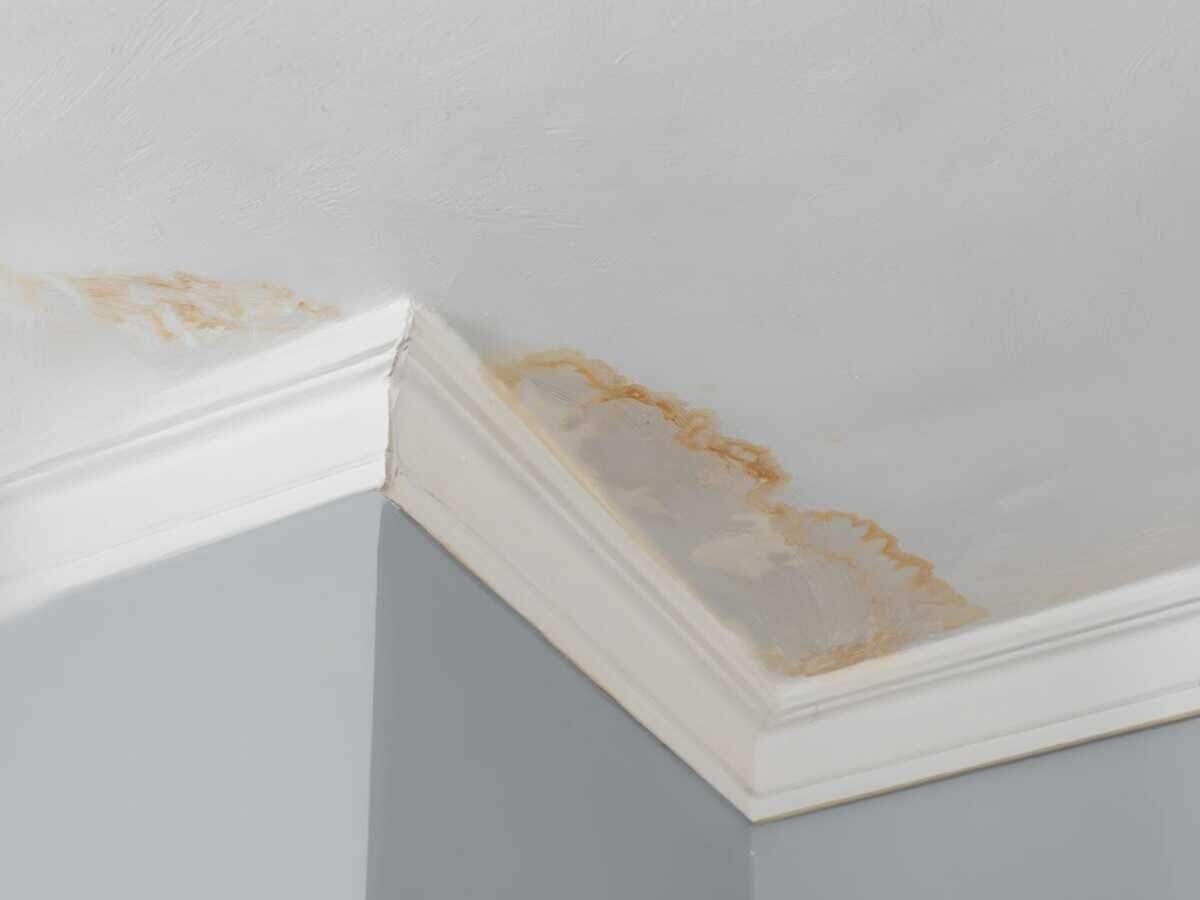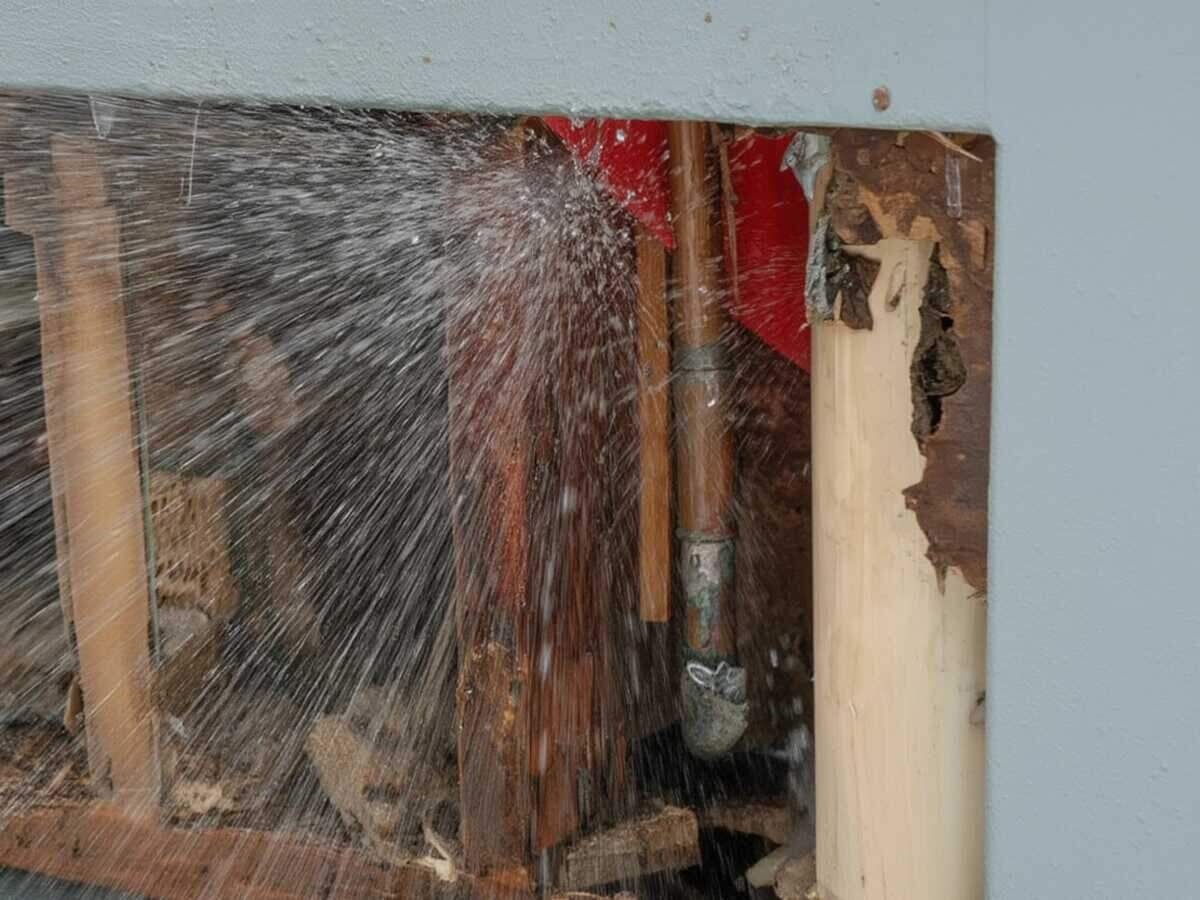




By the time our truck is in the driveway, most of a Cedar Park water loss has stopped being visible. These are slab houses with no crawl space under them, so nothing drains anywhere. The water runs flat, and within a couple of hours a good share of it has been taken up by carpet pad, subfloor seams, cabinet toe kicks, and the bottom foot of the drywall. What is still shining on the tile is only the part that has not found anything absorbent yet, which is why water removal here is mostly about the share you cannot see.
Which wave of the city your house belongs to tells us what we will be extracting from before we arrive. In the older sections the bedrooms and hallways are carpet over slab, and the pad holds far more water than the room ever showed. In the plans built through the 2000s the main living space is tile or glued plank running unbroken from the entry to the back wall, so the water travels much further before anything absorbs it and it hides underneath the flooring rather than in it. Same failed angle stop, two different extraction jobs one street apart.
What comes off the truck, and for which house
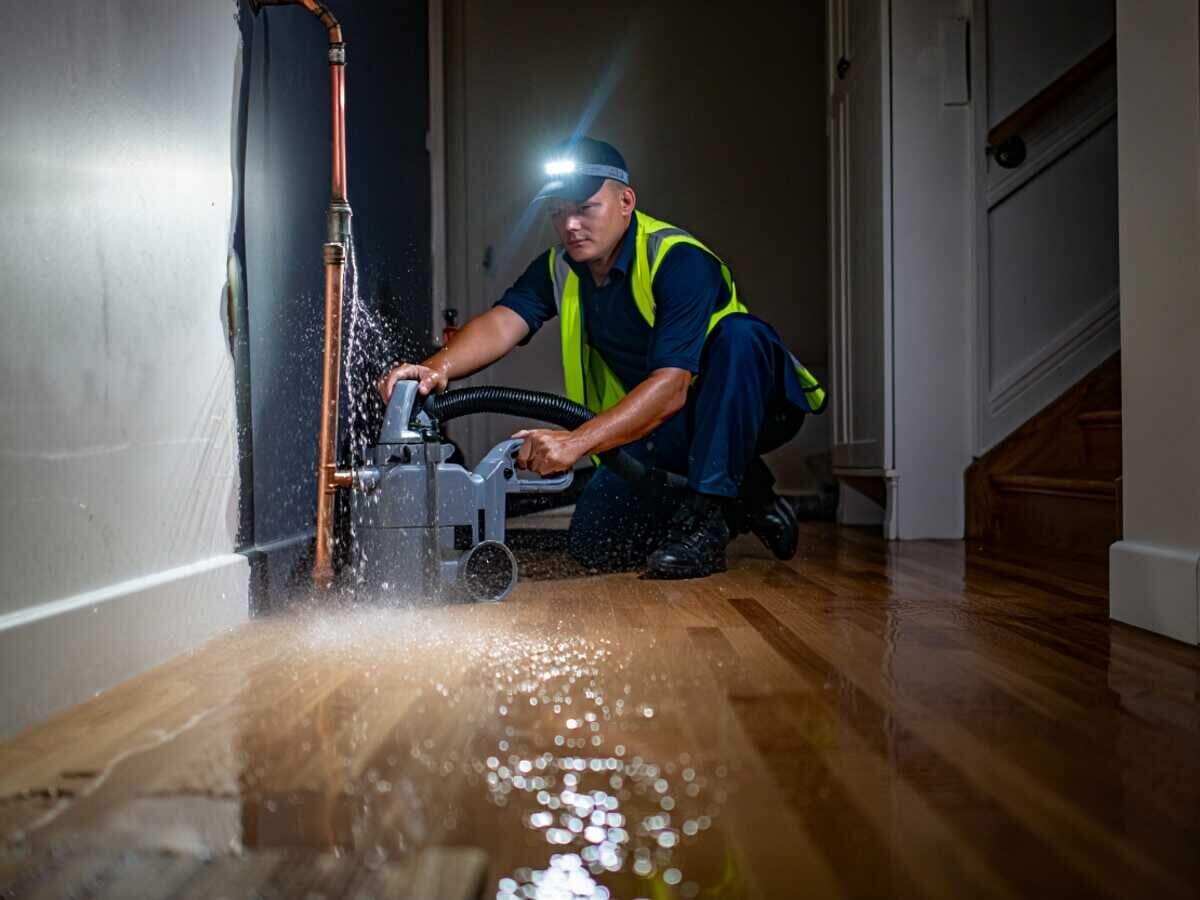
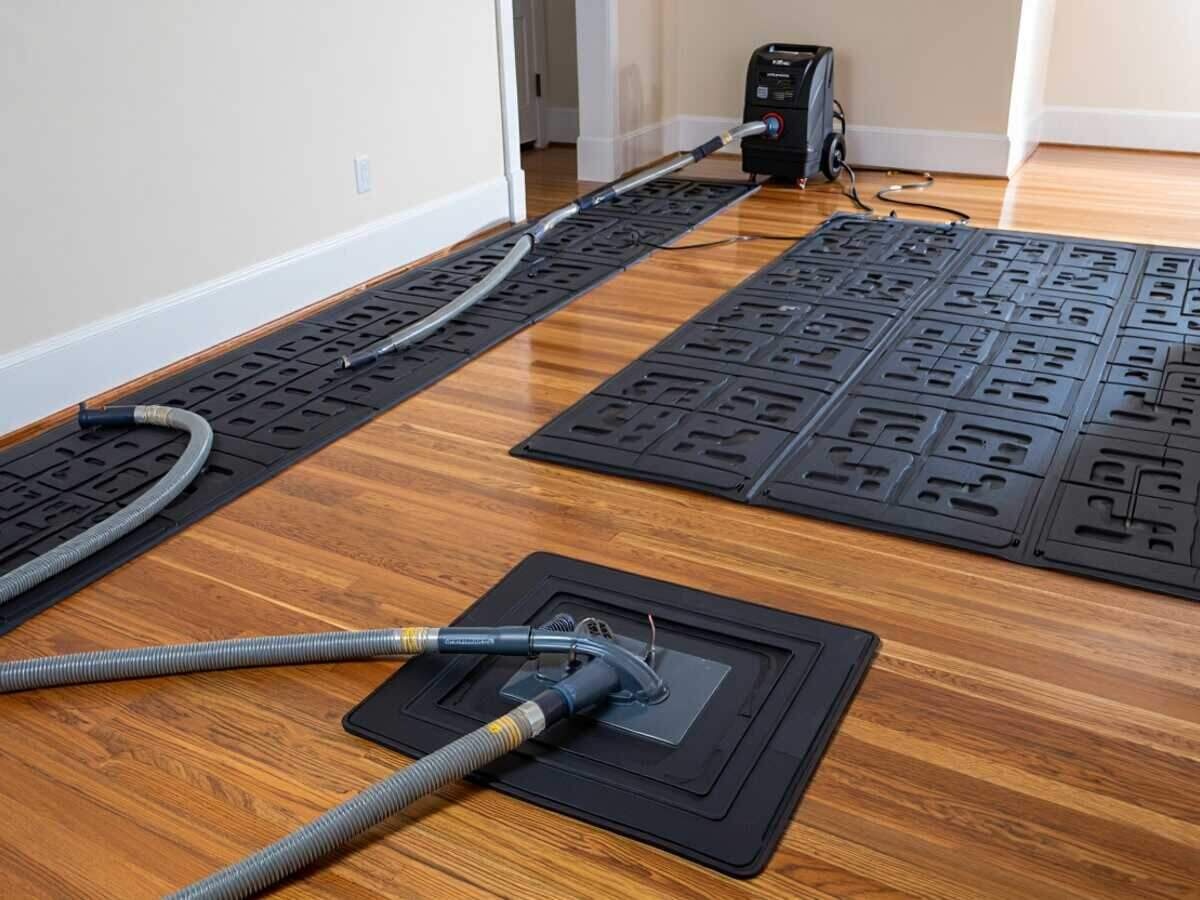
Extraction starts at the far edge of the wet area rather than at the puddle, so we meter the wall base first and mark where the readings drop off. In the carpeted rooms, weighted tools press water back up out of the pad, and that is usually what decides whether the pad stays. On tile and glued plank the work is the perimeter, the grout line, and the cabinet kicks, which are enclosed voids that trap water and cannot dry through the box, so they get opened and vented. Anything the meter finds inside a wall cavity comes out through the base instead of being left to sort itself out. Drying equipment goes in the same visit.
- The wet edge metered and marked before a hose comes off the truck
- Weighted extraction over carpet and pad, wand work along the wall base
- Cabinet kicks opened and vented where water got behind them
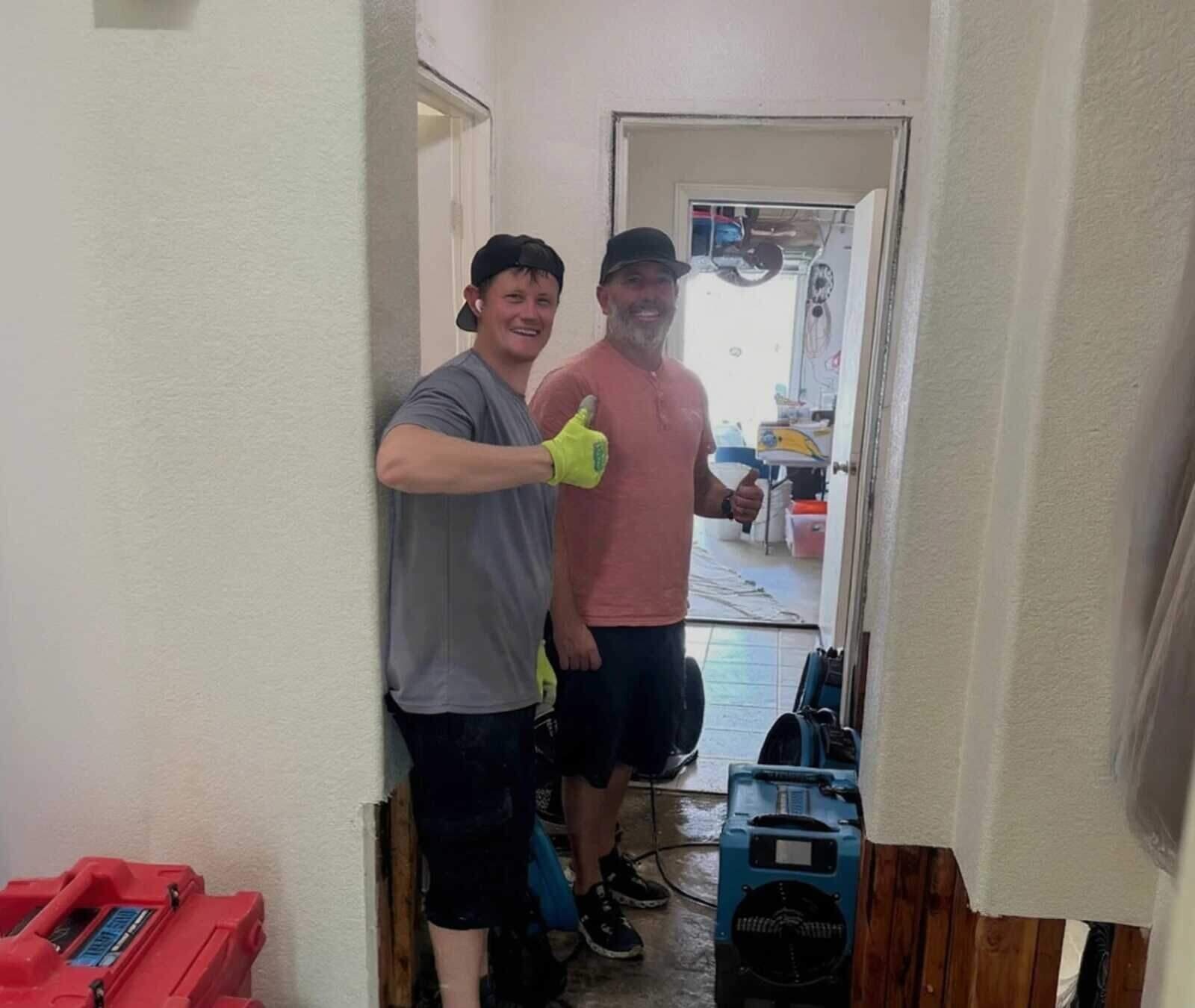
- Air movers and dehumidifiers set on the same visit, then read daily
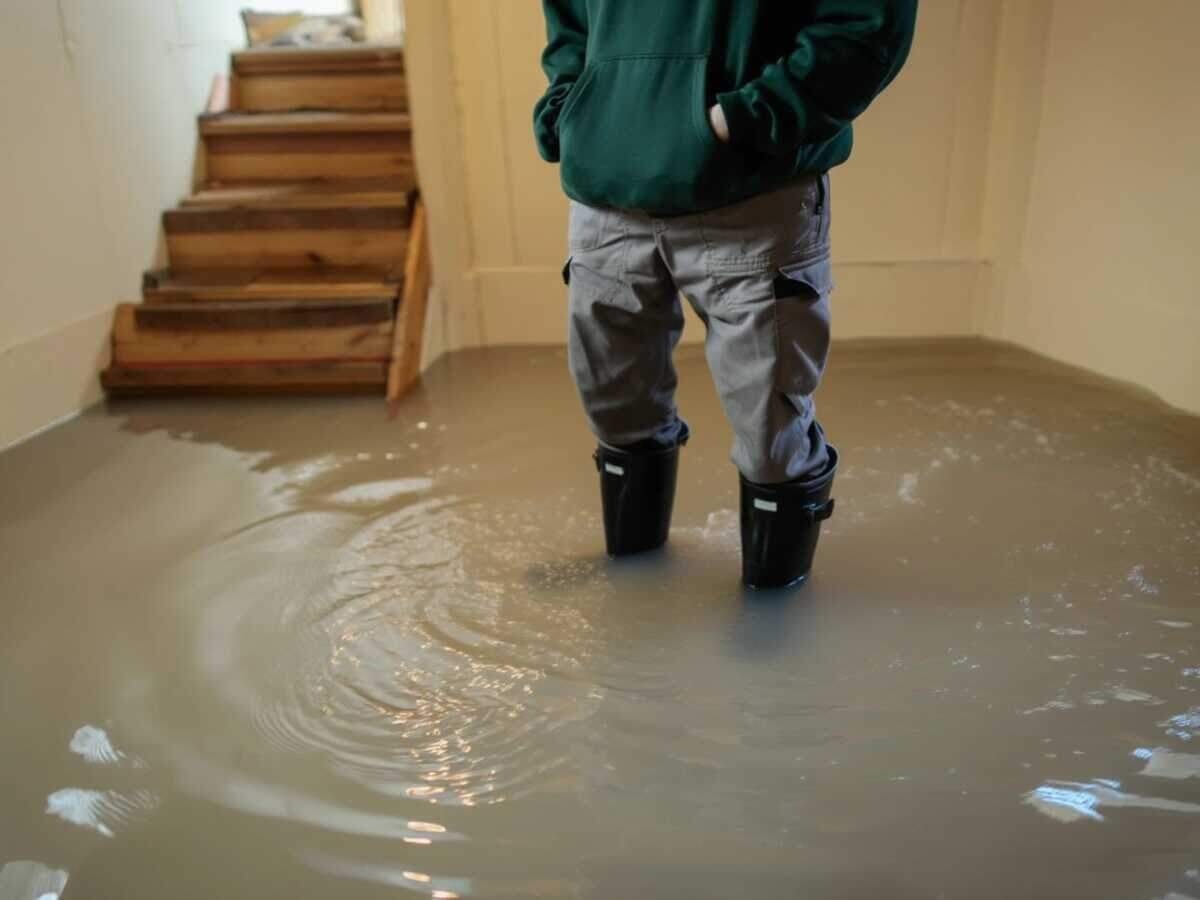
Pulling the water is the short part, often a few hours. Everything after it is drying to a number and proving it, and all of it is photographed and logged while it happens. A technician answers (512) 271-5099 at any hour, and the two things worth having ready are the part that failed and the number of hours it was open.