



Hardwood Floor Water Damage Repair in Cedar Park, TX

The dishwasher line ran overnight and by morning the wood along the kitchen island stands proud at every seam. On a Cedar Park slab there is no air beneath those boards, so the water has exactly one way out. Call (512) 271-5099.

Call (512) 271-5099 Answered live, 24/7Nights, weekends, holidays
  • We bill your insurer directly
  • IICRC-certified crews
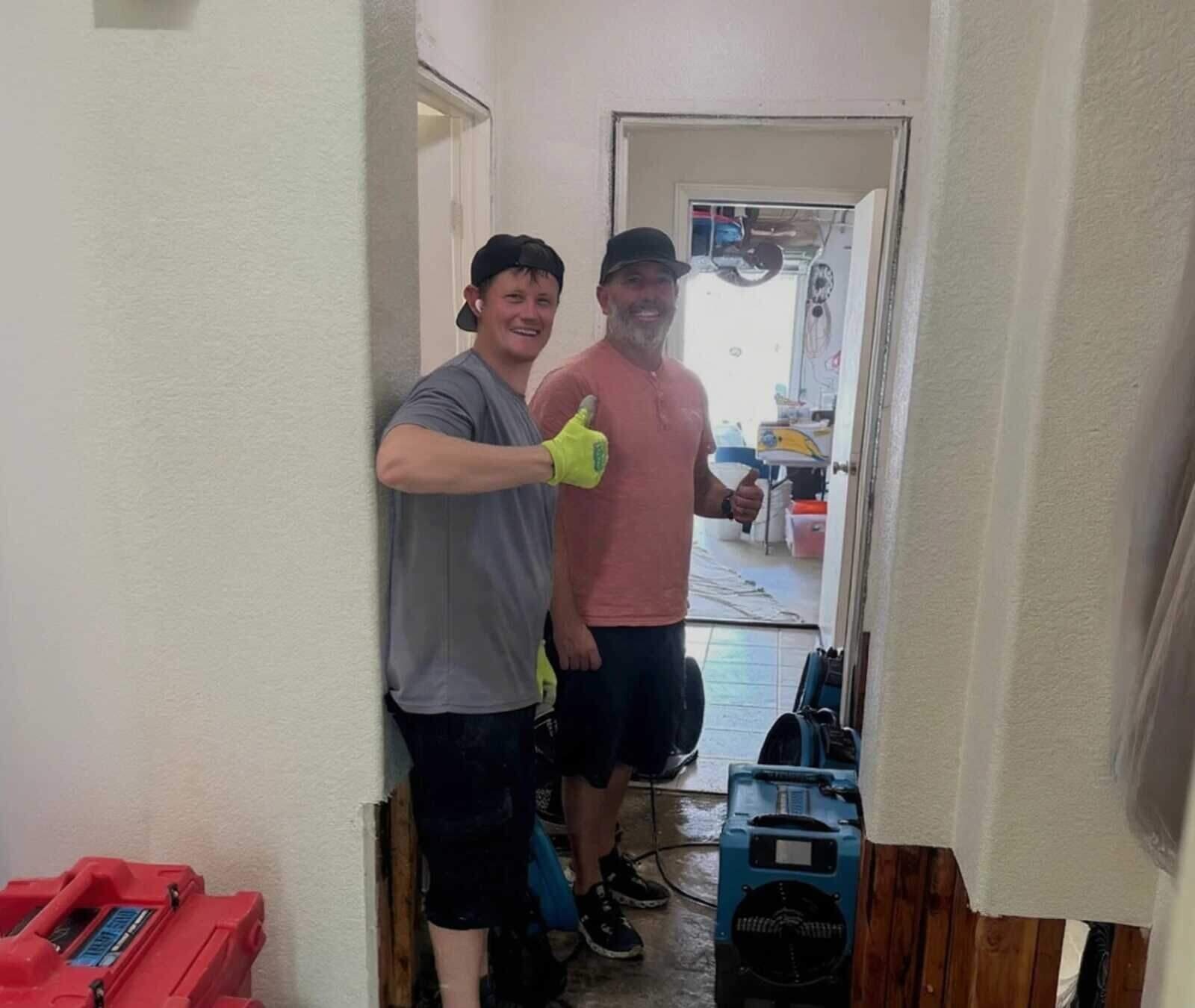
Local water damage crew working in an Austin-area home with air movers and a dehumidifier
Our crew · Austin metro
Why Cedar Park homeowners call us

A local crew that shows up and does it right

Dried to a reading Equipment stays until the material meters dry, not until the surface feels dry.
One crew, start to finish The same local crew from the first extraction to the final repair.
No surprise line on the bill Equipment days and demolition are priced before the work happens, not discovered on the invoice.
Local Austin crew Dispatched from the north metro, never routed through an out-of-state call center.
Certified & accredited
IICRC Certified firm Indoor Air Quality Association member Certified and licensed water damage restoration Certified and licensed mold remediation and removal
How it works

Our restoration process

Four steps, starting the moment you call.

1

Call & Dispatch

Tell us what happened. A local crew is dispatched on the call, and how fast we reach you depends on traffic and where you are.

2

Extract & Stabilize

We stop the source, pump out standing water, and set drying equipment.

3

Dry & Monitor

Air movers and dehumidifiers run while we track moisture daily to dry standard.

4

Repair & Reinstall

Drywall, texture, trim, and paint go back so the room reads finished.

Insurance-savvy from the first call

Documented to claim standard from the first hour

We document the loss to claim standard from the moment we arrive — photos, moisture readings by room, and a scope that maps to your policy. Then we bill your insurer directly for the covered work.

See how claims work in Texas

Almost every hardwood floor in Cedar Park sits directly on concrete. Nobody nails wood to a slab, so what is down is either glued to the concrete or floated over a foam underlayment, and either way there is no cavity below and no air moving under the boards. Water that gets underneath cannot drain, cannot evaporate downward, and ends up held between the slab and the finish on top. That one fact drives every decision we make on these floors.

It also gives us something to listen for. Walk a glued floor that has been wet: where the adhesive has released, the boards sound hollow and give slightly underfoot, and that area is telling you the bond is gone whether or not the wood ever cups. On a floating floor the tell is at the joints, which swell and stop meeting flush. Water usually enters at a tile transition or behind a dishwasher and then travels along the length of the boards, so the wet area is a long finger rather than a circle, and it runs well past anything visible from the doorway.

Pulling the water back up through the boards

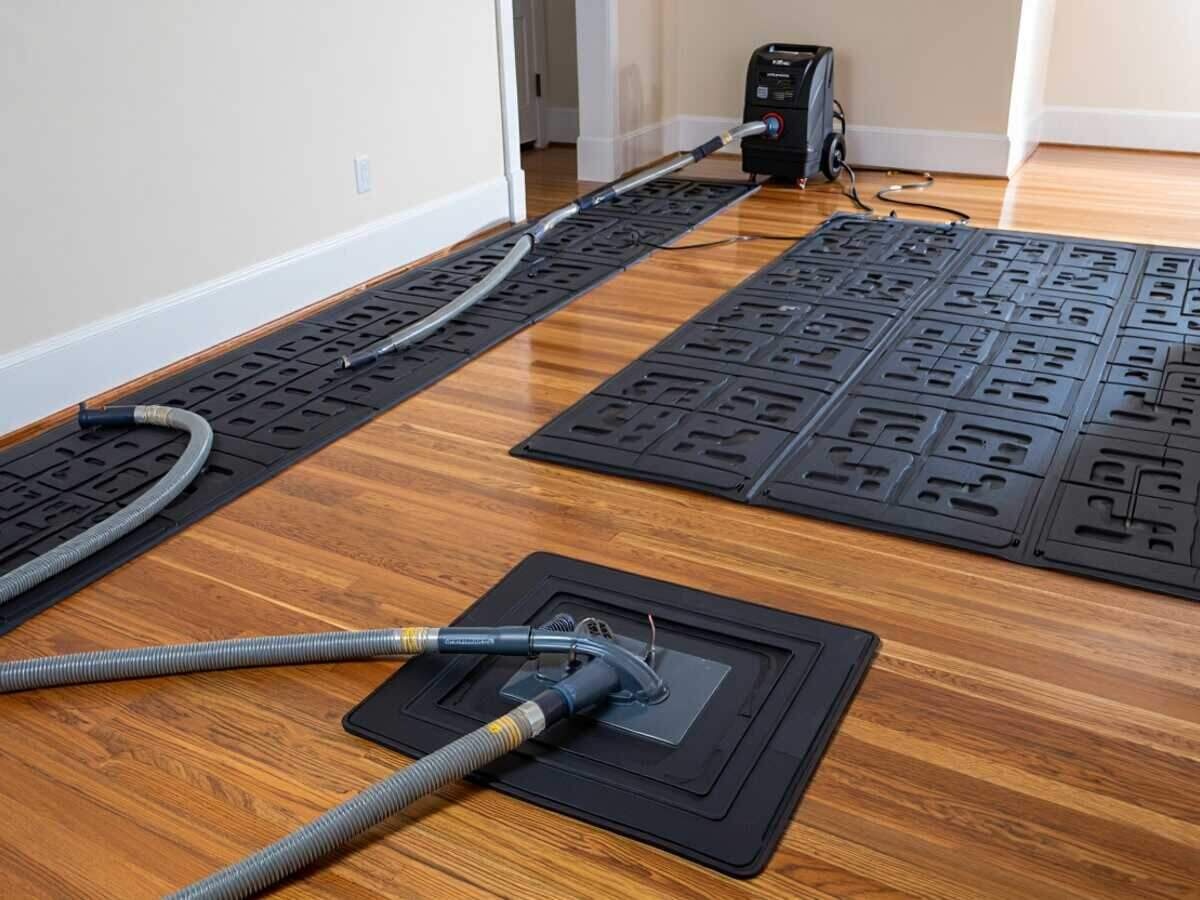
Air blown across a finished floor does close to nothing, because the finish that protects the wood also seals the water in. So we take it out through the boards: mats sealed to the surface with a vacuum unit drawing air and moisture up and out through hoses, while a dehumidifier keeps the room dry enough to keep accepting it. Readings come off pins in the wood and a reference taken in a room the water never reached, and the mats move as the wet area shrinks. We hold the pace down on purpose, because a floor pushed dry faster than the wood can equalize crowns and checks its finish, which is a self-inflicted second loss.

  • A pin reading on the boards and a reference from a dry room before anything starts
  • Vacuum mats sealed to the surface and repositioned as the wet area shrinks
  • A deliberately slow schedule so the wood does not crown on the way back
  • A plain answer on glued and floating floors that are past saving
Hardwood floor water damage repair in Cedar Park, TX

A glued or floating floor is less forgiving than a nailed hardwood floor over a wood subfloor, and we would rather say that on the first visit than after a week of equipment. Call (512) 271-5099 while the boards are still moving, because every day of swelling narrows the options.
Good to know

Frequently asked questions

The floor sounds hollow underfoot since the leak. What does that mean?

On a glued-down floor it means the adhesive has released from the slab in that area, usually because water got between the two. The boards can look perfect and still be sitting loose. It matters because a floor that has debonded will not re-bond as it dries, so that section becomes a repair question even if the wood itself comes back flat.

Can drying mats work on a floor glued to concrete?

They can, and that is the case they exist for, because there is no other route out. The mats seal to the surface and pull air and moisture up through the boards under vacuum. What decides the outcome is the reading on the wood and on the slab underneath, not how the floor looks, and we take both before committing to a drying plan.

Do the baseboards have to come off?

Usually the base shoe rather than the baseboard, and only along the wet run. Taking it off opens the perimeter gap the floor needs for airflow and lets us read and dry the bottom plate behind it, which is often wetter than the floor. It goes back with the rebuild, and it costs far less than finding a wet plate a month later.

Water damage won't wait

Wet wood on a Cedar Park slab? The reading decides, not the look.

Call and we will meter the boards and the slab, set mats where the numbers put the water, and tell you plainly whether this floor dries flat or comes out. The daily numbers go to your adjuster, and the coverage decision stays with your carrier.

Call (512) 271-5099 Available 24/7 · Austin metro