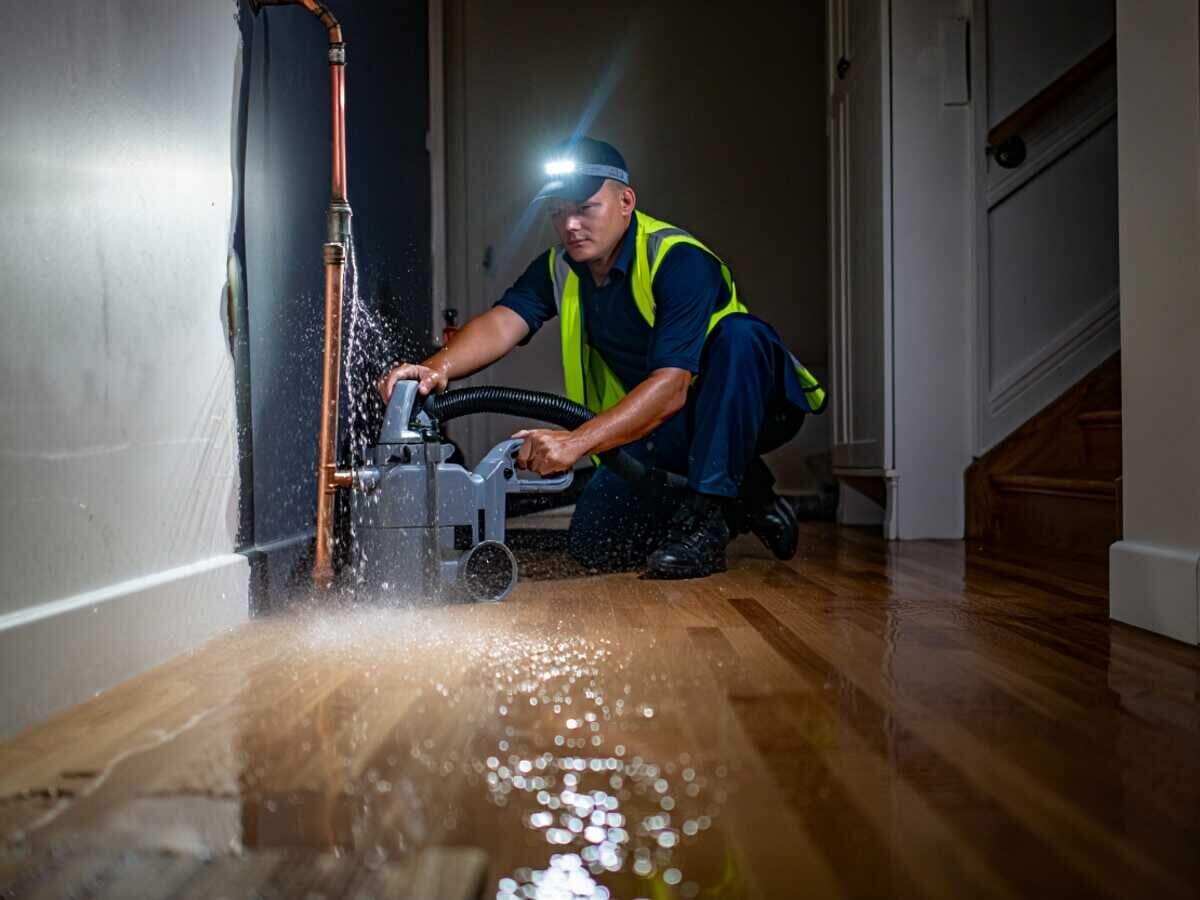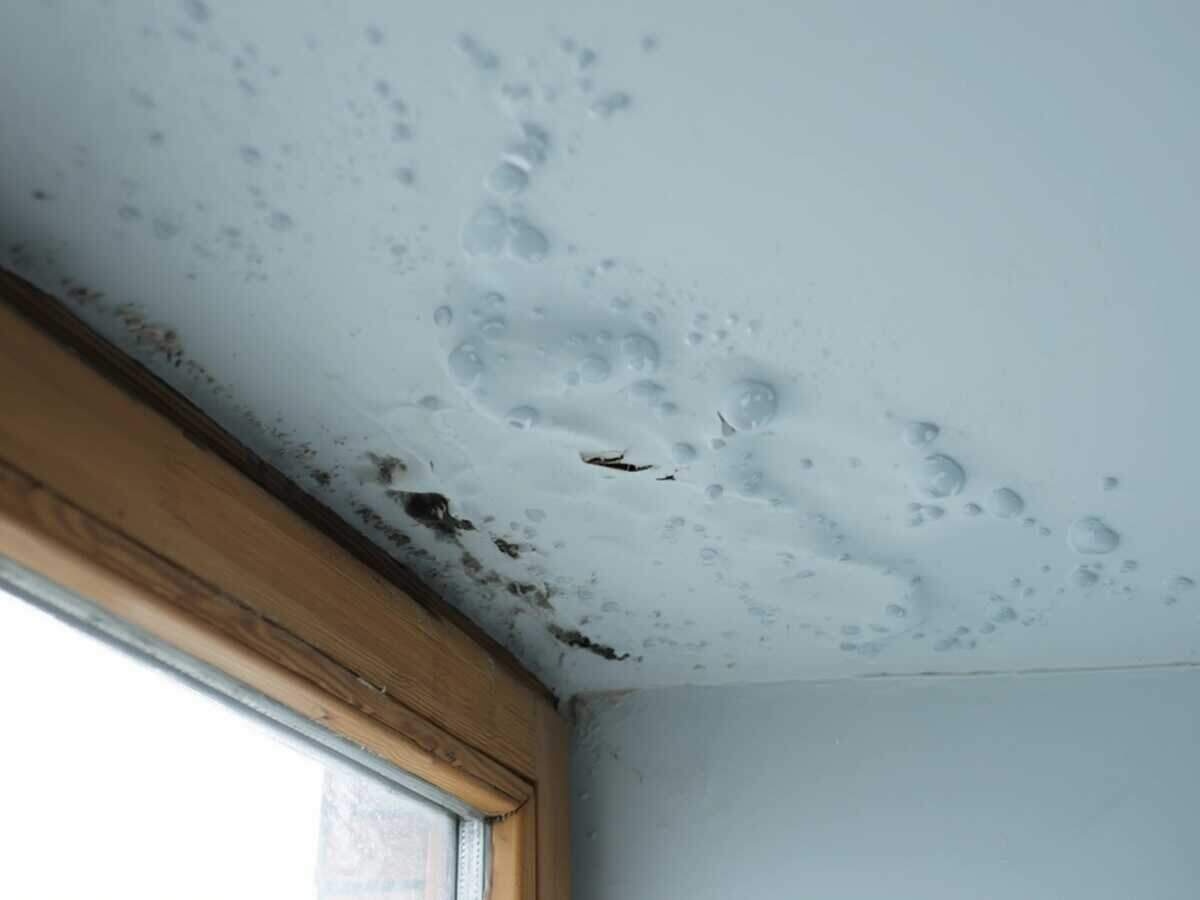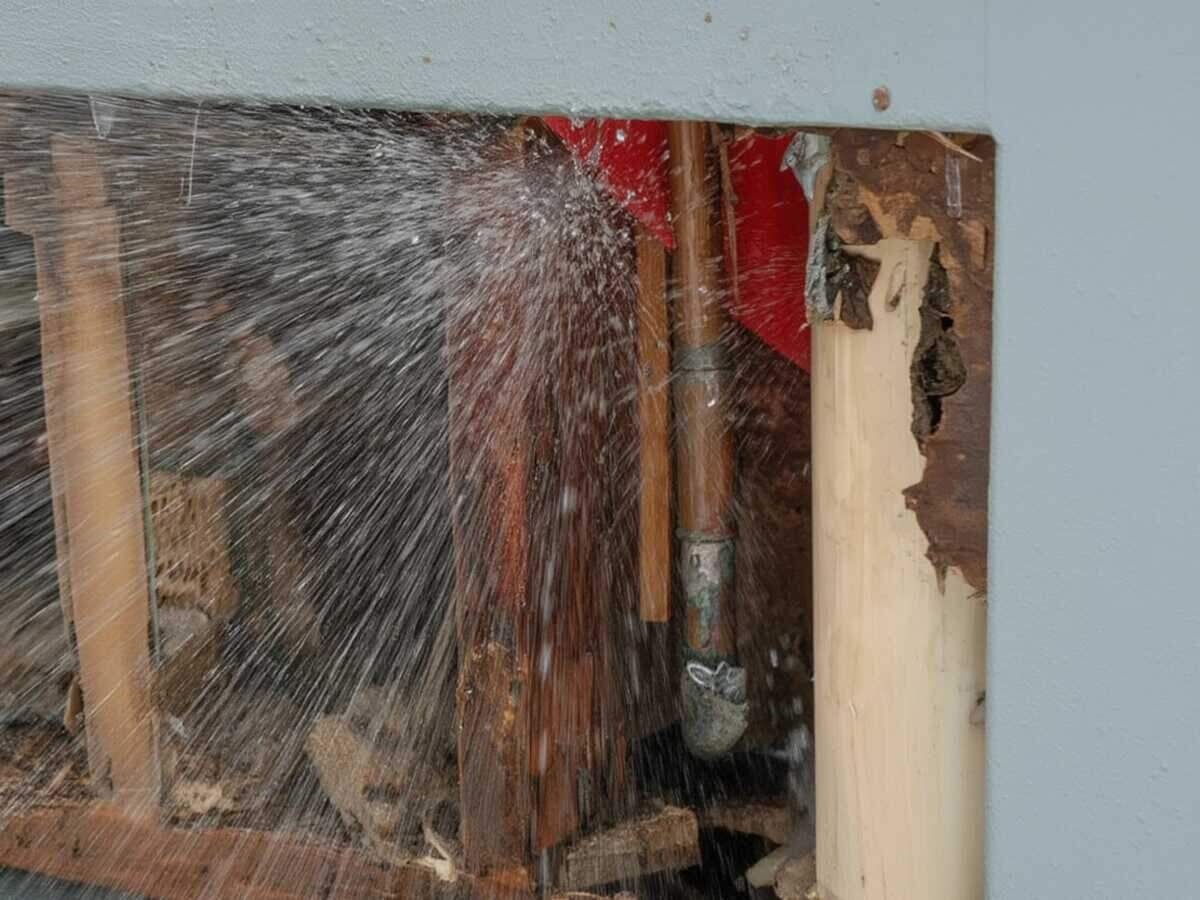




Mold removal in Buda usually traces back to a water heater that never actually burst. A tank in a utility closet or a garage alcove fails slowly first, weeping at a fitting or through a corroded seam, and the closet it stands in is warm, unventilated, and out of sight. Growth starts on the drywall paper and the bottom plate inside that closet weeks before anybody opens the door for a reason.
Then the house distributes it. In these slab floor plans the central return is a large grille in the same hallway, a few steps from the closet door, so every time the system runs it draws air out of that corner and sends it through the ducts to every bedroom. That is why people describe a whole-house smell and cannot point at a room. The first thing we do on arrival is shut the system down, and the first thing we ask is that you shut it down before we get there.
Containment when the growth is in a closet
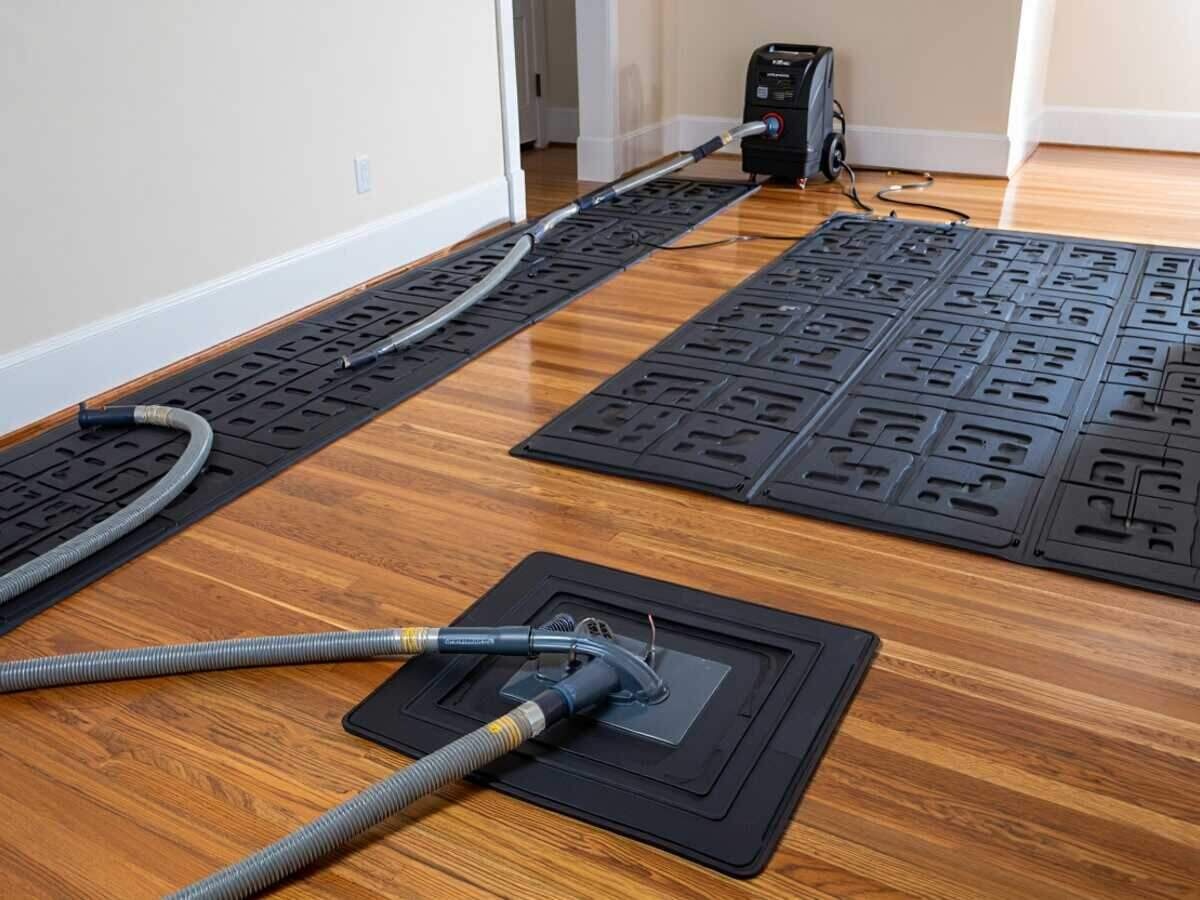
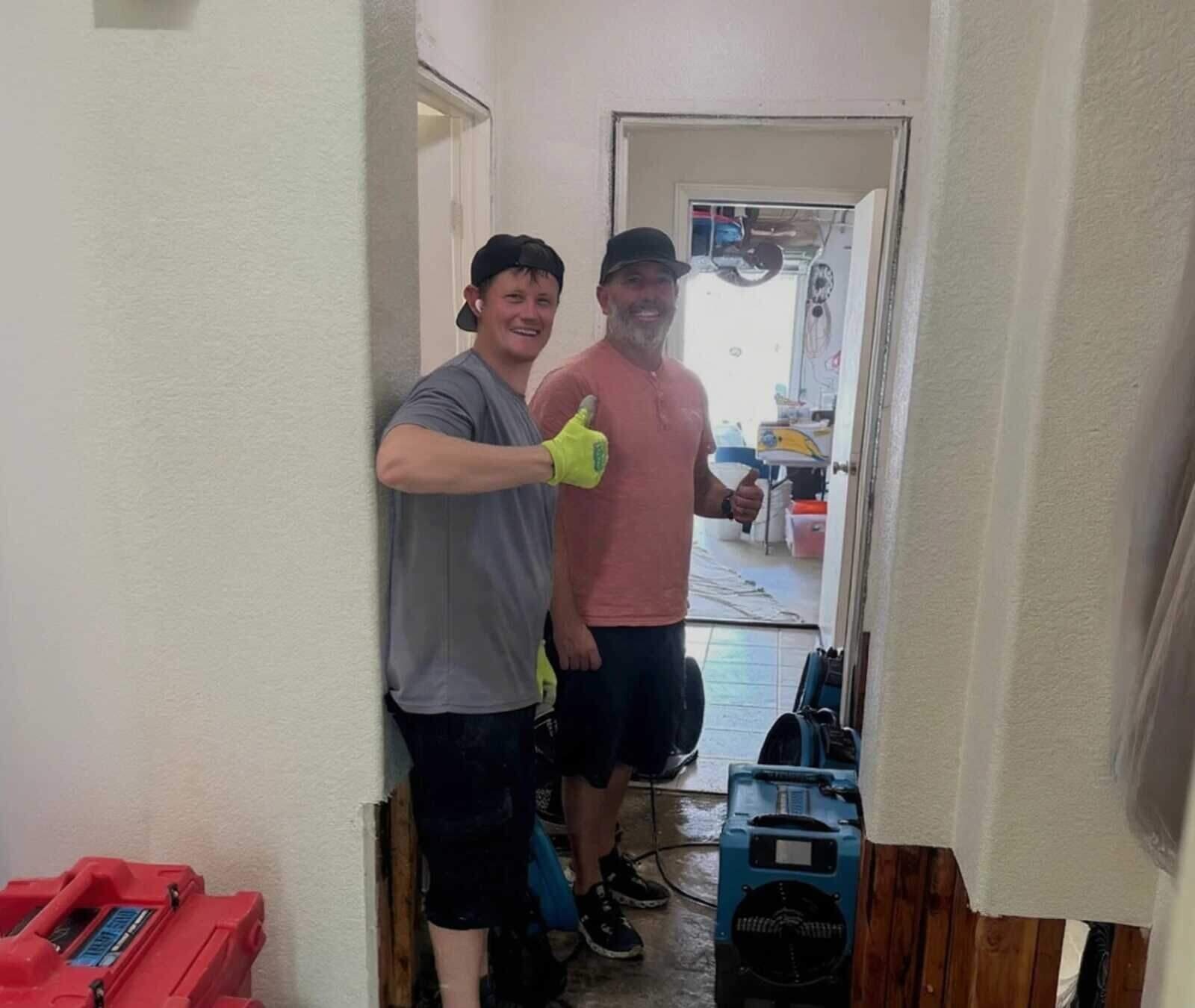
A closet is too small to be its own work zone, so the containment goes up across the hallway and the return grille is sealed and filtered, which keeps the duct system out of it. The zone runs under negative pressure with a HEPA scrubber, and we cut from inside the closet: drywall back to the height the meter calls for, the shelving and any casework the growth colonized, and the batt in the shared wall. The bottom plate and the slab line get read, because a closet that has been wet for a month is wet at the floor first. Sound framing is vacuumed and treated, then the cavity dries on daily readings.
- The system shut down and the hallway return sealed before any cutting starts
- Containment across the hall, negative pressure, HEPA scrubber running throughout
- Drywall, casework, and batt taken back to where the meter reads dry
- Bottom plate and slab line read and dried, since that is where a closet leak sits
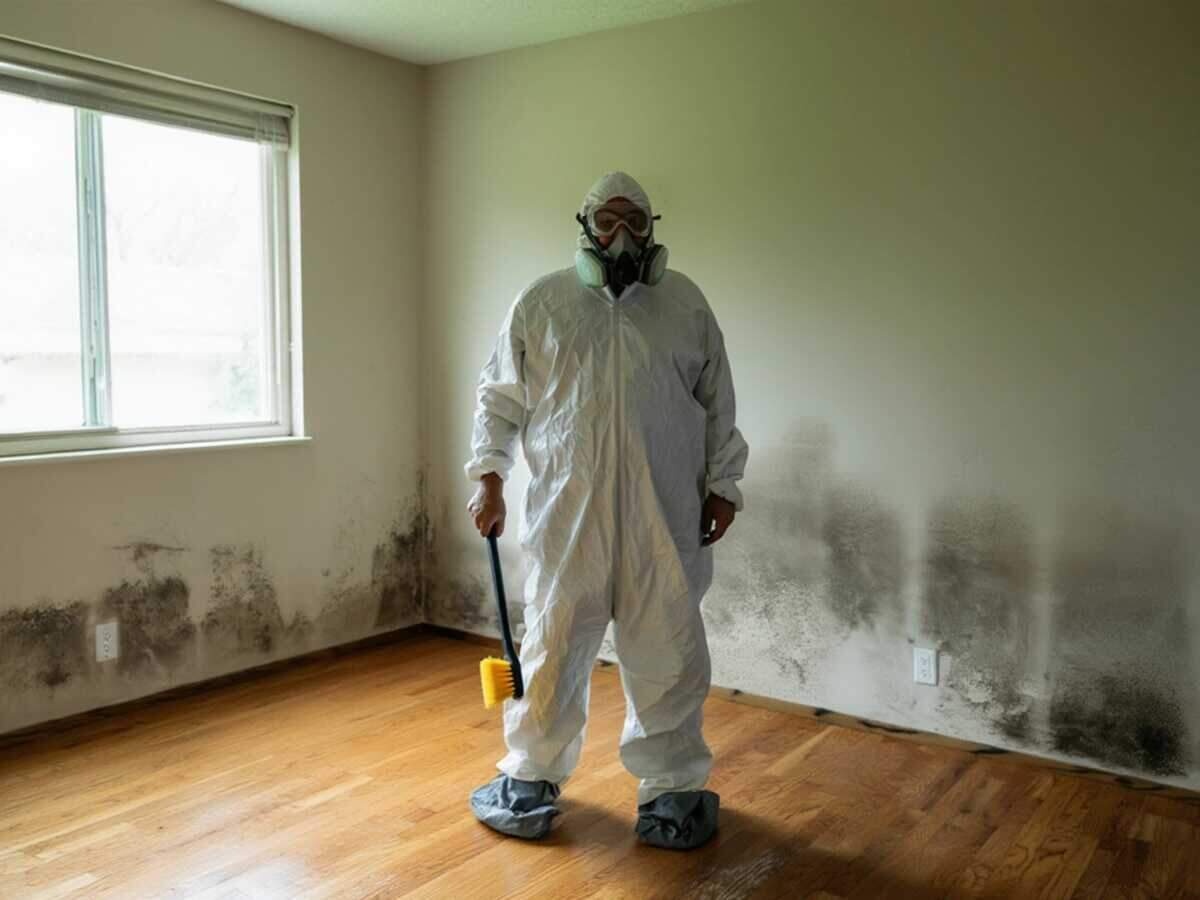
The heater has to be repaired or replaced before the closet closes back up, and that is a plumber's call rather than ours; we work around the swap so the wall is open while they have access and closed once the new unit is set. We photograph the containment, log the readings, and write the remediation and the drying as separate lines so your adjuster can price them. Call (512) 271-5099 and describe where the smell is strongest.