



Hardwood Floor Water Damage Repair in Buda, TX

By the time the wood tells you, the heater has been weeping for a week. The boards nearest the closet sound hollow underfoot, because the adhesive under them let go before anything on the surface changed shape. It is a quiet loss, and it is found late.

Call (512) 271-5099 Answered live, 24/7Nights, weekends, holidays
  • We bill your insurer directly
  • IICRC-certified crews
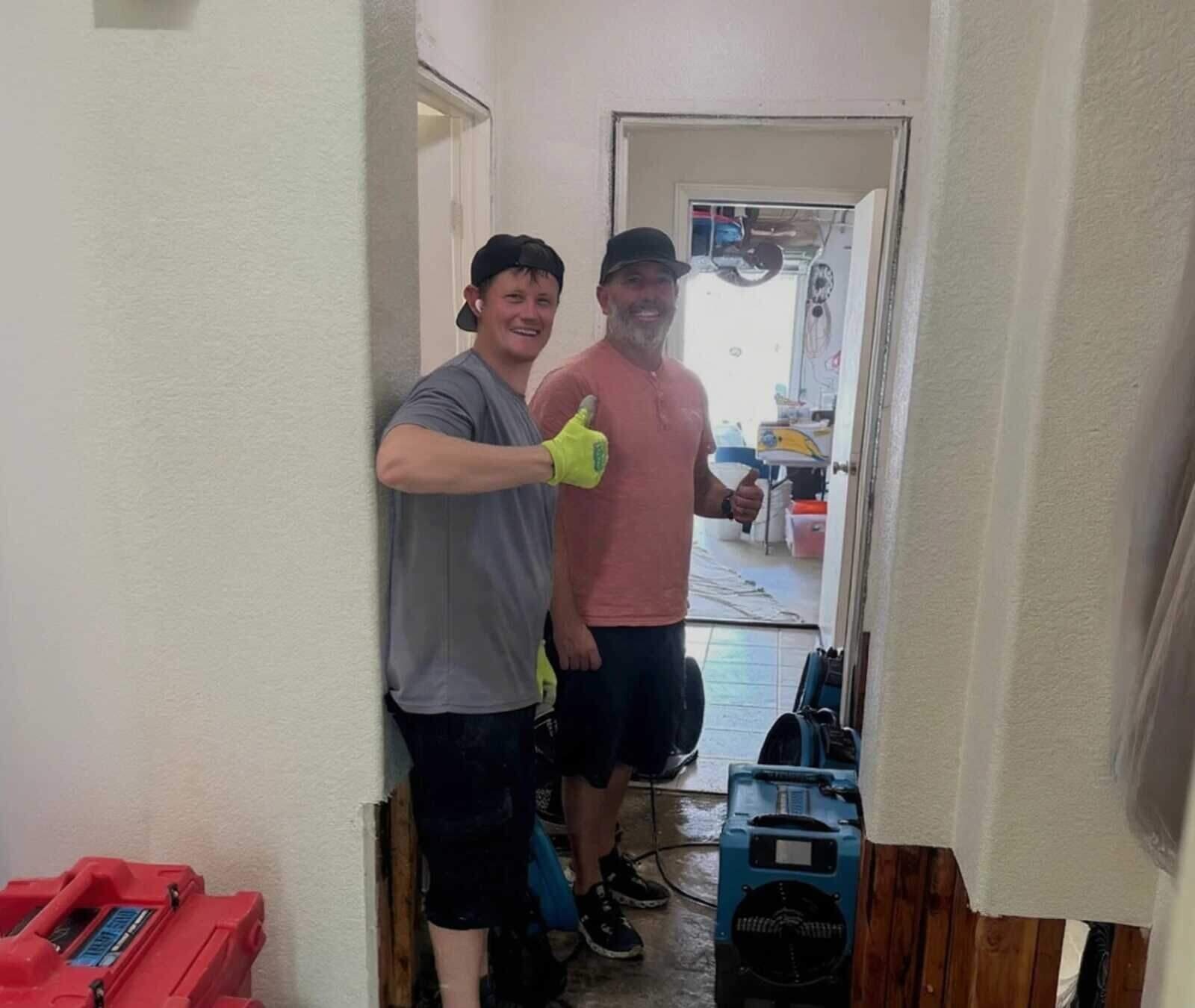
Local water damage crew working in an Austin-area home with air movers and a dehumidifier
Our crew · Austin metro
Why Buda homeowners call us

A local crew that shows up and does it right

Dried to a reading Equipment stays until the material meters dry, not until the surface feels dry.
One crew, start to finish The same local crew from the first extraction to the final repair.
No surprise line on the bill Equipment days and demolition are priced before the work happens, not discovered on the invoice.
Local Austin crew Dispatched from the north metro, never routed through an out-of-state call center.
Certified & accredited
IICRC Certified firm Indoor Air Quality Association member Certified and licensed water damage restoration Certified and licensed mold remediation and removal
How it works

Our restoration process

Four steps, starting the moment you call.

1

Call & Dispatch

Tell us what happened. A local crew is dispatched on the call, and how fast we reach you depends on traffic and where you are.

2

Extract & Stabilize

We stop the source, pump out standing water, and set drying equipment.

3

Dry & Monitor

Air movers and dehumidifiers run while we track moisture daily to dry standard.

4

Repair & Reinstall

Drywall, texture, trim, and paint go back so the room reads finished.

Insurance-savvy from the first call

Documented to claim standard from the first hour

We document the loss to claim standard from the moment we arrive — photos, moisture readings by room, and a scope that maps to your policy. Then we bill your insurer directly for the covered work.

See how claims work in Texas

Hardwood floor water damage from a slow leak behaves nothing like a burst. A weeping heater or a seeping supply fitting puts water down at a low rate for days, so the floor never takes the shock that cups boards overnight. Instead the water creeps along the slab under the flooring, works into the adhesive, and the first real symptom is a sound: a hollow note underfoot where the bond has released, usually starting at the wall nearest whatever leaked.

That timeline changes what the job is. On a floor found the same day, the question is how fast we can dry it. On a floor that has been wet for a week, the question is how much of it is still bonded, and whether the slab underneath can be brought back to a number a new floor can go over. We would rather answer the second question honestly on the first visit than sell five days of equipment to a floor that already decided.

Reading a floor that has been wet a while

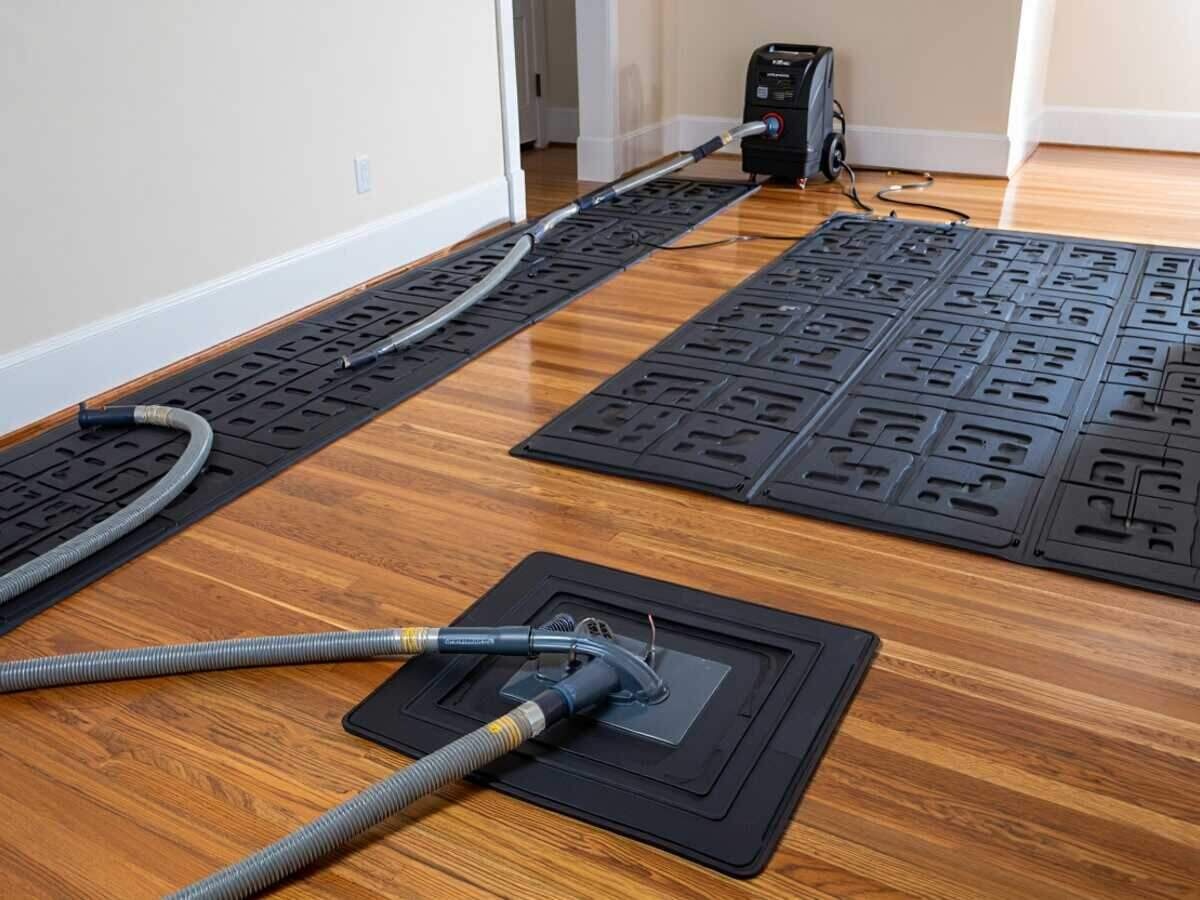
We sound the field first, tapping across the run to hear where the bond is gone, then take readings on the boards, at the wall base, and into the slab itself. Lifting one board at the wet edge tells us more than any of it: what the underside looks like, whether the adhesive is still doing anything, and how far the wet field runs past the flooring. Where the floor is worth drying, mats and vacuum go down and a dehumidifier holds the room. Where it is not, the flooring comes up and the drying effort goes into the slab and the wall base instead, because that is what the next floor has to sit on.

  • The floor sounded by hand to find where the bond has already released
  • Readings on the boards, the wall base, and the concrete underneath
  • One board lifted at the wet edge before anyone commits to a plan
  • Where the floor is gone, the slab dried to a number a new floor can go over
hardwood floor water damage repair in Buda, TX

Nothing about a slow leak improves while you think it over. The wet field under a floor keeps spreading at the same quiet rate it has kept all week, and the wall base and the cabinet runs are next in its way. Call (512) 271-5099 and tell us how long you think it has been going, even if the honest answer is that nobody knows.
Good to know

Frequently asked questions

The boards are not cupped. Does that mean the floor is fine?

Not on a slow leak. Cupping comes from a fast wetting on the underside; a floor that takes water gradually can lose its bond to the slab and still lie flat, which is why we listen to a floor before we look at it. Hollow spots, a seam that has opened slightly, or a board that flexes when you rock on it all say the same thing a meter will confirm.

What actually happens to the glue when it gets wet?

Most flooring adhesives soften and release under prolonged moisture, and a board that has let go does not re-bond by drying. That is why the honest question on an older leak is how much of the field is still stuck down, not how many days of air movers it would take. We map the released area by sound and by lifting a board, then price the work against what we actually found.

Do you have to lift a board to check?

One, at the edge of the wet, and usually a board that is already coming loose. What is underneath answers three questions at once: how wet the slab is, whether the adhesive is doing anything, and how far past the flooring the water traveled. Guessing at those from the top of a finished floor is how people end up drying something that was never going to come back.

If we replace the floor, how dry does the slab have to be first?

Dry enough that the new flooring's manufacturer will stand behind it, which is a number their instructions give and not a matter of opinion. We dry the slab, test it, and hand you or your installer the readings in writing. Putting a new floor over concrete that is still giving up moisture is the most expensive shortcut in this trade, because the second failure lands on you instead of on the claim.

Water damage won't wait

A hollow-sounding board in Buda means the water got there days ago.

We sound the floor, read the boards and the slab, and lift one board at the wet edge before anyone promises anything. Then you get a straight answer on whether it dries or comes out, with the readings that go behind it for your claim.

Call (512) 271-5099 Available 24/7 · Austin metro