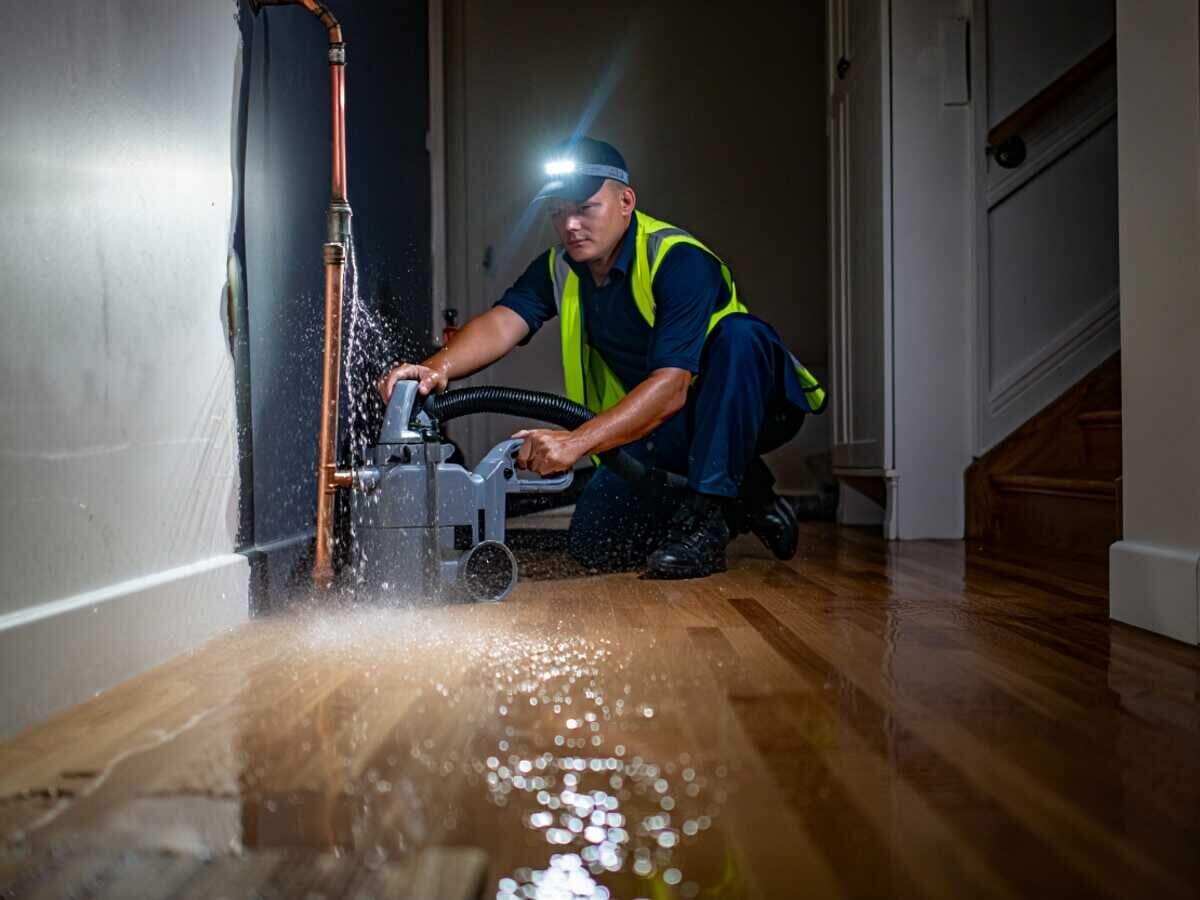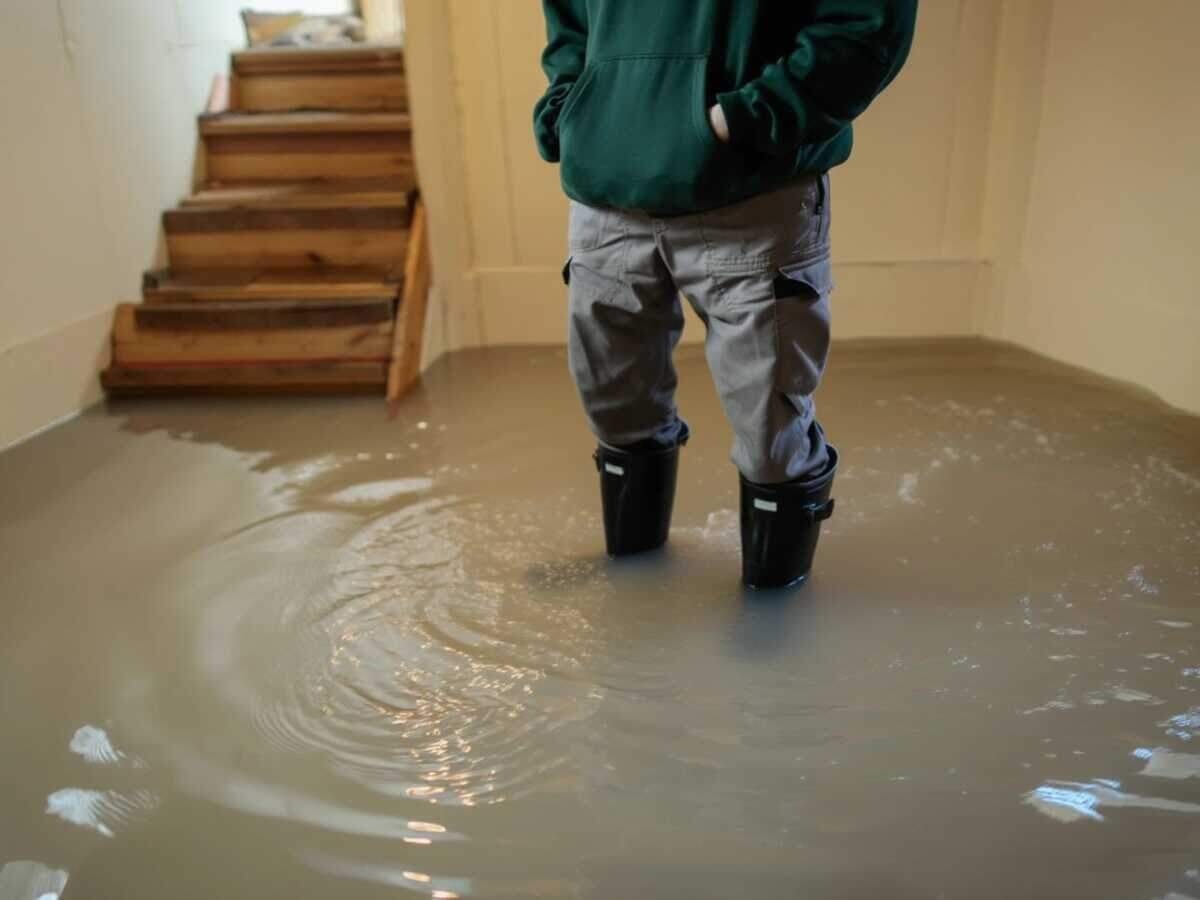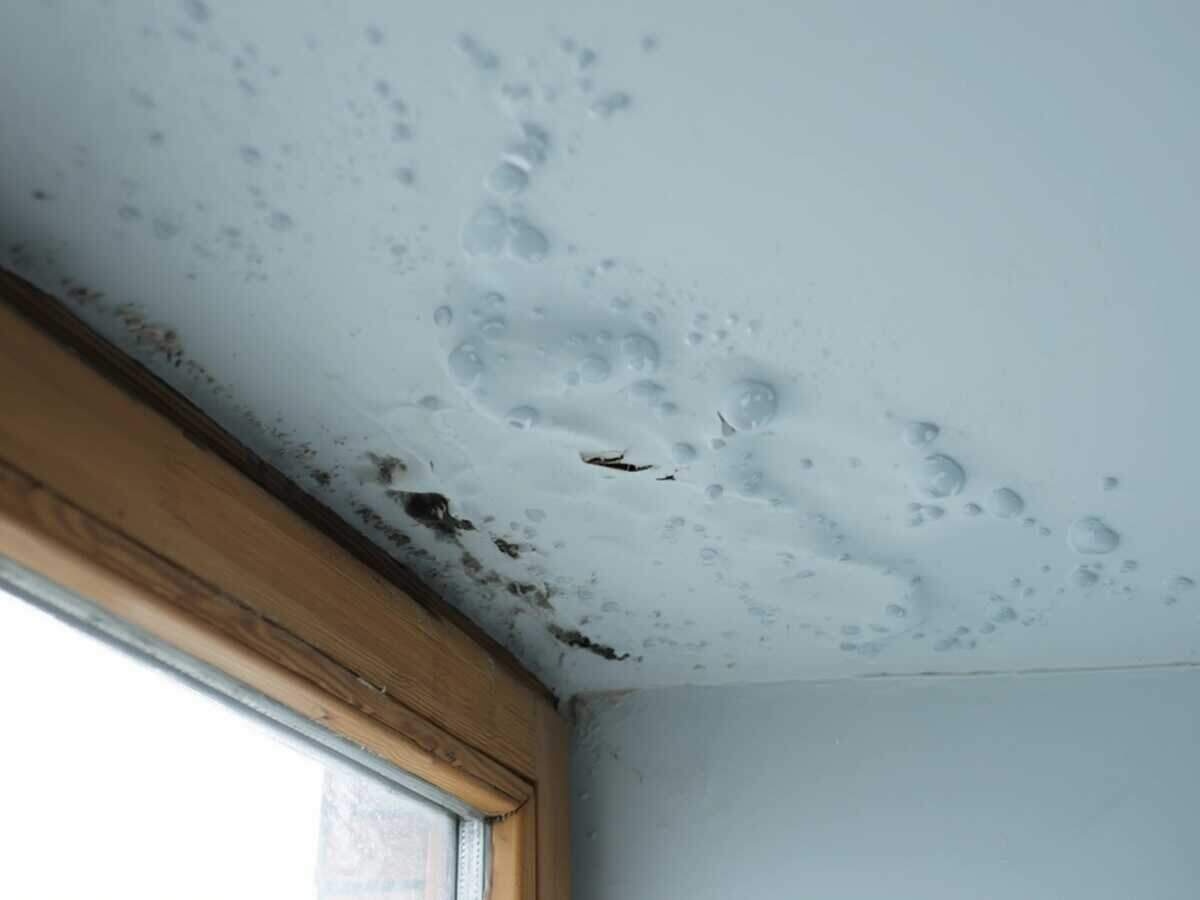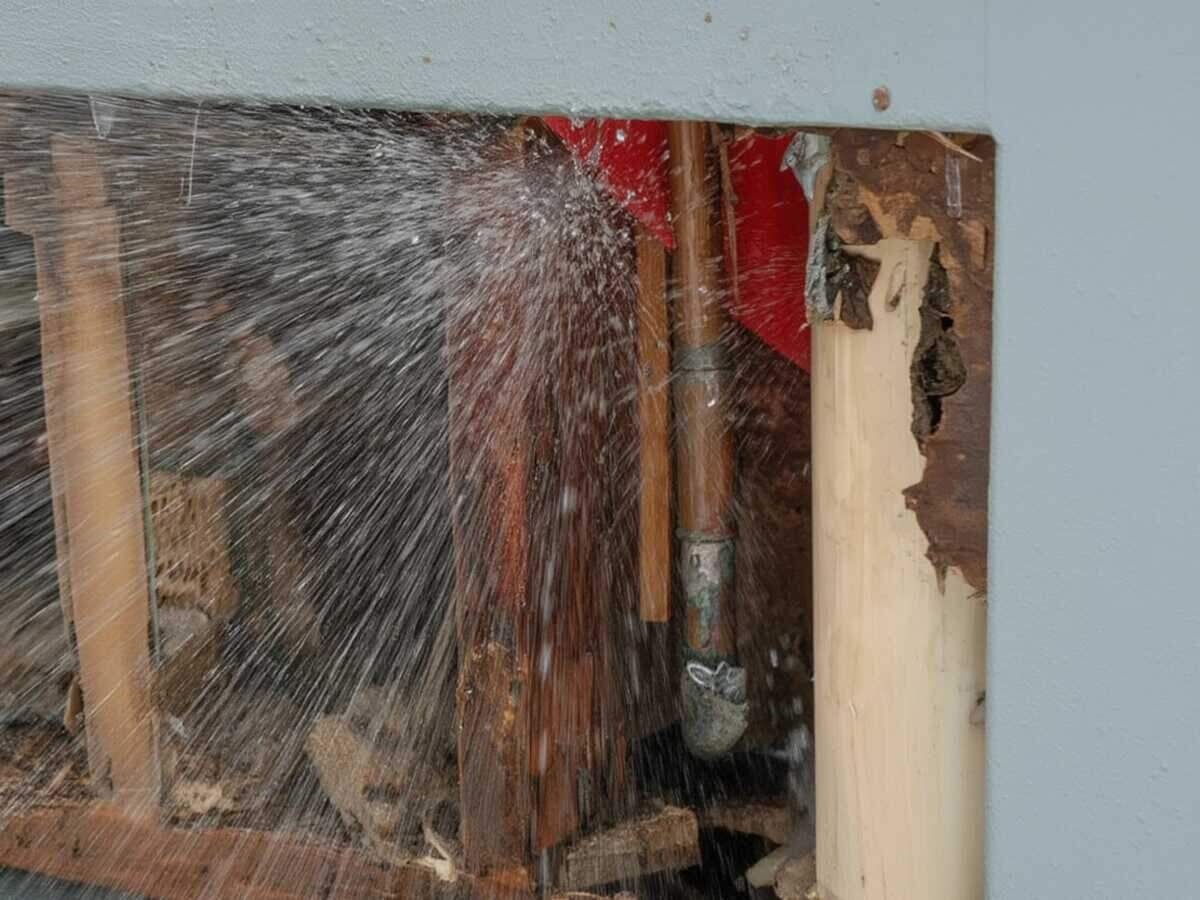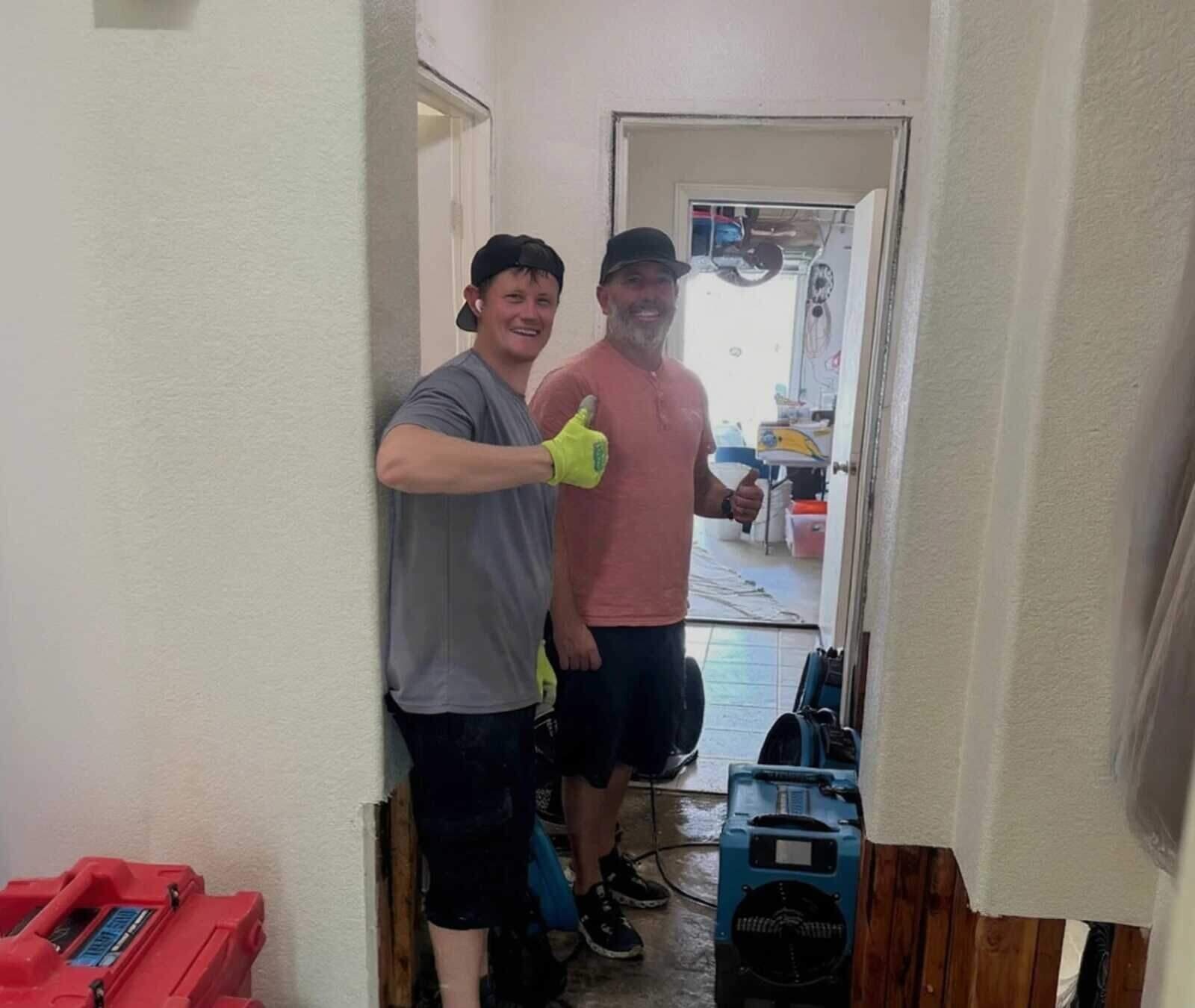




Hardwood floor water damage in these older rental houses spreads along the boards instead of out in a circle. Strip flooring is a directional assembly: every board is a channel, the tongue and groove joint runs the length of the room, and water moves far faster with the grain and through end joints than it does sideways across the face. So a supply leak under a kitchen sink can surface as cupping in a doorway on the other side of a wall, while the boards nearest the leak read the same as the rest of the room for the first day.
What sits underneath matters as much. These floors were laid over plank subfloor with a layer of felt or rosin paper between, and that layer holds water against the underside of the boards long after the surface has gone dry to the touch. It is why a subfloor reading lags days behind a board reading, and why a floor that felt fine on Wednesday is washboard by Saturday. Anybody who calls a wood floor fine because the top is dry has not put a meter into the layer that is holding the water.
Setting the drying zone by where the wood carried it
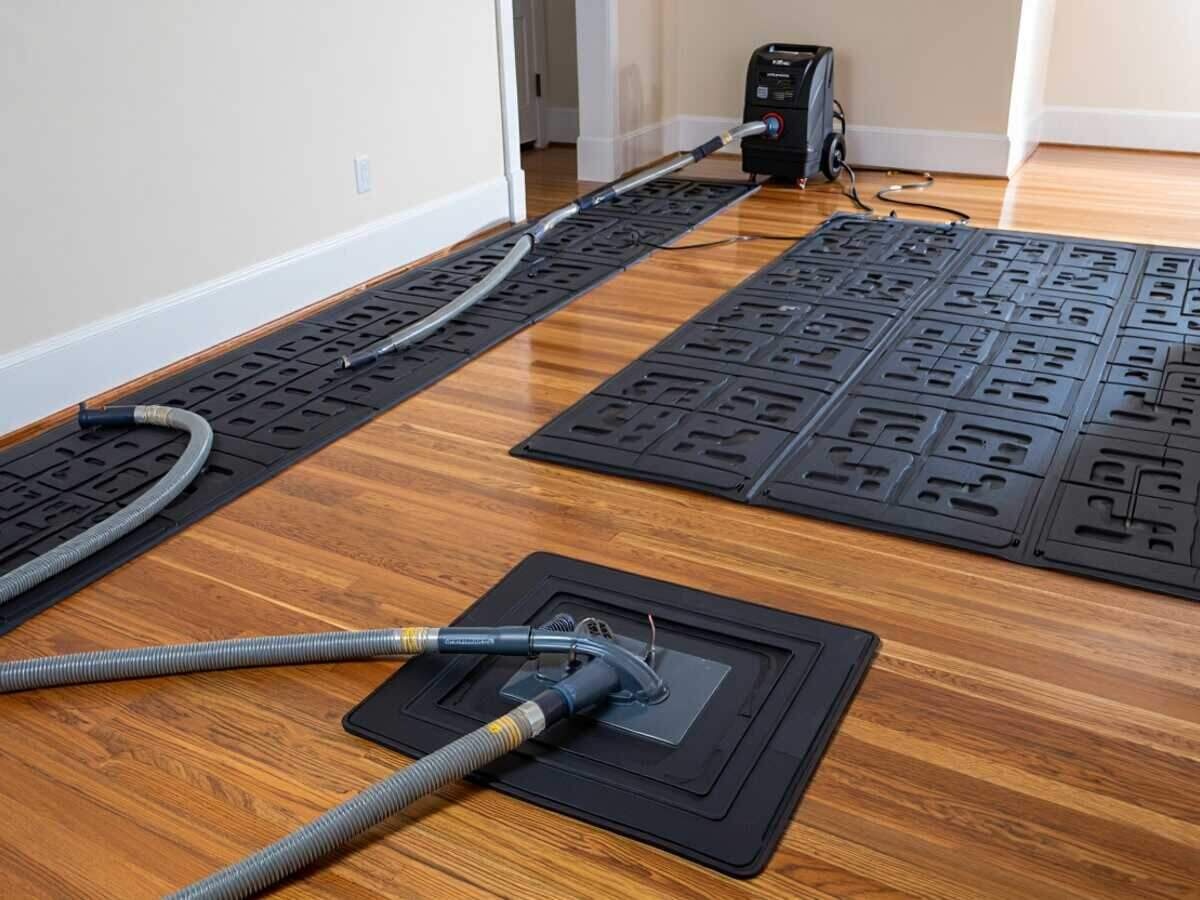
So the first job is to read the whole run rather than the wet-looking part: down the length of the boards, through doorways where the flooring is continuous, into the rooms on either side, and into the subfloor beneath. That map sets the drying zone, which usually comes out longer and narrower than anyone expects, because it follows the boards. Then mats seal to the surface and draw water up through the wood under vacuum, with the room air held down by a dehumidifier, at a pace kept slow on purpose, since a floor pushed hard trades cupping for crowning and split finish. Boards and subfloor are read daily, and the equipment stays until both numbers hold rather than until the floor looks flat.
- The whole board run metered, including through doorways into the next room
- The subfloor and the layer under the boards read, not only the surface
- Mat drying under vacuum with the room air held low, paced to avoid crowning
- Equipment left running until board and subfloor readings hold, not until it looks flat
Two things decide an old wood floor: how long it stayed wet, and whether water got into the subfloor under it. Both go badly in a rented house, because the person who sees it first usually waits to tell somebody. Call (512) 271-5099 the day it happens, and we will tell you on the phone what to get off the floor before the crew arrives.