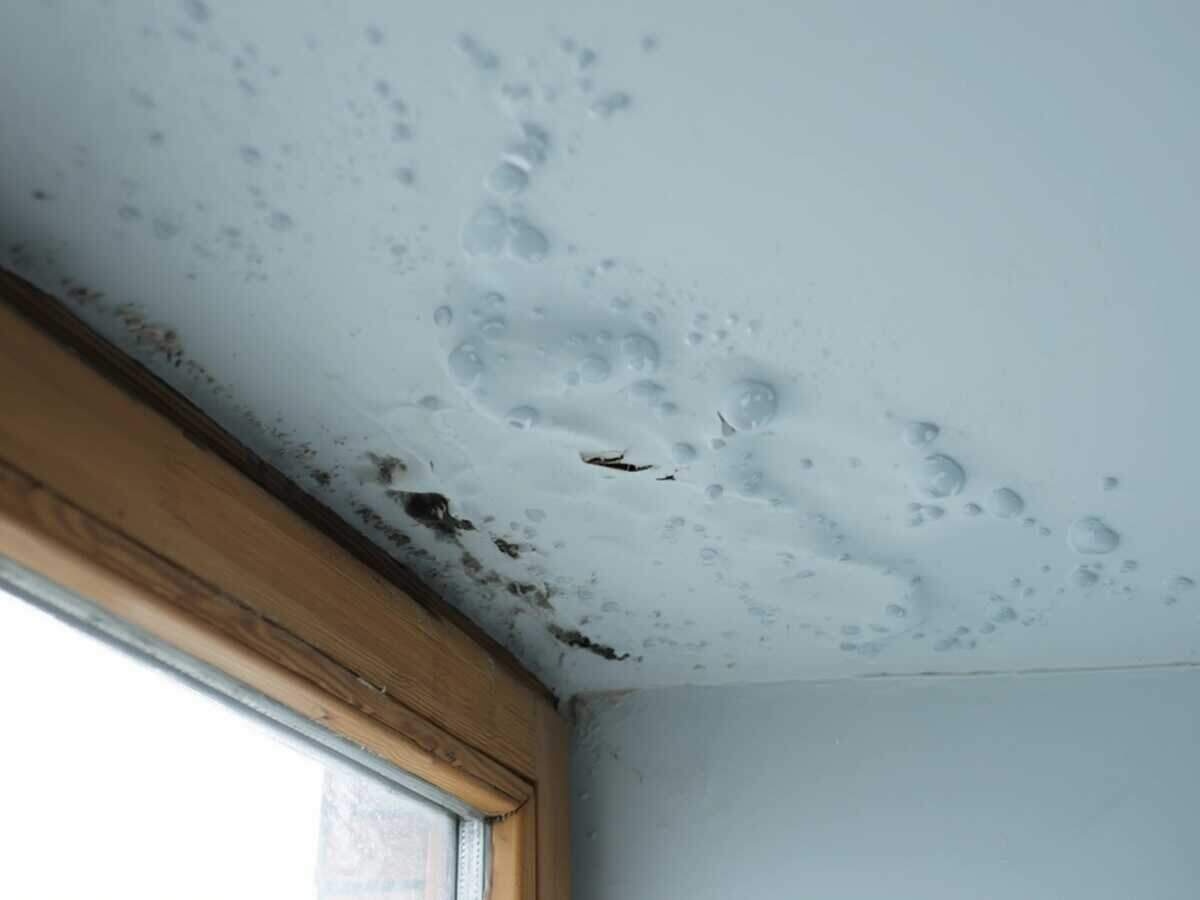




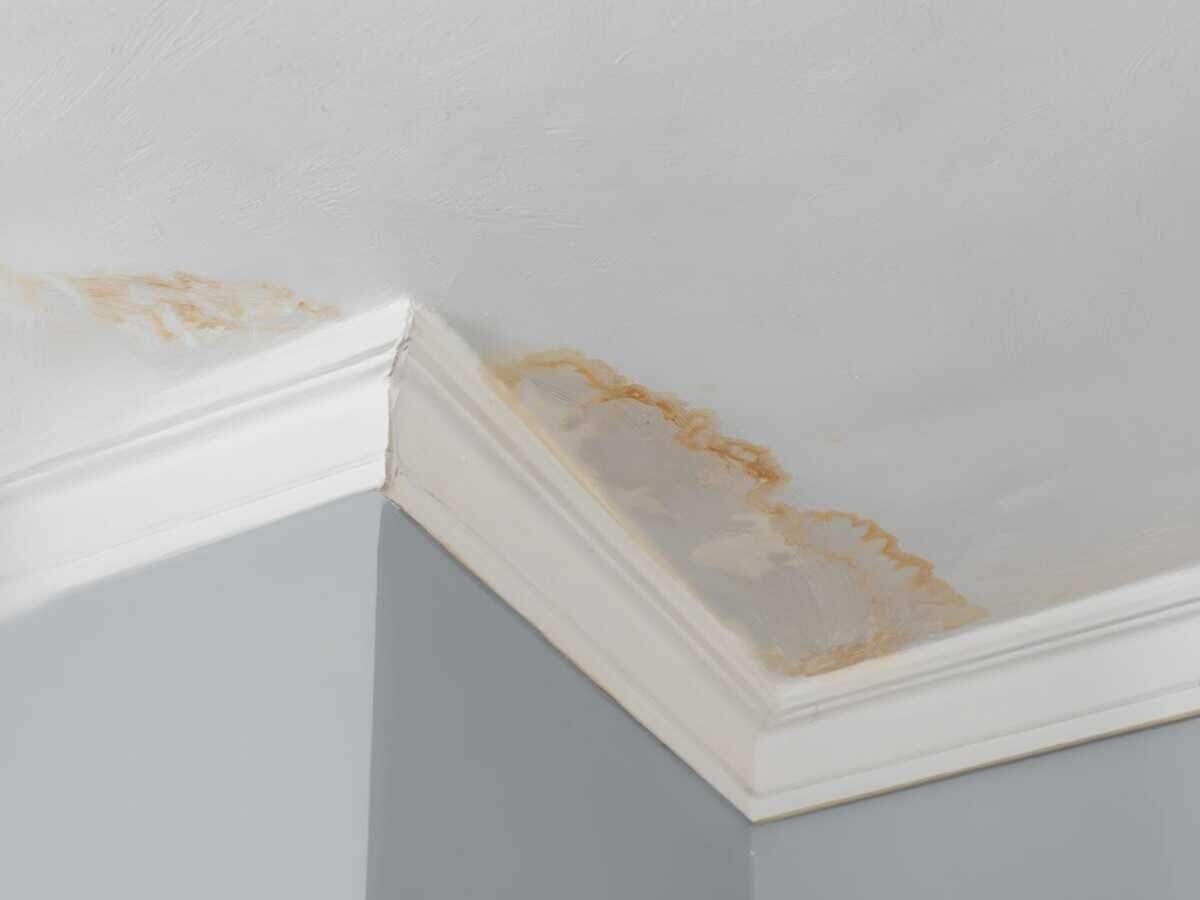
Ceiling water damage in the older San Marcos housing has a wrinkle the newer stock does not: there are frequently two ceilings. When these houses were remodeled and divided into rentals, the quickest way to deal with a cracked plaster or plank ceiling was to hang drywall under it and texture over the whole thing. From below it looks like any other ceiling. From above it is a sandwich, and water coming down from an upstairs bath spreads out on top of the new board while the face underneath still reads dry to a hand.
That delay is the damage. By the time a stain shows, the insulation, the original material, and the joists have all been holding water for a while, and the smell usually arrives before the mark does. It also means a small hole in the new board tells you very little. The water is not on the face, it is sitting on top of the layer above it, and a bucket under a pinhole is not drying anything.
Opening a ceiling that has two of everything
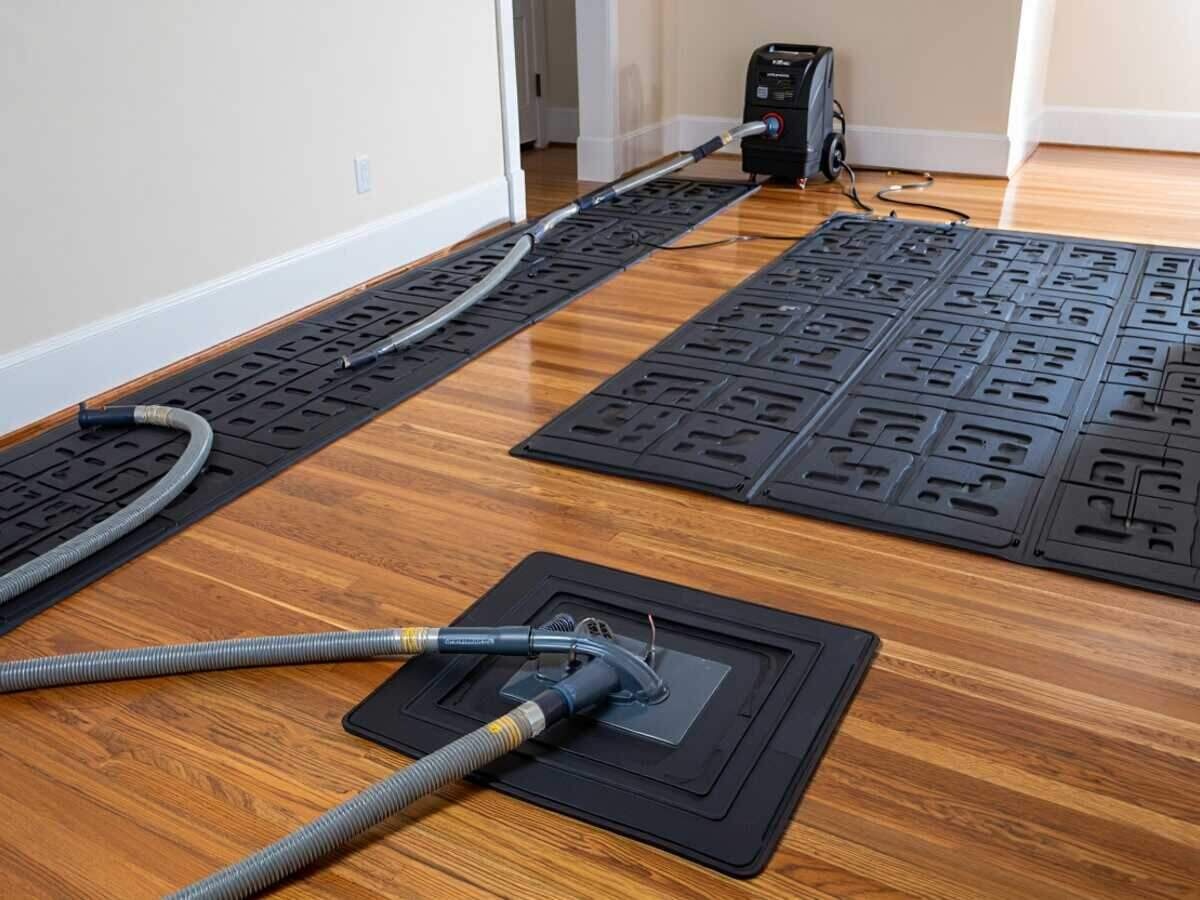
We find the source first, since a ceiling opened under a live leak just gets wet again, and in a house that has been split the fixture doing it usually belongs to somebody else's unit. Then we open where the meter says the water is sitting, take the newer layer down in the bay it is wet in, and remove the original material where it is saturated. The framing above gets air movers and a dehumidifier, with readings taken daily until the joists come back in line with dry wood elsewhere in the house, which in old dense-grain lumber takes longer than a new truss would. Then it goes back together: new board, texture worked to match the plane around it, and a sealing primer under the paint so nothing telegraphs through later.
- The source traced first, including into whichever unit the fixture belongs to
- The added layer opened where the meter says water sits, not where the stain shows
- Wet insulation and saturated original material out of the bay
- Old joists dried on daily readings before any new board goes up
One expectation worth setting: in these houses the opening usually runs the length of a joist bay rather than sitting in a tidy square around the stain, and where two ceiling layers are involved, more comes down than most owners picture. The readings behind that decision are yours to look at first. Call (512) 271-5099 and say what is above that room, and whether anybody upstairs has run water since it started.