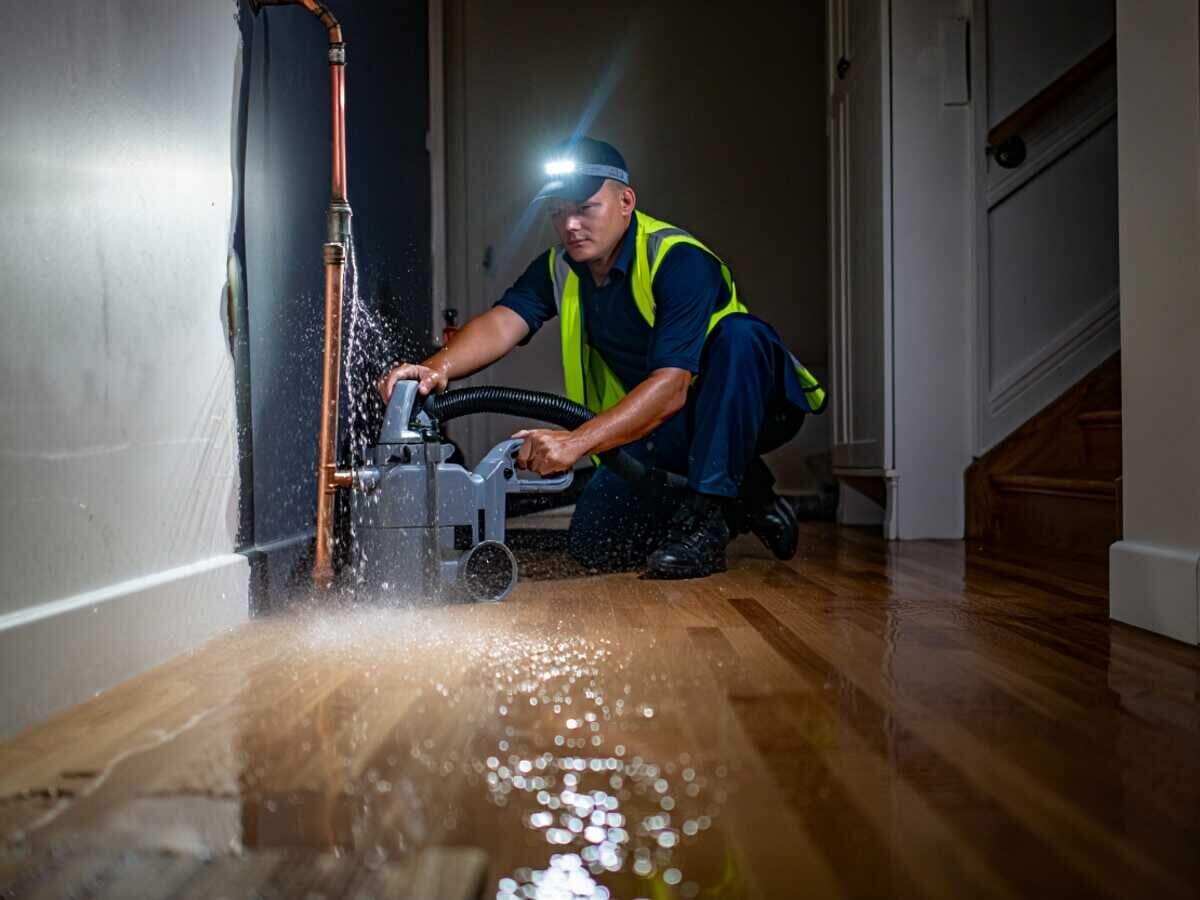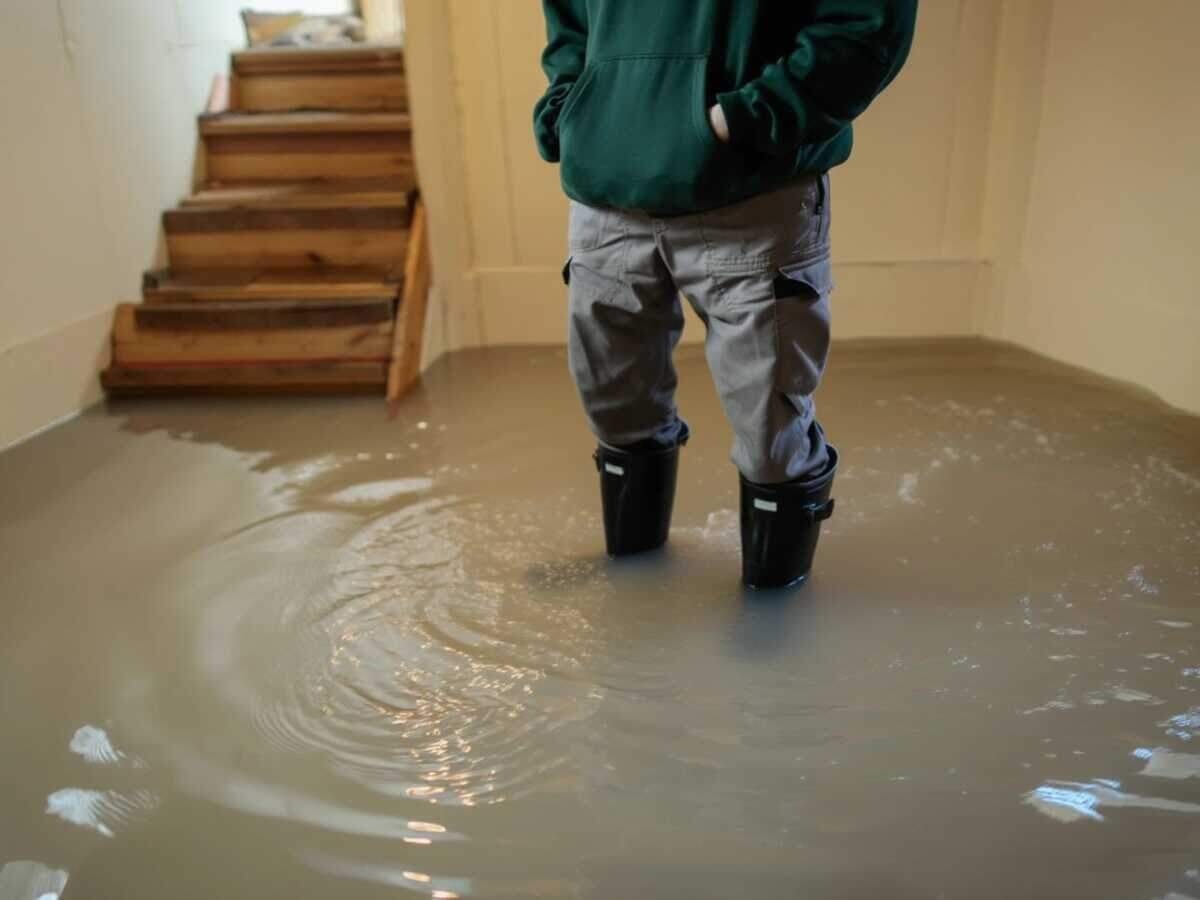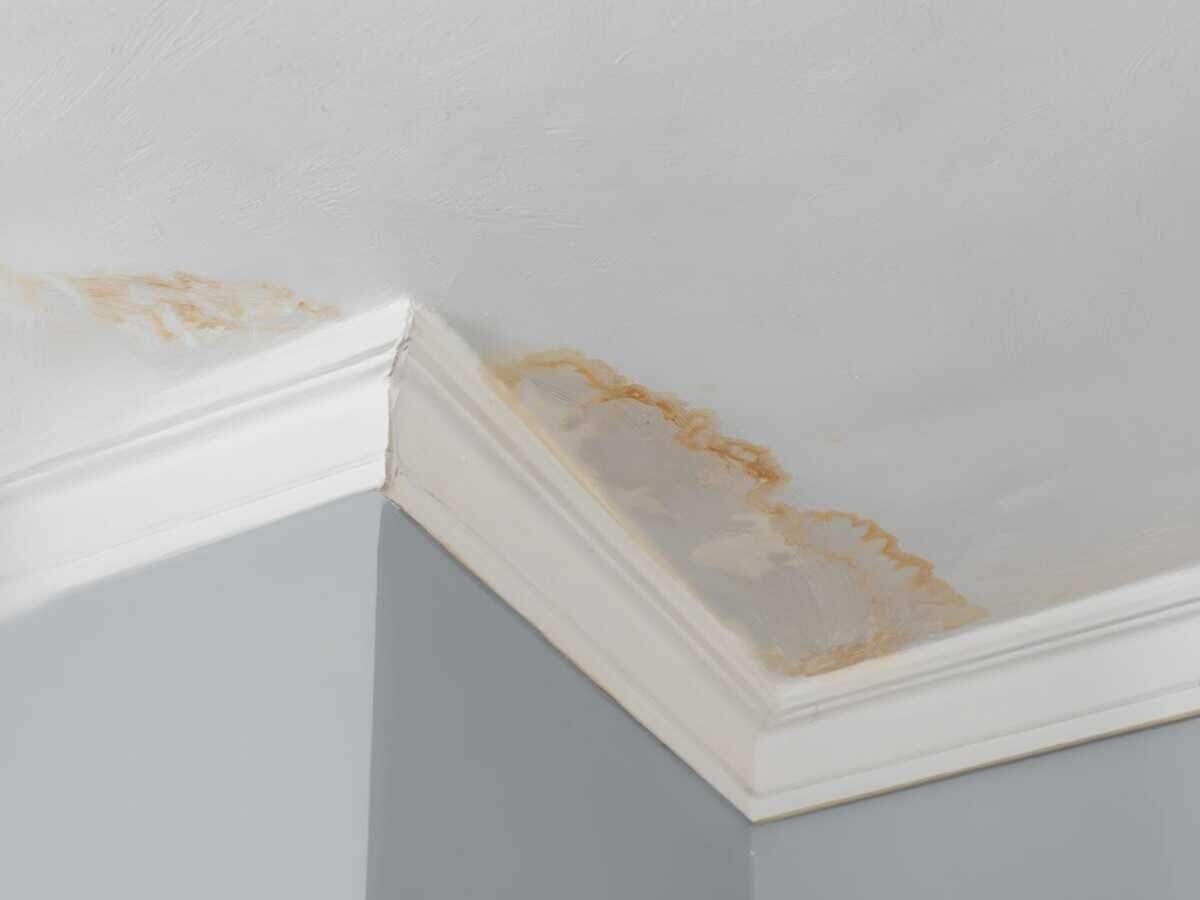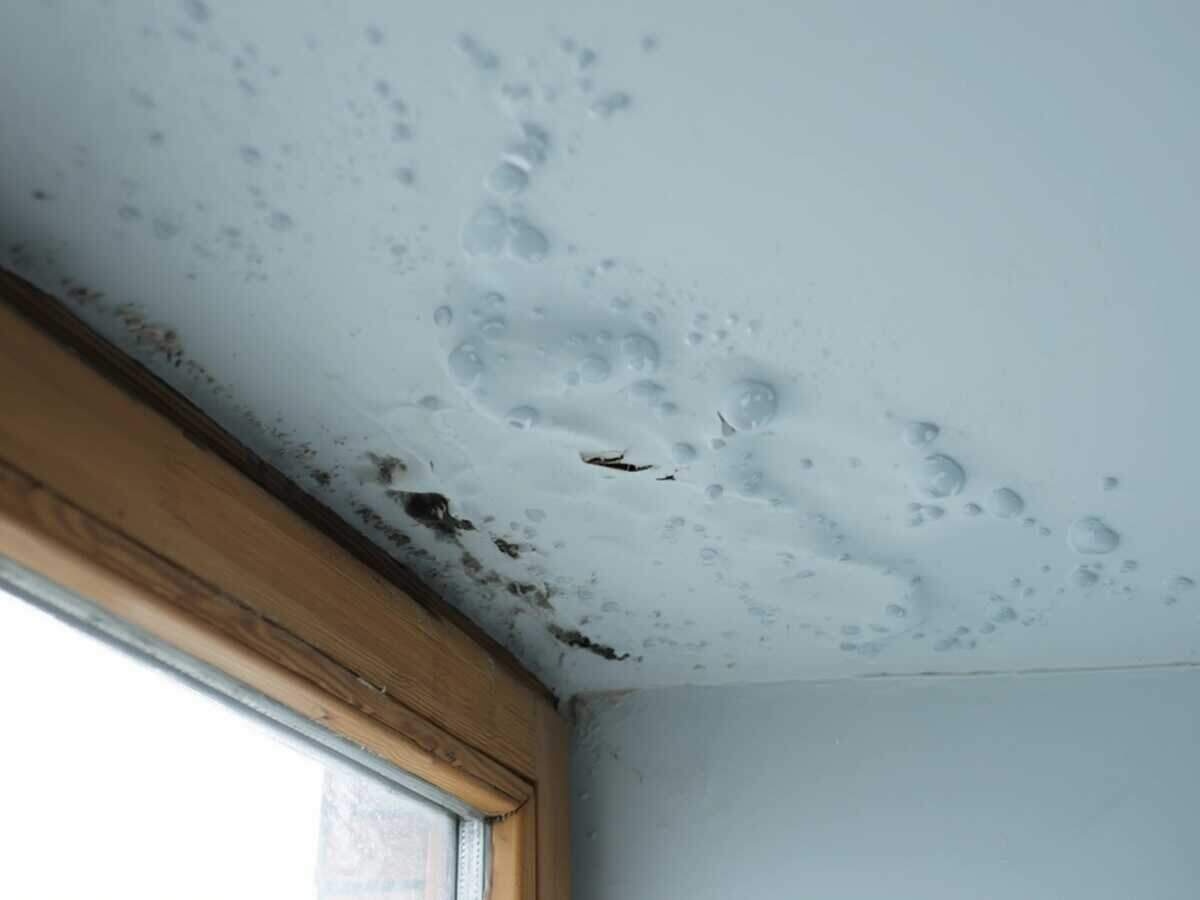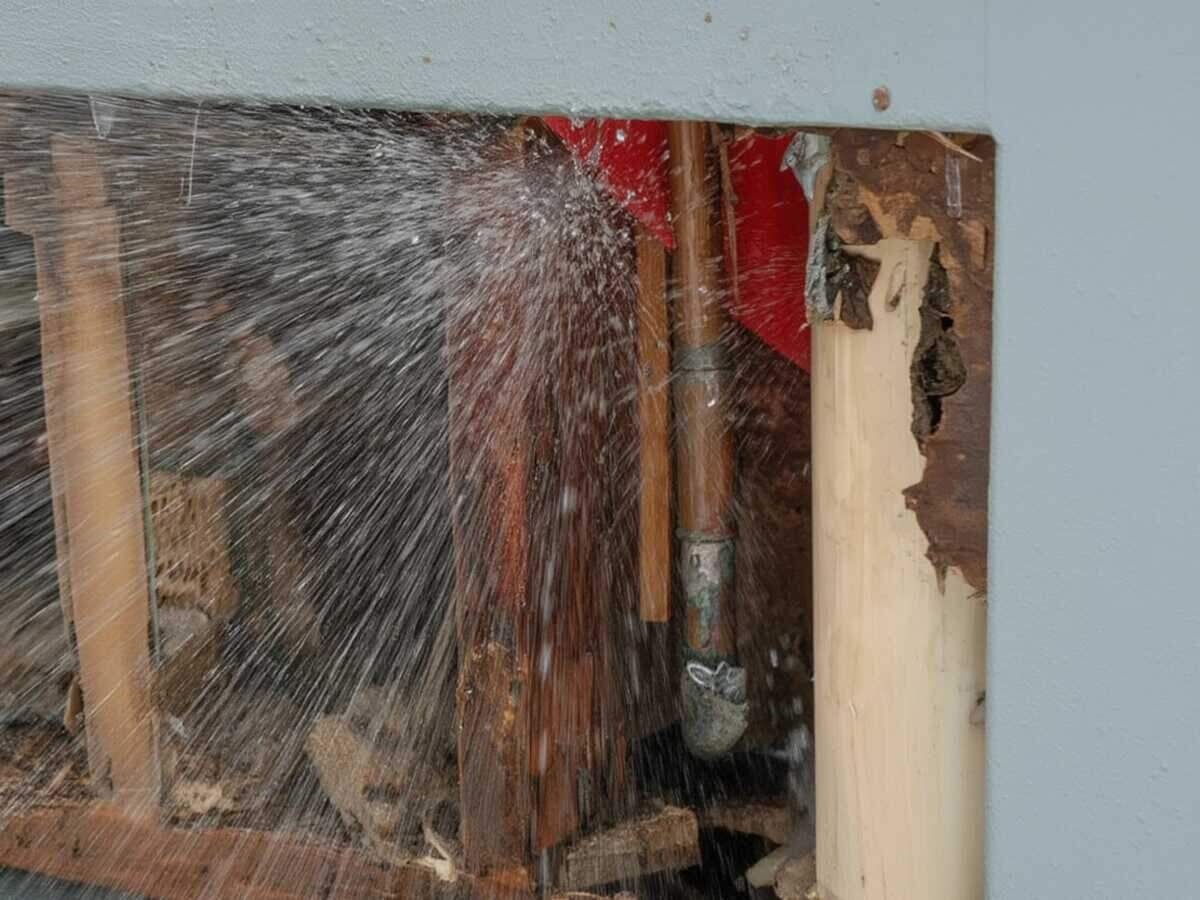



Hardwood floor water damage gets decided by which side the water reached first. A tub that overflowed upstairs, a supply riser that sprayed, a dishwasher that emptied across the kitchen: all of that lands on a finished surface built to shed it, then works down through the seams and end joints over several hours. Water arriving from the other direction, a wall plate soaked by a slab-level leak or a line that broke inside the wall, wets the unfinished underside and the subfloor first, and the wood swells from below while a sealed top face holds the moisture in. Same room, same boards, two different drying plans.
By the second day you can usually see which one you have. Top-down wetting shows at the joints, with dark lines and finish gone cloudy where water stood. Bottom-up wetting cups: every board's edges rise while the center stays low, and it happens across the whole wet field at once, including boards that never had a drop on top of them. Cupping is the recoverable stage. Buckling, where boards press hard enough to lift off the subfloor, is the stage after it, and the twist a board keeps once it has dried out of plane is the one nobody sands away.
Drying wood in place, and when that stops being realistic
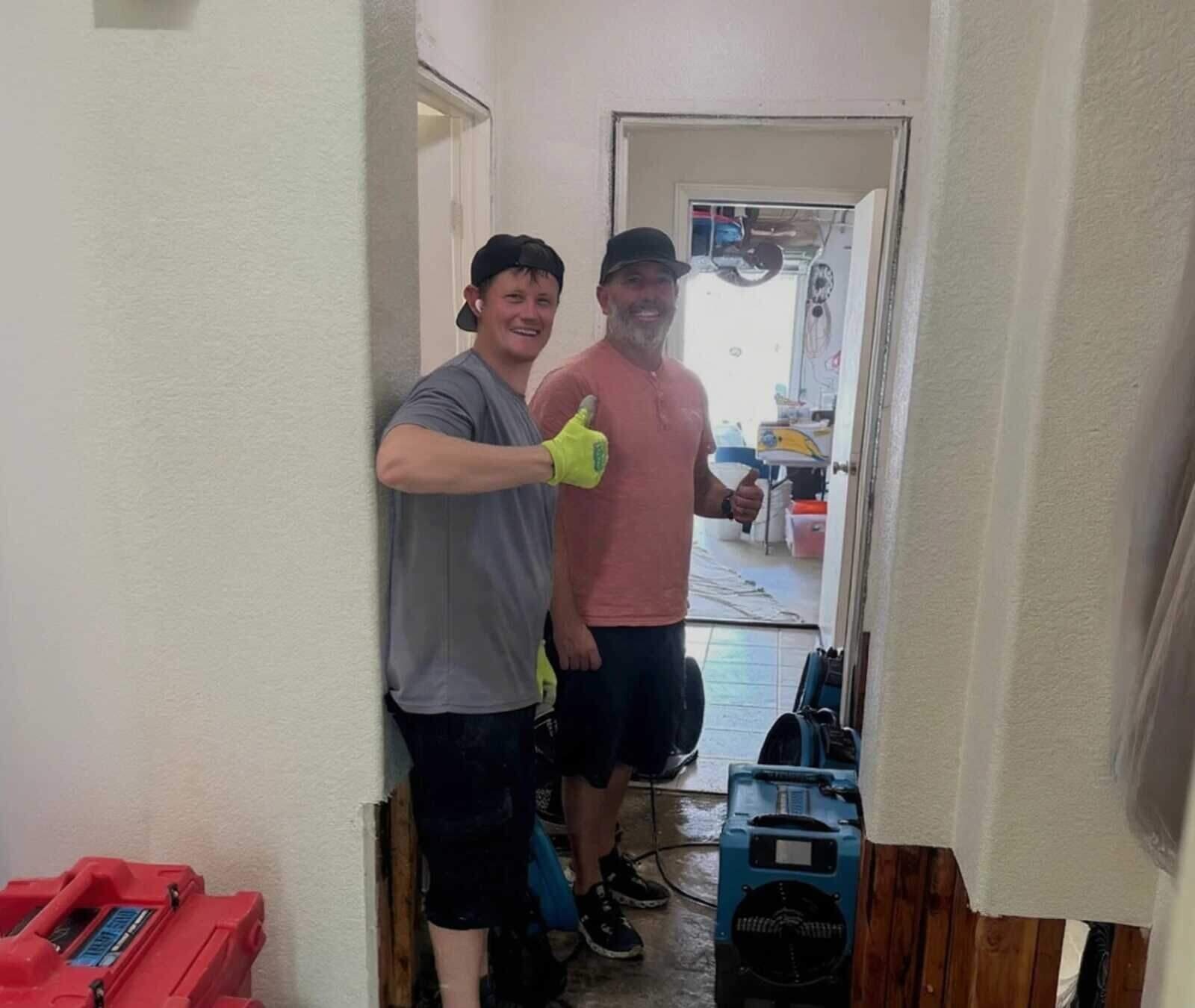
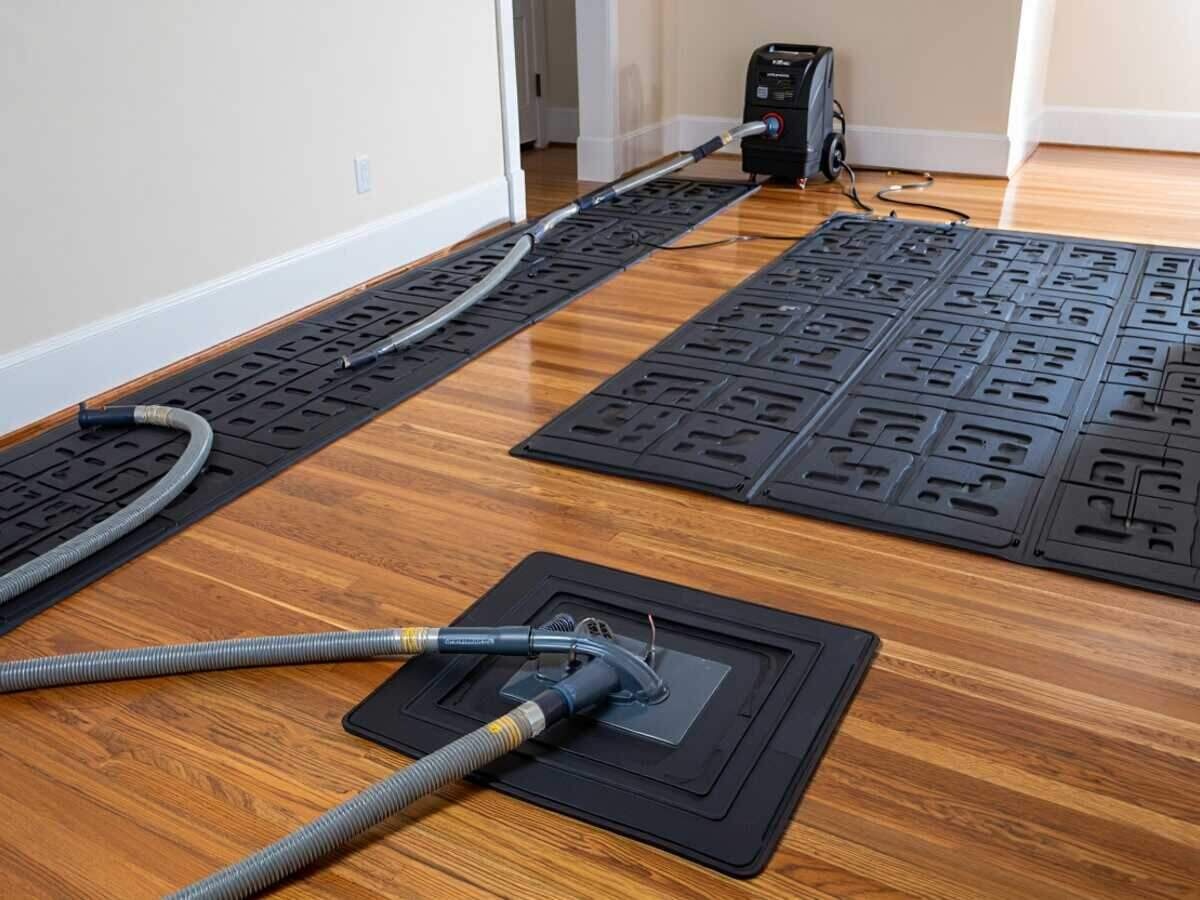
Air blown across a sealed floor accomplishes almost nothing, so we dry through the boards instead. Mats seal down over the boards and draw the water back up under vacuum, with a dehumidifier working the room air at the same time, and the pace stays slow on purpose, because forcing a floor trades cupping for crowning and split finish. A meter on the boards and on the subfloor sets the target, and the target is a reading taken from a dry part of the same floor rather than a number out of a book. Where the water came from below, the wet plate behind the baseboard has to be opened and dried with it, or the floor simply takes the moisture back.
- The source and the direction of wetting established before equipment goes down
- Mat drying under vacuum, paced slow enough to avoid crowning and split finish
- Boards and subfloor read against a part of the floor the water never reached
- A straight call on the boards that will not come back, written up for the claim
Time is the other variable and it is the one you control. Wood that has been wet a day is a drying job. Wood that sat through a long weekend usually is not. We are not around the corner from Liberty Hill, and on a floor what matters is same day rather than same hour. Call (512) 271-5099 the day the floor gets wet, and we will start with what you can do while the crew drives.