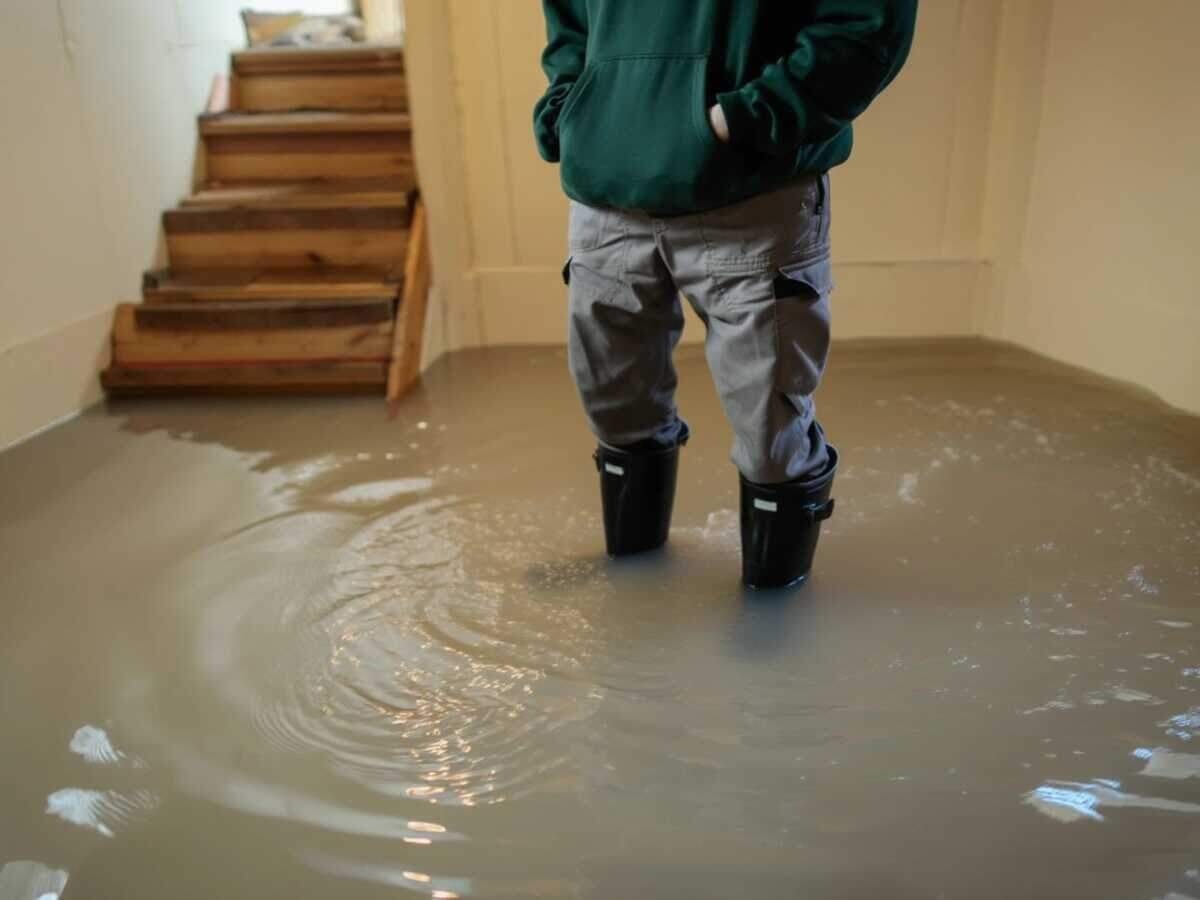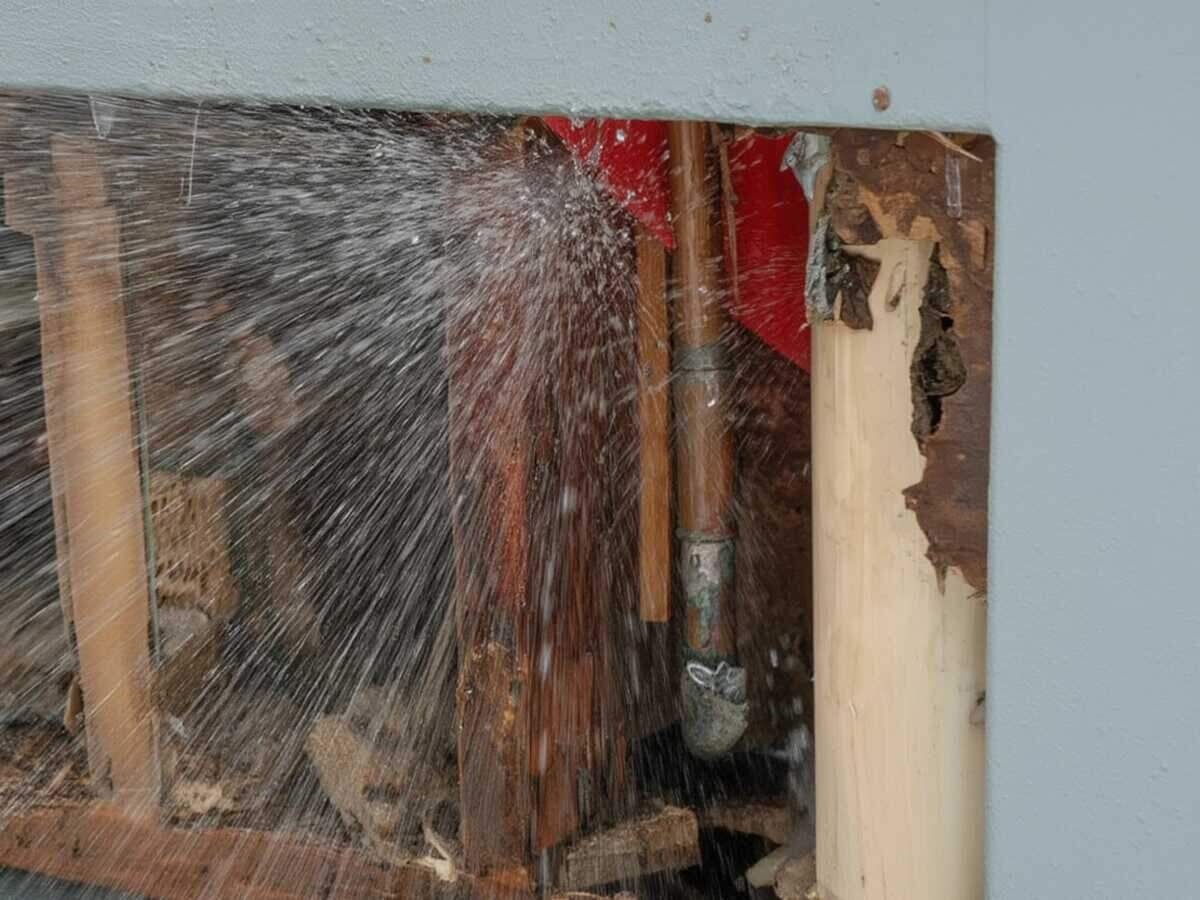


An emergency water damage call from Liberty Hill has a longer gap between the call and the crew than one from inside the metro, and pretending otherwise helps nobody. What that gap costs depends entirely on what happens inside it. Water spreads flat and fast across a slab, an hour of unattended flow decides whether a room gets dried or gutted, baseboards, cabinet kicks, pad and all.
So the call does real work. Whoever picks up stays on the line and goes in order: kill the water at its source, then cut power to any room where water has reached an outlet or a floor box. Everything after that is triage you can do with what is already in the house. Lift rugs off wet flooring and get them outside. Put furniture legs on blocks or foil so finish does not bleed into carpet. Empty the bottom of soaked cabinets and get anything with paper or electronics in it up onto a counter. Then leave the standing water alone, because it is going to take equipment, not towels, and you are better off spending that hour on the things water has not reached yet.
What the crew does when it pulls in
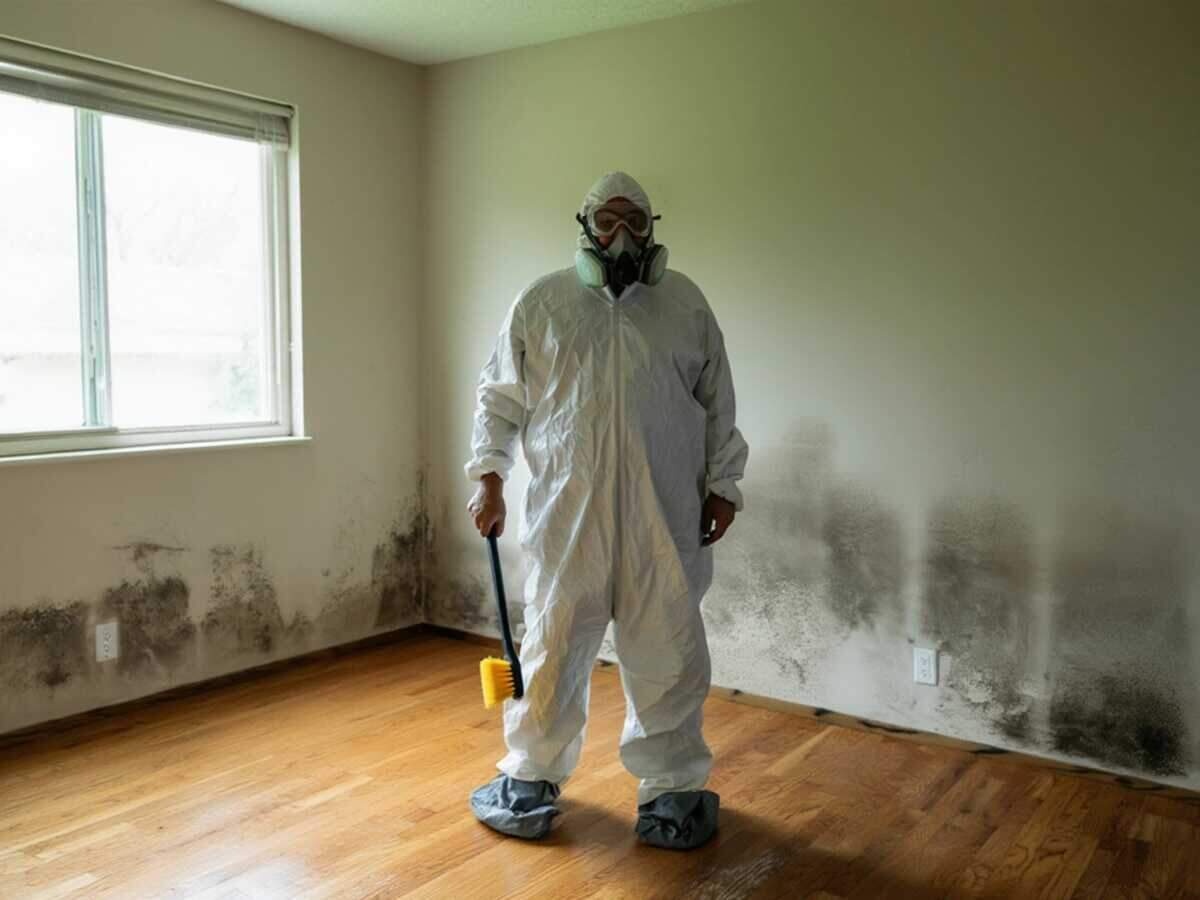
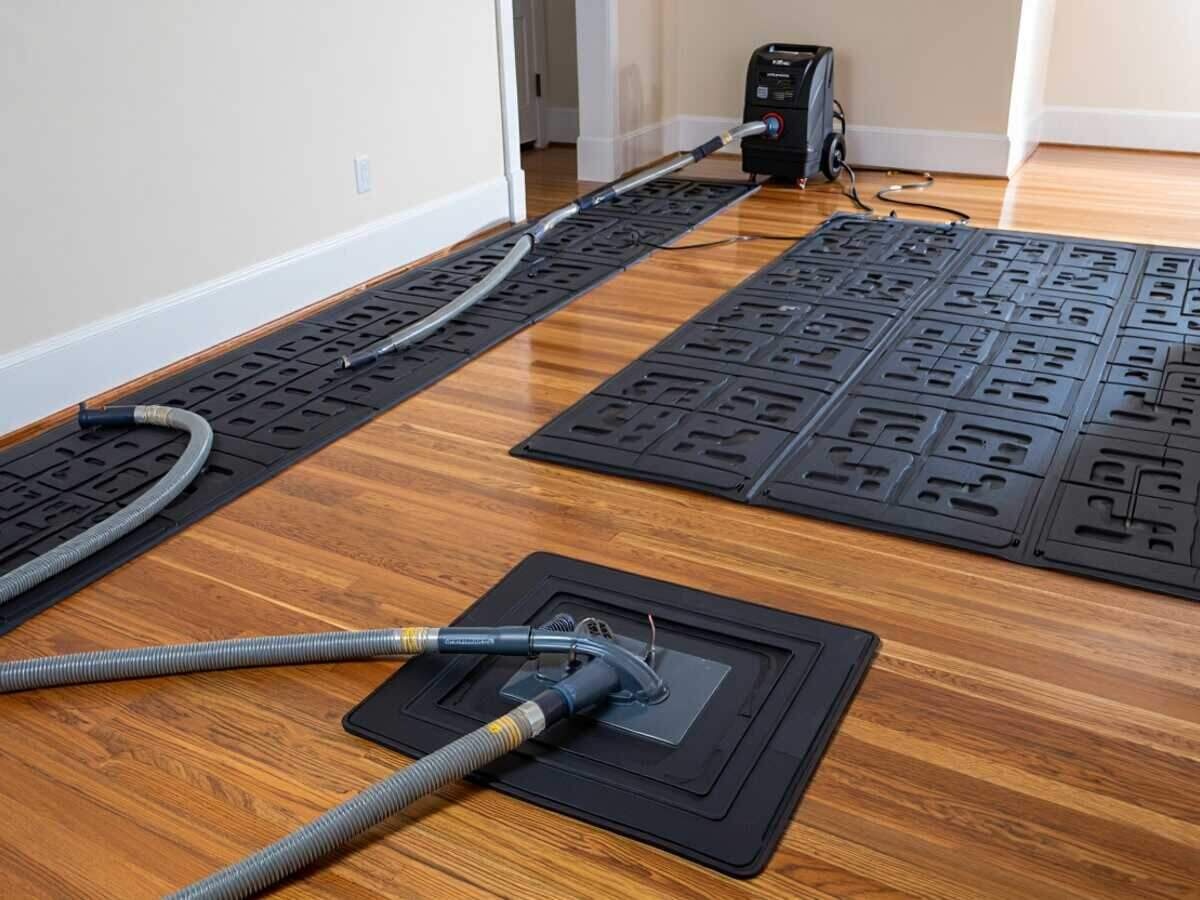
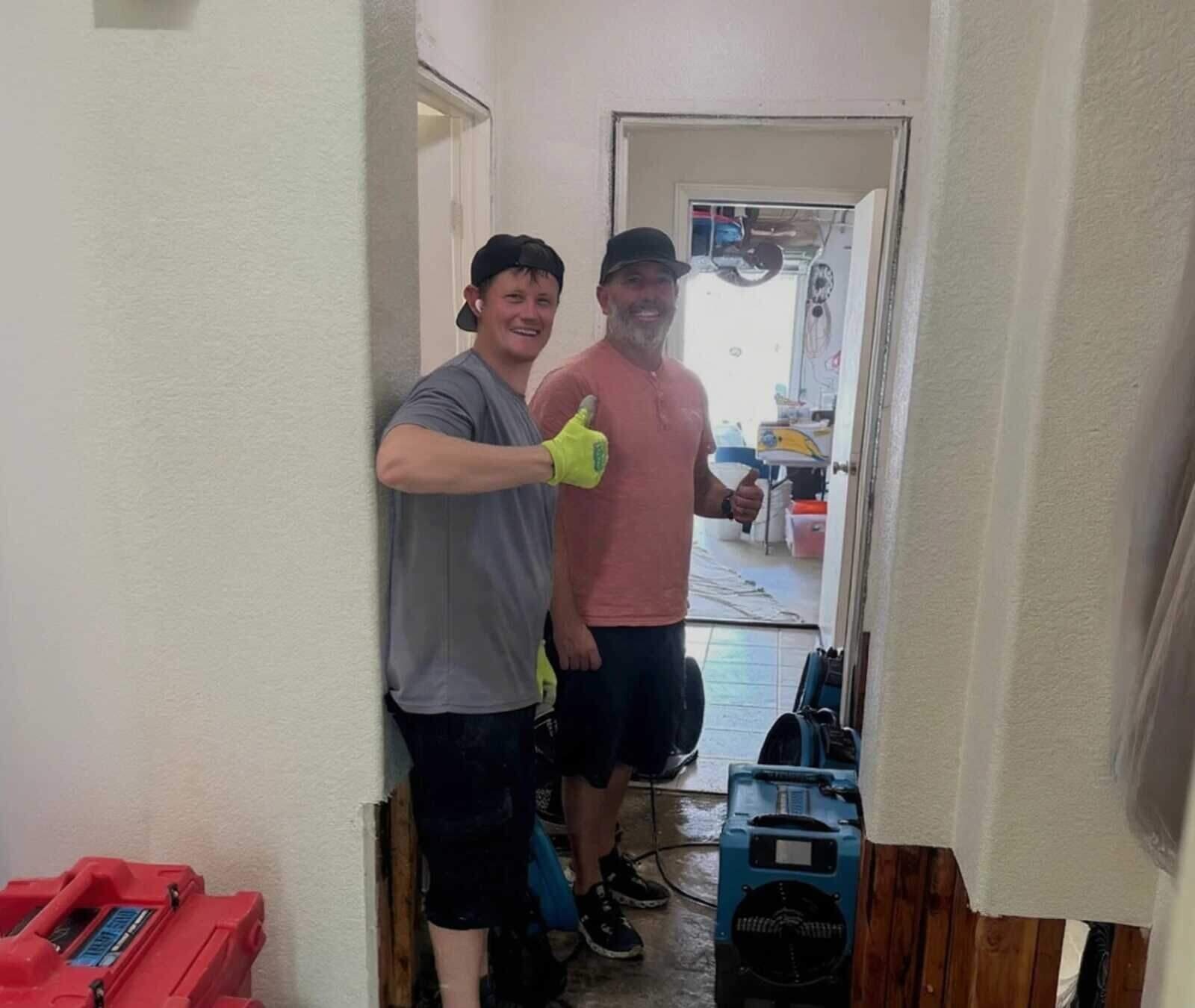
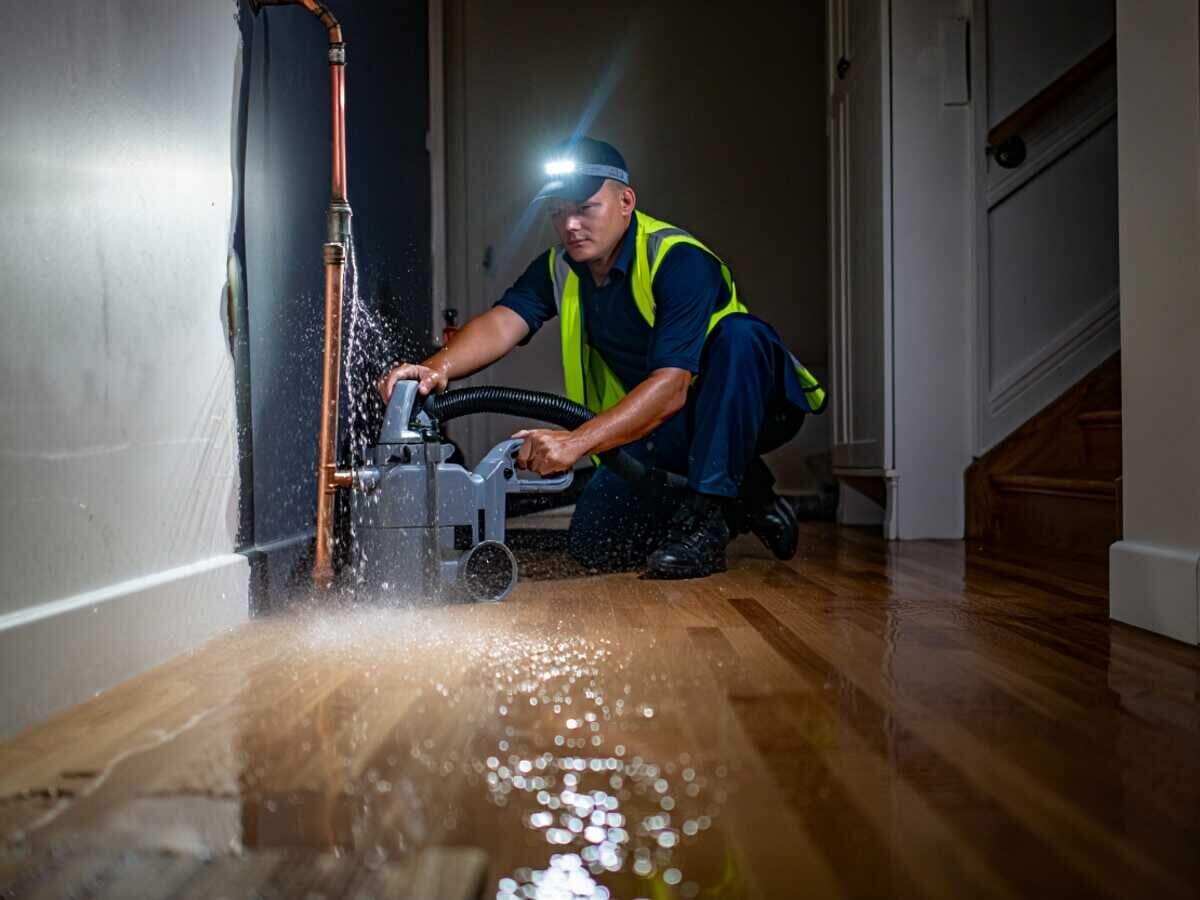
Everything the work needs is already aboard, so nothing gets measured tonight and fetched tomorrow. The crew confirms the source is dead first, then walks the floor with a meter and a thermal camera until the wet area has a boundary instead of a guess. Then extraction, then removal of whatever the readings condemn, then air movers and a dehumidifier set and running before anyone leaves. Every room gets photographed as we found it, because the file your adjuster works from is far easier to build at the start than to reconstruct later.
- A technician who stays on the line and works the shutoff with you
- Extraction, containment, and drying equipment loaded before the truck leaves
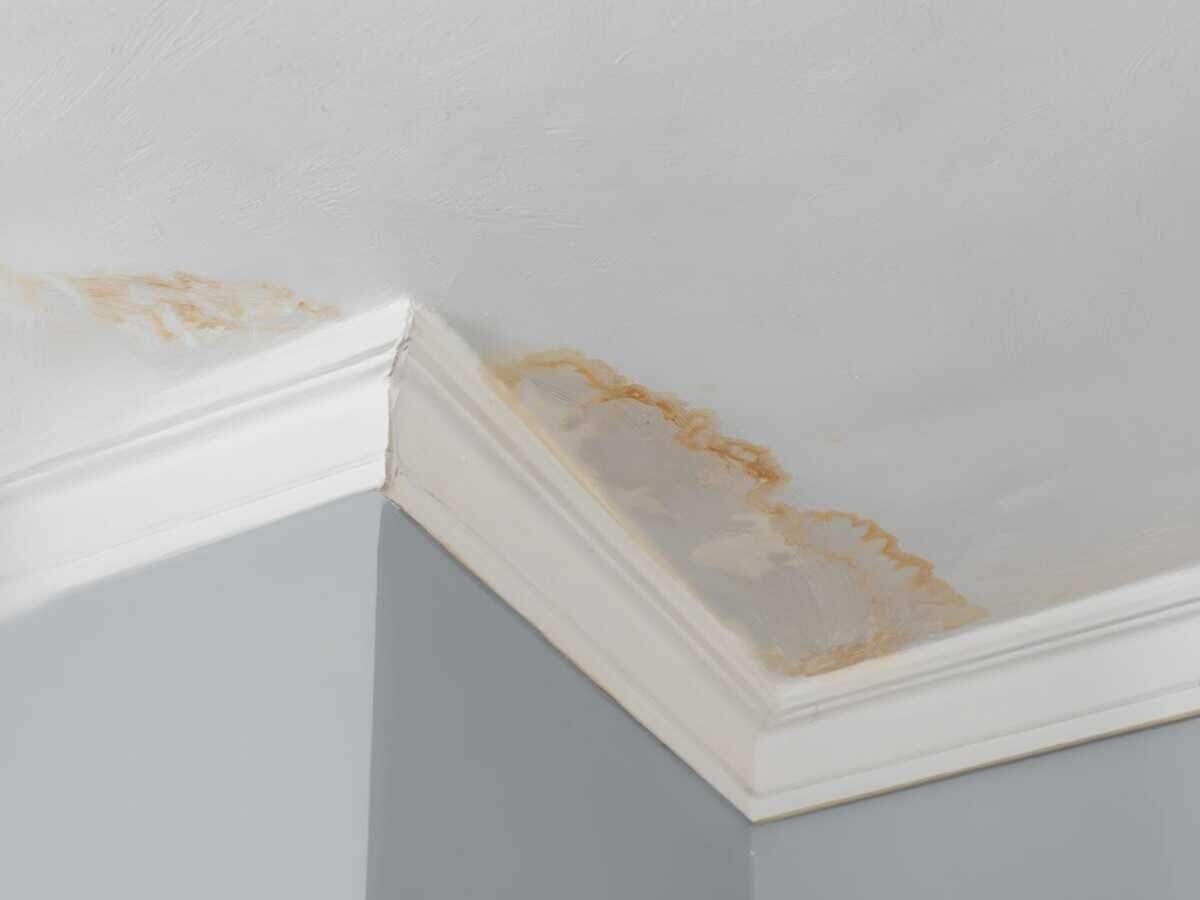
- The wet edge found with a meter instead of guessed from the stain
- Photographs and numbers recorded before anything is moved or cut, for the claim
Water that has come back up a drain is category three, so stop where you are and wait for the crew, since no amount of towels makes it safe to handle. For everything else, the sooner the water stops moving the smaller this gets. Call (512) 271-5099 with the address, the nearest cross road, and what gave out.