



Water removal in a slab house is a chase, not a pump-out. There is no low point to work from and no sump to drop a hose into, so standing water spreads flat and thin until something absorbs it, and the extraction follows the edge of the wet instead of the middle of the puddle. In a Kyle floor plan that edge is routinely two rooms away from where the failure happened.
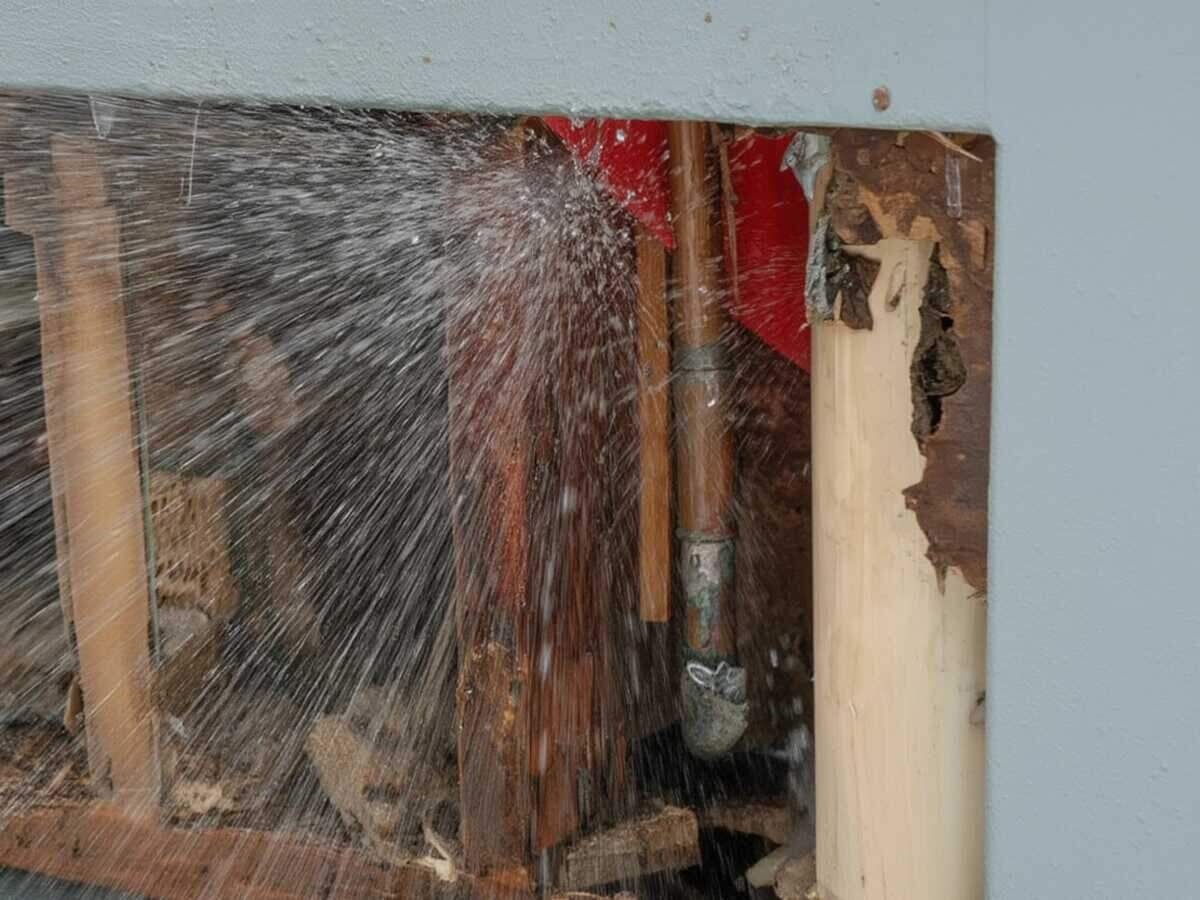
The first-generation water heaters in this city are what put the volume down. A tank installed when the subdivision was framed reaches the end of its life on roughly the same schedule as its neighbors, and when the bottom goes it releases everything it holds in a few minutes. The house absorbs that quietly. Carpet and pad take a lot of it, plank seams and tile grout take the rest, and by the time anyone gets home the surface looks like it dried itself.
How the extraction actually runs
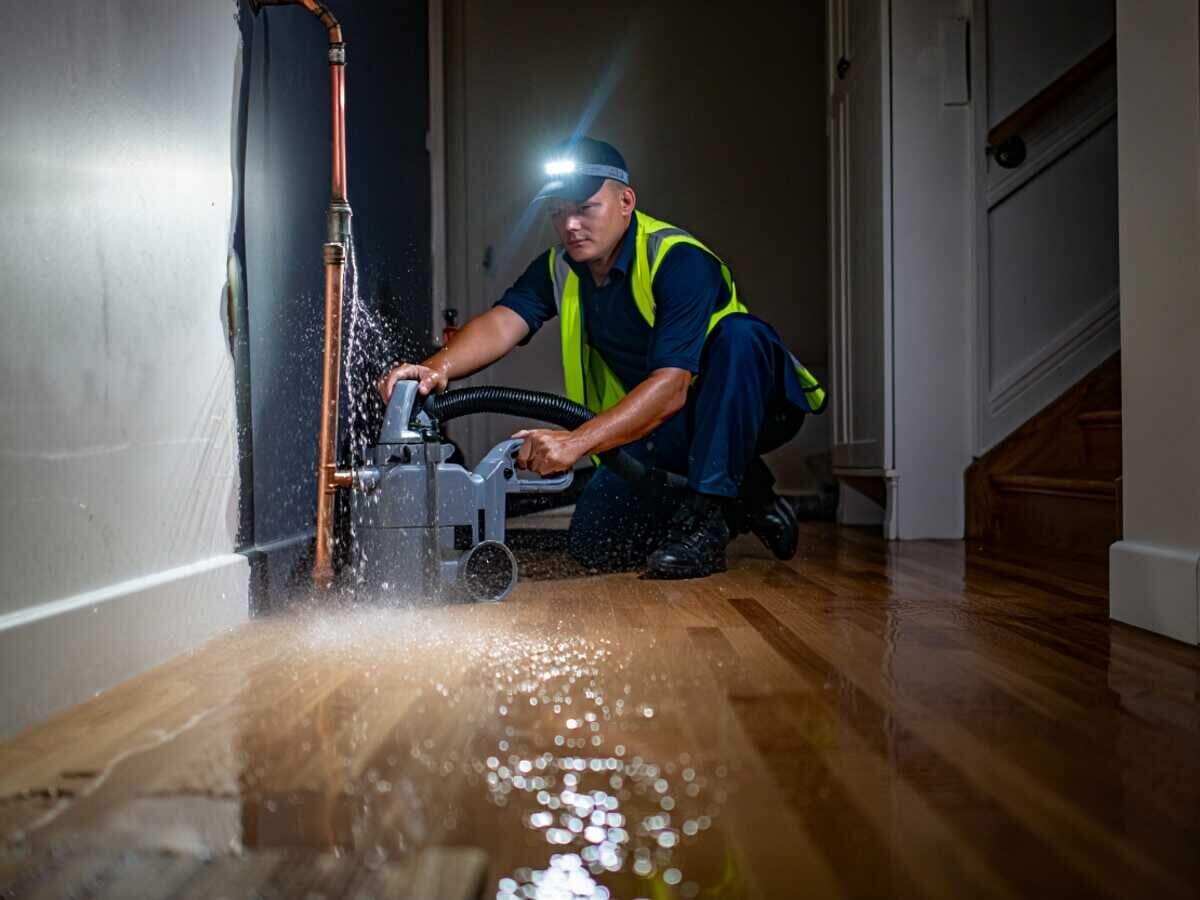
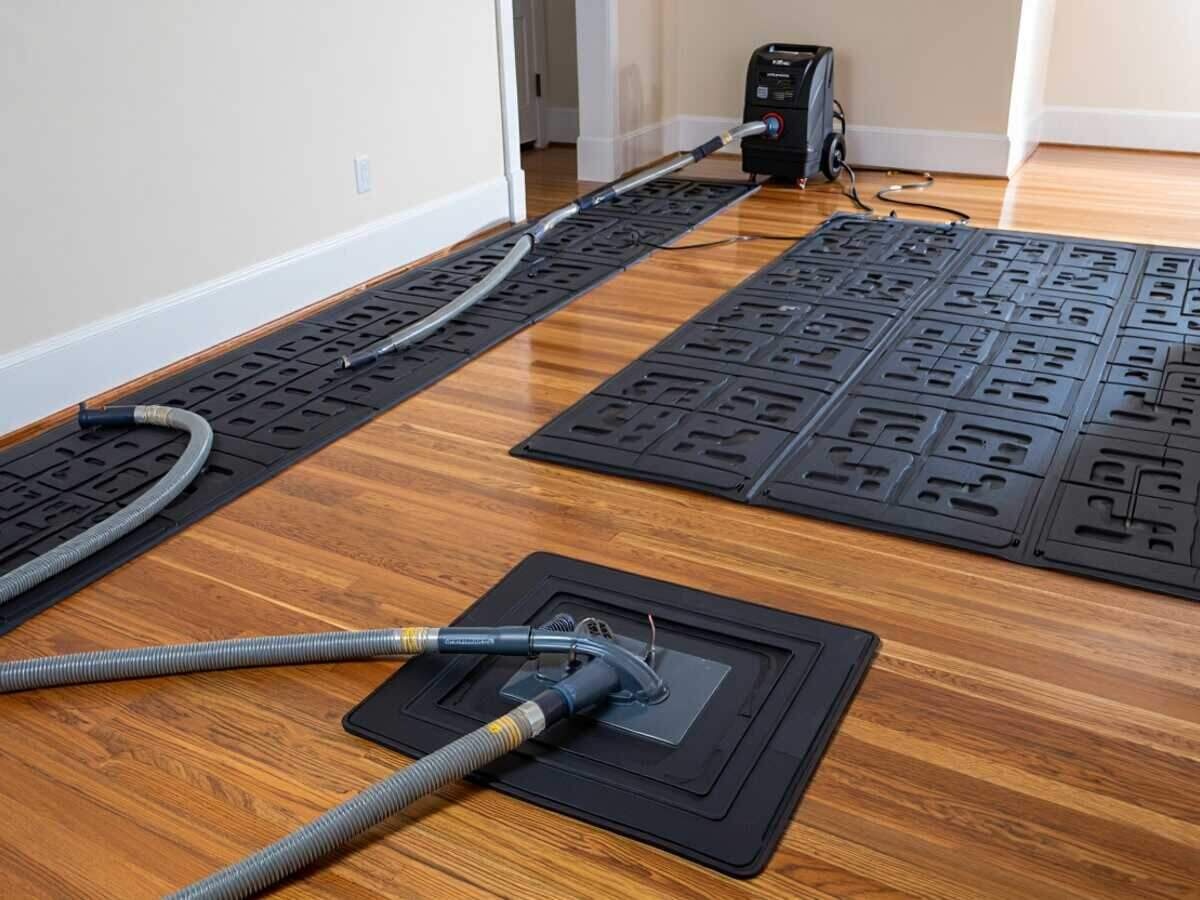
We clear the standing water first, then work the materials, because water sitting in pad and under flooring is what decides how much gets replaced. A truck-mounted vacuum handles volume; a portable goes where a hose will not reach, including closets and any upstairs room. On carpet we make slow weighted passes and repeat them once the pad has had time to give up more, and where the pad is worth keeping we detach the carpet at the tack strip and float it over air so both faces dry. Meters and a thermal camera then show what is still trapped under hard flooring and inside the wall base, and that gets drawn out or opened before a single air mover is set.
- Truck-mounted extraction for the volume, portables for closets and upstairs rooms
- Weighted carpet passes, repeated after the pad releases what it was holding
- Thermal imaging and pin readings on the wall base and hard flooring before anything is called dry
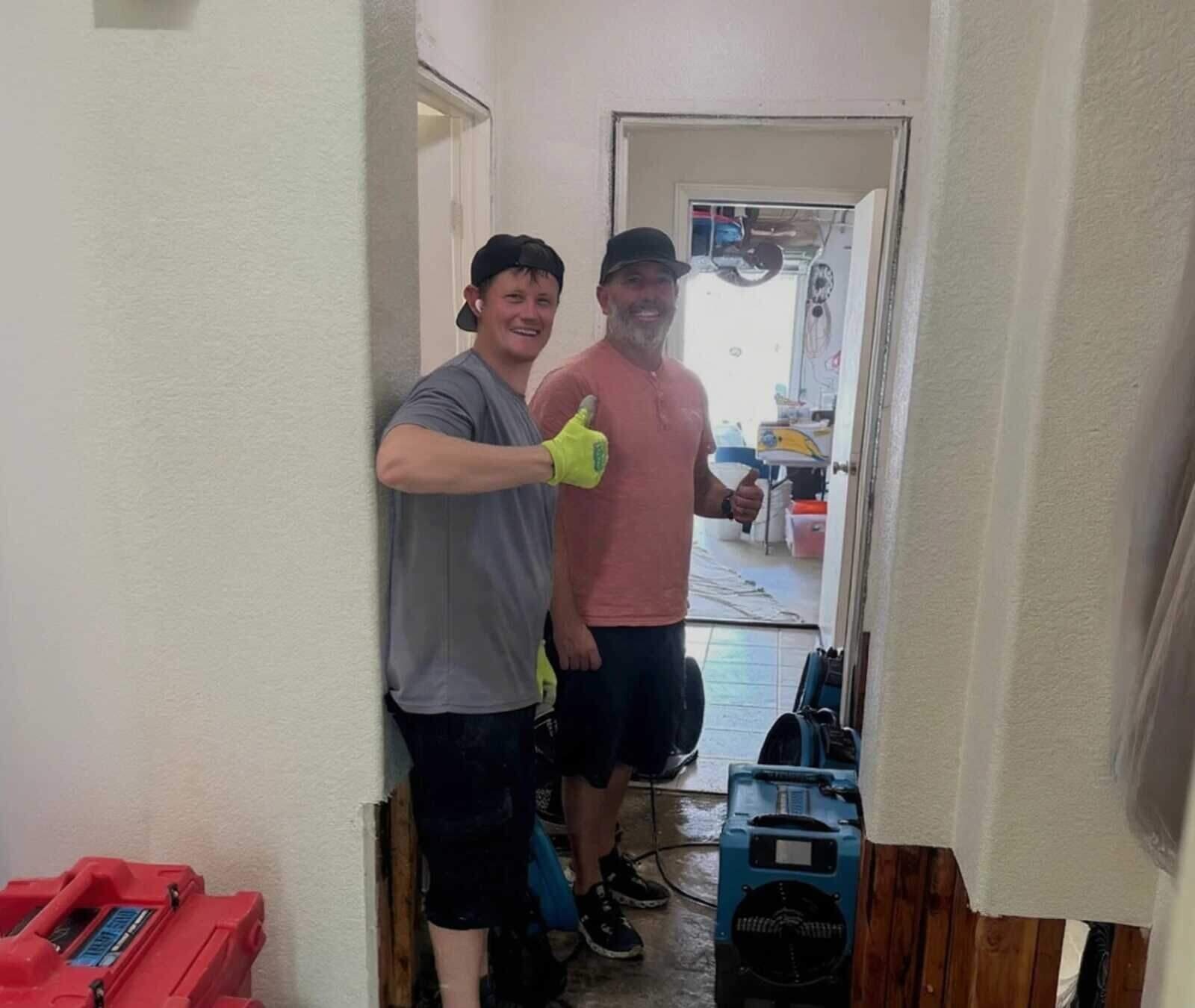
- Extraction handing straight into drying, same crew, same visit
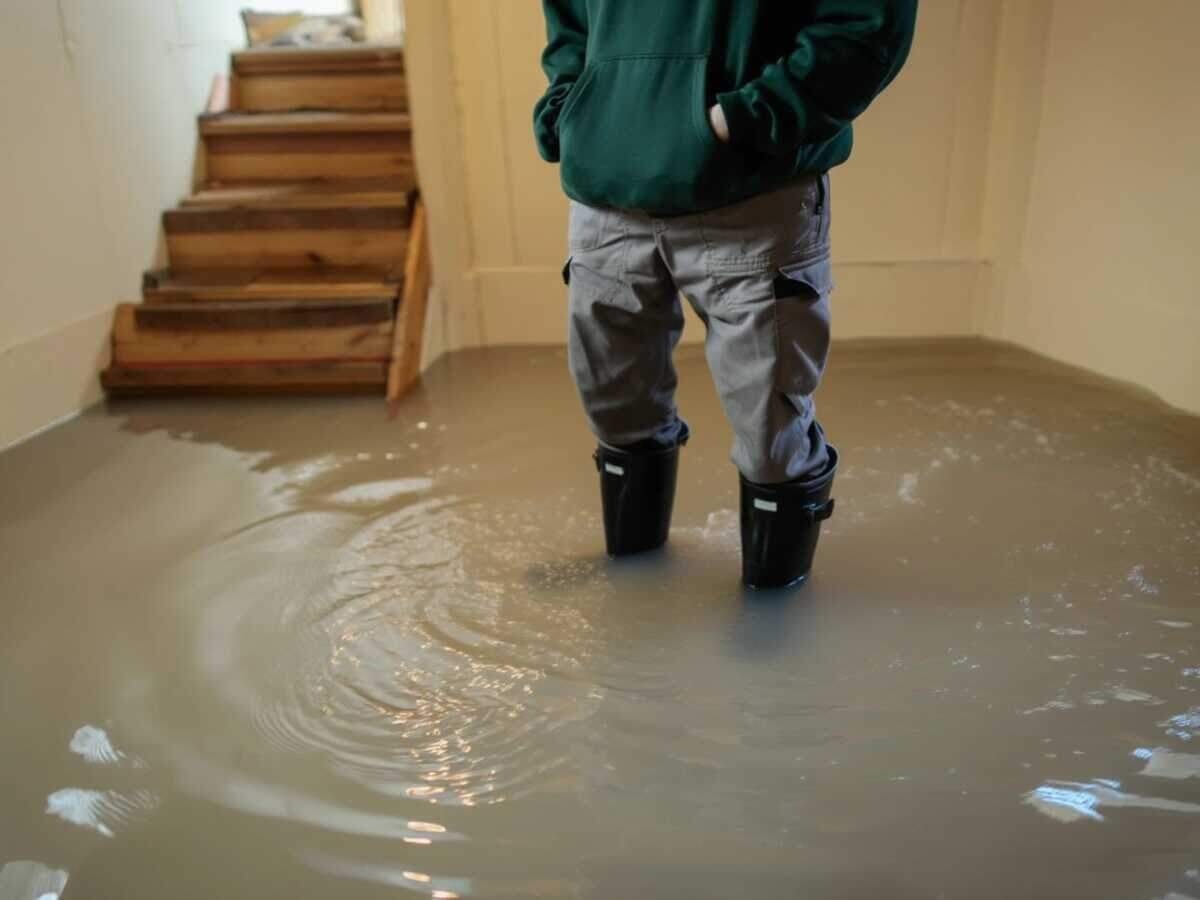
Pulling the water is the short part of this job and the part that decides the rest of it. Every gallon out today is a gallon the dehumidifiers do not have to take back out of the air over the next four days, which shortens the drying and shrinks the replacement list. Call (512) 271-5099 and tell us what let go and roughly how long it ran; those two facts tell us what to load.