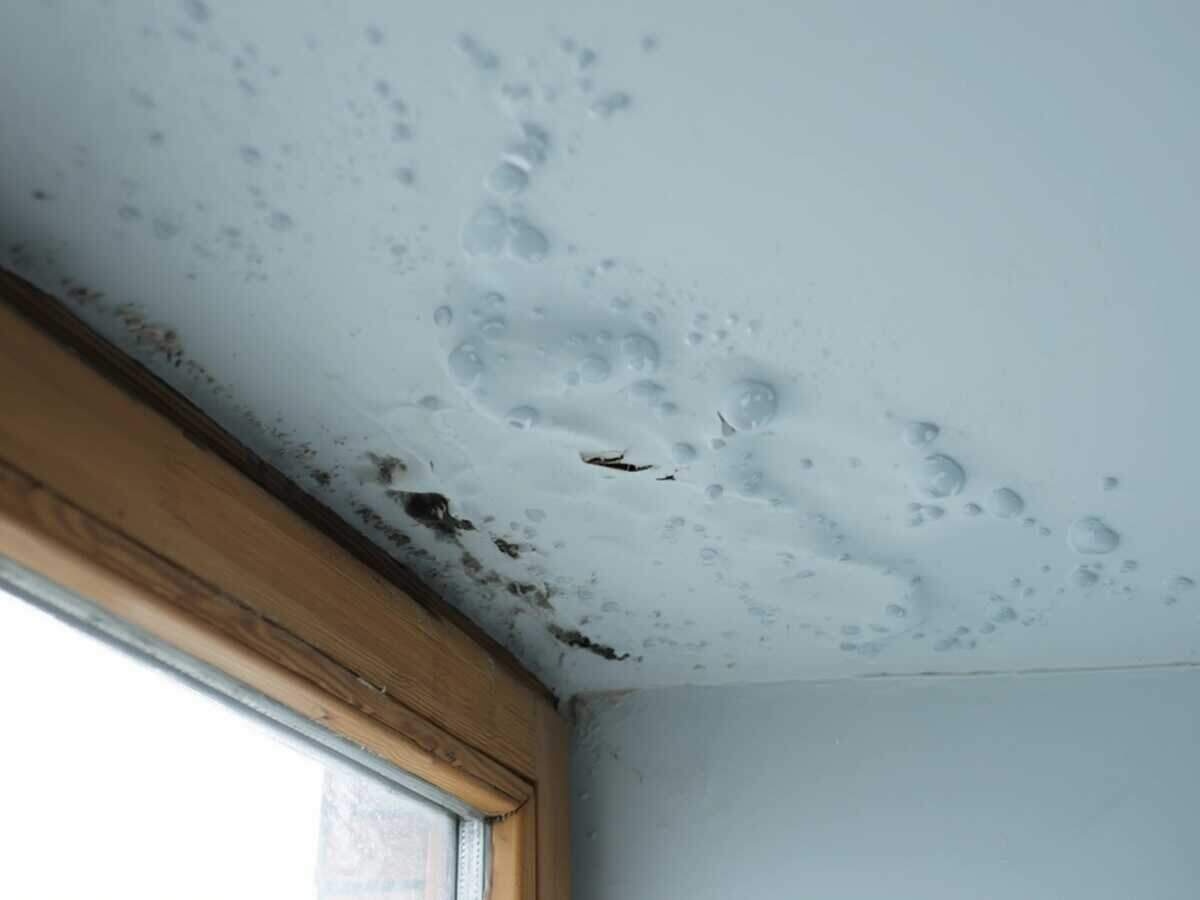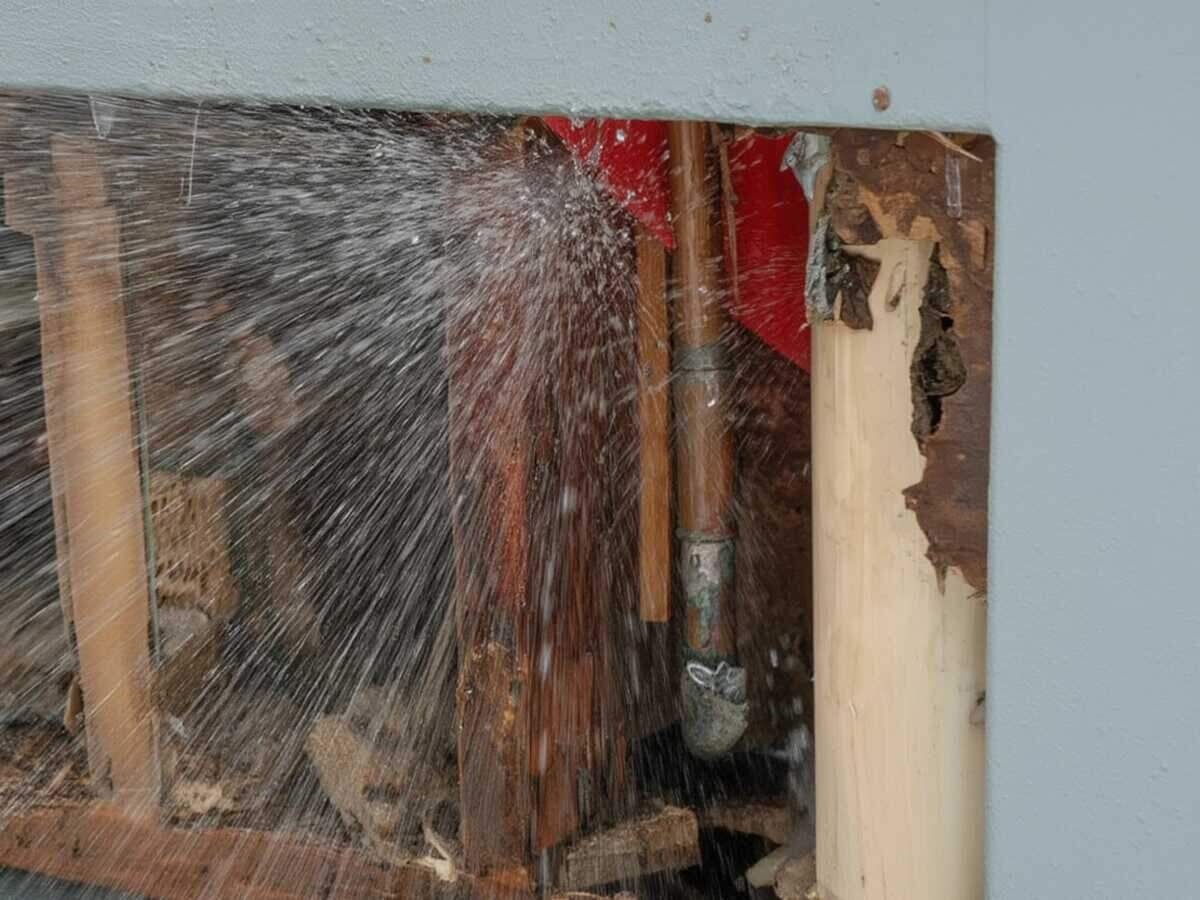




Ceiling water damage repair in a Kyle two-story almost always starts one floor up. These plans put the laundry on the bedroom level, and a washer discharge hose that backs out of its standpipe empties a full drain cycle onto a floor that was never built to hold water. Twenty gallons finds the gap where the vinyl meets the wall, drops into the ceiling below, and is out of sight in about a minute.
It does not land where you would expect. The ceiling hangs on trusses and the bays between them run in one direction, so water travels along a bay until something stops it or a taped seam gives it a way out. That is why the stain shows over the sofa in the family room instead of under the machine, and why the wet area up there is wider than the mark down here.
What comes down and what stays up
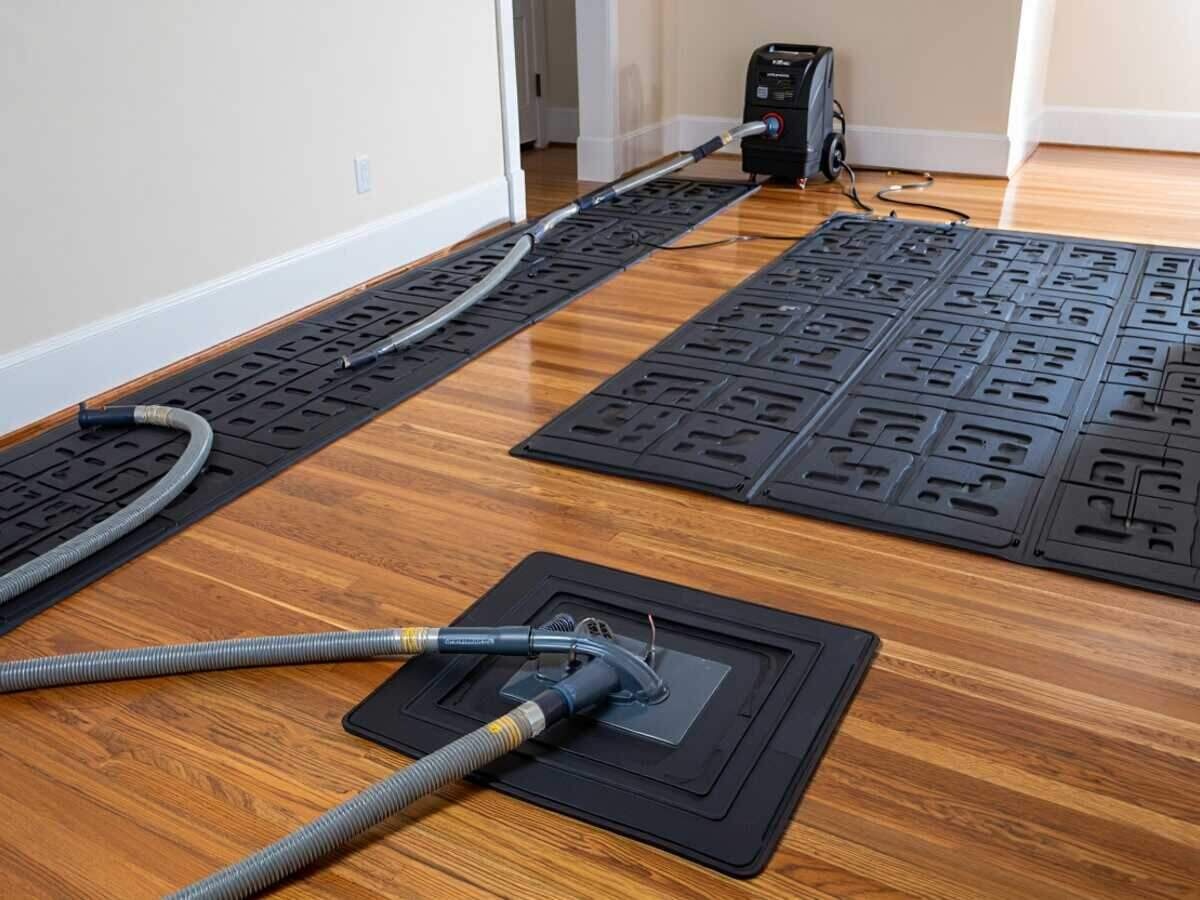
Drain water is not a supply leak, and that changes the answer. Water off a washer standpipe carries detergent, lint, and whatever came off the clothes, which puts it in category two, so soaked insulation and board come out instead of being dried in place. We check the ceiling for weight first, and if a panel is carrying water we open it low and let it run into a bucket rather than wait for a seam to fail on its own schedule. After that the cut follows the meter, the batt comes out, air goes into the bay, and the rebuild is board, tape, texture, and a sealer that keeps the old ring from coming back through.
- Loaded panels opened low and drained in a controlled stream, not left to fall
- Drain water treated as category two: soaked insulation and board out, not dried in place
- The truss bay opened and dried on daily readings, top side and room side
- Board, tape, texture, and a sealed surface so the ring does not ghost through
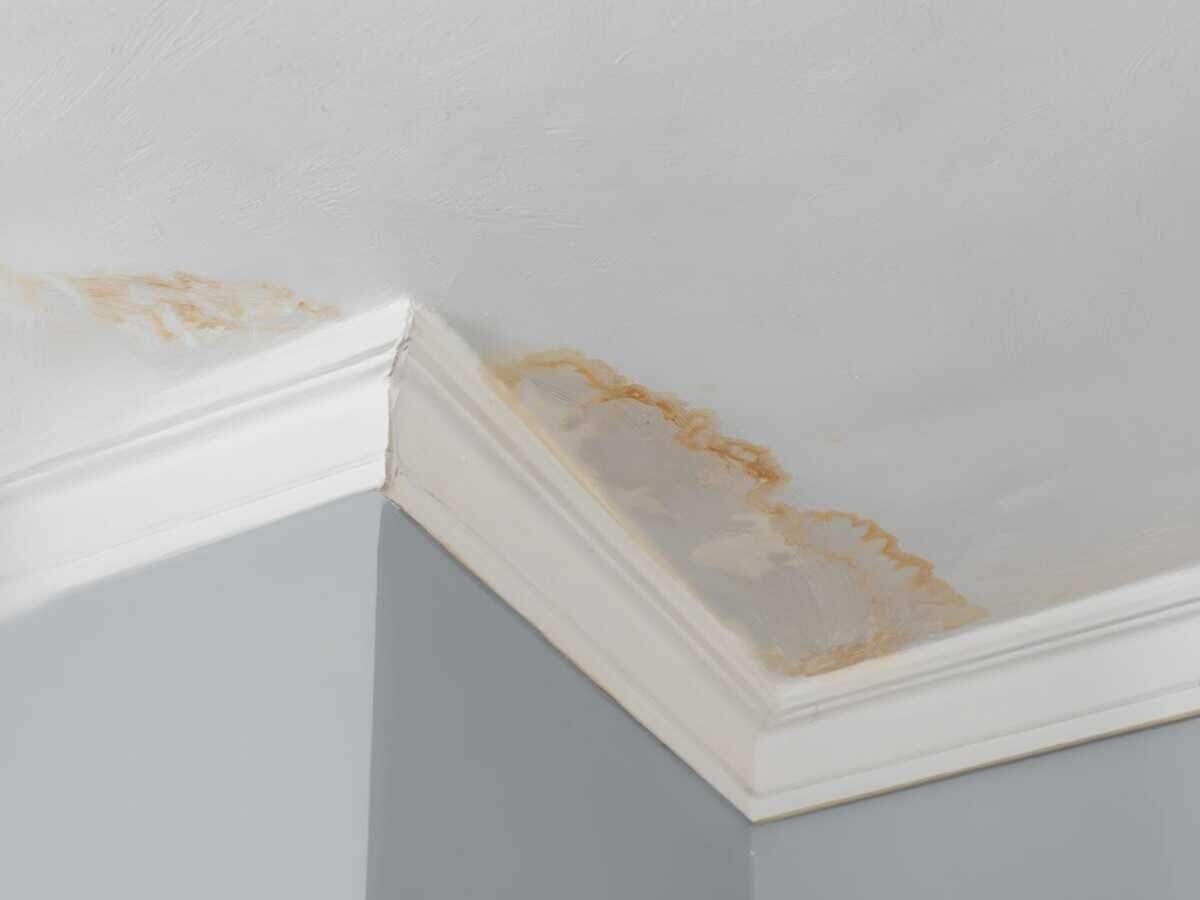
The drying and the drywall are the same ticket here, so nobody hands you a dry ceiling with a hole in it and the number of a second contractor. If a ceiling in your house is sagging or dripping right now, keep everyone out from underneath it and call (512) 271-5099.