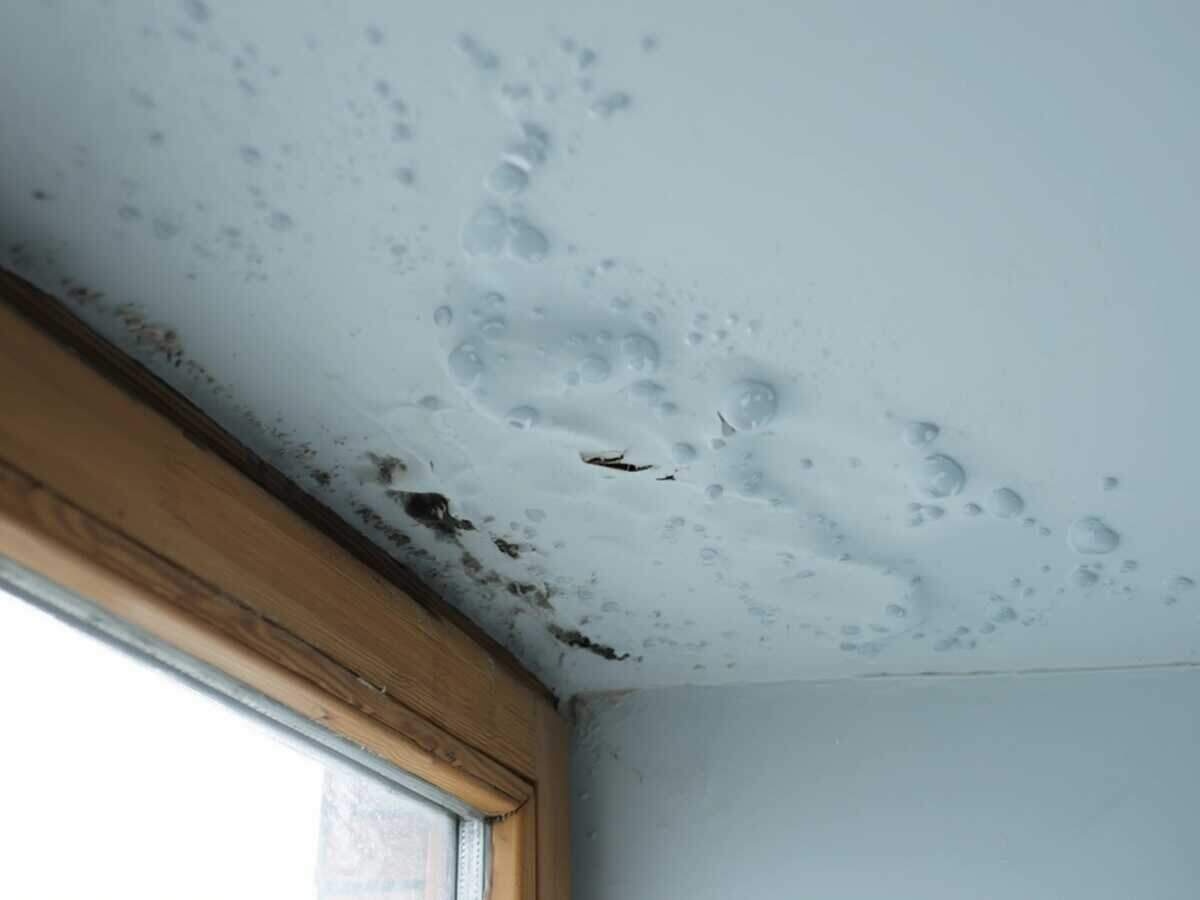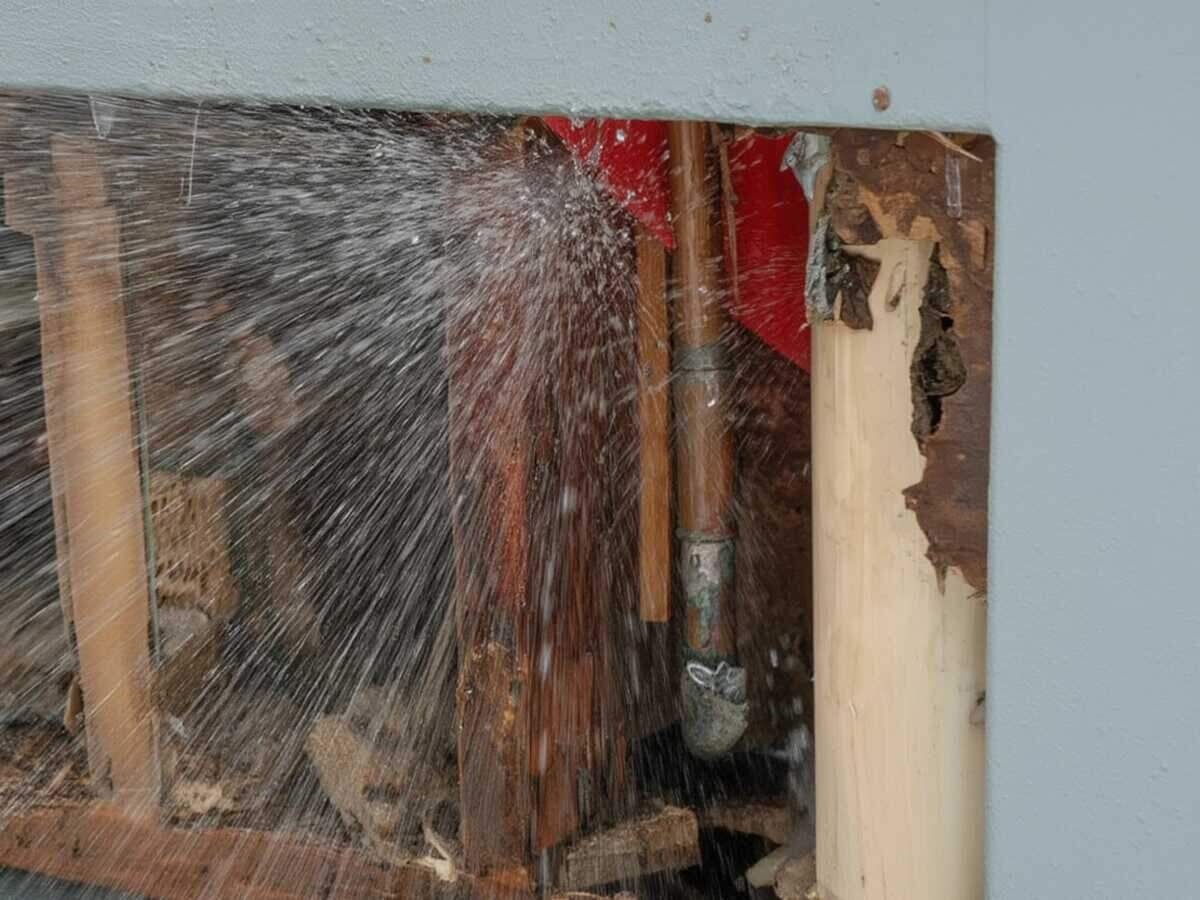




Hardwood floor water damage in a Hutto house is usually a floating floor problem. Engineered plank goes down over a foam pad on the slab, locked plank to plank, and the whole floor is one connected sheet meant to move as a unit. The installer leaves a gap of about a quarter inch at every wall for that movement and hides it behind the baseboard. Add water and the sheet grows in all directions at once, and where the gap has been used up, or where a cabinet run or an island is sitting on the field and pinning it, the floor lifts at its weakest joint instead.
That is why a ridge turns up out in the middle of a room rather than next to the leak, and why a long run through a doorway binds and peaks at the opening. It also means the wet part is underneath. The finished face sheds water while the pad and the slab hold it, so a floor can read normal to a hand for days while the material below it stays soaked. A meter and one lifted plank settle what is actually going on.
How we dry a floor that is not attached to the house
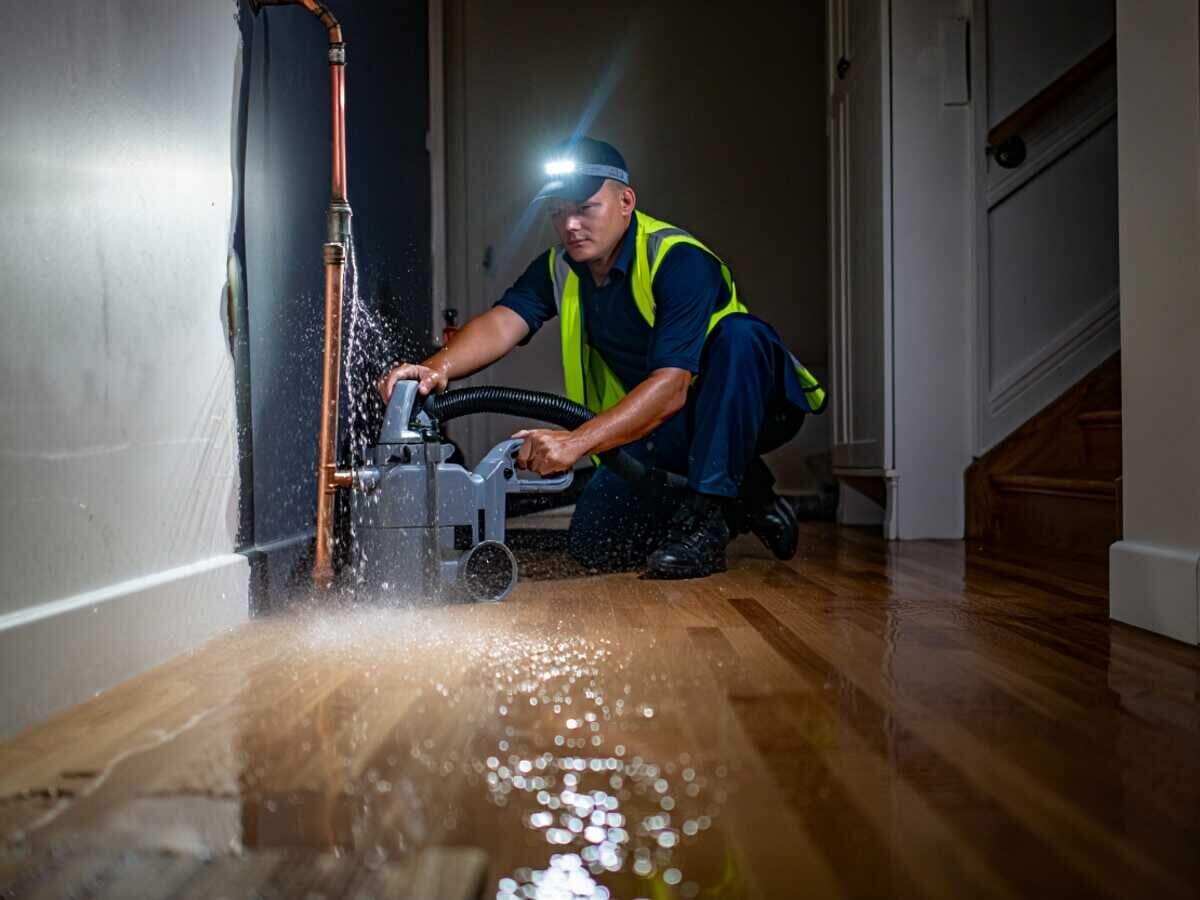
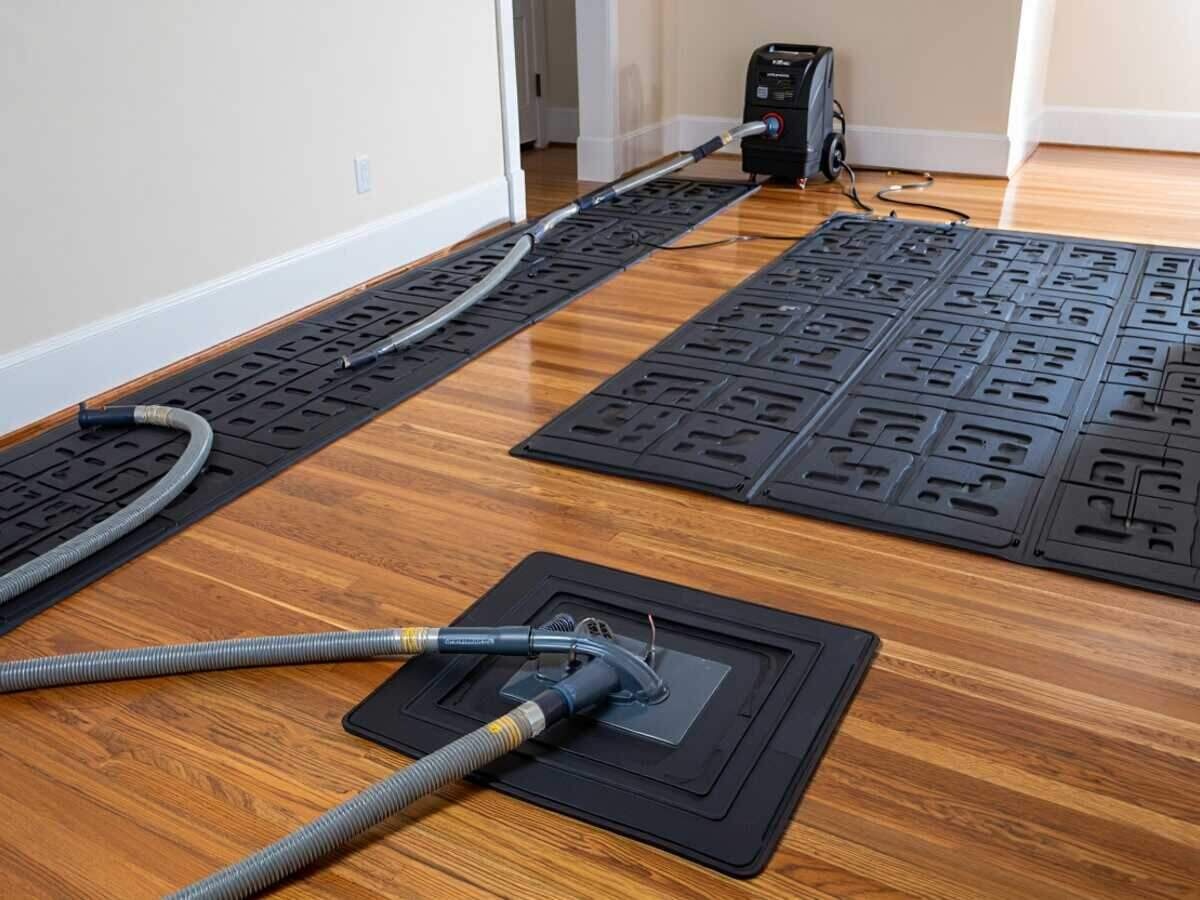
We read across the field and at the seams, then lift a plank at the wet edge to see the pad and the slab underneath, which is the fastest honest answer available. If the floor is worth saving, base and shoe come off around the wet zone to give the field room to lie back down and to open that perimeter gap as an air path, drying mats go on the boards under vacuum, and a dehumidifier holds the room while the pace stays deliberately slow. Rushing a wood floor trades cupping for splits and checks. Readings on the boards and the slab come daily, and we stop at the number a dry section of the same floor is holding.
- A plank lifted at the wet edge so the pad and slab get read rather than guessed at
- Base and shoe removed around the wet zone to relieve the field and open an air path
- Vacuum mats pulling moisture up through the boards, with the pace held slow on purpose
- Daily readings on boards and slab, stopped against a dry section of the same floor
Two honest limits. A hardwood veneer over a plywood core can often be dried; a core that has delaminated or a fiberboard core that swelled is finished, and you will hear it on the first visit instead of after five days of machines running on it. And because a floating floor comes apart in sequence, a damaged run can often be rebuilt with planks from the builder's leftover box in the attic or borrowed out of a closet, which is the difference between a repair you see and one you do not. Call (512) 271-5099.