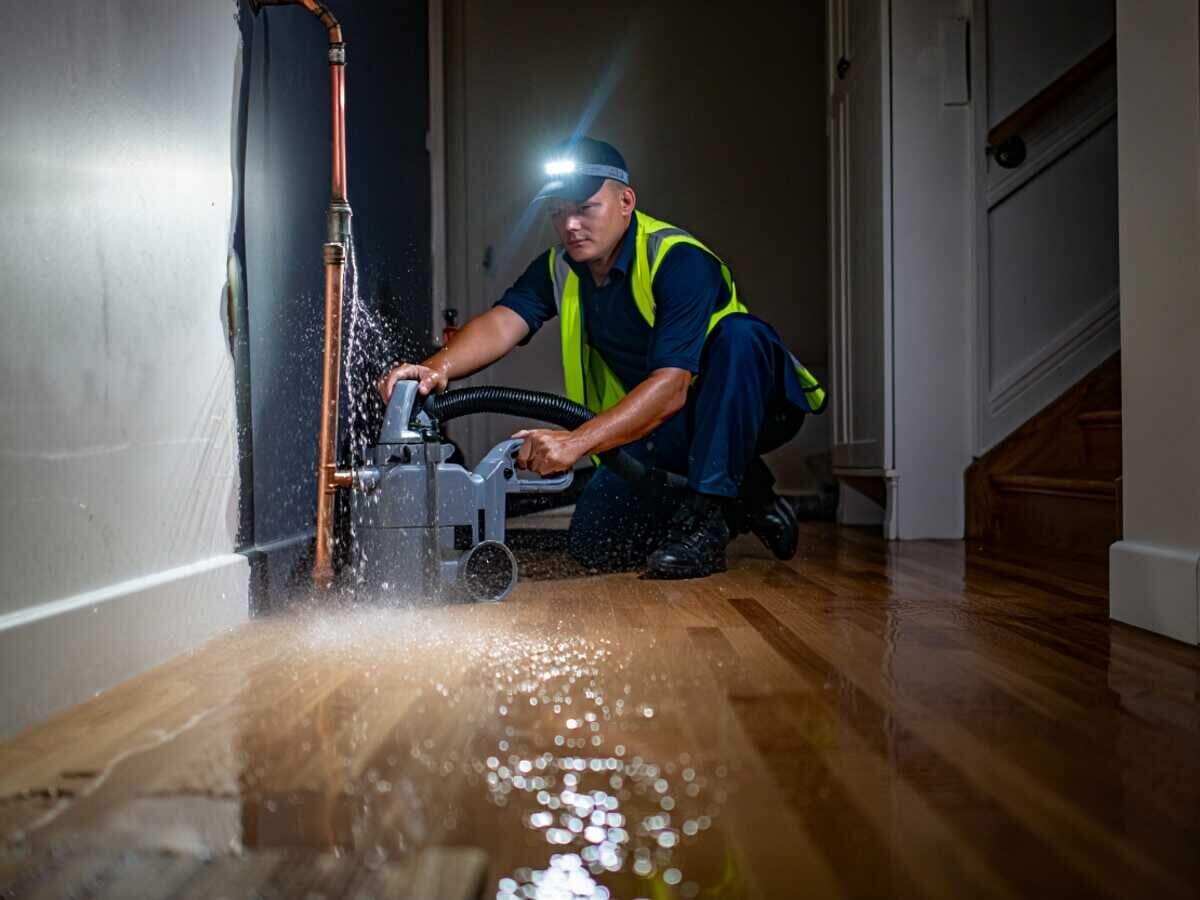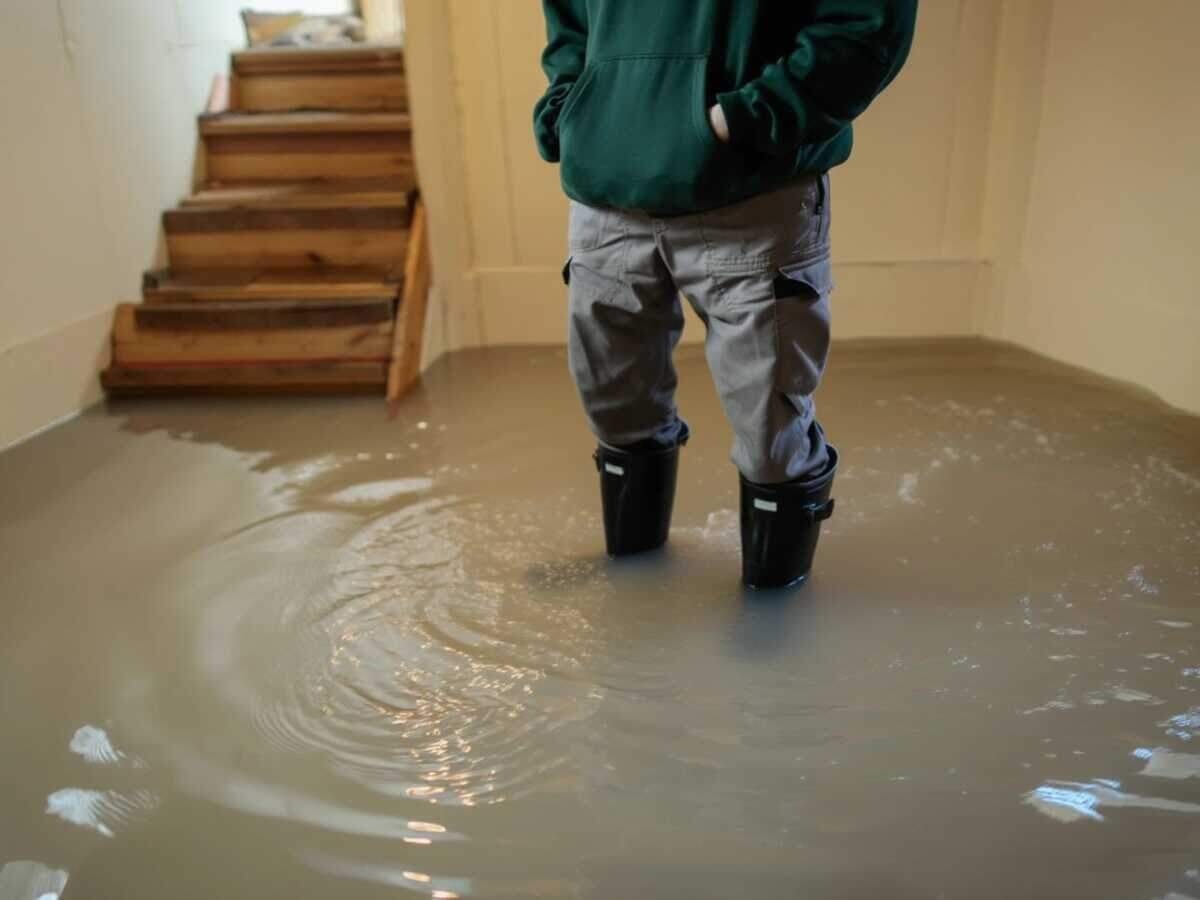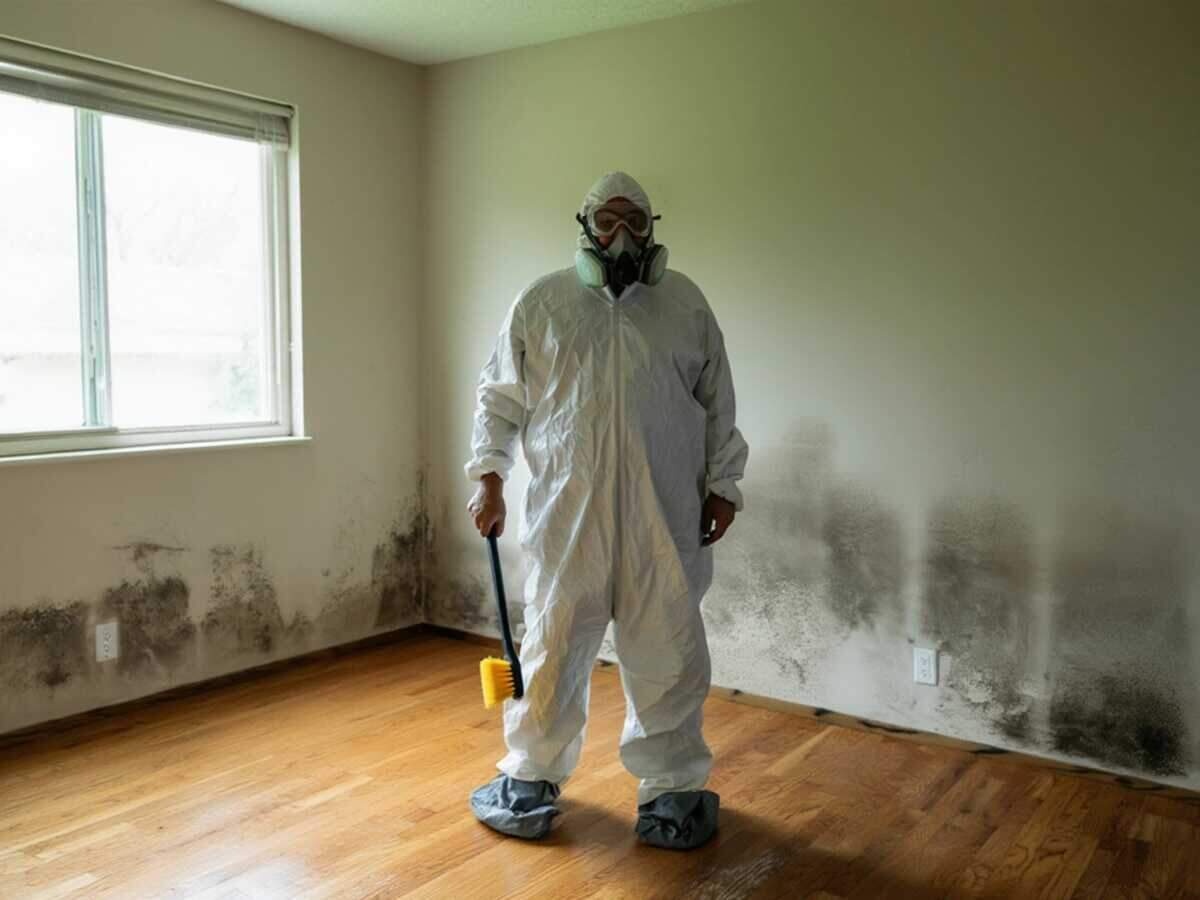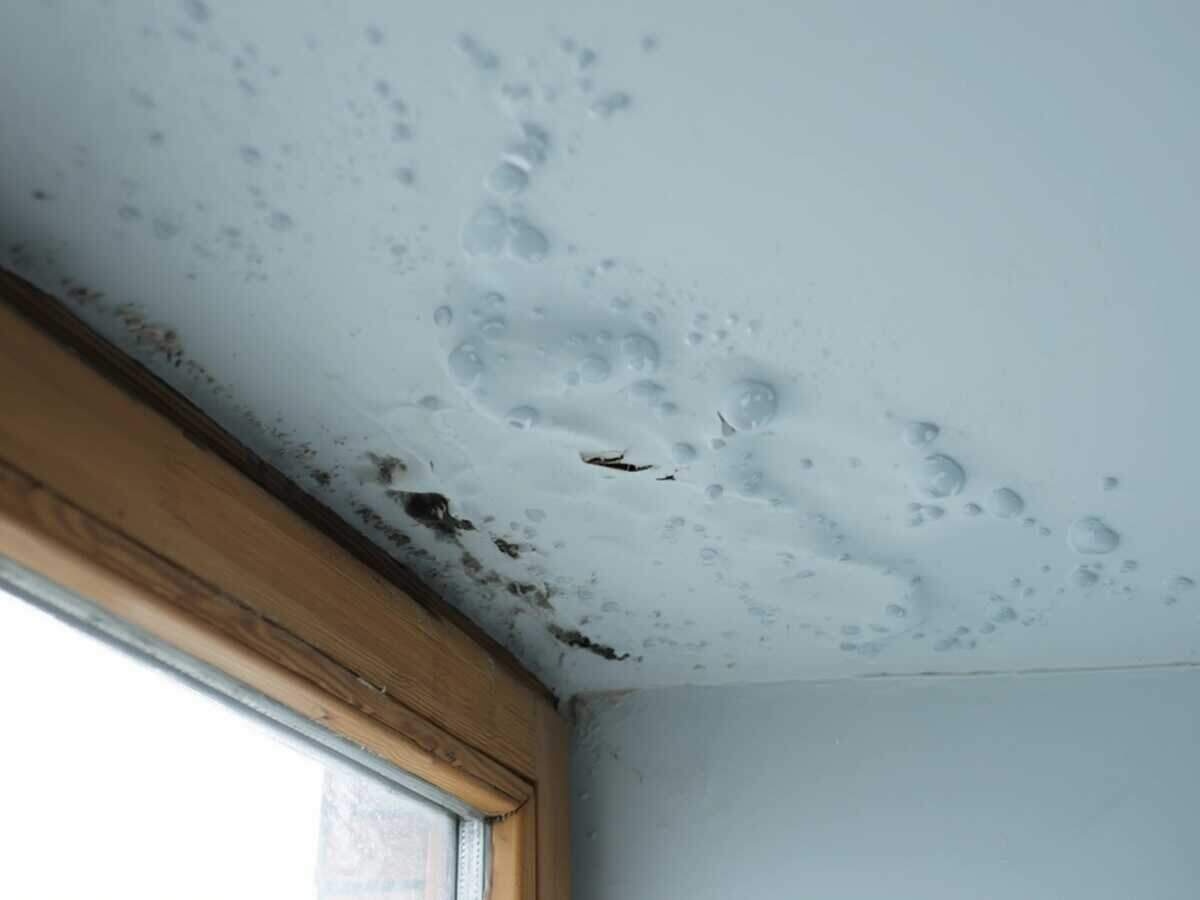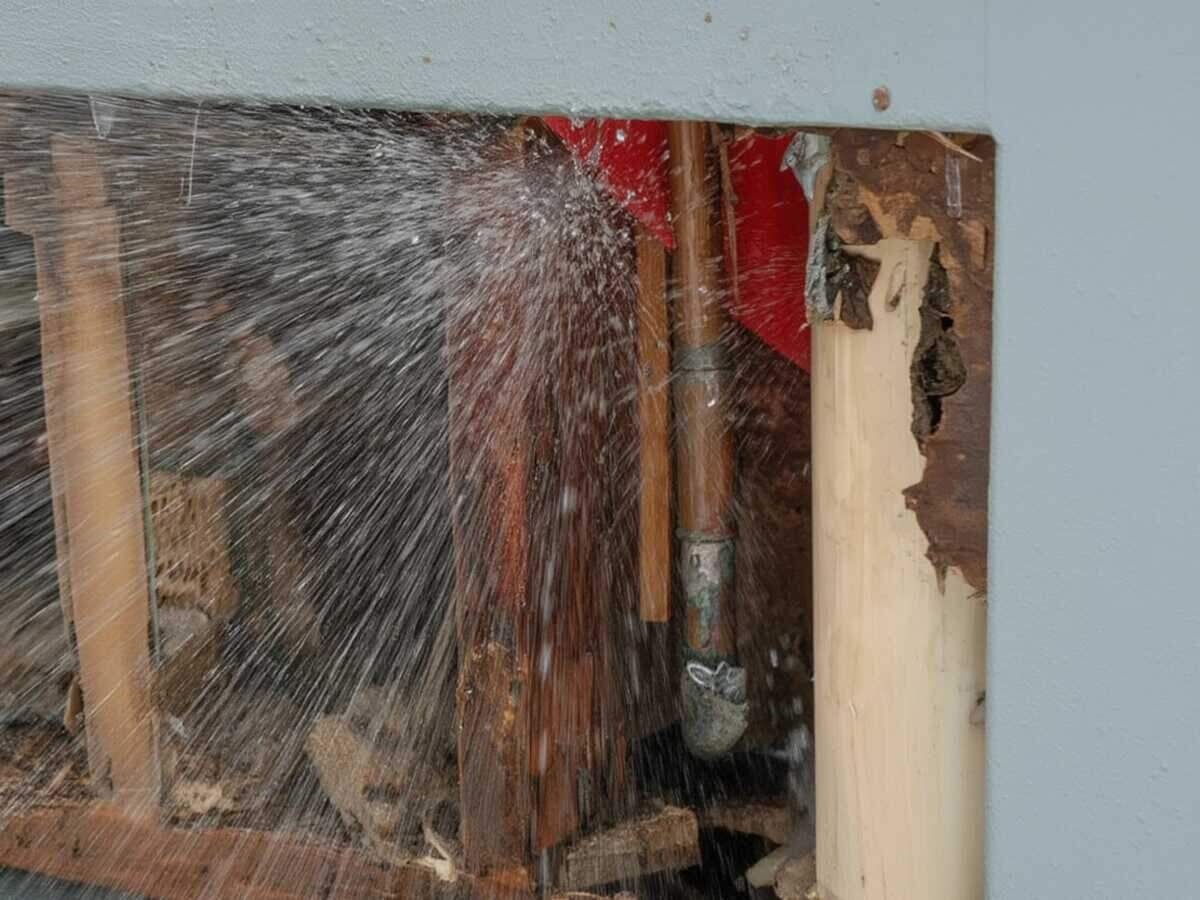




Ceiling water damage repair in a single-story Hutto house usually means dealing with something you cannot see from the room. The air handler sits up in the attic on a plywood platform built over a hallway or a closet, and on plenty of these plans the water heater is up there with it. When a fitting weeps or a pan overflows, the water spreads across that decking first. Plywood takes it in, gives it back slowly, and keeps feeding the ceiling below for days after a plumber has replaced the part that failed.
That is why the stain grows after the leak stops, and why the wet area overhead is wider than the mark on the paint. Water runs to the edge of the platform, drips onto blown insulation, and the insulation carries it sideways well before it reaches drywall. By the time a ring shows, the board above it has been damp for a while and the fiberglass around it is packed down and heavy.
What we do above the ceiling and what we do to it
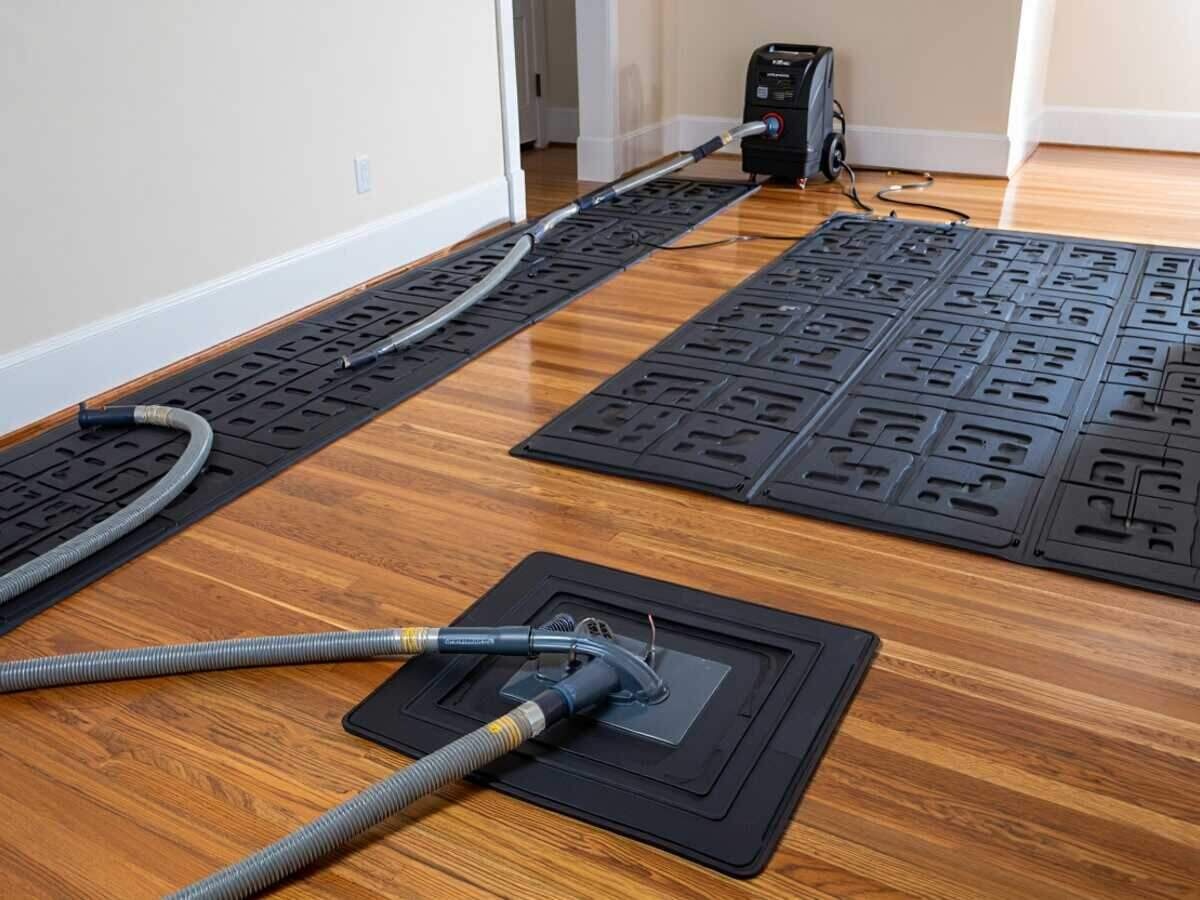
The first trip up the ladder is for readings, not for a saw. We meter the decking, the framing and the top face of the ceiling board, then pull the wet insulation out of that area, because soaked fiberglass will not give the water back on its own and it is also what makes a ceiling sag. Drying runs from the attic side where we can reach it and from the room side where we cannot, with a dehumidifier holding the space and readings taken daily. Board that has lost its bond comes down and is replaced, the new surface is finished to match the ceiling around it, and the old ring is sealed with a stain-blocking primer before any paint goes near it.
- The platform decking read and dried, not just the ceiling underneath it
- Wet blown insulation pulled out of the affected bay instead of left to pack down
- Drying worked from the attic side where access allows and from the room side where it does not
- New board hung, finished to match the surrounding ceiling, and the old ring sealed before paint
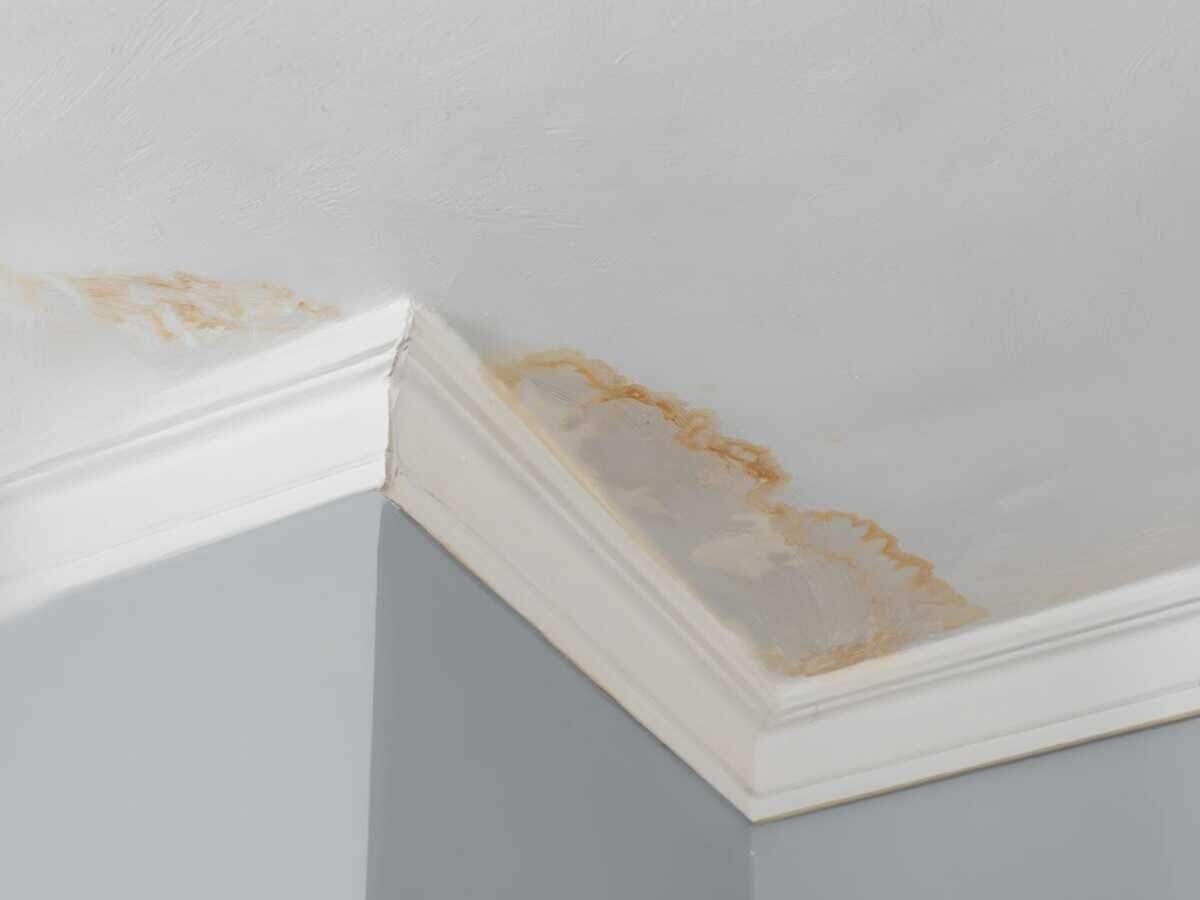
If a section of ceiling is sagging or feels heavy, stay out from under it and say so on the phone, because a loaded panel carrying wet insulation comes down all at once rather than politely. Everything else can be looked at in daylight. Call (512) 271-5099.