



Roof water damage from a skylight does not behave like a roof leak, and Dripping Springs houses are full of skylights. Vaulted great rooms, long ranch plans with dark middles, and the tube lights that got added to bathrooms and closets later. Every one is a hole in the roof with a curb and a flashing kit around it, and the flashing kit is what gives out, usually at the head or in the mitered corners, sometimes at a curb that was built shorter than the shingle course wanted.
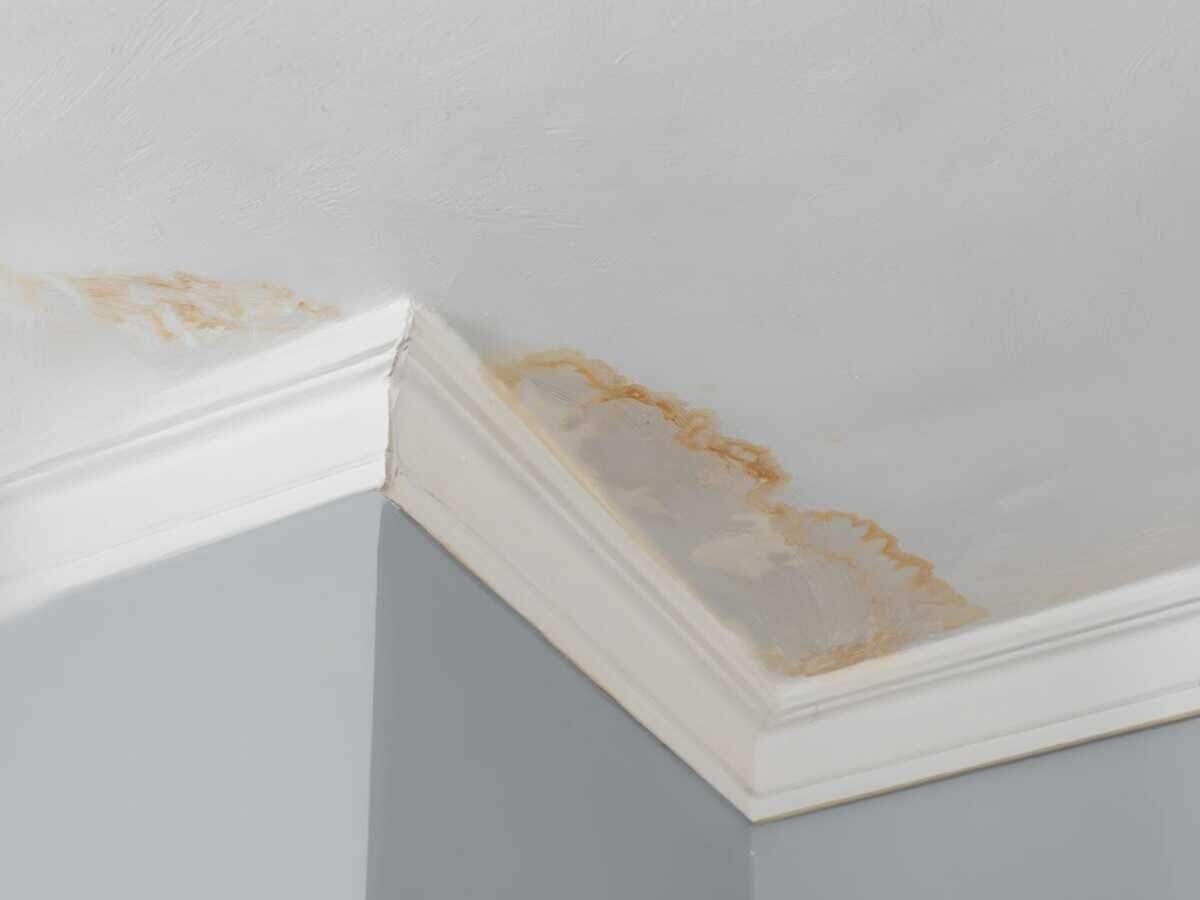
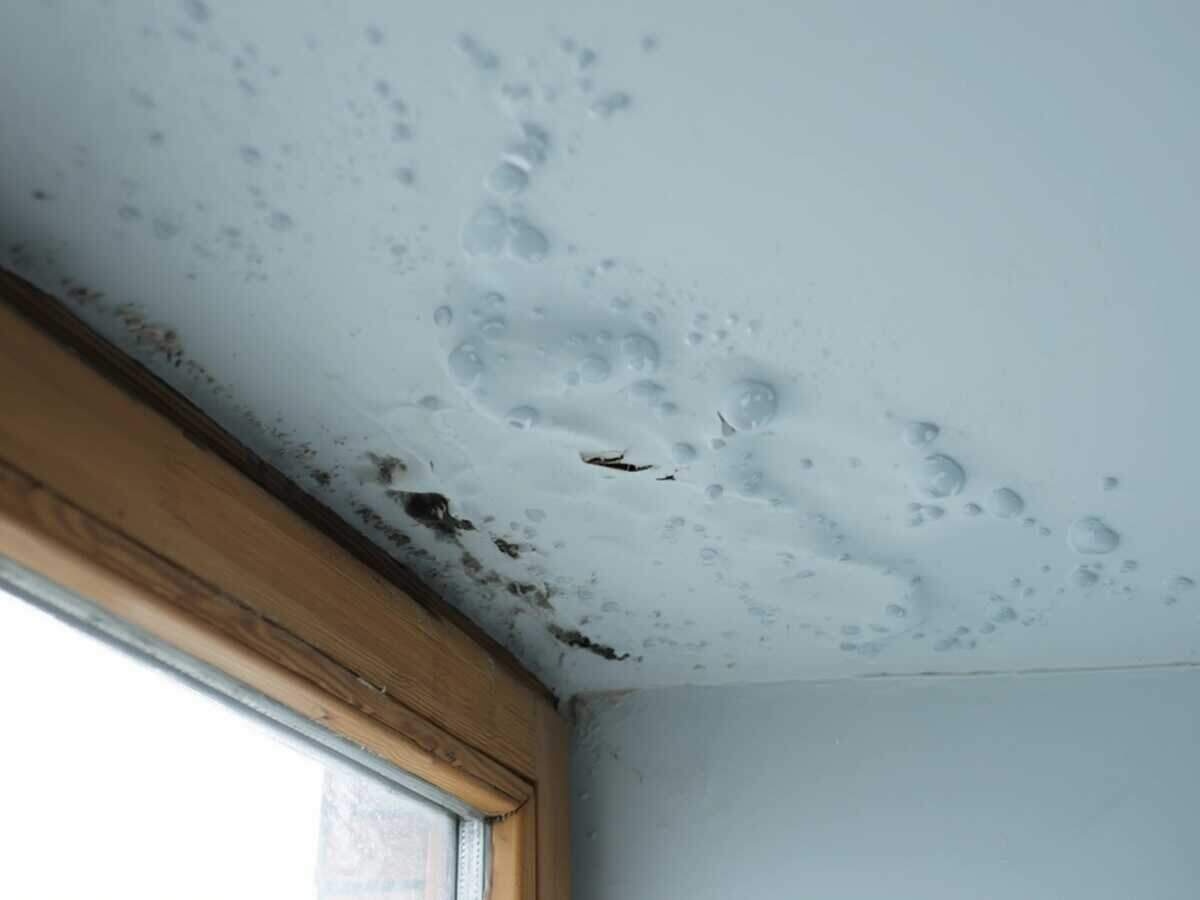
Where the water goes next is what makes these hard to find. It runs down the inside of the shaft, the finished drywall chase between the opening in the roof and the opening in the ceiling, and it never touches the attic floor. So the attic reads dry, the ceiling around the skylight looks fine, and the only tell is a damp line at a shaft corner, a lifted seam of tape, or a stain that starts high on the shaft wall and works down.
Drying a shaft nobody can get behind
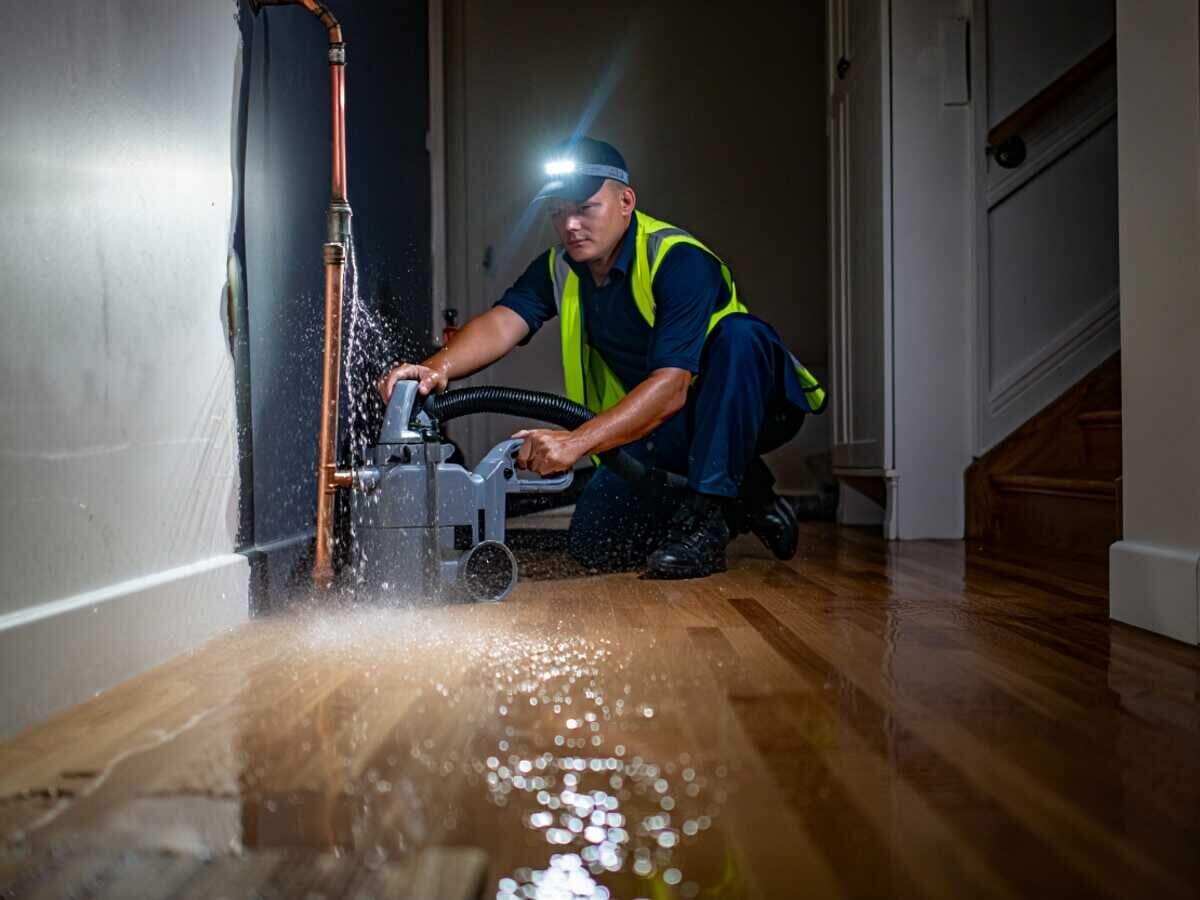
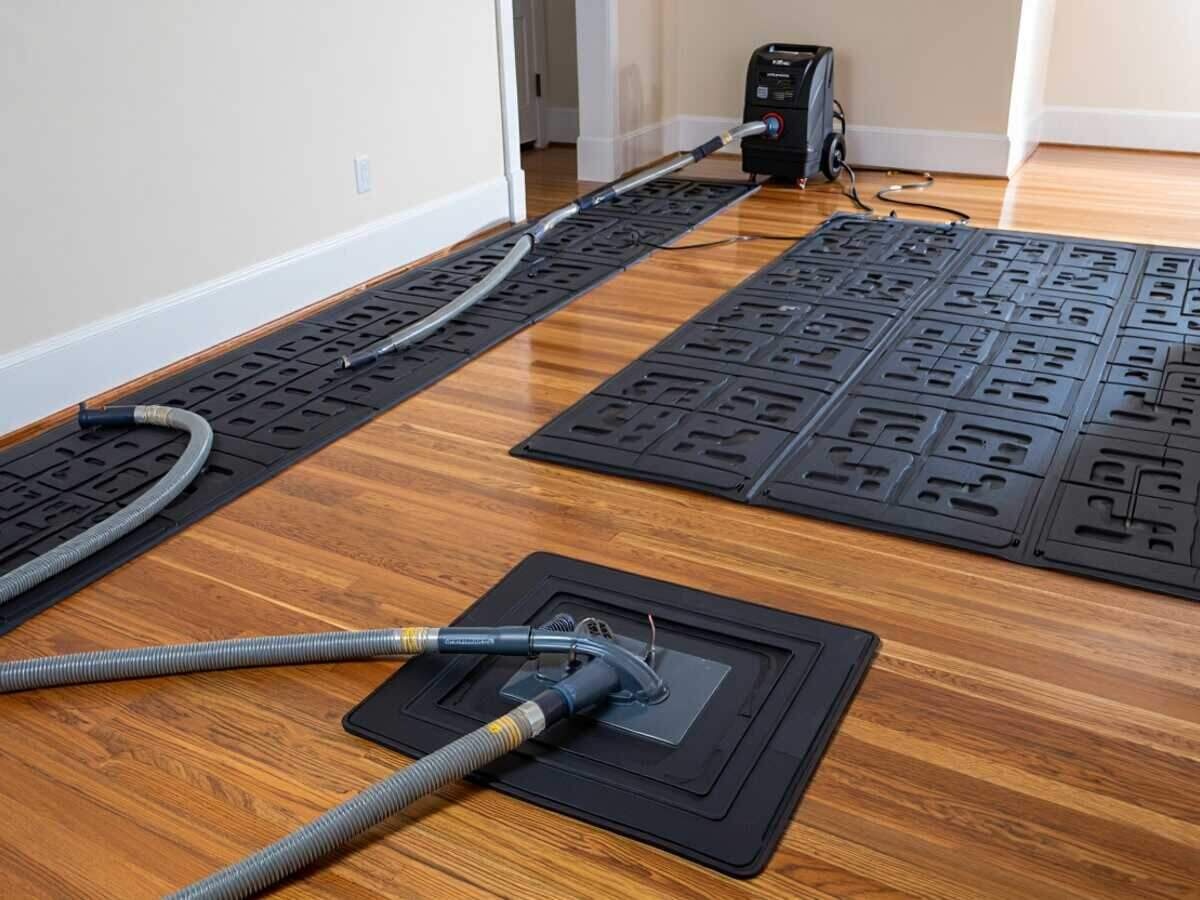
We read it from the room side, up the shaft, on a grid, because the wet band is narrow and easy to walk past. The insulation wrapped around the outside of that chase gets checked as well, since a soaked blanket around a box will keep the box wet for weeks. An inspection opening goes in at the bottom corner where water collects, air is moved through the shaft rather than at it, and readings run daily until the framing around the opening holds. Then the drywall, tape, and finish go back. The curb, the flashing kit, and the unit itself belong to a roofer, and we tell them where the water came through.
- The shaft read from the room side on a grid, not judged from a ceiling stain
- Insulation around the outside of the chase checked, since a wet wrap keeps it wet
- An inspection opening at the bottom corner of the shaft, where the water collects
- Framing at the roof opening dried on daily readings before the finish goes back
Skylights have a service life, and a unit old enough to have a failed seal or a cracked curb is a replacement conversation rather than a re-sealing one. That call is your roofer's. Ours is the water: where it entered, what it wet, how far down the shaft it traveled, and what has to be rebuilt. All of it goes in the file with dated photographs and readings, and your carrier decides the claim. Call (512) 271-5099 and tell us which side of the shaft is wet.