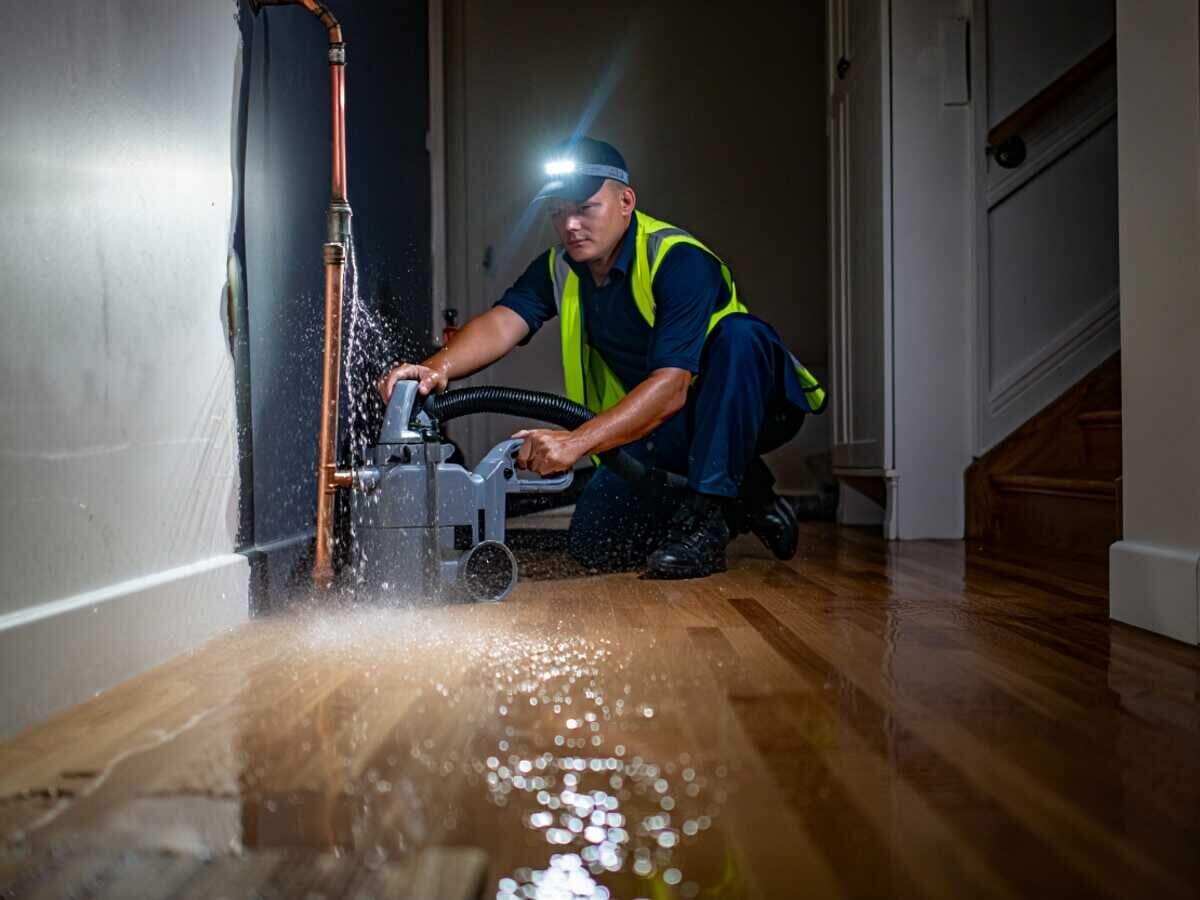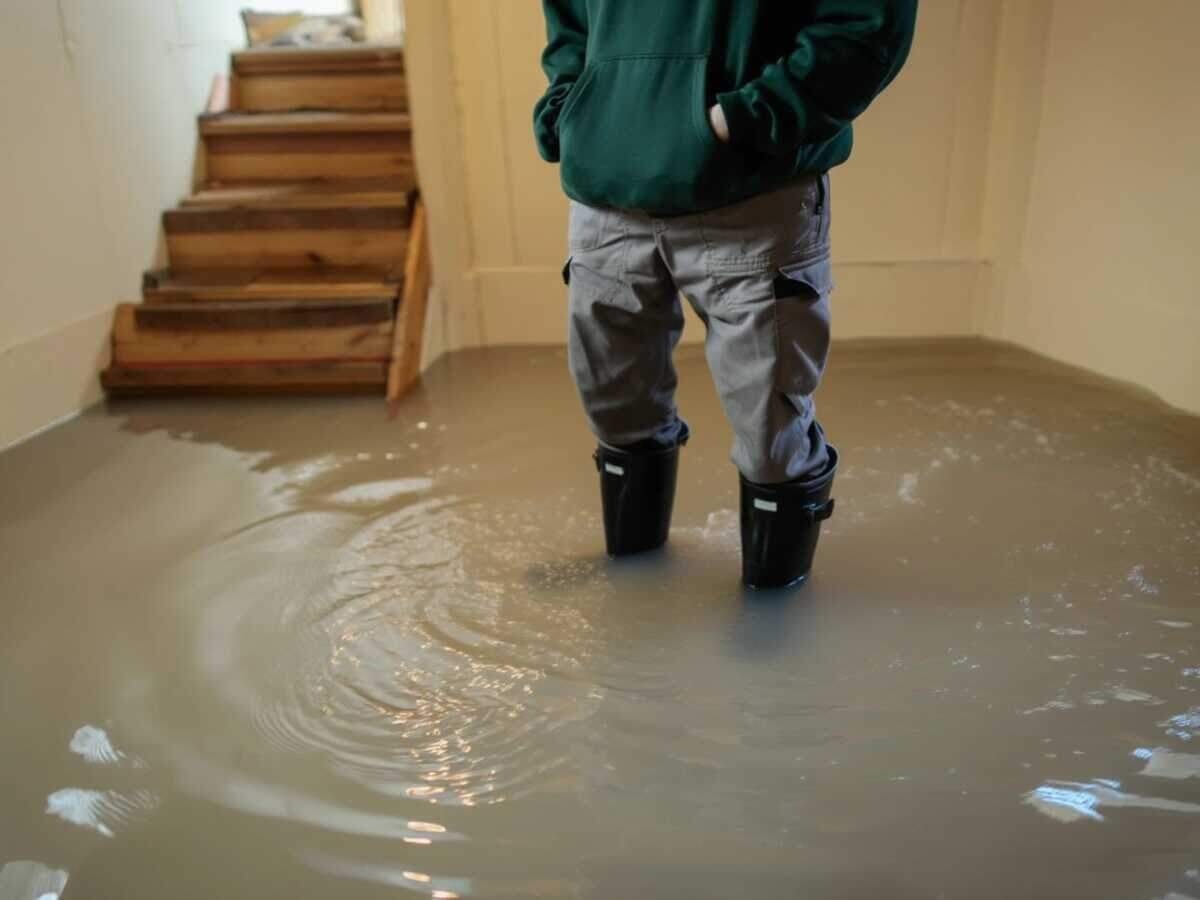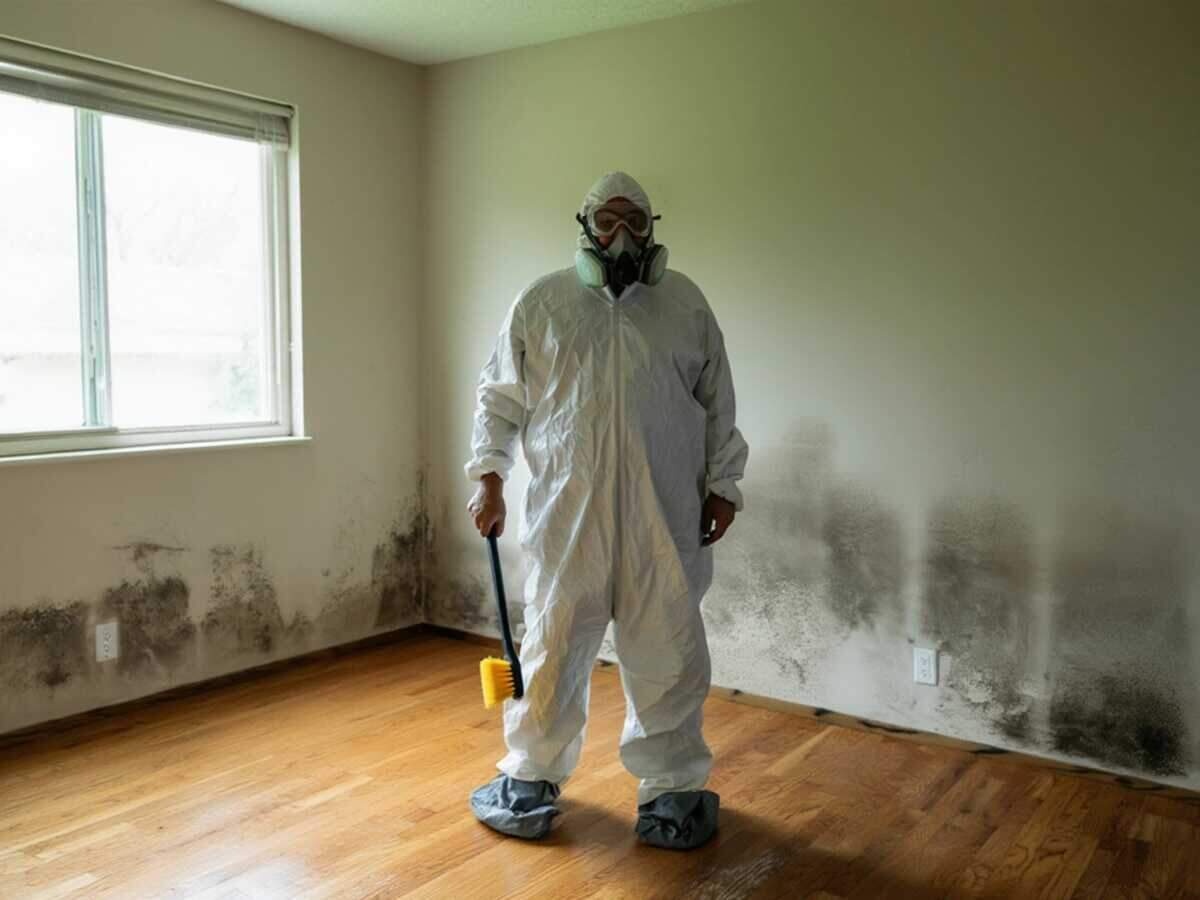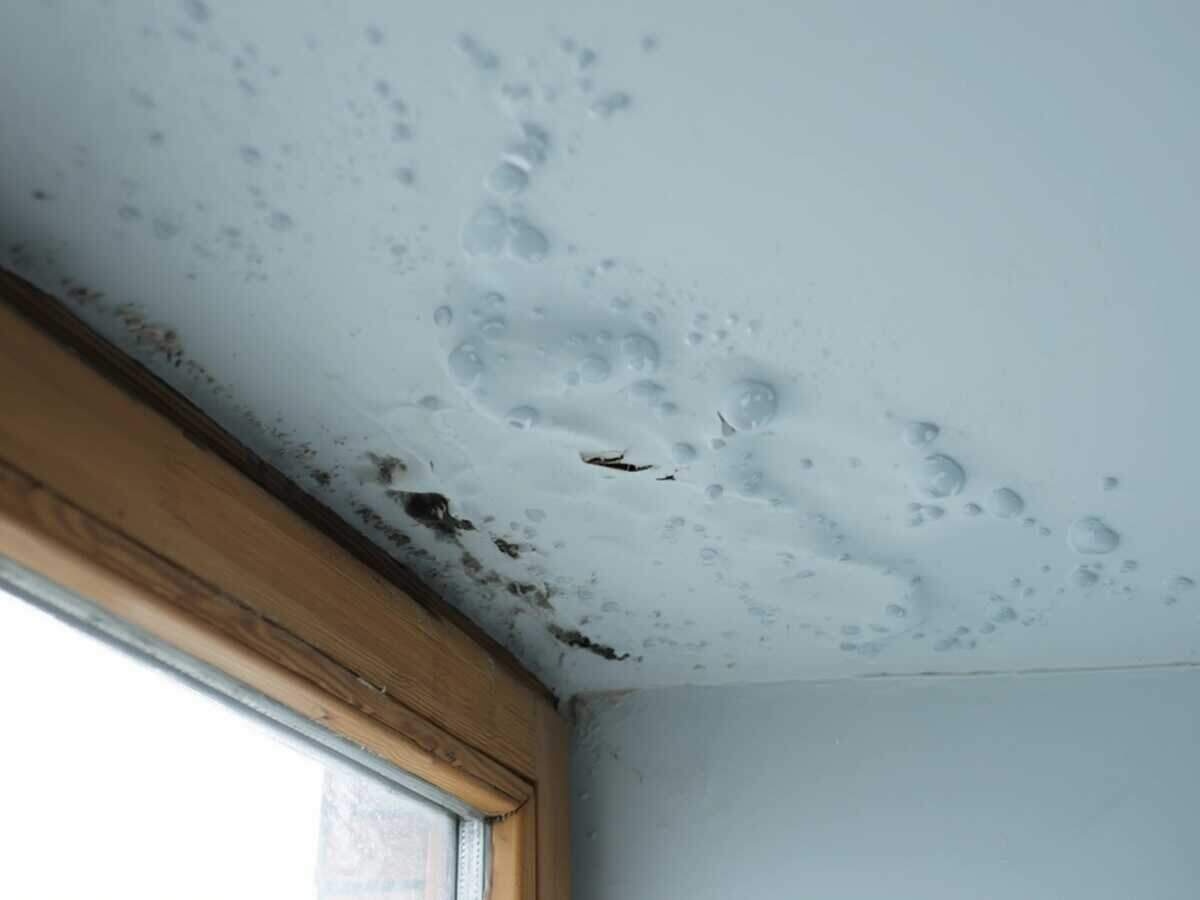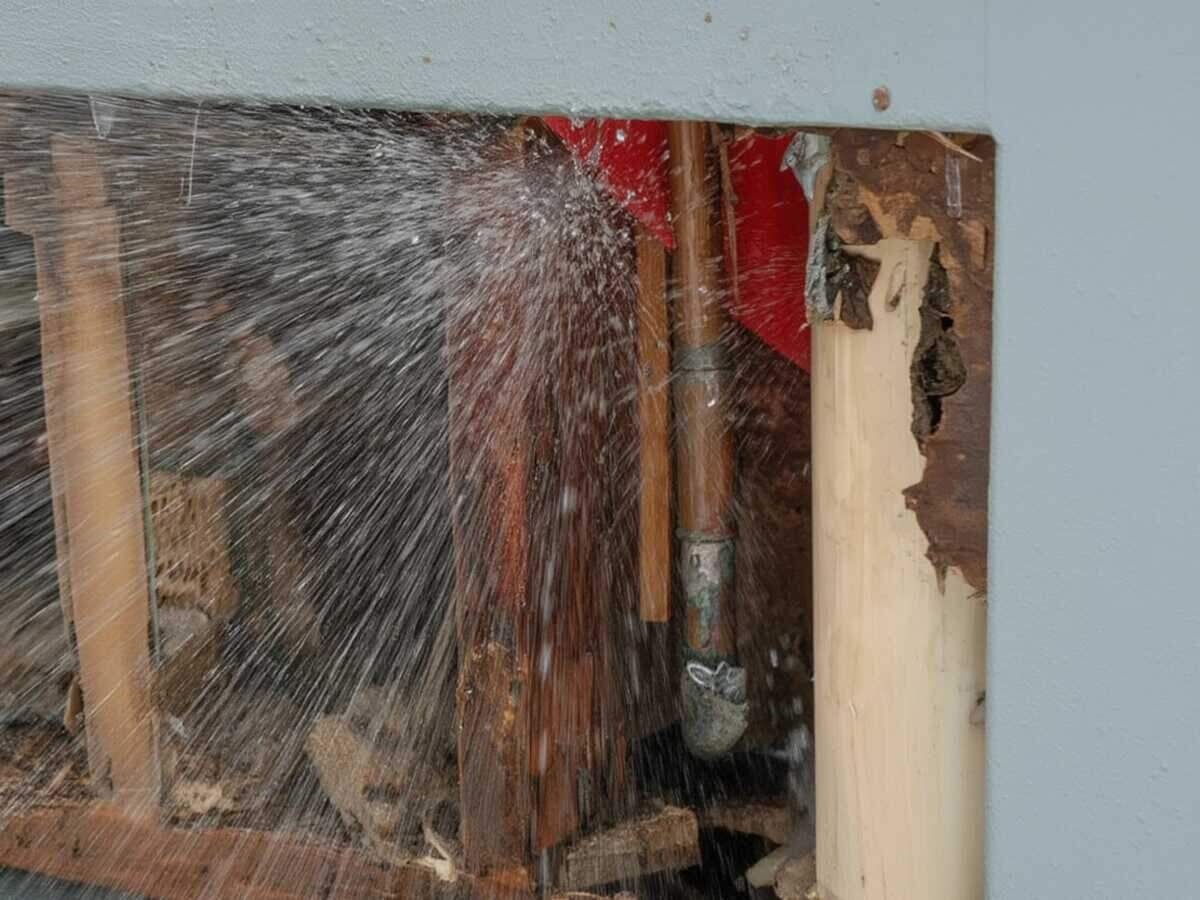




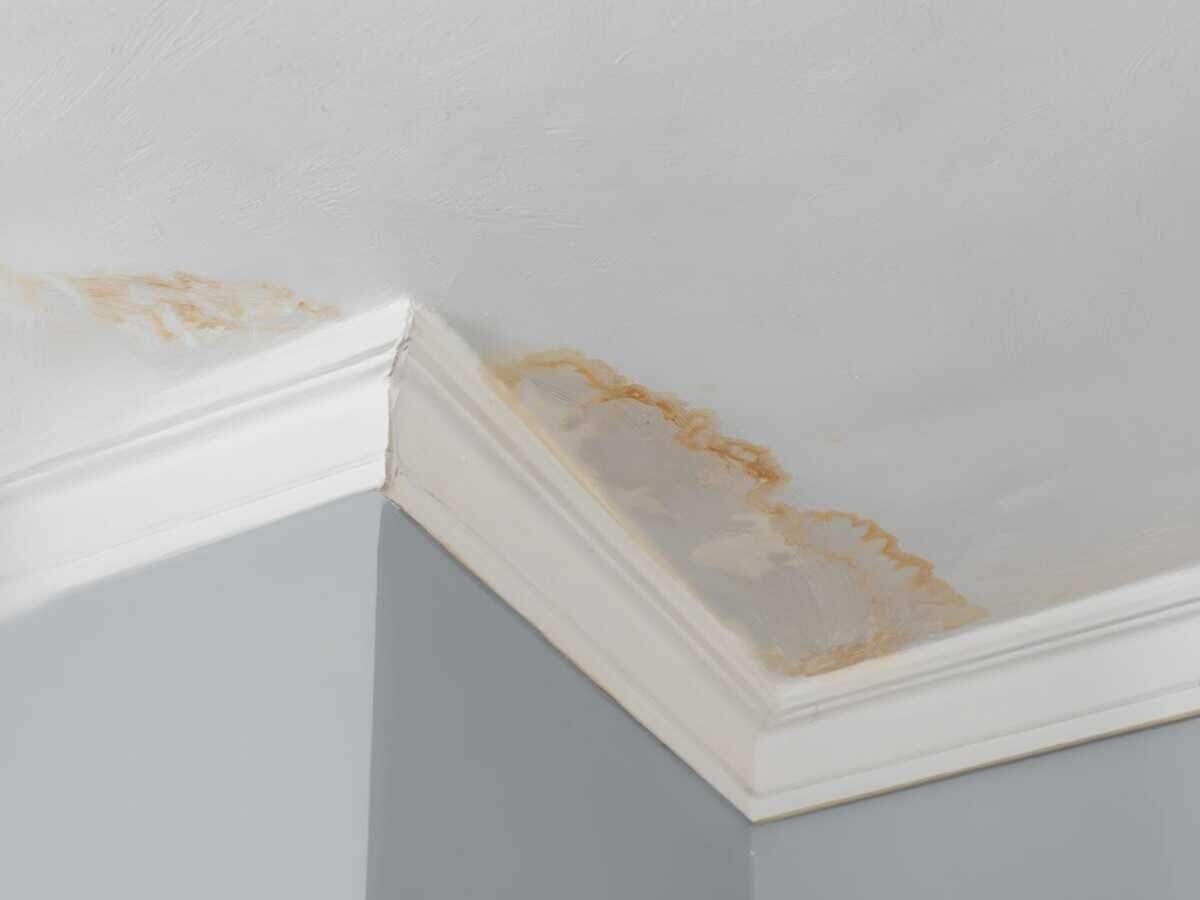
The ceiling is where an upstairs bathroom reports its problems, and the way a stain behaves names the fixture before anybody opens anything. A mark that darkens within an hour of a shower and dries back in between points at the pan, the drain connection, or the valve behind the tile. A stain that grows steadily, day and night, wet or dry, is a supply line under pressure. One that shows up after a flush and then stops is usually the seal at the closet flange. Pflugerville's two-story plans put two and sometimes three baths on the second floor, so on most of these calls there is more than one candidate directly overhead.
What the stain cannot tell you is where the water actually sits. It surfaced at the lowest opening the ceiling assembly gave it, a seam, a light box, or the joint where the ceiling meets a wall, and the wet material can run several feet the other way along a truss chord. So we meter and scan before anything is cut, and we take readings from the bathroom side as well, because the subfloor up there took the water first and is still holding some of it.
The part of the repair you look at afterward
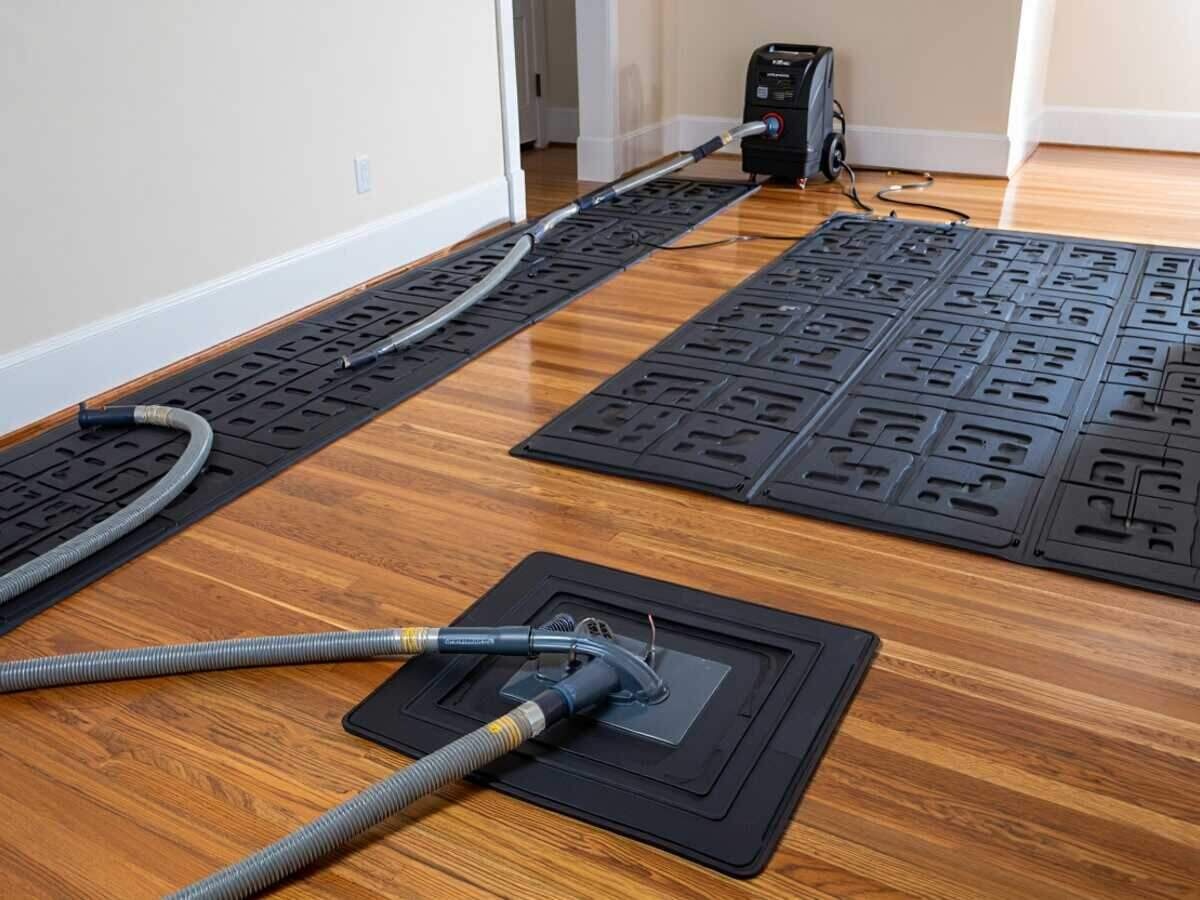
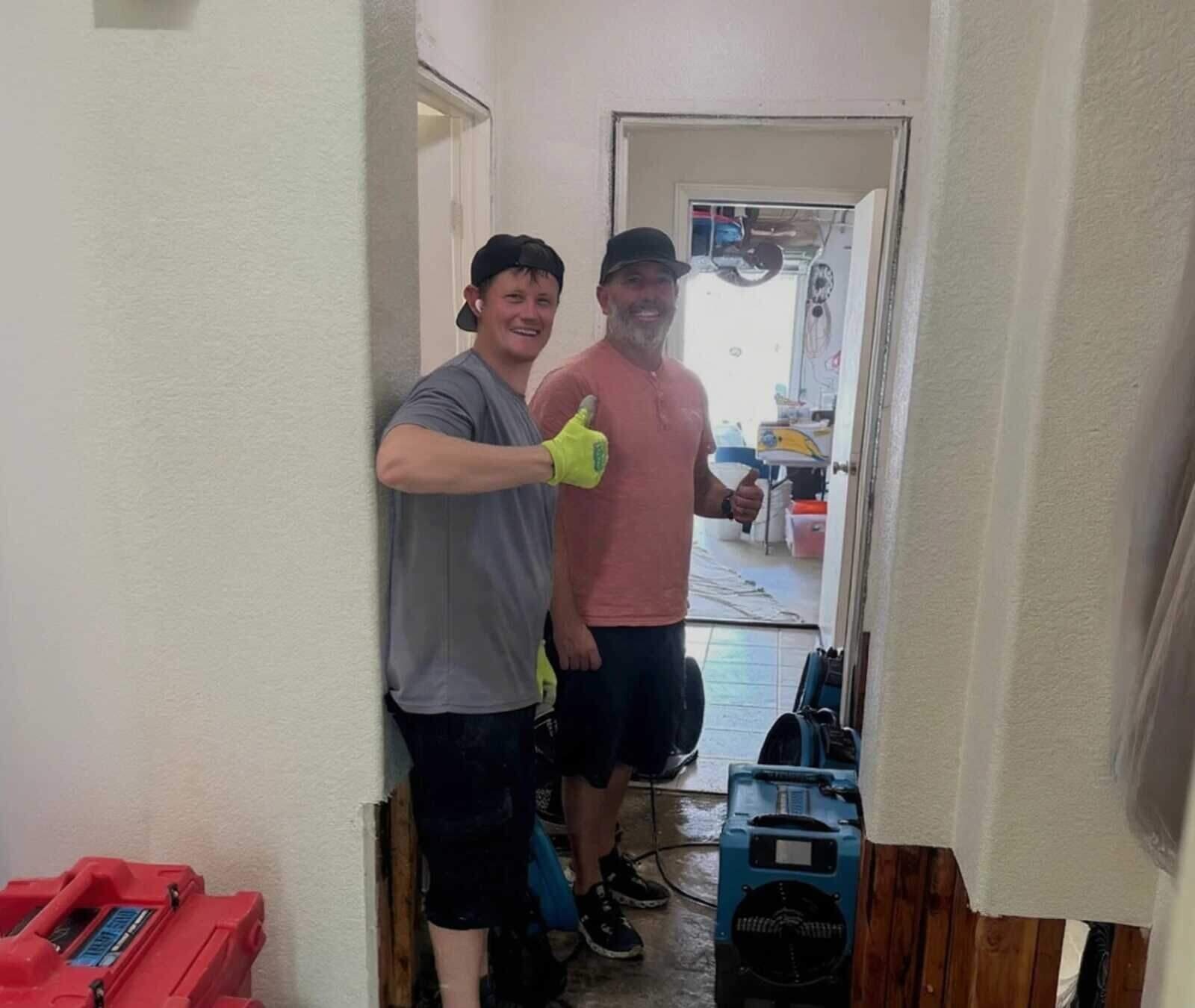
Less ceiling comes out than most people expect when the call comes early. The drywall in these houses is half-inch board on trusses at two feet on center, so it sags between the framing once it has taken water on, and a panel that has lost its bond comes out regardless of how it looks. Where the board is still sound, we relieve any load, open the bay along the readings, pull the wet batt, and dry inside the cavity with a dehumidifier holding the room. Then the finish has to match a sprayed texture from the build era, which on nearly every one of these ceilings is knockdown or orange peel, so it gets sprayed and knocked down rather than troweled, and the old ring goes under a stain-blocking primer so it cannot ghost through the new paint.
- The fixture narrowed from the way the stain behaves, before anything is opened
- Readings taken from the bathroom side too, since the subfloor took the water first
- Board that has lost its bond removed, sound board dried in the bay
- Sprayed texture matched and the old ring sealed under a stain-blocking primer
The pipe repair belongs to a plumber, and we schedule around one often enough that if you do not have somebody, we can tell you what to ask for. The ceiling water damage repair, the drying, and the finish work are ours, and they happen in that order rather than all at once. Call (512) 271-5099.